Why a Munchkin Cattery Should Have Ramps in Every Pen
It can be truly disheartening to see adorable Munchkin kittens advertised, only to wonder if their living conditions actually cater to their unique physical needs. Many prospective owners feel a pang of concern, knowing these cats have short legs that profoundly impact their mobility. This guide will walk you through precisely why a responsible Munchkin cattery must have ramps in every pen, ensuring the health, safety, and well-being of these special felines from day one.
Understanding the Munchkin's Unique Physicality
Munchkin cats are undeniably charming, but their defining feature—their short legs—is a direct result of a genetic mutation known as pseudoachondroplasia. This isn't just a cute quirk; it fundamentally changes how they interact with their world. Their spine, unlike their legs, is typically of normal length, which means it carries a load a normal cat's does not, and their posture and movement are uniquely adapted to their stature.
The Impact of Short Legs on Mobility
Imagine trying to navigate a world built for someone much taller than you. That's essentially the daily reality for a Munchkin cat. While they are remarkably agile on flat surfaces and can often keep up with their long-legged counterparts when running, vertical challenges become a significant hurdle. They simply cannot jump to the same heights as other cats. This isn't a lack of desire or ability; it's a physical limitation. They might try repeatedly, sometimes with an almost comical determination, but many standard cat structures are simply out of reach. This constant striving can put undue stress on their developing bodies.
Furthermore, a Munchkin's front legs often have a slight bowing due to the bone development. While this is typical for the breed and not necessarily painful in itself, it means their weight distribution and the way they absorb impact from even small jumps are different. Their elbows take a fair amount of the landing force, for instance, which is something breeders and owners need to be mindful of throughout the cat's life. You might observe a Munchkin trying to "stair-step" its way up furniture, using every available surface as a launching pad, or performing its famous "prairie dog sit" to get a better view. These behaviors are adorable, but they underscore the need for an environment that supports, rather than strains, their natural movements.
Why Standard Cattery Setups Fall Short
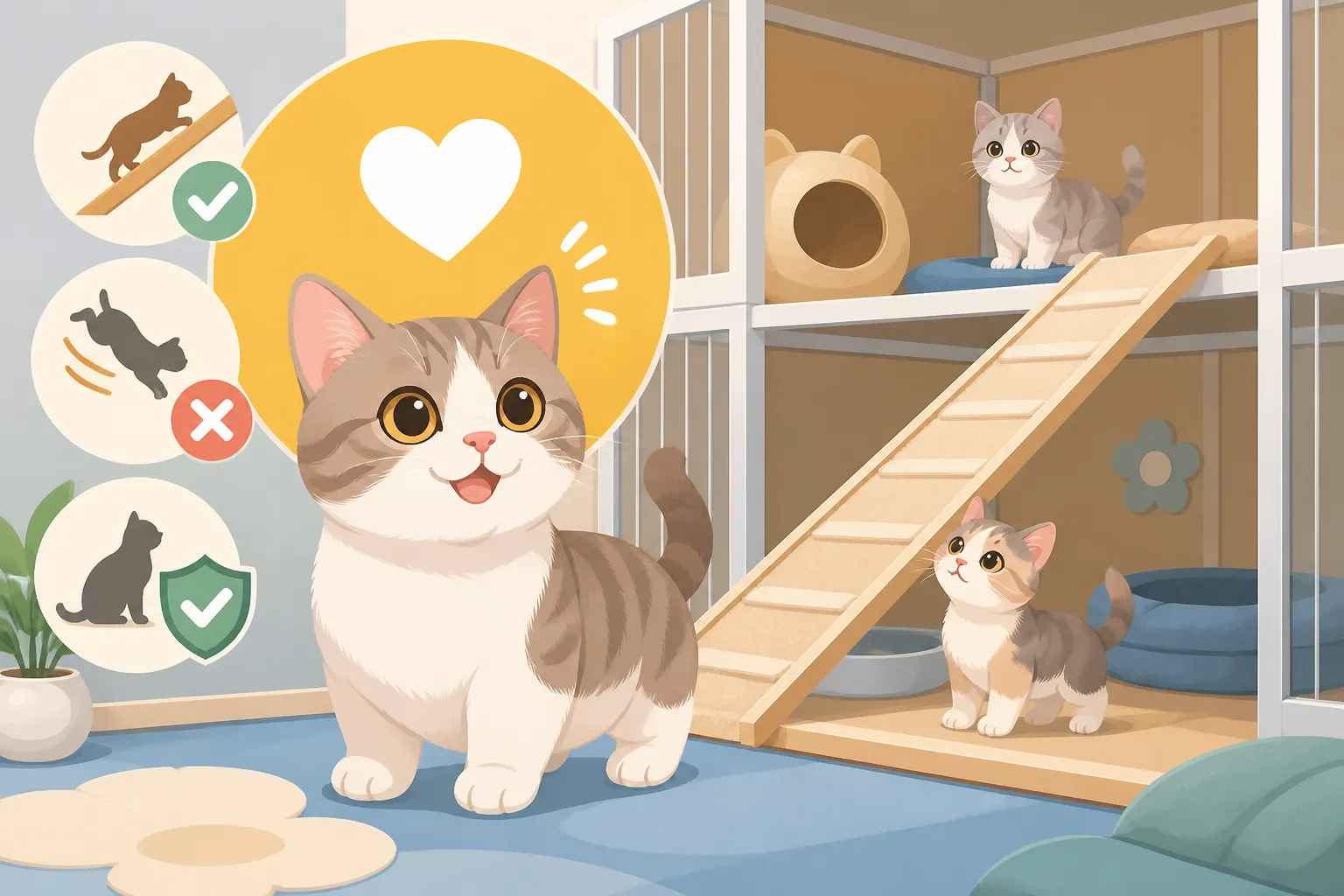
Most traditional cattery pens and enclosures are designed with the agility and jumping prowess of a standard cat in mind. They feature multiple high shelves, perches, and bedding areas, often without any intermediary steps or ramps. For a Munchkin kitten or adult, this kind of setup is not just inconvenient; it can be actively detrimental.
Without appropriate ramps or low-level steps, Munchkins are faced with a dilemma: either remain on the floor, potentially missing out on higher resting spots, views, or social interaction, or attempt jumps that are too high for their short legs. Repeatedly attempting and failing jumps, or worse, making precarious landings, can lead to injuries or exacerbate potential skeletal issues. Imagine a tiny kitten constantly trying to scramble up a smooth, vertical surface, only to slip and fall. It's not just a physical risk; it's a source of stress and frustration. Why a Munchkin Cannot Make the Kitchen Counter is a good read if you want to understand the limits of their jump.
The Importance of Ramps for Joint and Spinal Health
The conversation around Munchkin health often revolves around their unique skeletal structure. While Munchkins are generally robust and playful, the way their bodies are designed necessitates careful consideration, especially concerning their joints and spine. Ramps aren't just about convenience; they're a proactive measure for long-term health.
Preventing Undue Stress on the Spine and Joints
The Munchkin's shortened limbs mean that their spine is subjected to different forces than a long-legged cat's. Every jump, every landing, every stretch can put strain on their joints, particularly in their shoulders, elbows, and hips. While a well-bred Munchkin should not be in constant pain from its legs, repeated high-impact activities can contribute to premature wear and tear.
Lordosis, a spinal condition where the spine curves inward, can be a concern in some Munchkins. While it's not unique to the breed, the mechanics of a Munchkin's body might make them more susceptible if proper care isn't taken. Lordosis Is the Spinal Curve the Munchkin Argument Is About offers more insight into this condition. Providing ramps allows them to ascend and descend safely, distributing weight more evenly and reducing the jarring impact that comes from jumping. This reduces the risk of aggravating any predisposition to spinal or joint issues, ensuring they develop in the healthiest way possible. Think of it as preventative maintenance for their adorable, albeit unique, physiques.
Promoting Natural Movement and Muscle Development
Just like humans, cats need to move to stay healthy and develop strong muscles. Ramps encourage natural movement patterns for Munchkins. Instead of struggling with impossible vertical leaps, they can walk, trot, and climb inclines, engaging their muscles in a safe and supportive way. This promotes healthy muscle development, which in turn provides better support for their joints and spine.
A sedentary Munchkin is at higher risk for weight gain, which is particularly dangerous for this breed. Why an Overweight Munchkin Is in Real Trouble delves into this. Exercise, even gentle climbing on ramps, helps maintain a healthy weight and keeps their bodies strong. In a cattery setting, where kittens are growing and exploring, having ramps available allows them to move freely between levels, fostering coordination and strength without the risk of injury. It also helps prevent them from becoming withdrawn or frustrated by an inaccessible environment, encouraging their innate curiosity and playfulness.
Creating a Safe and Enriched Environment
A truly responsible cattery environment isn't just about providing food and water; it's about enriching the lives of the animals within it. For Munchkins, this means designing a space that acknowledges and supports their physical differences, fostering both their physical and mental well-being.
Accessibility for All Ages and Abilities
Ramps ensure that every Munchkin, regardless of age or individual ability, can access all areas of their pen. This is particularly crucial for young kittens, whose bones and joints are still developing, and for older cats who might already be experiencing the subtle stiffness that comes with age. A kitten needs to learn its limits in a safe way, and an older cat shouldn't be forced to jump down from a high perch when its joints are feeling creaky.
Imagine a shy Munchkin kitten, new to the world, wanting to retreat to a cozy, elevated bed but being unable to reach it. Or an elderly queen, who might find jumping uncomfortable, suddenly having to choose between discomfort and isolation. Ramps eliminate these stressful choices, offering universal access. They are, in essence, fundamental equipment, not luxuries. Ramps and Steps Are Munchkin Equipment, Not Luxuries is a great resource for understanding why. This inclusive design reflects an understanding of the breed's needs and a commitment to their welfare.
Reducing Stress and Behavioral Issues
When cats can't reach desirable spots, whether it's a comfy bed, a sunny perch, or a vantage point to observe their surroundings, it can lead to frustration, anxiety, and even behavioral problems. High places offer a sense of security and control for cats, and denying a Munchkin access to these can be very stressful. In a cattery, this stress can manifest as territorial disputes, withdrawn behavior, or excessive vocalization.
By integrating ramps, a cattery provides Munchkins with the agency to move freely and access all resources. This reduces competition for ground-level spots and allows them to choose their preferred resting or observation points, fostering a sense of calm and well-being. A happy, confident Munchkin is more likely to thrive, socialize well, and transition smoothly to a new home. This thoughtful design also shows that the breeder understands their cats deeply, which is exactly what you want to see.
What to Look For in a Responsible Cattery
When you're looking for a Munchkin kitten, finding a cattery that prioritizes the health and well-being of their cats is paramount. Observing the environment in which the kittens are raised can tell you a lot about the breeder's understanding of the breed's specific needs.
Visual Cues of a Well-Adapted Cattery
When you visit a cattery or ask for videos, keep an eye out for specific adaptations. Look beyond just clean cages and healthy-looking cats. Do you see ramps leading to every elevated surface? Are there low-entry litter boxes? Are food and water bowls placed at a comfortable height, perhaps slightly raised to ease strain on their shoulders, but not so high that they have to crane their necks?
| Feature | Standard Cattery Setup | Munchkin-Adapted Cattery Setup | Why It Matters for Munchkins |
|---|---|---|---|
| Elevated Surfaces | High shelves, perches, cat trees | Ramps or multi-level steps to all elevated spots | Allows safe access without strenuous jumping, protecting joints. |
| Litter Boxes | Standard height entry | Low-entry senior cat boxes, or cut-down boxes | Easy access for short legs and low bellies, prevents accidents. |
| Food & Water | Bowls on the floor or elevated for standard cats | Bowls at floor level or slightly raised (not too high) | Prevents neck/shoulder strain while eating. |
| Flooring | Smooth, hard surfaces (tile, laminate) | Carpeted areas, rugs, non-slip mats | Provides traction, prevents slipping, cushioning for landings. |
| Play Equipment | Tall scratching posts, high hanging toys | Horizontal scratchers, low-level wand toys, tunnels | Accessible engagement, prevents stretching beyond their reach. |
A breeder who has clearly thought about these details, especially providing How to Set Up Ramps Around a Munchkin's House, demonstrates a deep commitment to the breed. It shows they're not just breeding for aesthetics but for the cat's quality of life. Ask to see the parents move, and observe how easily they navigate their environment. If a cattery boasts of its "rug-hugger" Munchkins but has no ramps, that's a red flag.
Questions to Ask the Breeder
Don't be shy about asking direct questions about their setup and practices. A good breeder will welcome your curiosity and be transparent.
- "Can you show me how your kittens access their sleeping shelves or higher perches?"
- "What measures do you take to prevent joint strain in your breeding cats?"
- "At what age do you introduce ramps or steps to your kittens?"
- "Do you provide guidance on how to adapt a home for a Munchkin cat?"
A responsible breeder should be able to articulate their reasoning behind their cattery design and demonstrate a clear understanding of Why a Munchkin's Spine Carries a Load a Normal Cat's Does Not. They might even offer advice on products like joint supplements, talk about the importance of maintaining a healthy weight for their Munchkins, or mention pet insurance for potential future joint care.
Ultimately, seeing ramps in every pen is a strong indicator of a cattery that prioritizes the long-term health and happiness of its Munchkin cats. It's a sign that they understand the unique needs of this wonderful breed and are dedicated to giving their kittens the best possible start in life. It's about ensuring these charming, short-legged companions can live full, joyful lives without unnecessary strain or discomfort.
Disclaimer
This article is for general informational purposes only and does not constitute professional advice. Laws, prices and regulations vary by location and change over time. Consult a qualified professional for guidance on your specific situation.