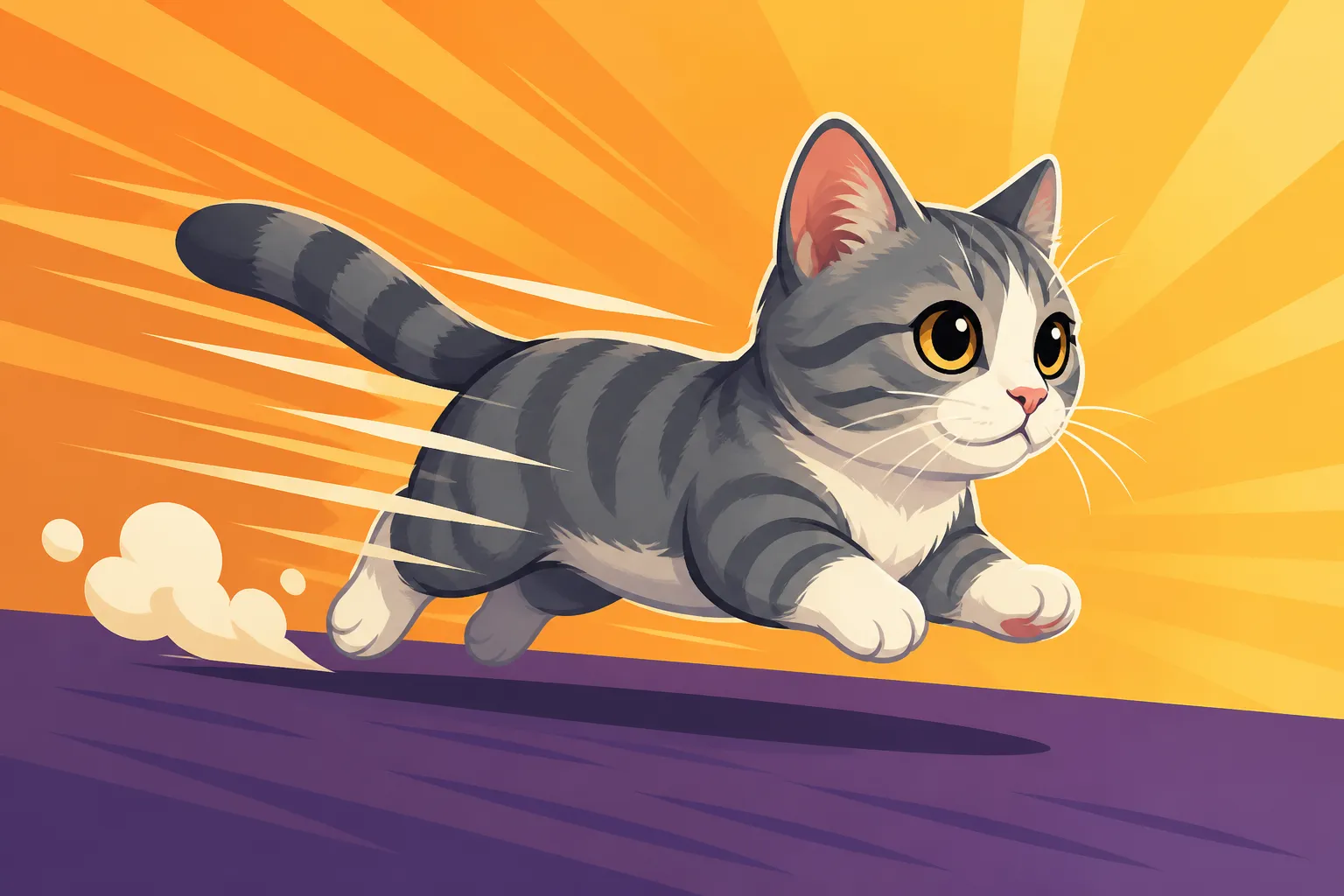
How Fast a Munchkin Can Run
One of the most common questions I hear from folks considering a Munchkin cat is, "Can they really run?" There's this idea that their short legs must severely hobble them, making them slow and clumsy. It's a valid concern, and many prospective owners worry about limiting their feline friend's natural exuberance. But let me tell you, that perception often doesn't match the reality of a healthy Munchkin in full stride. This guide is here to shed light on exactly how these unique felines move, dispelling some myths and celebrating their surprising agility and speed, especially on the flat.
Understanding the Munchkin's Unique Gait and Physicality
It’s easy to look at a Munchkin and assume their short stature means they're constantly struggling. Their adorable short legs are certainly distinctive, but it's crucial to understand how their entire anatomy works together. While their legs are undeniably shorter due to a specific genetic mutation, their body length and overall muscularity are typically comparable to a domestic house cat. This isn't a miniature cat in every sense; it's a cat with shortened limbs on a standard-sized body.
The Appearance of Short Legs
The genetic mutation responsible for the Munchkin's short legs causes a condition called pseudoachondroplasia. This means the long bones in their legs don't grow to their typical length. However, their spine, head, and torso usually develop normally. This is a key distinction, because if their spine were also shortened or compromised in the same way, we'd be looking at a much different, and likely more debilitating, situation. Why a Munchkin's Legs Are Short but Its Body Is Not delves deeper into this fascinating genetic trait.
When you watch a Munchkin walk, you'll notice a distinct, low-slung shuffle. They don't have the high, elegant stride of a Siamese or the powerful spring of a Bengal. Instead, their bodies stay closer to the ground, almost like a ferret. This low profile is often what makes people wonder about their speed, picturing them waddling rather than running.
How Their Build Influences Movement
Despite appearances, this unique build grants them certain advantages, especially in agility and quick bursts of speed over short distances. Their center of gravity is lower, which contributes significantly to their stability and ability to make sudden turns. Think of it like a sports car versus an SUV – the sports car, being lower to the ground, can often take corners at higher speeds with greater stability.
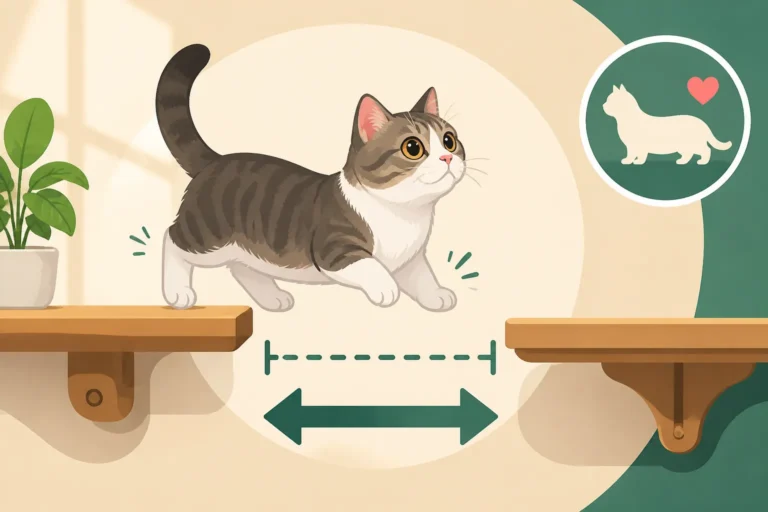
While they may not scale the heights with the same effortless grace as a long-legged cat, their ground game is surprisingly strong. They learn to adapt to their environment, using their compact bodies to navigate tight spaces and launch themselves with surprising power when needed. It’s less about vertical leap and more about horizontal hustle.
Dispelling Myths: Munchkin Speed on the Flat
Now, let's get to the heart of the matter: how fast can a Munchkin actually run? The truth is, on a flat, even surface, a healthy Munchkin cat can be surprisingly swift, often keeping pace with or even outrunning their longer-legged counterparts for short sprints.
The Straightaway Sprint
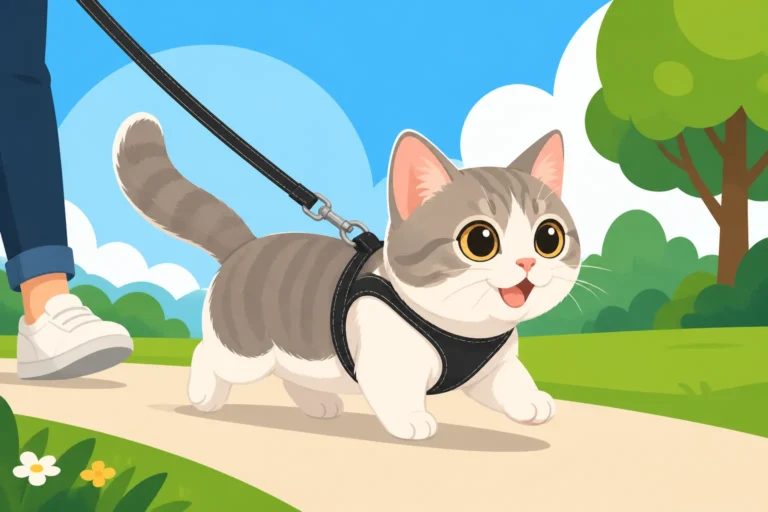
When a Munchkin hits its stride on level ground, you'll be amazed at the ground it covers. They don't have the high knee action you might see in a larger cat, but their short, powerful legs work like pistons, propelling them forward with incredible efficiency. Their low profile actually reduces air resistance, and their compact build allows for rapid acceleration. Many owners report that their Munchkins are absolute blurs when chasing a favorite toy across the living room floor.
It's common to see a Munchkin bolt from one end of a room to the other in a flash, especially when stimulated by play or the promise of food. They might not have the long, loping strides, but their quick, repetitive movements make up for it. How Fast a Munchkin Runs on Level Ground describes this phenomenon in detail. So, if you're envisioning a slow, lumbering animal, prepare to be surprised by their zip!
Comparing to Normal-Legged Cats
Can a Munchkin truly outrun a normal-legged cat? For short, burst-like sprints on a flat surface, absolutely. Their low center of gravity and powerful hindquarters allow for quick take-offs. Imagine a drag race – the Munchkin might win the initial burst, especially if the surface provides good traction. However, for sustained speed over long distances, or for scaling obstacles, a normal-legged cat with longer strides would likely have the advantage.
The real difference isn't necessarily in top speed, but in how that speed is achieved and maintained. Normal-legged cats rely on longer, more expansive strides, while Munchkins use a rapid-fire succession of shorter steps. Both methods are effective, but they cater to different types of movement and terrain. Whether a Munchkin Outruns a Normal Legged Cat explores this comparison further.
The "Ferret-Like" Movement
You might hear a Munchkin's running style described as "ferret-like," and it’s a really apt comparison. Ferrets, with their elongated bodies and short legs, are incredibly quick and agile on the ground. They slink and dart, using their entire body to propel themselves. A Munchkin moves with a similar fluidity, their low belly skimming the floor as they weave and charge. This distinctive movement is part of their charm and why they are so captivating to watch when they get a burst of energy.
The Secret Weapon: Cornering and Agility
Where Munchkins truly shine in the speed department isn't just in straight lines, but in their incredible agility and ability to change direction on a dime. Their unique physique, far from being a hindrance, actually makes them masters of the quick turn and pivot.
The Low Center of Gravity Advantage
One of the biggest benefits of their short legs is their incredibly low center of gravity. This isn't just a quirky characteristic; it's a biomechanical advantage. When a cat with long legs tries to make a sharp turn at speed, they have to lean considerably, distributing their weight to avoid toppling over. A Munchkin, already sitting low to the ground, doesn't have as far to "fall" or as much weight to shift. They hug the ground through turns, maintaining incredible stability. Why a Munchkin's Low Center of Gravity Helps a Munchkin Corner explains the physics behind this maneuverability.
This means they can execute tight turns with astonishing precision and speed, often leaving their longer-legged playmates scrambling to keep up. It's like watching a race car taking a hairpin bend – smooth, controlled, and fast. This agility is what makes playing with a Munchkin so much fun; they are masters of evasive action.
Rapid Direction Changes
Imagine a game of chase with a laser pointer or a feather wand toy. A normal cat might have to slow down slightly to reset its body for a sharp 90-degree turn. A Munchkin, however, can often pivot almost in place, or execute a very tight arc without losing much momentum. Their compact form allows for quick shifts in weight and direction.
This ability to change direction quickly isn't just about play; it's a survival trait. In the wild, being able to quickly dodge a threat or pivot to catch prey is vital. While our beloved Munchkins are pampered indoor pets, this inherent agility is still very much a part of their natural predatory instincts. How a Munchkin Changes Direction at Speed is a great resource if you want to understand more about their amazing dexterity.
Mastering Obstacle Courses
Because they can’t always jump over obstacles, Munchkins become experts at navigating around them, or finding low pathways through them. This means they develop incredible body awareness and spatial reasoning. They're like little furry tanks, zipping through chair legs, under tables, and around boxes with impressive speed and accuracy.
This makes them fantastic candidates for homemade indoor agility courses, utilizing tunnels, low platforms, and weaving poles. Providing opportunities for this type of enrichment isn't just fun; it also helps maintain their muscle tone and joint health. Consider setting up a simple course with cardboard boxes, blankets draped over chairs, and maybe even some pet tunnels you can find on Amazon.
Factors Influencing a Munchkin's Speed and Mobility
While Munchkins are surprisingly quick, their speed and overall mobility aren't static. Several factors can significantly influence how well and how fast they move throughout their lives. As a responsible owner, understanding these elements is crucial for their well-being.
Age and Development
Just like any cat, a Munchkin kitten is a whirlwind of energy. They'll dart, pounce, and chase with boundless enthusiasm. Their bones are still developing, and their bodies are incredibly flexible. As they mature into adulthood, their speed and agility will reach their peak, usually between one and five years old. However, as they age, especially once they are considered senior around eight to ten years old, you might notice a gradual decrease in their overall speed and enthusiasm for vigorous play.
An older Munchkin might be less inclined to chase a toy at full tilt, preferring gentler games or simply observing. This isn't necessarily a sign of pain, but a natural slowing down. However, it's always wise to monitor any sudden or significant changes in mobility, as it could indicate an underlying health issue. When a Munchkin Counts as Senior offers more insights into caring for your aging companion.
Weight Management
This is perhaps the single most critical factor influencing a Munchkin's long-term mobility and comfort. Because of their short legs, every extra ounce of weight places disproportionate stress on their spine, shoulders, and elbows. An overweight Munchkin isn't just a "chubby" cat; it's a cat at serious risk for joint pain, spinal issues, and a significant reduction in its ability to move freely and quickly.
Imagine trying to run a marathon with heavy weights strapped to your ankles – that's how an overweight Munchkin feels trying to navigate its day. Maintaining a lean, healthy body condition is paramount. This means careful portion control, weighing out their food, and encouraging plenty of floor-level play to keep them active. Why Weight Is More Dangerous on a Munchkin cannot be stressed enough – it's a game-changer for their quality of life.
Here's a quick guide to body condition scoring:
| Score | Description | Ribs | Waist | Abdominal Tuck | Mobility |
|---|---|---|---|---|---|
| 1 | Emaciated | Easily felt, visible | Severe | Pronounced | Weak |
| 2 | Very Thin | Easily felt, minimal fat | Evident | Obvious | Reduced |
| 3 | Ideal | Easily felt, slight fat | Visible | Present | Normal |
| 4 | Overweight | Hard to feel, covered by fat | Indistinct | Minimal/Absent | Slightly Reduced |
| 5 | Obese | Cannot feel, heavy fat | Absent | Absent | Severely Reduced |
Always consult your vet for an accurate assessment and weight management plan.
Health and Genetics
While Munchkins are generally robust cats, certain health conditions can affect their mobility and speed. Spinal issues like lordosis (an inward curvature of the spine) or pectus excavatum (a sunken chest) can, in severe cases, impact their ability to move efficiently and even breathe comfortably. Reputable breeders screen for these conditions and will provide health guarantees. What Lordosis Actually Is in a Munchkin and How Pectus Excavatum Affects a Munchkin's Breathing are good reads to understand these conditions.
Any cat, including a Munchkin, can also develop arthritis as they age, which will naturally slow them down. Regular vet check-ups, especially as they get older, are essential for early detection and management of any joint pain or other health concerns. Pay attention to how your Munchkin walks; if their gait changes or they seem reluctant to play, it's always worth a trip to the vet. How a Vet Watches a Munchkin Walk offers insight into how professionals assess feline movement.
Environmental Enrichment
A stimulating environment encourages movement and play, which in turn helps maintain a Munchkin's physical fitness and, by extension, their speed and agility. While they can't jump to high shelves, providing floor-level toys, tunnels, and low steps or ramps to reach favorite perches will keep them active. Puzzle feeders, available on Amazon, can also engage their minds and encourage movement as they work for treats.
Regular play sessions with wand toys that stay close to the ground, or small balls they can chase, are vital. How Much Floor Level Play a Munchkin Needs cannot be emphasized enough – it's their primary mode of exercise and exploration. A bored Munchkin is a sedentary Munchkin, which can contribute to weight gain and muscle loss.
In conclusion, don't let the short legs fool you into thinking a Munchkin is a slow-moving lump. They are astonishingly quick on the flat and masters of agility, using their unique physique to their advantage. With proper care, weight management, and environmental enrichment, your Munchkin will enjoy a lifetime of zipping, darting, and surprising you with their speed.
Disclaimer
This article is for general informational purposes only and does not constitute professional advice. Laws, prices and regulations vary by location and change over time. Consult a qualified professional for guidance on your specific situation.