Whether a Munchkin Outruns a Normal Legged Cat
It’s a common misconception that a Munchkin cat, with their signature short legs, is automatically slower or less agile than their long-legged feline counterparts. In reality, while their anatomy certainly dictates a unique style of movement, it doesn't necessarily mean they're always left in the dust. Many owners are surprised by the bursts of speed and incredible maneuverability their Munchkins display. This guide will explore the fascinating mechanics behind a Munchkin's movement, comparing their capabilities to those of a normal-legged cat, and helping you understand just how fast and nimble these adorable furballs can truly be in their daily lives.
The Unique Mechanics of Munchkin Movement
When you first see a Munchkin cat, it's easy to assume their short stature limits their athletic prowess. However, this breed has adapted its movement in truly remarkable ways, leveraging its unique physique to achieve surprising speeds and agility, especially in certain situations. It's not about being slower; it's about being different. Their movement is a fascinating study in adaptation, proving that sometimes, different can be just as effective, if not more so, in specific contexts.
How Short Legs Influence Stride and Speed
The most obvious difference in a Munchkin's movement is, of course, their legs. Their short limbs mean they naturally take more steps to cover the same distance as a normal-legged cat. Imagine comparing a human sprinter versus a marathon runner – the sprinter takes shorter, faster steps to generate explosive speed over a short distance, focusing on rapid leg turnover. A Munchkin operates on a strikingly similar principle. While their individual stride length is inherently reduced, their leg turnover rate can be incredibly high. They're like little blur-machines, pumping those short legs with impressive rapidity, creating a scuttling, low-to-the-ground burst of acceleration.
This high frequency of steps allows them to build up speed quickly from a standstill, rather than relying on long, sweeping strides that require more leverage. This particular style of locomotion is incredibly effective for sudden sprints and quick dashes that are so characteristic of a cat's natural hunting and play behaviors. We often think of speed as purely about top-end velocity, but acceleration is a huge part of a cat's repertoire. A Munchkin's quick, almost ferret-like gait provides excellent acceleration, enabling them to dart after a favorite toy or chase a sibling with surprising effectiveness. This quickness is a hallmark of their playful nature and often catches new owners off guard, who might have expected a slower, more ponderous movement. How Fast a Munchkin Can Run delves deeper into the pure velocity aspect and the surprising speed these cats can develop.
The Advantage of a Low Center of Gravity on the Flat
Here's where the Munchkin truly shines in terms of agility and maneuverability, especially when running on flat surfaces: their exceptionally low center of gravity. Picture a sleek sports car or a nimble go-kart – they are engineered to be low to the ground for maximum stability and cornering ability. A Munchkin cat, with its body positioned significantly closer to the floor, benefits from this same principle in spades. This low stance minimizes the risk of tipping over during sharp turns, sudden stops, or quick changes in direction. When a normal-legged cat attempts a tight corner at speed, there's a natural moment where they have to lean heavily into the turn, potentially losing balance or momentarily slowing down to regain control.
A Munchkin, however, can practically hug the ground, executing incredibly tight, rapid changes in direction with a remarkable grace that can only be described as fluid. This means that while they might not have the same raw top speed over a wide-open field against a truly long-legged, fast breed, in a cluttered living room or a hallway full of furniture, a Munchkin can often outmaneuver and outpace a longer-legged cat. They navigate obstacles with a kind of fluid, almost slithering movement, weaving effortlessly through chair legs, darting under tables, and disappearing around corners. This low-slung design gives them exceptional control and stability, making them surprisingly adept at navigating complex environments quickly and gracefully. You'll often see them burst into a fit of "zoomies," tearing around furniture, making sharp, precise turns that would leave a lankier cat stumbling or taking a wider arc. This ability to corner quickly and maintain momentum is a significant factor in their perceived speed and boundless playfulness. Why a Munchkin Corners Faster Than It Should explores the biomechanics behind this impressive agility.
Speed Across Different Environments and Situations
It's not enough to just talk about raw speed; we need to consider how a Munchkin performs in the real world of cat life, which is rarely a perfectly flat, obstacle-free track. Their unique body shape provides distinct benefits and presents certain challenges depending on the terrain and the specific task at hand. Understanding these nuances helps us appreciate their specific athletic strengths and how they interact with their environment.
Straight-Line Speed Versus Agility and Cornering
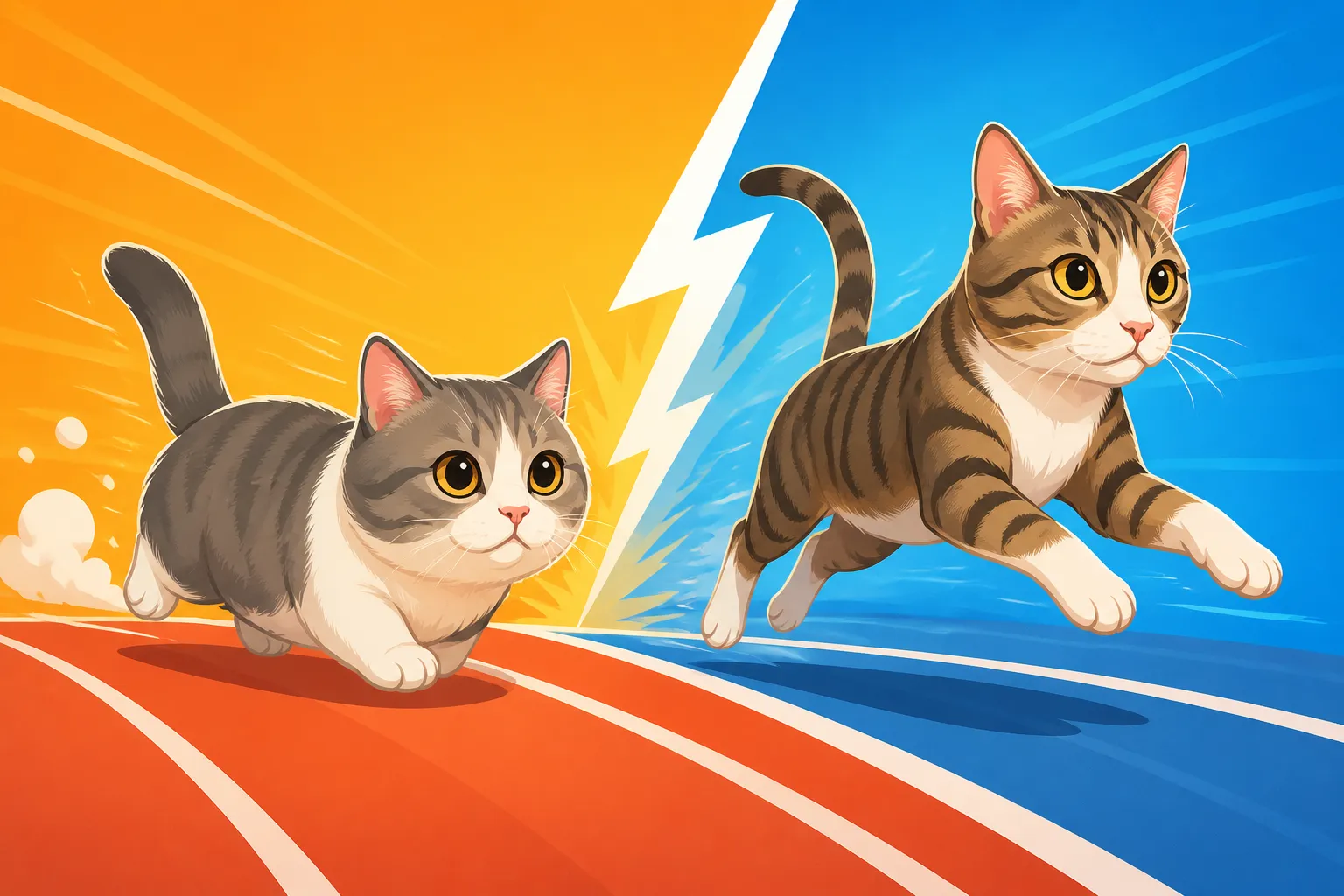
When it comes to a pure straight-line sprint across a long, open space, a normal-legged cat might eventually pull ahead due to their longer stride allowing for greater top-end speed and momentum over extended distances. Think of a cheetah on the savannah, built for immense strides and sustained high speed. However, how often does a typical house cat need to run in a perfectly straight line for an extended period? Rarely. Most cat "races" or bursts of speed happen in short increments, often involving a chase around furniture, through doorways, or in pursuit of a scurrying toy.
This is precisely where the Munchkin's agility comes into its own. Their ability to accelerate rapidly, coupled with their exceptional capacity for executing tight turns, gives them a distinct advantage in close quarters or environments with many obstacles. They can change direction with incredible precision and speed, pivoting almost on the spot to follow a moving target. This is why, during playful interactions or a game of chase within a room, a Munchkin might very well seem to "win" against a larger, long-legged cat. They can dart under a sofa, pop out the other side, and be gone before the other cat can navigate around the obstacle. This makes them formidable players in a dynamic, obstacle-rich indoor environment, where quick thinking and even quicker maneuvering are key. How a Munchkin Changes Direction at Speed provides more insight into their impressive ability to maneuver.
Challenges on Uneven Surfaces or Obstacles
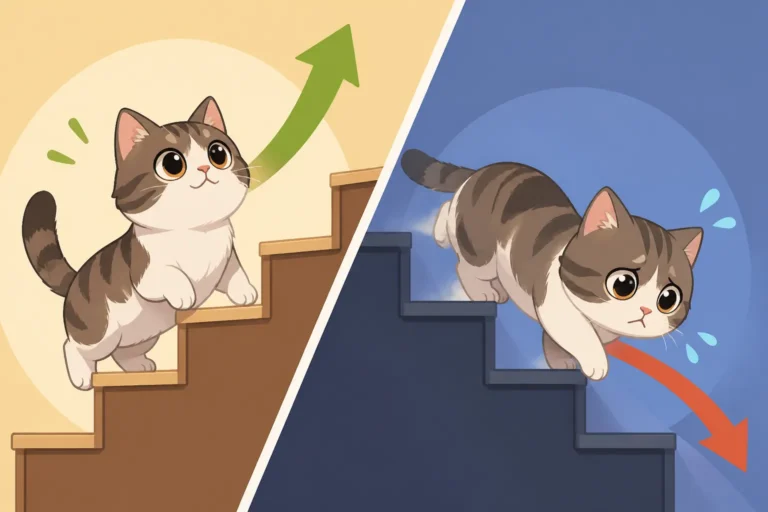
While they undoubtedly excel on flat, even ground, the Munchkin's short legs do present undeniable challenges when it comes to verticality or navigating uneven terrain. Climbing, jumping to significant heights, and gracefully managing stairs or high furniture require different biomechanics than running on the flat. A normal-legged cat can effortlessly leap onto a kitchen counter, scale a tall cat tree, or bound up a flight of stairs without a second thought. For a Munchkin, these are often significant hurdles, requiring careful planning or assistance.
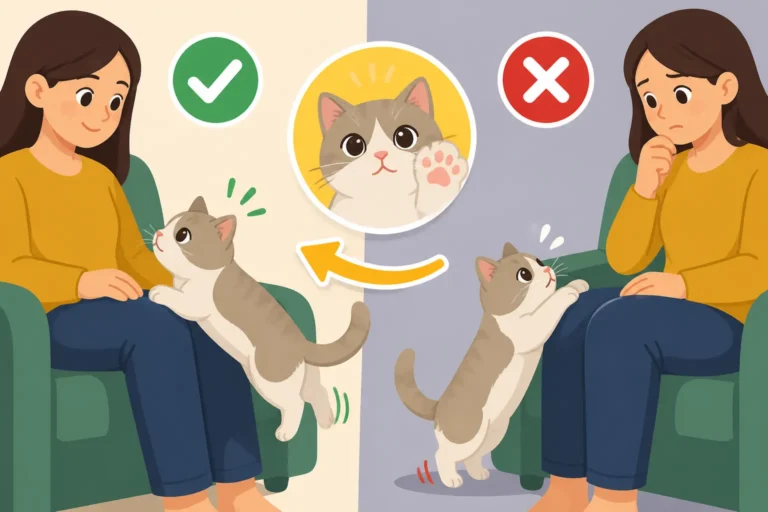
They are incredibly resourceful and compensate by finding alternative routes – using lower furniture as a staircase, employing a series of smaller jumps, or simply asking for help (often with a distinctive vocal plea or by sitting expectantly at your feet, looking up with big, hopeful eyes). Steep inclines, rough outdoor terrain (which they absolutely should not be exposed to unsupervised, due to their limited ability to escape threats!), or high steps can slow them down considerably or even become insurmountable barriers. Their limited reach means they cannot always use their claws to pull themselves up to higher spots with the same ease and leverage as a long-legged cat. So, while they might be surprisingly quick and agile on the ground, their overall "effective speed" in a home filled with tall furniture or multiple flights of stairs might appear slower simply because they have to find detours, utilize ramps, or seek assistance to reach their desired locations. This is why having ramps or pet steps readily available throughout the home is so crucial for them, ensuring they can access all their favorite spots without unnecessary strain.
Comparing Munchkin Speed to a Normal-Legged Cat
The question of whether a Munchkin can "outrun" a normal-legged cat is more nuanced than a simple yes or no answer. It truly depends on defining the conditions, the specific environment, and what "outrun" truly means in the context of a cat's daily life and natural behaviors. It's less about a deficiency and more about a difference in approach.
The Perception Versus Reality of Their Speed
Many people, upon first encountering a Munchkin, instinctively assume they are handicapped in some way, often equating short legs with slowness, clumsiness, or even a lack of coordination. This perception is, in large part, inaccurate. A healthy, well-adjusted Munchkin is anything but slow or clumsy. They are typically active, intensely playful, and often possess an almost relentless energy for chasing toys, engaging in vigorous play, and exploring every inch of their floor-level world. Their unique gait, often described as a "ferret-like" waddle or scurry, is not a sign of discomfort but rather a highly efficient and effective movement for their specific body type. Why a Munchkin Is Faster on the Flat Than You Expect helps to debunk some of these common misconceptions, highlighting their surprising agility.
They might not be Olympic high-jumpers or champion tree-climbers, but they are certainly not genetically predisposed to being couch potatoes unless their individual health or weight dictates otherwise. Their play style is characteristically defined by fast dashes, sudden stops, intricate weaving patterns, and quick pounces rather than towering leaps. They are perfectly capable of chasing down a laser pointer dot or a thrown toy with impressive speed and precision, often surprising unsuspecting humans who initially expected a more sedate pace. The sheer confidence they exude in their movement is evident in their fearless dashes, playful antics, and the way they survey their surroundings from their low vantage point, sometimes even standing on their hind legs in their famous "prairie dog" stance. What a Munchkin's Prairie Dog Posture Tells You reveals more about this unique behavior.
General Factors Affecting Any Cat's Speed
It's also critically important to remember that leg length, while a distinguishing characteristic, isn't the only factor influencing a cat's overall speed and agility. Just like humans, individual cats vary greatly in their physical capabilities, regardless of breed. Many general factors play a significant role.
Consider these common factors, which apply universally to both Munchkins and normal-legged cats, dictating their mobility and energy levels:
- Age: Kittens, regardless of breed, are notoriously fast, agile, and seemingly inexhaustible bundles of energy. Conversely, senior cats naturally slow down as they age, experiencing reduced muscle mass, decreased joint flexibility, and often a lower overall energy level. An older Munchkin might experience stiffness earlier in its joints, particularly in the shoulders and elbows which bear a lot of impact, which could impact its speed and willingness to play.
- Weight: An overweight cat, whether a Munchkin or any other breed, will be significantly slower, less agile, and at a much higher risk for a myriad of health problems. Every extra pound is a disproportionate burden on their skeletal system, especially for a Munchkin whose unique frame is already carrying a specific load. This is particularly crucial for Munchkins, as Why Weight Is More Dangerous on a Munchkin clearly explains; maintaining a healthy weight is paramount for their long-term mobility and overall quality of life.
- Health: Any underlying health conditions, such as arthritis, heart issues, respiratory problems, or chronic pain, can drastically reduce any cat's energy, speed, and willingness to move. Regular veterinary check-ups are absolutely essential to ensure your Munchkin remains in peak physical condition and to catch any issues early.
- Personality and Play Drive: Some cats are simply more active and playful by nature than others, irrespective of their breed or leg length. A highly motivated Munchkin with a strong prey drive and a love for interaction will exhibit more speed and agility than a lazier long-legged cat who prefers lengthy naps to vigorous play sessions.
- Environment and Enrichment: A cat living in a stimulating environment with plenty of opportunities for appropriate play, safe exploration, and regular movement will naturally be more active, and consequently, faster and more agile than one confined to a small, unadapted space that offers little in the way of engagement.
So, while their short legs are indeed a defining physical characteristic, they are just one piece of a much larger puzzle when assessing a Munchkin's overall speed, athleticism, and general physical capabilities. A fit, healthy, and playful Munchkin can easily hold its own in a household full of feline friends, often surprising everyone with their spirited dashes.
| Movement Aspect | Munchkin Cat (Short Legs) | Normal-Legged Cat |
|---|---|---|
| Stride Length | Shorter, more frequent steps; high turnover rate | Longer, more powerful strides; fewer steps per distance |
| Acceleration | Excellent; quick bursts from a standstill | Good; may take slightly longer to reach peak velocity |
| Top Speed (Sprint) | Good over short distances; might be outpaced over long straightaways by very fast breeds | Can achieve higher top speeds over longer, unobstructed distances |
| Cornering/Agility | Exceptional; highly stable and rapid changes of direction due to low center of gravity | Good; but may lean more, potentially slowing slightly in very tight turns or complex paths |
| Climbing/Jumping | Limited; requires assistance or alternative routes (ramps, steps) to reach heights | Excellent; can easily scale significant heights and clear obstacles |
| Obstacle Navigation | Weaves around or darts under obstacles efficiently on the ground | Leaps over or maneuvers around obstacles; often prefers vertical escape |
| Stability | Very stable, especially during fast maneuvers and sharp turns; low center of mass aids balance | Generally stable; but can be less "grounded" during extremely sharp turns or sudden stops from high speed |
| Energy Output | May expend more energy over long distances due to higher step count | More efficient over long, straight distances due to longer strides |
Maximizing a Munchkin's Mobility and Enjoyment
As responsible Munchkin owners, our primary goal isn't just to marvel at their unique speed and agility, but to ensure they can navigate their world happily, safely, and without undue strain. This means thoughtfully adapting our homes and play routines to suit their specific physical needs, allowing them to thrive and express their natural feline behaviors to the fullest.
Creating an Environment for Optimal Movement
Because Munchkins can't simply leap onto high surfaces with the same ease as their long-legged cousins, their environment needs to be thoughtfully and strategically arranged to give them accessible routes to all the places a cat loves to be. This isn't about coddling them; it's about empowerment, providing them with the tools they need to be independent and confident explorers. Ramps and steps become their essential personal staircases to comfort, security, and boundless exploration. As stated in Ramps and Steps Are Munchkin Equipment, Not Luxuries, these items are crucial.
Think about all the places your cat might want to go: the cozy spot on the sofa for cuddles during movie night, the warmth of your bed at night, or a sunny windowsill for bird-watching. For a Munchkin, these cherished elevated areas need accessible routes. You can find excellent pre-made pet ramps on sites like Amazon that are specifically designed with gentle slopes and good traction, making them perfect for little legs. Alternatively, you might get creative with sturdy step stools, ottomans, or even strategically arranged cushions that create a gentle "staircase" effect. The ultimate goal is to provide multiple easy-access points to their favorite elevated spots without forcing them to attempt potentially straining jumps or feel frustrated by unreachable perches. For instance, a quick Amazon search for "cat steps for small breeds" or "pet ramps for low-riding cats" will yield a variety of safe and effective options that can transform your living space into a truly Munchkin-friendly paradise. Teaching them to use these aids is usually quite straightforward, often involving positive reinforcement, gentle guidance, and irresistible treats. How to Teach a Munchkin to Use a Ramp offers excellent, actionable guidance on introducing these vital mobility aids effectively.
Appropriate Play and Exercise
Play is not merely entertainment; it's absolutely crucial for any cat's physical and mental well-being, helping to maintain a healthy weight, build muscle, and provide vital mental stimulation. For a Munchkin, it's an especially fantastic way to maintain muscle tone, keep their joints supple, and manage their weight – a critical aspect of their long-term health, as discussed in Why a Munchkin's Belly Nearly Touches the Floor. Since high jumps aren't their physical forte, the focus should naturally shift to games that emphasize their ground-level speed, agility, and quick changes in direction.
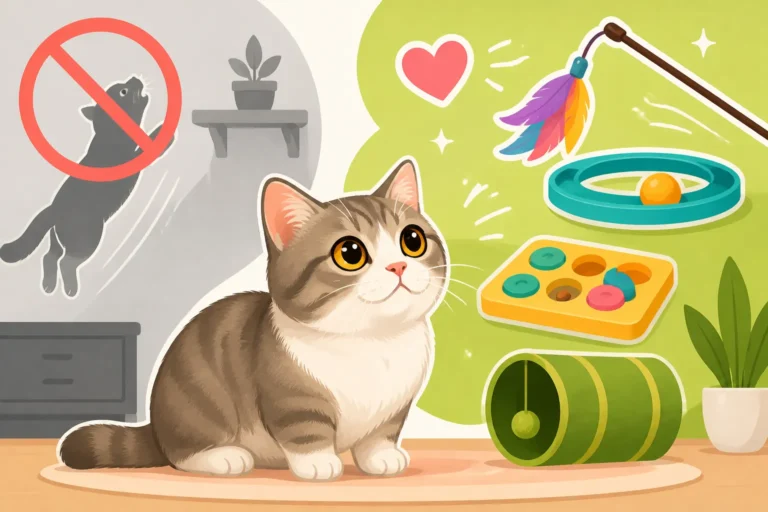
Wand toys are an absolute winner for Munchkins. The erratic movement of a feather teaser or a soft lure skittering across the floor perfectly mimics natural prey, allowing them to engage their innate hunting instincts with exciting dashes, sudden stops, and incredibly quick turns. You can drape the wand toy over low furniture, letting the "prey" disappear and reappear, encouraging them to stalk, chase, and pounce with gusto. Feather teasers, sturdy strings, or small stuffed mice dragged along the floor are also incredibly effective at stimulating their chase drive. Which Wand Toys Suit a Munchkin's Reach provides even more ideas for engaging playtime.
Laser pointers can also be a hit, prompting those signature rapid-fire leg movements and tight cornering that Munchkins do so well. Just remember to always end a laser pointer session by immediately redirecting their attention to a physical toy they can "catch" and sink their claws into, preventing potential frustration from never truly capturing their elusive prey. Interactive feeder toys, where they have to roll, bat at, or manipulate a puzzle to dispense treats, are also excellent for providing mental stimulation and encouraging physical movement. Many reputable brands available on Amazon, like PetSafe or KONG, offer puzzle feeders specifically designed for ground-level play that even a Munchkin can easily access. Providing ample How Much Floor Level Play a Munchkin Needs cannot be overstated; it's essential for their physical health, mental happiness, and overall quality of life. By thoughtfully providing these appropriate outlets for play and exploration, we ensure our Munchkins stay happy, healthy, and enthusiastically enjoy showing off their unique and surprising brand of speed and agility!
Disclaimer
This article is for general informational purposes only and does not constitute professional advice. Laws, prices and regulations vary by location and change over time. Consult a qualified professional for guidance on your specific situation.