Why Coming Down Is Harder Than Going Up for a Munchkin
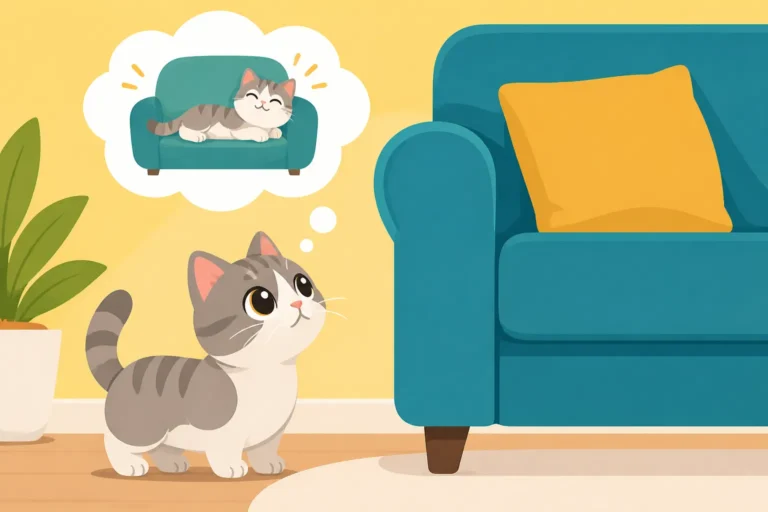
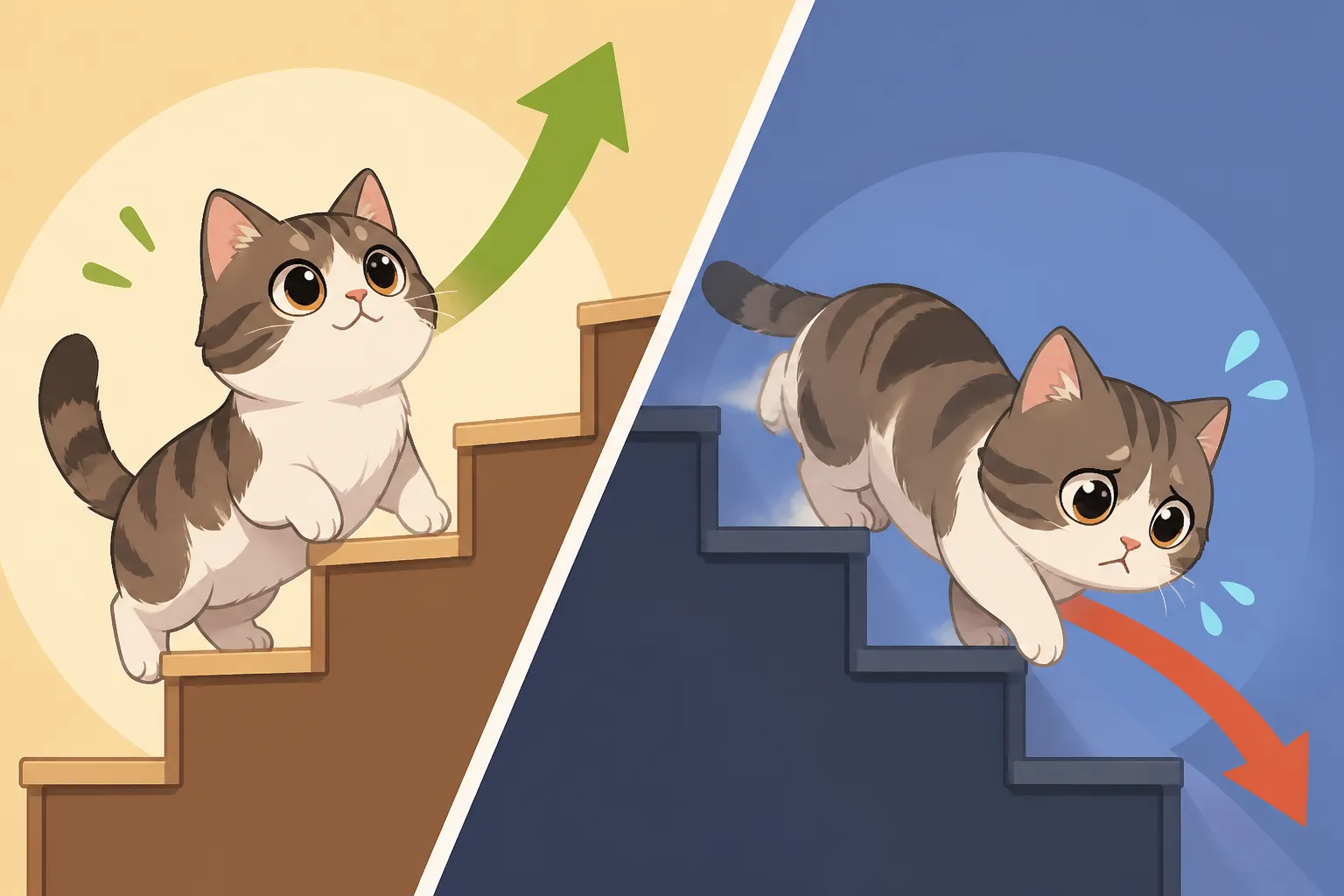
It’s a common misconception, isn't it? Many of us assume that if our little Munchkin can bound up onto the sofa or bed with surprising agility, then surely getting down will be just as easy. But if you’ve been watching your short-legged companion, you’ve probably noticed a distinct difference. Coming down often looks more hesitant, sometimes awkward, and can even carry a visible impact. This isn't your imagination; for a Munchkin cat, the physics of descending from even a modest height are fundamentally more challenging and taxing on their unique anatomy than going up. This guide will delve into why that is and how you can make life safer and more comfortable for your adorable, vertically-challenged feline friend.
The Physics of the Fall: Why Short Legs Struggle to Land
When you watch a long-legged cat leap gracefully, it’s easy to miss the intricate physics at play. They are masters of both ascent and descent, thanks to their flexible spines and elongated limbs designed for powerful propulsion and controlled shock absorption. For a Munchkin, while the "up" can be surprisingly robust, the "down" is a different ball game entirely.
Leverage and Propulsion for Ascent
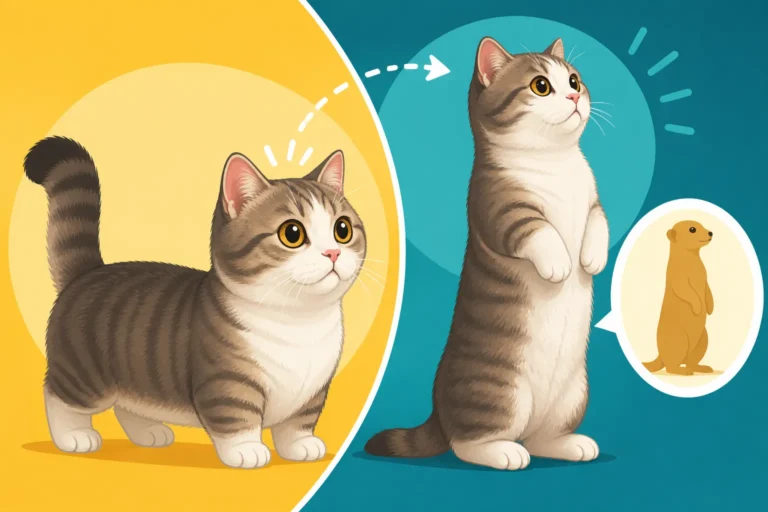
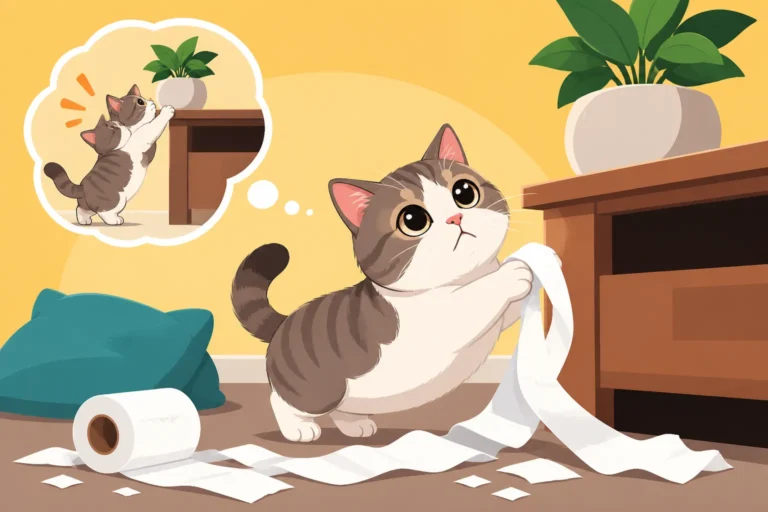
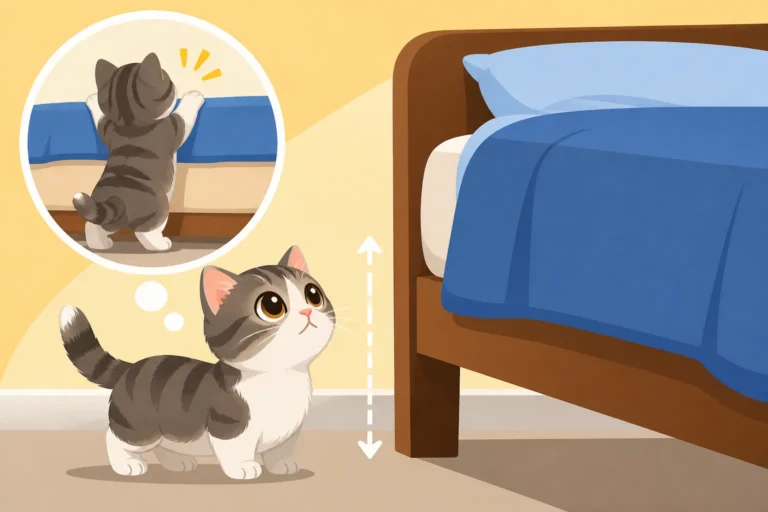
Think about a standard cat preparing to jump onto a countertop. They coil their powerful hind legs, gathering energy like a spring, and then explode upwards. Their longer legs provide ample leverage and a wide range of motion, allowing for a smooth, powerful launch. A Munchkin also has strong hindquarters – their bodies are otherwise normal cat anatomy, just on shorter stilts. They can often achieve impressive vertical jumps by using this same powerful propulsion. They might appear to "ferret-walk" or sprint before a leap, generating momentum, or they might launch from a standstill with immense determination. The challenge isn't necessarily generating the initial upward thrust; it's what happens on the other side of that jump.
Shock Absorption and Braking for Descent
This is where the short legs really come into play. When a long-legged cat jumps down, their limbs act like sophisticated shock absorbers. They extend their legs, spreading the impact over a greater distance and allowing their muscles and joints to gradually decelerate their body. Their long, springy legs bend and straighten, dissipating the energy of the landing. This is a controlled "braking" maneuver.
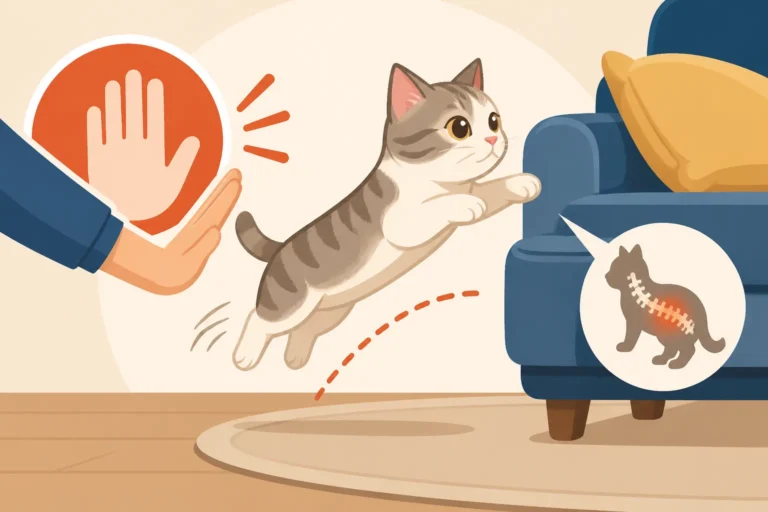
For a Munchkin, the shorter legs mean significantly less "suspension travel." There's less limb length to absorb the shock, so the impact is more sudden and direct. Imagine dropping a rigid block versus a spring from the same height – the block hits harder. A Munchkin's body, especially its front legs and shoulders, bears the brunt of this impact much more directly than a cat with standard leg length. They can't "stick" the landing as gracefully or absorb the energy as efficiently, which means more force is transmitted up their legs and into their spine.
Center of Gravity and Stability
A cat's center of gravity is crucial for balance and agility. While a Munchkin's low center of gravity is an advantage for swift turns and stability on flat ground – allowing them to corner remarkably well – it can become a hindrance when descending from height. A normal cat can adjust its body position mid-air, shifting its center of gravity to prepare for an optimal landing, often twisting to land on all four paws. This airborne control helps them brace for impact.
A Munchkin, despite its impressive athleticism, has less room for error in this mid-air adjustment. Their shorter legs mean that if they misjudge the landing even slightly, their body might hit the ground with less control. Instead of a controlled four-paw touchdown, it can sometimes resemble more of a "thud," with their chest or belly getting closer to the ground than ideal, or their front legs splaying out as they try to regain balance. This lack of dynamic aerial stability means that what looks like a simple jump down is actually a much more precarious maneuver for them.
The Toll on Tiny Joints: Understanding Landing Impact
Every time your Munchkin jumps down from a height, their little body absorbs a degree of impact. Over time, these repeated small traumas can accumulate, leading to significant wear and tear on their joints and spine. It's not always immediately obvious, but it's a critical consideration for their long-term health and comfort.
Front Leg and Shoulder Strain
The front legs are usually the first point of contact when a cat lands from a jump. For a Munchkin, this means their already short and sometimes slightly bowed front legs are subjected to considerable force. Unlike their long-legged cousins, who have more extensive musculature and longer bone structures to distribute this stress, a Munchkin's shoulders, elbows, and wrists bear a more concentrated load.
Think about the repetitive stress on a human runner's knees – now imagine that stress amplified by insufficient shock absorption. Over years, this can lead to earlier onset or more pronounced How Arthritis Shows in a Munchkin's Front Legs. Owners might start to notice stiffness after naps, reluctance to jump, or subtle changes in gait. Their elbows, in particular, take a significant hit. Each time they land, their elbow joints absorb the kinetic energy, especially if they are coming down from a height they barely managed to jump up to. This constant compression and jarring can inflame the joint capsules and lead to degenerative changes over time.
Spinal Compression and Lordosis Risk
Beyond the limbs, the spine is another area of concern. A cat's spine is naturally flexible, acting as a natural shock absorber and allowing for incredible agility. However, the unique conformation of a Munchkin means their spine can carry a load that a normal cat’s does not, particularly during impact. When a Munchkin lands, the lack of effective leg shock absorption means more of the landing force is transferred directly upwards through their vertebrae.
This can lead to micro-traumas or exacerbate existing spinal conditions. One such condition, What Lordosis Actually Is in a Munchkin, involves an excessive inward curve of the spine, and while it's not unique to Munchkins, the physical stresses they experience could certainly contribute to its development or worsening. Even in Munchkins without diagnosed lordosis, the repeated compression from jumping can put undue strain on the intervertebral discs and surrounding muscles, potentially leading to discomfort, stiffness, or pain as they age. It's a silent stressor that builds up over time, making comfortable movement harder down the line.
The Cumulative Effect of Repeated Jumps
It’s tempting to think that if your Munchkin is happily jumping up and down now, there's no problem. But it’s the cumulative effect of these daily activities that truly matters. Every jump on and off the sofa, every leap from a chair, every descent from a low bed – each action contributes to the gradual wear and tear on their joints and spine.
Imagine a little kitten, full of boundless energy, jumping all over the house. These small impacts add up over months and years. By the time they reach their senior years, the consequences of a lifetime of uncontrolled descents can become evident. Stiffness, reduced mobility, reluctance to engage in play they once loved, or even subtle signs of pain can emerge. This is why proactive measures, even when your Munchkin is young and seems invincible, are so incredibly important. It's about protecting their quality of life for the long haul and anticipating the challenges that their unique anatomy will face.
Creating a Safe Descent Path: Practical Solutions for Your Home
Understanding why coming down is harder for a Munchkin is the first step; the next is creating an environment that supports their unique needs. It’s about adapting your home to your Munchkin, rather than expecting them to continually adapt to a world built for long-legged cats.
Ramps, Steps, and Tiered Furniture
The single most impactful change you can make is introducing ramps and steps. These aren't just luxuries; they are essential equipment that provide safe, low-impact alternatives to jumping. Think about all the places your Munchkin currently jumps from: the bed, the sofa, a favorite armchair, a window perch. Each of these spots needs a ramp or a set of pet steps.
When selecting ramps, look for ones with a gentle incline and a non-slip surface. Carpeted ramps are often a hit because they provide grip and are soft on paws. For steps, ensure the risers are low and the treads are deep enough for your Munchkin to feel secure. You might find a wide variety of options on Amazon, ranging from wooden pet steps to carpeted ramps designed for small dogs, which often work perfectly for Munchkins. How to Set Up Ramps Around a Munchkin's House involves more than just buying them; it's about strategic placement. Place them at every access point to elevated surfaces your cat enjoys. Remember, it’s not enough to have one ramp; they need a clear, easy path to every elevated spot. Some creative owners even arrange existing furniture, like sturdy ottomans or low bookcases, to create a natural "staircase" for their cat, reducing the height of individual jumps.
Softening the Landing Zones
Even with ramps and steps, there will be times your Munchkin decides to make a spontaneous leap. To mitigate the impact, strategically place soft landings. Hardwood, laminate, or tile floors are particularly unforgiving for a Munchkin's joints. A hard landing on these surfaces can send jarring vibrations up their legs and spine.
Combat this by placing plush rugs, thick mats, or dedicated pet beds directly beneath common jump-off points. If your Munchkin loves to nap on the edge of the bed, ensure there's a soft landing spot right below. For a favorite chair or windowsill, consider a thick, cushioned mat. Even if they have a ramp, a soft landing zone acts as a secondary safety net. Not only does this reduce impact, but it also provides better traction. Why a Munchkin Slips on Laminate is a real concern, so adding rugs or carpet runners throughout your home can create safer pathways and landing spots for all their movements, whether jumping or running.
Strategic Furniture Placement
Sometimes, the simplest solutions involve no new purchases at all, just a bit of clever rearrangement. Take a good look at your living space from your Munchkin's perspective – quite literally, get down on the floor and observe. Are there ways you can bridge gaps or reduce heights between different pieces of furniture?
For example, if your Munchkin loves to get on a tall bookshelf, can you place a sturdy, lower ottoman or a small table next to it to break up the vertical climb into smaller, manageable steps? Can you slide a lower stool next to your favorite armchair so they can hop onto the stool first, then onto your lap, rather than attempting a direct leap? How to Rearrange a Room So a Munchkin Can Climb often means thinking about their natural pathways. If they usually jump from the armchair to the window, can you put a sturdy cat tree with close-set platforms in between to create a staircase? This approach minimizes the need for single, high jumps and provides them with safer, multi-stage routes to their desired destinations.
Observing and Supporting Your Munchkin's Mobility
Being a Munchkin owner means being extra observant of their movement and being proactive in providing support. Their innate drive to explore and climb remains, even if their bodies aren't always designed for easy descents.
Recognizing Signs of Difficulty
Your Munchkin might not overtly tell you they're in pain or finding descents difficult, but they will show you through subtle cues. Pay close attention to their behavior. Do they hesitate before jumping down, perhaps pacing back and forth or looking at the ground with uncertainty? Does their landing look awkward, perhaps with a slight wobble, a hard thud, or do they immediately shake their paws or tuck their front legs in? Are they vocalizing more when jumping, perhaps a soft meow or grunt?
Sometimes, they might simply start avoiding certain elevated spots they once loved, opting for floor-level comfort instead. An older Munchkin might stop using its ramp if the angle has become too steep for stiff joints. If you notice any changes in their gait after a jump, or if they seem less enthusiastic about playtime, these could all be indicators of discomfort. Early recognition of these signs can help you intervene quickly and prevent further strain or pain. Regular observation, even filming them occasionally, can provide valuable insights to share with your vet.
The Role of Gentle Assistance and Training
You are your Munchkin's best ally in navigating a vertical world. While we want them to be independent, there will be times they need a helping hand. Knowing How to Lift a Munchkin Correctly is crucial. Always support their entire body, especially their spine and hindquarters, rather than dangling them by their front legs or scooping them awkwardly. Gentle, stable lifts prevent unnecessary strain.
You can also train them to use the ramps and steps you've installed. Positive reinforcement, using treats or praise, works wonders. Start by placing treats directly on the ramp, leading them up and down. Make it a fun, rewarding experience. Over time, they'll associate the ramp with safety and ease. You can even train them to come when it's time to be lifted, especially if they're stuck on a high surface without a ramp. A simple verbal cue followed by a gentle scoop can become a comforting routine. Remember, consistency is key – make using the ramps and steps the easiest and most rewarding option.
Weight Management for Joint Health
This point cannot be stressed enough: maintaining a healthy weight is paramount for a Munchkin cat's joint health, especially concerning the impact of descents. Every extra gram of weight your Munchkin carries magnifies the force exerted on their joints and spine during any movement, particularly when landing from a jump. Why an Overweight Munchkin Is in Real Trouble is simple physics: more mass means more impact.
An overweight Munchkin will experience significantly more stress on their already compromised front legs, shoulders, and spine with every jump. This accelerates wear and tear, increases the risk of arthritis, and can exacerbate conditions like lordosis. It can also make them less agile and more prone to awkward landings, further increasing their injury risk.
Consult your veterinarian to determine the ideal weight for your individual Munchkin and create a precise feeding plan. Why Every Extra Pound Matters More on a Munchkin is a concept to take seriously. Portion control, high-quality nutrition, and encouraging gentle floor-level play are all critical components. By keeping your Munchkin lean, you significantly reduce the physical burden on their delicate skeletal structure, allowing them to move more comfortably and safely throughout their lives, making those necessary descents far less impactful.
Disclaimer
This article is for general informational purposes only and does not constitute professional advice. Laws, prices and regulations vary by location and change over time. Consult a qualified professional for guidance on your specific situation.