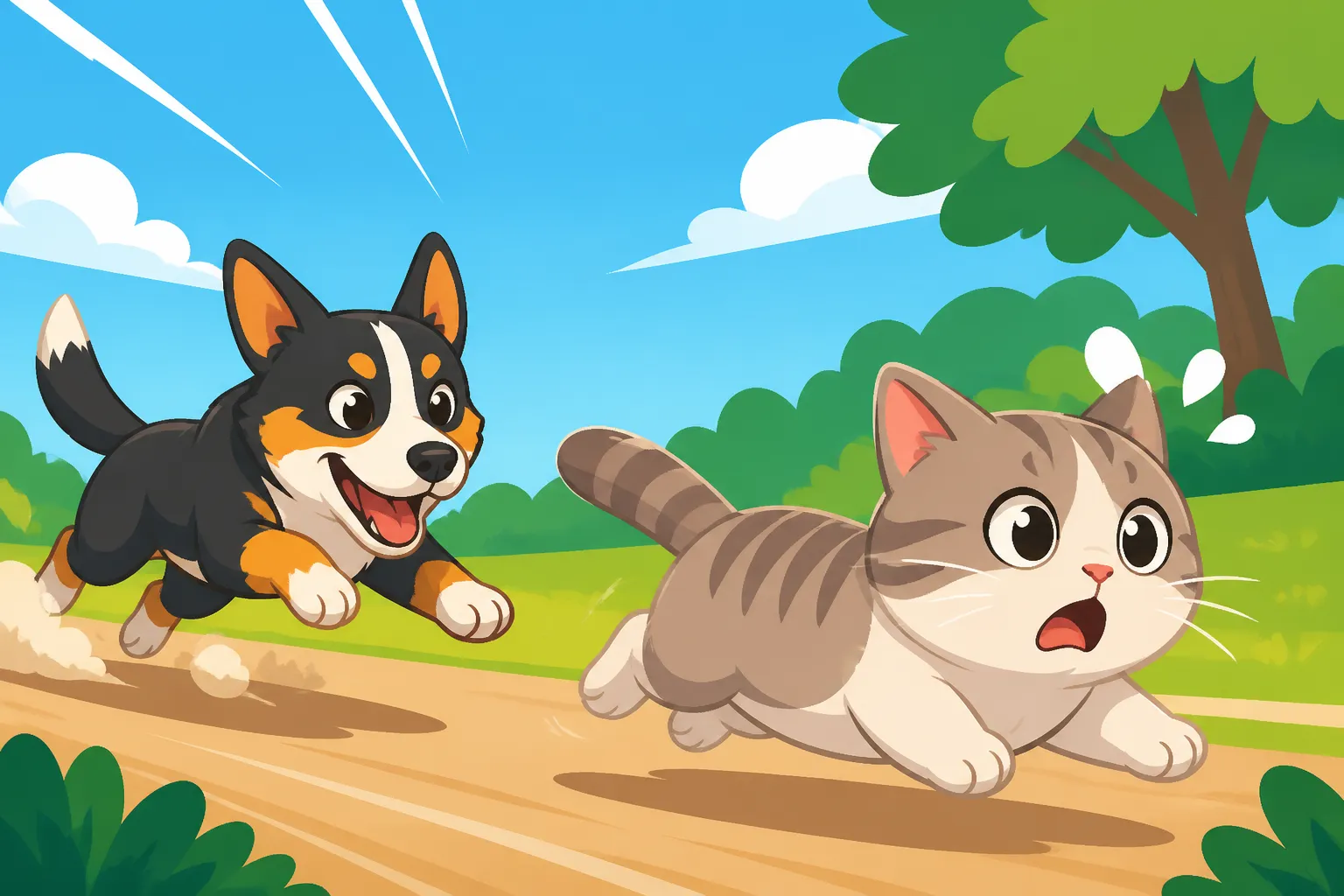
Why a Munchkin Cannot Outrun a Dog Outdoors
One of the most heartbreaking scenarios a cat owner can imagine is their beloved pet facing danger outdoors, especially from a larger, faster animal like a dog. For us Munchkin cat parents, this fear is amplified because our sweet, low-riding companions, despite their surprising agility, are fundamentally disadvantaged in a confrontation. Their short legs, which make them so endearing, also strip them of the crucial escape mechanisms that protect normal-legged felines, making the idea of a Munchkin trying to outrun a dog outdoors a truly terrifying and often futile prospect. This guide will delve into the harsh realities of why a Munchkin cat simply cannot outrun a dog outdoors, highlighting the critical differences that make the open environment a perilous place for them.
The Munchkin's Physical Realities: Built for Flat-Out Speed, Not Evasion
While Munchkins are surprisingly quick on a level floor, their unique physique, defined by their distinguishing short legs, presents significant limitations when it comes to escaping a predator like a dog in an uncontrolled outdoor environment. Their design is a fascinating blend of compact power and inherent vulnerability.
The Short Stature and Ground Clearance
Imagine a race on a flat track: a Munchkin can often hold its own for a short burst. They have a surprisingly powerful stride, and their low center of gravity can make them nimble. But now, picture that race taking place through tall grass, over a patch of rough ground, or through a garden bed with low-lying bushes. Suddenly, the Munchkin's advantage evaporates. Their short legs mean very little ground clearance. What for a normal cat might be a quick hop over a small stone or a dash through light undergrowth becomes a monumental effort, a constant snagging, tripping, and slowing down.
When a Munchkin tries to run through anything other than perfectly smooth terrain, they're essentially plowing through it. Their belly can drag, their short legs get tangled, and their speed is severely compromised. A dog, with its longer legs and higher clearance, can bound over these same obstacles with relative ease, covering ground far more efficiently. The sheer physical effort required for a Munchkin to navigate anything but perfectly flat ground is immense, and in a life-or-death chase, every second and every ounce of energy counts. It’s a bit like asking a sports car designed for a racetrack to perform off-road – it’s just not built for it. You can learn more about how their unique legs affect their movement by reading Why a Munchkin's Legs Are Short but Its Body Is Not.
Limitations in Jumping and Climbing
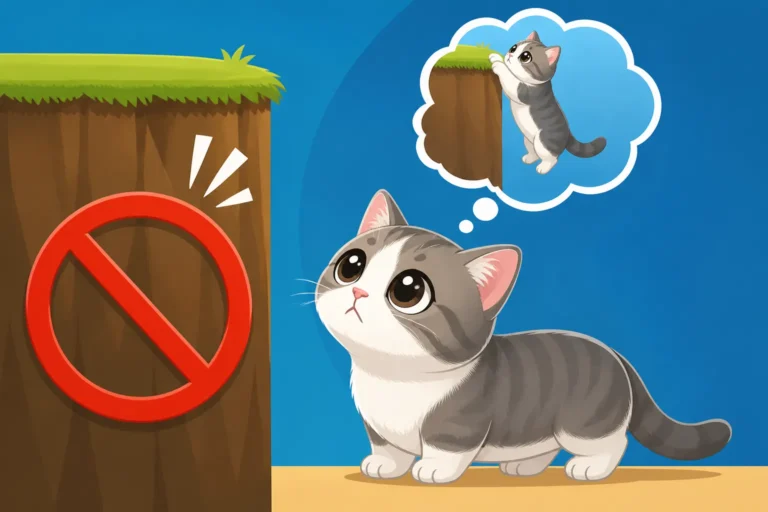
This is perhaps the most critical difference between a Munchkin and a normal cat when it comes to outdoor survival. A typical cat, when threatened, has an instinctive and highly effective escape strategy: go vertical. A quick leap onto a fence, a dash up a tree, or a scramble to the top of a shed provides immediate refuge from most ground-based predators. Dogs, for the most part, can't follow. This vertical escape is a cat's superpower.
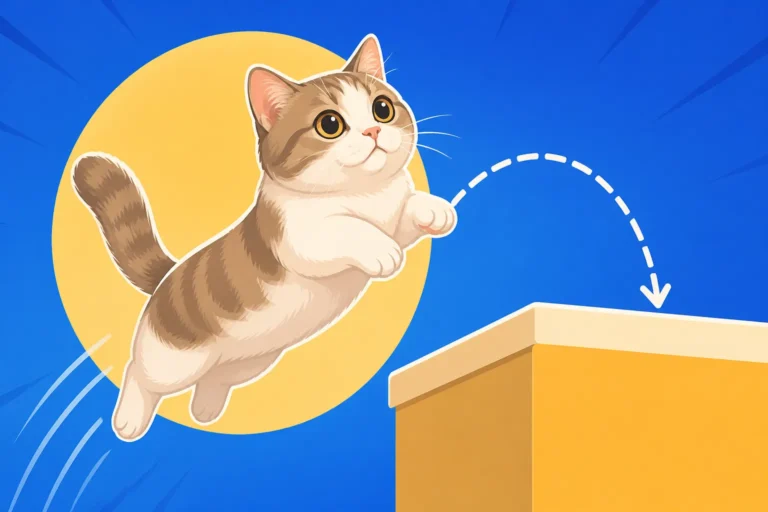
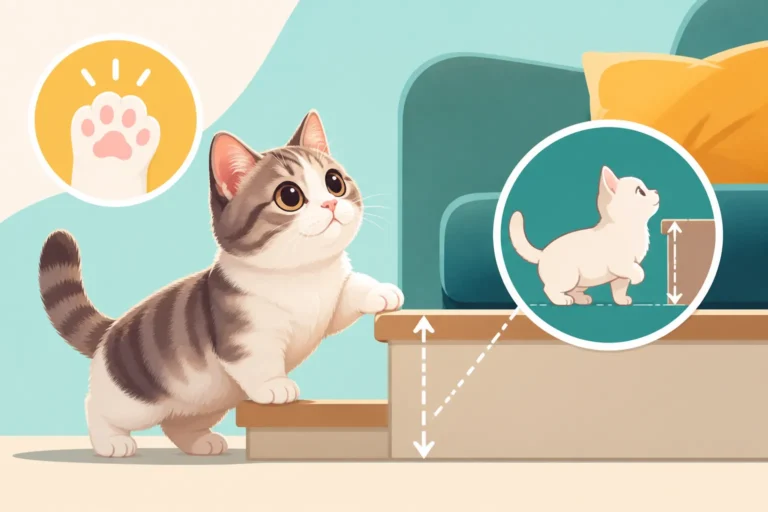
However, a Munchkin cat simply doesn't possess this superpower. Their short legs severely limit their vertical jump. While they can achieve impressive feats of agility, such as using furniture as a staircase indoors, making multiple smaller jumps, these are calculated movements. They are not the explosive, high-leaping escapes that a cat needs to get away from a charging dog. A Munchkin might be able to jump onto a low garden wall or a pile of firewood, but these offer little protection from a determined dog. They cannot scale a six-foot fence, nor can they dart up the trunk of a tree. They are essentially grounded, losing their primary defensive maneuver. For more insights into their jumping abilities, see How High a Munchkin Can Actually Jump. This lack of vertical escape leaves them incredibly vulnerable, as there are very few places outdoors a Munchkin can get to that a dog cannot also reach or at least intimidate them from.
The Predator's Advantage: Speed, Size, and Instinct
When you pit a Munchkin against a dog, you're not just comparing two different species; you're looking at fundamentally different physiological designs and predatory instincts. The deck is heavily stacked against our little short-legged friends.
The Speed and Agility of a Dog
While a Munchkin can surprise you with its bursts of speed on a smooth surface, that speed is often no match for even a moderately fast dog, especially over varied terrain or longer distances. Dogs are, by and large, built for chasing. Their longer legs, powerful hindquarters, and larger lung capacity give them superior acceleration and endurance in a pursuit. Think about it: a Border Collie can outrun most humans and many small animals. Even a medium-sized terrier, with its quick, agile movements, can easily outpace a Munchkin.
Furthermore, a dog's predatory drive means they are often relentless. Once a dog fixates on a small, fleeing animal, its instinct kicks in. It's not just a casual chase; it's often a focused hunt. A Munchkin might have a quick dart or two, but it won't be able to maintain the necessary speed or agility to truly escape a dog that is serious about the chase. The sustained effort required would quickly exhaust a Munchkin, leaving it with no energy for evasive maneuvers or finding a hiding spot. Understanding How Fast a Munchkin Can Run might give you a sense of their indoor speed, but it's a very different story outdoors.
The Disparity in Size and Strength
Beyond speed, there's the undeniable reality of size and strength. A typical housecat, even a large one, is significantly smaller and lighter than most dog breeds. A Munchkin, being on the smaller side of the feline spectrum, is even more diminutive. This size difference means that if a dog catches a Munchkin, the outcome is almost invariably devastating. There's simply no contest in terms of physical strength or defensive capability.
A dog's jaws are powerful, designed for gripping and tearing. A cat's claws and teeth are effective against small prey or other cats, but they offer little defense against a dog weighing many times its own body weight. Once a dog has a Munchkin in its grasp, escape becomes nearly impossible. The sheer force exerted by a dog can cause severe injury or worse, even if the dog's intent isn't purely to kill but merely to "play" or "shake." This is why a larger dog poses such a significant risk to a Munchkin; their size and strength make any encounter potentially lethal. See Why a Large Dog Is a Risk to a Munchkin for more on this critical danger.
The Unpredictable Outdoor Environment: Hidden Dangers
The great outdoors isn't a controlled environment like your living room. It's a chaotic, unpredictable place teeming with elements that conspire against a short-legged cat trying to evade a dog.
Obstacles and Terrain Challenges
Consider the typical backyard or park. You have patches of tall grass, which for a Munchkin can feel like a dense jungle. There are uneven patches of ground, small dips, discarded leaves, branches, and even low-lying plants. Each of these is a potential trip hazard or a speed reducer for a Munchkin. A normal cat might clear a small bush or a garden hose with a single graceful bound. A Munchkin would have to either go around, losing precious seconds, or try to push through, getting slowed down considerably.
Imagine a Munchkin trying to run through a field of wildflowers or a slightly overgrown lawn. Their low belly would be brushing the ground, their short legs struggling to find purchase, and their vision obscured by the vegetation. Meanwhile, a dog would likely be bounding over the same terrain, easily spotting the small cat and closing the distance. Even seemingly innocuous features like a slight incline or a few steps can become insurmountable challenges in a panicked flight. Why a Munchkin Cannot Climb a Fence further illustrates their limits in outdoor evasion.
Lack of Safe Retreats
This point ties into the jumping limitations discussed earlier but merits its own focus within the outdoor context. For most cats, a safe retreat means getting to high ground. This could be the branch of a tree, the roof of a shed, or the top of a tall wall. These elevated perches offer a sanctuary where the cat can observe the threat from a safe distance until it passes.
For a Munchkin, these essential safe retreats are largely inaccessible. If a dog corners a Munchkin in an open yard, the cat has nowhere to go but to try to run horizontally, which we've established is a losing battle. There are no sudden leaps to safety, no quick disappearances into the canopy. The best a Munchkin might hope for is to squeeze under a very low deck or into a tiny crevice, but even those spots might not be quickly accessible or entirely dog-proof. This lack of reliable, accessible high ground makes the outdoor environment incredibly dangerous for them. Why a Munchkin Cannot Escape a Confrontation emphasizes this vulnerability.
Why Outdoor Access is a Grave Risk for Munchkins
Given all these factors, it becomes crystal clear why allowing a Munchkin unsupervised outdoor access is an unacceptable risk. It’s not about restricting their freedom; it’s about safeguarding their lives.
The Instinct to Explore vs. The Inability to Escape
Cats, by nature, are curious creatures. They love to explore, stalk, and observe their surroundings. A Munchkin is no different in its innate curiosity. However, we, as responsible owners, must understand that their physical limitations fundamentally change how they can safely express this curiosity. What might be a thrilling adventure for a normal cat —chasing a butterfly, exploring a new scent—becomes a high-stakes gamble for a Munchkin, particularly when a potential predator like a dog enters the picture.
Their instinct to explore doesn't come with a built-in ability to survive every outdoor threat. They don't know they can't climb that tree or outrun that Labrador. That's where our human responsibility comes in. We need to acknowledge that while they may want to be outside, the world outside our controlled homes is simply not designed for their unique physiology. It's a stark reality, but one that every Munchkin owner must face. For a deeper understanding of their movements, check out How a Munchkin Gets Where It Wants Without Jumping.
Creating a Safe Outdoor Experience
So, what's a loving Munchkin owner to do if their cat yearns for a taste of the outdoors? The answer lies in controlled, supervised, and safe outdoor experiences.
One excellent option is a catio – a secure, enclosed outdoor space that allows your Munchkin to enjoy fresh air, sunshine, and the sights and sounds of nature without the dangers of free-roaming. Catios can range from small window boxes to elaborate multi-level enclosures. When designing one for a Munchkin, remember to incorporate ramps and low-level platforms to accommodate their short legs. You can find many great modular catio components and even full kits on platforms like Amazon that can be adapted for your Munchkin’s needs. What a Munchkin Sized Catio Needs will give you specific ideas for adapting these spaces.
Another possibility is leash training. Yes, cats can be leash trained! Starting young is best, using a comfortable, secure harness (not just a collar, as they can slip out of those). Look for harnesses designed for cats, often available on Amazon, that provide a snug but non-restrictive fit around their chest and shoulders. A gentle, short leash walk in a very quiet, contained area (like a secure backyard with no dog access) can provide supervised outdoor enrichment. Always ensure you are present and vigilant, ready to scoop up your Munchkin at the first sign of any potential threat. Never leave them tethered or unsupervised. For tips on appropriate gear, refer to Which Harness Fits a Munchkin's Body.
It’s crucial to understand that even with leash training, the risks in an open, public space are too high. A sudden loose dog, a loud noise, or an unexpected encounter can turn a pleasant stroll into a panic. The safest approach is to create controlled environments where the specific vulnerabilities of a Munchkin are accounted for and mitigated. If you're ever in doubt, just remember What a Munchkin Does When a Dog Approaches and it will reinforce the need for extreme caution.
The joy of seeing your Munchkin explore can be fulfilled safely, without placing them in situations where their charming, short legs become a critical disadvantage in the face of danger. Prioritizing their safety above all else ensures they can live a long, happy, and truly protected life with you.
Disclaimer
This article is for general informational purposes only and does not constitute professional advice. Laws, prices and regulations vary by location and change over time. Consult a qualified professional for guidance on your specific situation.