Why a Raised Bowl Eases a Munchkin’s Shoulders
For Munchkin cat parents, it’s a constant dance of observation and adaptation. You're always looking for ways to make life just a little bit easier and more comfortable for your adorable short-legged companions. One challenge many owners face, often without realizing it, is how their beloved feline friends eat. Bending down to a floor-level food or water bowl, day in and day out, puts a surprising amount of strain on a Munchkin's delicate shoulders and spine. This guide will help you understand why this happens and how a simple change to a raised bowl can make a world of difference for their long-term comfort and health.
Understanding the Munchkin's Unique Anatomy and Its Impact on Eating
Let's be real, a Munchkin cat is built a little differently, and that's precisely why we adore them. But those charmingly short legs come with a set of ergonomic considerations that standard cat products often overlook. When a long-legged cat bends to eat, it's a relatively easy motion, distributing weight and allowing for a natural curve of the spine. For a Munchkin, it's a whole different story, and understanding this is key to providing them with optimal care.
The Mechanics of Short Legs and Spinal Load
Imagine trying to eat your dinner off the floor without using your hands. You'd likely hunch over, your neck would crane, and your shoulders would bear a disproportionate amount of your upper body's weight. This is a pretty good analogy for what your Munchkin experiences with a traditional floor bowl. Their short legs mean that their chest and belly sit much closer to the ground, requiring a significant forward bend and downward extension of the neck to reach their food.
This isn't just an awkward pose; it's a posture that places continuous stress on their cervical spine (neck) and shoulder joints. While their back itself is of normal length, the short legs mean the entire skeletal structure carries a load that a normal-legged cat's does not, particularly around the front assembly. This constant pressure, repeated multiple times a day for years, can lead to chronic discomfort and even contribute to the premature wear and tear of these crucial joints. It's a fundamental aspect of What the Short Legs Actually Cost a Munchkin in terms of daily wear.
Why Floor-Level Bowls Create Strain
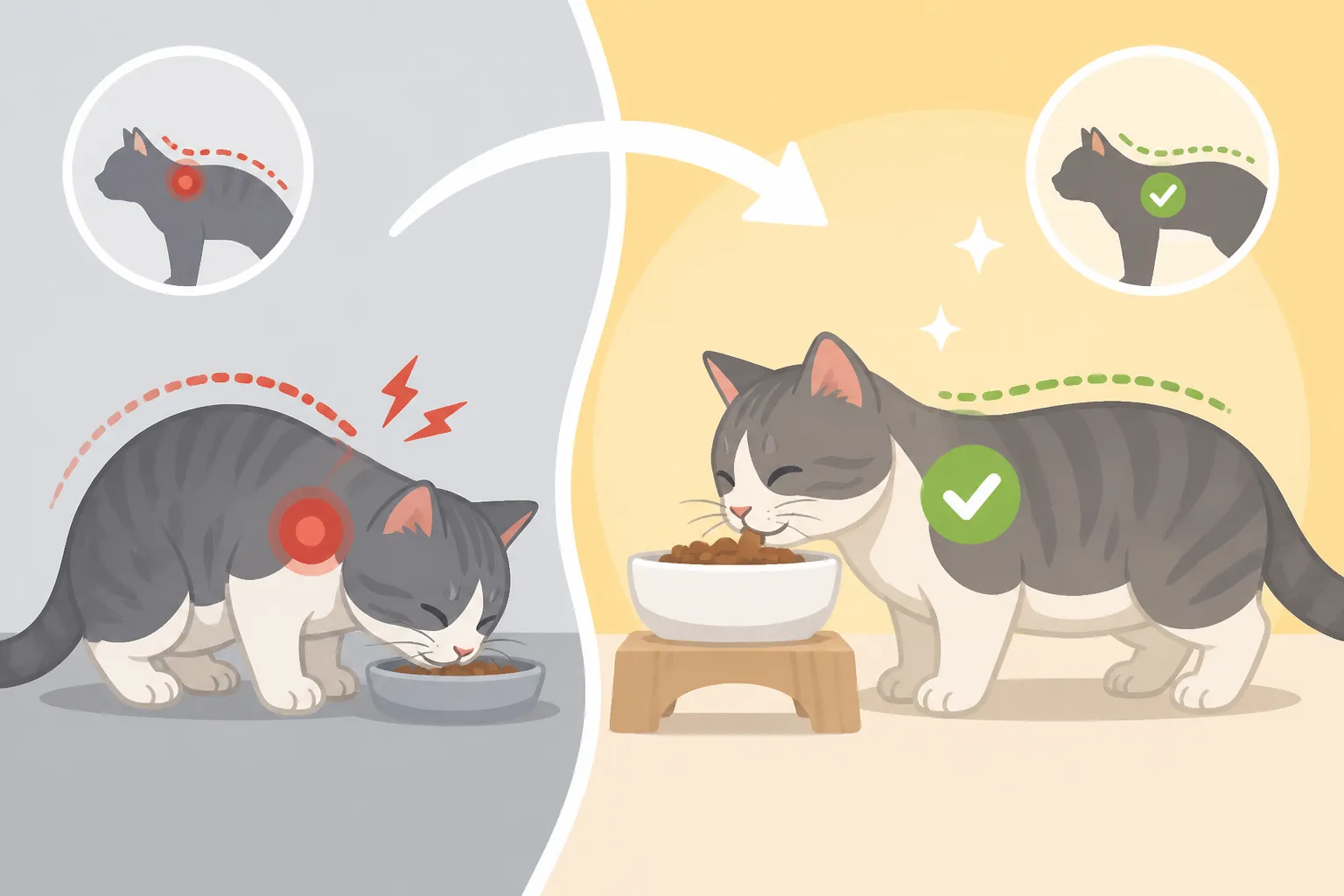
Think about the angle of a Munchkin's neck and shoulders when they're nose-deep in a floor bowl. Their head is angled sharply downwards, and their shoulders are compressed. This isn't just a brief moment of discomfort; eating can take several minutes, and if they're particularly enthusiastic eaters, they might be in this strained position for a good while. Now multiply that by two or three meals a day, plus water breaks, and you're looking at hours of cumulative stress on those sensitive areas over their lifetime.
This sustained posture can lead to a tightening of the muscles around the neck and shoulders, potentially causing pain and reduced flexibility over time. It’s not an immediate, dramatic injury, but rather a slow, insidious process of microtrauma that can build up. Just like a human working at a poorly set up desk might develop chronic neck pain, a Munchkin eating from the wrong height can experience similar issues.
Early Onset of Joint Issues
While Munchkins are generally robust cats, their unique structure means their joints, particularly in the shoulders and elbows, are subjected to different forces than those of a standard cat. Constant straining to reach food can accelerate the development of degenerative joint diseases like osteoarthritis. It’s a sad reality that Why a Munchkin's Shoulders Wear First is a common concern for breeders and vets alike. The impact of gravity combined with repetitive, awkward movements can put those shoulder and elbow joints under immense pressure.
When you see your Munchkin doing the adorable "prairie dog" sit, observing their surroundings on their hind legs, it’s a moment of wonder. But when they are eating, they often have to push their front legs outwards for balance, further exacerbating the strain on their shoulder complex. This early onset of joint issues can severely impact their quality of life as they age, making even simple movements painful. Preventing this strain from the start is one of the most proactive steps you can take for their long-term health.
The Benefits of Raised Bowls for Munchkins
Switching to a raised bowl for your Munchkin might seem like a small adjustment, but the benefits to their overall comfort, posture, and even digestion can be surprisingly significant. It's all about accommodating their natural build and making everyday activities less of a physical chore.
Promoting Better Posture and Spinal Alignment
The most immediate and obvious benefit of a raised bowl is that it allows your Munchkin to eat and drink with their head and neck in a much more neutral, natural position. Instead of craning downwards, their spine can remain relatively straight, and their shoulders are less compressed. Imagine the relief! This improved posture reduces the strain on the cervical vertebrae and the surrounding musculature, preventing the constant microtrauma we discussed earlier.
When a cat eats from a raised bowl, their body isn't forced into an uncomfortable angle. They can stand or sit comfortably, allowing their weight to be properly distributed across their four legs, rather than leaning heavily on their front assembly. This isn't just about comfort; it's about promoting healthier spinal alignment over their lifespan, which is incredibly important for any cat, but especially one with unique conformational aspects.
Easing Digestion and Swallowing
While the primary concern for Munchkins with floor bowls is musculoskeletal strain, there's a secondary benefit to digestion. When a cat eats with their head down, gravity isn't always working in their favor to help food travel down the esophagus. A slightly elevated eating position can aid in the natural passage of food and water, potentially reducing instances of regurgitation, especially for cats who tend to eat quickly or those with sensitive stomachs.
Think of it like this: if you're trying to drink from a water bottle while lying completely flat on your back, it's much harder than sitting upright. The same principle applies here, albeit less dramatically. For Munchkins, an elevated bowl makes swallowing a smoother, less effortful process, contributing to their overall digestive comfort. It's a subtle but meaningful improvement that can make mealtime a more pleasant experience all around.
Enhancing Comfort for All Ages
While younger Munchkins might seem endlessly flexible, preventing strain now can mean a much more comfortable senior life. However, raised bowls are particularly transformative for older Munchkins. As cats age, they often develop arthritis or other joint stiffness. For a senior Munchkin, bending low to eat can become genuinely painful and challenging. At What Age a Munchkin Starts to Stiffen is a common question, and proactively addressing joint health with tools like raised bowls can push that age further out.
An older Munchkin might even start to avoid eating or drinking as much if the act itself causes discomfort. A raised bowl removes this barrier, allowing them to continue enjoying their meals without unnecessary pain. It’s a simple adaptation that supports their mobility and quality of life through their golden years, ensuring they can maintain their independence and dignity at mealtime.
Choosing the Right Raised Bowl System for Your Munchkin
Once you're convinced that raised bowls are the way to go for your Munchkin, the next step is finding the perfect system. It's not just about aesthetics; functionality, material, and adjustability play crucial roles in ensuring maximum comfort and benefit for your short-legged friend.
Ideal Height and Adjustability
The "ideal" height isn't one-size-fits-all, as Munchkins can vary slightly in their leg length, even within the "short-legged" category. The goal is for your cat to be able to eat with their neck in a relatively straight, horizontal line, without having to crane up or down excessively. A good rule of thumb is that the bowl rim should be roughly level with your Munchkin's chest when they are standing comfortably.
Adjustable raised bowls are often the best choice because they allow you to fine-tune the height. This is particularly useful for kittens as they grow, or if you have multiple Munchkins of slightly different heights. Some systems offer multiple height settings, while others might use stackable risers. You might find excellent adjustable options on platforms like Chewy or Amazon, allowing you to experiment to find your cat's sweet spot.
Material and Design Considerations
Beyond height, think about the material and design of the bowls themselves.
- Stainless Steel: This is often recommended by vets because it's non-porous, easy to clean, and resistant to bacteria buildup. It's also durable and doesn't hold odors.
- Ceramic: Ceramic bowls are attractive and heavy, making them less likely to tip. However, they can chip or break, and if they have hairline cracks, bacteria can harbor within them. Ensure they are glazed properly and washed thoroughly.
- Plastic: While often affordable, plastic bowls can scratch easily, creating crevices for bacteria. Some cats can also develop "plastic acne" on their chin. If you opt for plastic, choose high-quality, food-grade options and replace them frequently.
Consider bowl shape too. Wider, shallower bowls can be more comfortable for cats, as they prevent "whisker fatigue," where their sensitive whiskers brush against the sides of a deep bowl. Some raised feeders also come with a slight tilt, which can further aid in keeping food accessible and reducing neck strain.
Here's a quick comparison of common bowl materials:
| Feature | Stainless Steel | Ceramic | Plastic |
|---|---|---|---|
| Durability | Very high, shatterproof | High, but can chip/break | Variable, can scratch |
| Hygiene | Non-porous, easy to sterilize | Non-porous if glazed, inspect for cracks | Porous, scratches harbor bacteria |
| Weight | Lightweight to medium | Heavy, stable | Very lightweight, can slide |
| Aesthetics | Modern, clean look | Wide range of colors/designs | Wide range of colors/designs, less durable |
| Health Risks | Minimal | Minimal if undamaged, lead-free | Possible "plastic acne," chemical leaching |
| Cost | Moderate | Moderate to high | Low to moderate |
Where to Find Suitable Options
You're in luck because the market for pet products has really expanded to cater to specific needs. Major online retailers like Chewy and Amazon offer a vast selection of raised pet bowls and feeders. You'll find everything from simple elevated stands with standard bowls to elaborate, adjustable feeding stations. Many brands now recognize the benefit of ergonomic feeding, and a quick search for "elevated cat bowls" or "raised pet feeder adjustable" will yield plenty of results.
Some pet supply stores might also carry options, allowing you to see them in person before buying. Don't hesitate to read reviews from other cat owners, especially those with smaller breeds, to get a sense of what works best in real-world scenarios.
Integrating Raised Bowls into Your Munchkin's Routine
Making the switch to a raised bowl is a positive step, but it's important to introduce it thoughtfully to ensure your Munchkin accepts and benefits from the change. Remember, cats are creatures of habit, and even a beneficial change can be met with initial skepticism.
Gradual Introduction and Observation
Don't just swap out their old bowl for a new, raised one and expect immediate acceptance. Cats can be finicky! Instead, introduce the raised bowl alongside their current floor-level bowl for a few days. Put a small amount of their favorite food in the new bowl, while still providing their usual meal in the old one. This allows them to investigate and get used to the new setup at their own pace.
Watch how they approach and use the raised bowl. Are they comfortable? Does the height seem right? Some cats might take to it immediately, while others might need a week or two to fully transition. Once you see them consistently using the raised bowl, you can gradually phase out the old one. If they seem hesitant, try adjusting the height slightly or placing a favorite toy near the new bowl to create positive associations.
Placement and Accessibility
Where you place the raised bowls matters. Just like with regular bowls, they should be in a quiet, low-traffic area where your Munchkin feels safe and secure while eating. Avoid placing them right next to their litter box. If you have multiple cats, consider having multiple feeding stations to prevent resource guarding, even if only one is a Munchkin.
Ensure the area around the bowl is easy for your Munchkin to access and stand on. A non-slip mat underneath can prevent the feeder from sliding, especially if your cat is an enthusiastic eater. If your Munchkin is particularly short or an older cat with limited mobility, make sure there are no obstacles they have to navigate or jump over to reach their food and water.
Comprehensive Joint Care Beyond Bowls
While raised bowls are fantastic for alleviating shoulder and neck strain, they are just one piece of the puzzle when it comes to a Munchkin's joint health. A holistic approach is always best. This includes vigilant weight management, as every extra gram of weight puts additional strain on their short legs and spine. Weight Control Is the Whole Munchkin Care Plan is not an exaggeration for this breed. Discuss with your vet the best diet and portion sizes for your cat's age and activity level.
Consider incorporating joint supplements into their diet, especially as they approach middle age. Ingredients like glucosamine, chondroitin, and Omega-3 fatty acids can support cartilage health and reduce inflammation. Your vet can recommend suitable options and proper dosages. Which Joint Supplements Suit a Munchkin is a conversation you should definitely have with your veterinarian. Regular, gentle play on the floor can also help maintain muscle tone without putting undue stress on their joints.
Recognizing Signs of Discomfort
Even with the best setup, it's crucial to remain observant and recognize any signs of discomfort in your Munchkin. Cats are masters at hiding pain, so you'll need to pay close attention to subtle cues.
Watch for changes in their eating habits:
- Are they suddenly eating less or taking longer to finish meals?
- Are they reluctant to approach the bowl?
- Are they trying to eat from an awkward position even with the raised bowl?
- Do they vocalize while eating?
Beyond mealtime, look for changes in their overall mobility:
- Are they less active or playful?
- Are they having trouble jumping even small distances they used to manage?
- Do they show stiffness, especially after resting?
- Do they react negatively when you gently touch their neck or shoulders?
If you notice any of these signs, don't hesitate to consult your veterinarian. They can conduct a thorough examination, assess their joint health, and recommend further steps, which might include pain management or physiotherapy. Being proactive and observant is the greatest gift you can give your Munchkin, ensuring they live a long, comfortable, and happy life.
Disclaimer
This article is for general informational purposes only and does not constitute professional advice. Laws, prices and regulations vary by location and change over time. Consult a qualified professional for guidance on your specific situation.