Which Show the Munchkin Debuted At
A lot of Munchkin history gets compressed into one sentence: the breed debuted at Madison Square Garden. That is the essential answer, but it leaves out what “debut” means, who organized the show, and why appearing there did not make the Munchkin an established breed overnight. Here’s how to separate the public introduction from the steps that followed.
The Munchkin debuted at Madison Square Garden
The 1991 show in New York City
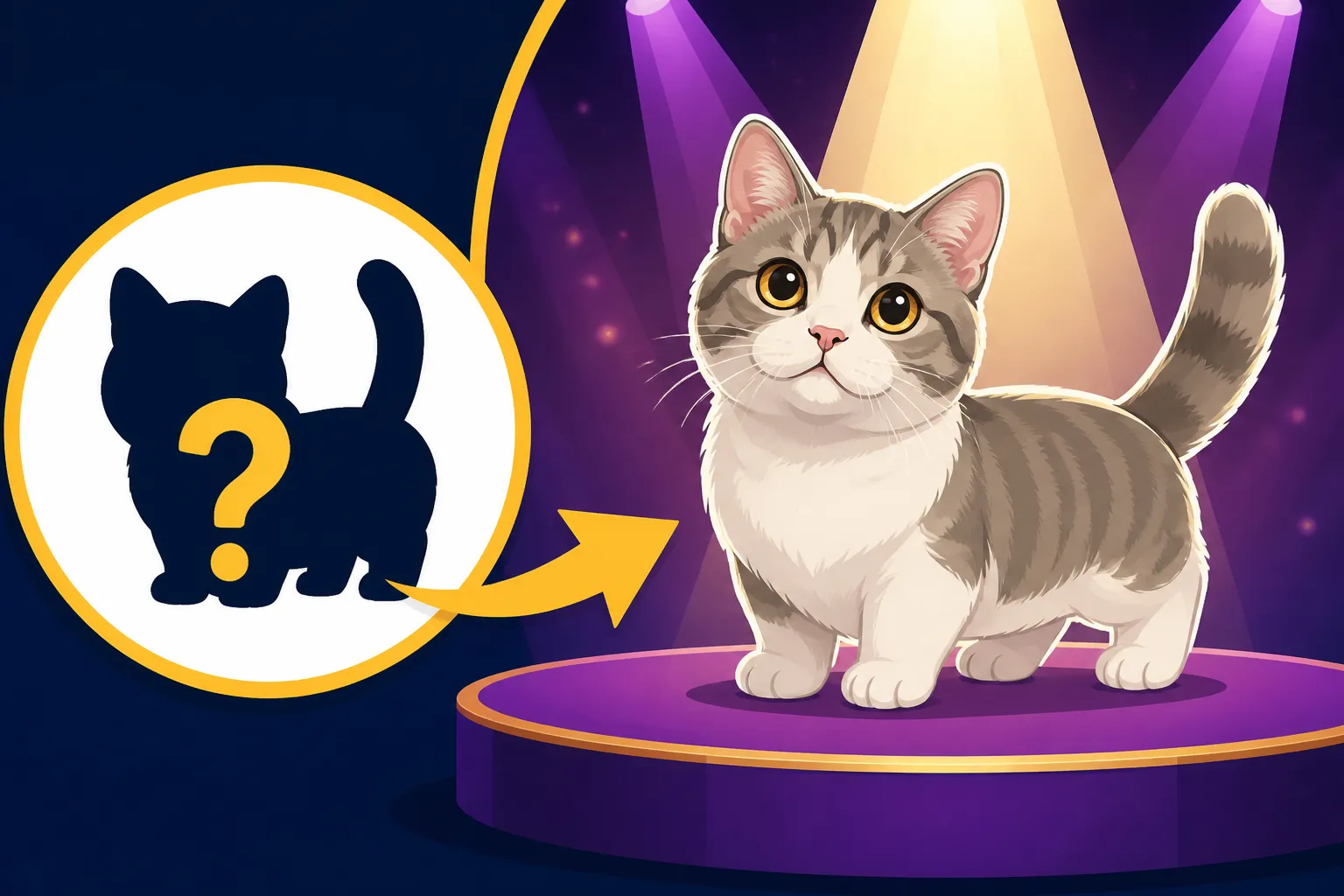
The Munchkin made its widely reported public debut at a cat show held at Madison Square Garden in New York City in 1991. It was an important first chance for a large audience to see the short-legged cats presented as a developing breed, rather than encounter them only as unusual-looking individual cats.
Madison Square Garden is the answer most people are looking for when they ask which show the Munchkin debuted at. But it helps to be precise about the word debut: this was a public introduction, not a declaration that every cat organization accepted the Munchkin or that the breed had already completed a formal recognition process.
The story of the cats themselves began well before the show. In Louisiana, a short-legged cat named Blackberry became central to the early breeding history. One of her kittens, Toulouse, also became important to the developing population. For background on that beginning, see Sandra Hochenedel and the First Munchkin and Which Cat Behind the Munchkin Was Named Blackberry.
Why a public debut is not the same as breed recognition
A cat appearing at a show can attract attention without being eligible for full competition as a recognized breed. Cat registries have their own processes for evaluating a proposed breed, and those processes can involve developing a standard, collecting information about the cats, and deciding how they may participate in shows.
That distinction matters with the Munchkin because the 1991 appearance is often described as though it were the moment the breed was officially accepted. It was not. The show introduced the cats to a broad audience and helped bring the emerging breed into public discussion. Formal recognition and show status came through later decisions, which are separate milestones.
| Milestone | What it means |
|---|---|
| Public debut | The cats are presented to an audience as a developing breed |
| Registry evaluation | A cat organization considers the breed’s status and requirements |
| Registration or development program | The registry records cats or supports a defined process toward recognition |
| Championship status | Eligible cats can compete for championship titles within that registry |
So if someone asks, “Which show did the Munchkin debut at?” the direct answer is the 1991 cat show at Madison Square Garden. If they ask, “Was it fully recognized there?” the answer is no. For a closer look at the public introduction, read When the Munchkin Was First Shown Publicly.
What the Madison Square Garden appearance did and did not change
It gave people a first high-profile look
A debut at a well-known venue gave the breed visibility. People could see the cats in person, compare them with familiar domestic cats, and begin asking how the short legs were inherited and whether they affected movement or health. The event helped turn a developing breeding story into a public conversation.
That attention can be a mixed blessing. A distinctive appearance is easy to remember, but it can also encourage quick judgments based on looks alone. Some observers were fascinated; others raised concerns about deliberately breeding for short legs. Those questions did not disappear after the show. They became part of the Munchkin’s longer history.
For readers interested in how older examples of short-legged cats fit into the story, Whether Short Legged Cats Existed Before the Munchkin looks at the question beyond the 1991 event. The public debut was a notable moment, but it was not the beginning of every short-legged-cat account or the end of the debate.
It did not settle the argument about the breed
A show appearance cannot, by itself, establish that a breed is healthy, ethically bred, or accepted by every registry. Those are different questions, and the Munchkin has remained controversial partly because people weigh them differently. Supporters may focus on the cats’ everyday behavior and the breeding practices they consider responsible. Critics may question whether intentionally selecting for shortened legs is compatible with good welfare.
That disagreement is one reason it is useful to distinguish historical facts from opinions about the breed. The date and venue of the debut describe an event. They do not settle whether someone should breed, buy, or show a Munchkin. For a deeper look at the registry’s role, see What TICA's 1994 Program Meant for the Munchkin and Why a Judge Resigned Over the Munchkin.
The same separation helps when reading modern breed descriptions. A cat’s show history tells you something about how its public profile developed; it does not replace careful consideration of its health, movement, and living needs. If the history has prompted you to explore those practical questions, Whether a Munchkin Is the Right Cat for You covers the household decision from a broader perspective.
How the debut connects to the Munchkin’s show history
The path from public attention to registry milestones
The Madison Square Garden appearance came before the later registry milestones that shaped the Munchkin’s organized show history. TICA’s involvement and subsequent decisions gave the breed a more formal place within that organization’s framework. Those steps were not interchangeable with the initial public introduction: a cat can be seen by the public long before a registry grants it a particular status.
It is also worth avoiding the impression that all registries share the same rules. Cat organizations can differ in which breeds they accept and what kinds of competition they permit. That means “the Munchkin is recognized” may need a follow-up question: recognized by which organization, and for what purpose? A breed’s status in one registry does not automatically determine its status in another.
The later movement toward championship competition was another distinct stage. How Long the Munchkin Took to Reach Championship explains that progression, while What Championship Status Changed for the Munchkin focuses on what that status meant in practice.
Why the date is sometimes described differently
People may encounter slightly different descriptions of the Munchkin’s “first” show because writers sometimes use debut loosely. One person may mean the first well-known public presentation; another may mean the first show under a registry program, or the first time cats were eligible for a certain class of competition. Those events can occur at different points in a breed’s development.
When comparing accounts, look for the specific event being described. Does the writer mean the Madison Square Garden appearance in 1991? A later registry program? Or a later step toward championship status? Once those milestones are separated, the accounts are easier to reconcile.
A quick way to keep the timeline straight is to remember that public attention came first, followed by registry processes and later show-status decisions. The Madison Square Garden event is the answer to the question about the Munchkin’s public debut, not a shorthand for every later milestone in its history.
Why the 1991 debut still matters
It helps explain the breed’s public identity
The debut matters because it marks a point when the Munchkin became visible to a much wider audience. Once people saw the cats presented together, the breed’s defining physical feature became central to public discussion. The cats were no longer just an unusual story from Louisiana; they were being introduced as a deliberate, developing breed.
That visibility shaped the questions that followed. People wanted to know where the cats came from, how the trait was passed on, and what the short legs meant for movement and welfare. The event did not answer all those questions, but it made them harder to ignore. For the breed’s name and its popular associations, see Why the Munchkin Was Named After the Wizard of Oz.
It is useful context, not a recommendation
A historical milestone can help explain why the Munchkin became well known, but it should not be treated as an endorsement or as proof that the breed is right for a particular home. Anyone moving from curiosity about the 1991 show to practical ownership research should consider the cat’s needs, the breeder’s practices, and the household environment separately from the breed’s public profile.
For instance, a prospective owner might research low-access litter boxes, safe routes onto furniture, grooming, and routine veterinary care. Retailers such as Chewy may be one place people look for basic cat supplies, but the important step is choosing equipment that suits the individual cat and asking a veterinarian about health questions. Chewy’s product listings can help with comparing ordinary supplies, while a history article cannot tell you what a particular cat needs. And if the Madison Square Garden story simply sparked interest, there is no need to turn that interest into an immediate purchase decision.
The short version is straightforward: the Munchkin’s widely reported public debut was at a cat show at Madison Square Garden in 1991. The fuller story is that this appearance introduced the cats to a larger audience; registry evaluation and later show milestones came afterward, and the debut itself did not settle the debates surrounding the breed.
Disclaimer
This article is for general informational purposes only and does not constitute professional advice. Laws, prices and regulations vary by location and change over time. Consult a qualified professional for guidance on your specific situation.