Why a Munchkin Tries the Same Jump Repeatedly
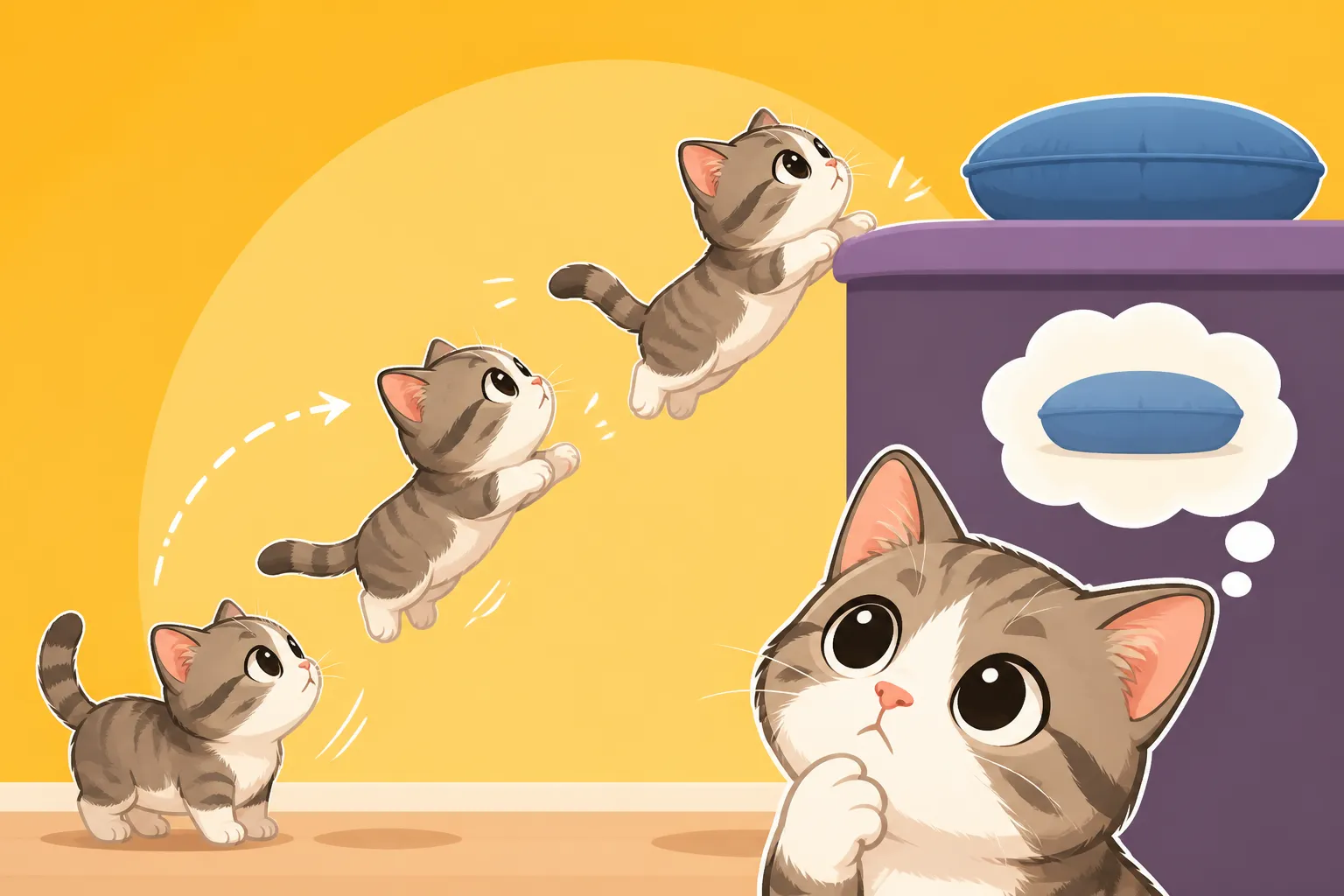
It can be incredibly endearing, yet sometimes frustrating, to watch your little Munchkin cat try, try, and try again to jump onto a piece of furniture that always seems just out of reach. You might see them eyeing the armchair, twitching their tail, making the same little preparatory crouch, only to fall short or give up mid-air. It leaves many of us wondering, "Why do they keep doing this? Don't they know their limits?" This guide is here to shed some light on this persistent behavior, exploring the unique physical realities of the Munchkin, their inherent feline instincts, and how we, as their loving human companions, can understand and better support their attempts to navigate their world.
Understanding the Munchkin's Physical Limitations
Let's be honest, those short legs are the defining feature of a Munchkin, and while they're undeniably cute, they completely change the physics of how a cat moves through the world, especially when it comes to vertical aspirations. It's not that your Munchkin doesn't want to reach the top; it's that their body isn't always cooperating with their brain's intentions.
The Mechanics of a Short-Legged Jump
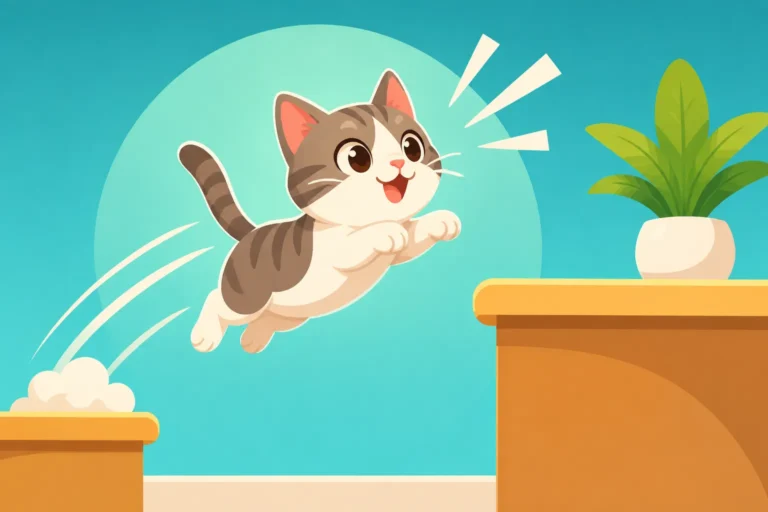
When a normal-legged cat prepares for a jump, they load their powerful hind legs like springs, extending their spine and using their long limbs for both propulsion and leverage. A Munchkin, however, has significantly shorter leg bones, particularly in their upper limbs. This means they have less leverage and less overall height to generate the necessary upward force. Their take-off isn't as explosive, and their trajectory is often flatter and less vertical. You might notice them having to wind up more, or taking a running start, trying to compensate for that lack of vertical power.
It's a common misconception that Munchkins can't jump at all; they absolutely can, but their maximum jump height is considerably lower than that of their long-legged counterparts. Think about it from their perspective: they might look at a surface, gauge the distance, and their feline brain calculates a jump. But the physical execution simply can't match the intent if that surface is truly too high. This is why you often see them How High a Munchkin Can Actually Jump, proving they have the instinct, just not always the reach.
Misjudging Distance and Height
Cats are masters of spatial awareness, usually. They have incredible depth perception and an innate ability to assess distances before leaping. However, for a Munchkin, this internal calibration might be a constant work in progress. While their instincts tell them where they want to be, their actual physical capabilities can lead to repeated misjudgments. They might see a sofa or a chair, know it's a prime napping spot, and think they can make it because the desire is so strong.
When they repeatedly try and fail, it’s not necessarily a sign of a lack of intelligence, but rather a persistent effort to reconcile their natural feline drive with their unique physical form. They’re essentially running their own little experiments, testing the boundaries of their short legs again and again. Each attempt, whether successful or not, gives them more data about their environment and their own body, even if the outcome remains the same for that particular obstacle.
The Instinct to Climb and Explore
Despite their short stature, Munchkin cats are still, at their core, cats. And cats, by their very nature, are driven to climb, explore, and survey their surroundings from elevated positions. This isn't just about curiosity; it's deeply rooted in their evolutionary history.
The Drive for High Ground
For centuries, climbing has been a vital survival strategy for felines. High places offer a vantage point for spotting prey, a safe retreat from predators or rivals, and a sense of security. Even though our pampered housecats rarely face these specific threats, the instinct remains strong. Your Munchkin's desire to reach the top of the bookshelf, the kitchen counter, or even just the back of the sofa isn't just a whim; it's a fundamental part of being a cat. This intrinsic drive is often why Why a Munchkin Cannot Make the Kitchen Counter is such a common frustration point for both cat and owner.
When a Munchkin repeatedly tries a jump, they're often responding to this primal call. They see a desired spot, perhaps a sunbeam on a windowsill or a cozy blanket draped over a chair, and their internal compass points them upwards. The short legs are an obstacle to this instinct, creating a loop of desire and limited execution. It’s like watching a dedicated athlete with an injury; they still have the drive to perform, even if their body temporarily limits their capabilities.
Observing the World from Above
Cats are naturally observant creatures, and a higher perch gives them a better view of their territory. From an elevated position, they can monitor household activity, watch birds outside a window, or simply feel more secure knowing they have a full panoramic view of their domain. For a Munchkin, achieving this coveted high ground can be a constant challenge, which is why they might repeatedly attempt to reach a favorite spot.
Imagine the frustration of seeing everything happening around you, but always from ankle height. While they adapt incredibly well to floor-level living, there's still an inherent satisfaction in being above the fray. They are trying to participate in this fundamental feline behavior, even if it takes multiple attempts or a creative approach, like How a Munchkin Uses Furniture as a Staircase, to achieve their goal.
Learning and Adapting: Trial and Error
Cats are incredibly intelligent and adaptive, and Munchkins are no exception. Their repetitive jumping isn't always just hopeful stubbornness; it's often a form of active learning and problem-solving, albeit one that sometimes yields predictable results.
Mapping the Home Environment
Just like any cat, a Munchkin needs to understand the layout and limitations of their home. For a normal cat, this might involve learning which surfaces are stable for landing or which curtains are easy to climb. For a Munchkin, it's about rigorously testing every potential vertical pathway. Each jump, whether successful or not, contributes to their mental map of what's possible and what isn't. They're gathering data points, refining their understanding of their own body's interaction with the environment.
They might try a jump, fail, and then immediately look for an alternative route. Perhaps a stack of books, a strategically placed stool, or even your leg could become part of their makeshift staircase. This trial-and-error approach is a core part of feline cognition, and for Munchkins, it's particularly pronounced when it comes to overcoming their physical unique aspects. They're constantly assessing, adapting, and finding creative solutions to reach their desired destinations.
The Persistence of a Determined Cat
If you've ever owned a cat, you know they can be incredibly persistent when they want something. Whether it's demanding attention, insisting on a particular toy, or trying to get to a specific spot, cats have a remarkable ability to keep trying. For a Munchkin, this persistence is amplified by their need to find solutions to their vertical challenges. They're not just being stubborn; they're driven by deeply ingrained instincts and a desire to participate fully in their feline world.
This persistence can be charming to watch, but it's also important to know When to Stop a Munchkin Attempting a Jump if it looks like they're putting themselves at risk or causing undue strain. They might try the same jump repeatedly, not because they've forgotten they failed before, but because the reward of reaching that spot is still perceived as high, or they're hoping that this time they'll find that extra inch of propulsion. It’s a testament to their spirit, but also a call for us to help them achieve their goals more safely.
Environmental Factors and Owner Intervention
Our homes, designed for humans with long legs and opposable thumbs, often present an unintended obstacle course for a Munchkin. Understanding what motivates their persistent jumping and how we can adapt their environment is key to their well-being and happiness.
Irresistible Targets
What is your Munchkin trying to reach? Often, it's something incredibly appealing: a sunny spot on a high shelf, a favorite toy left on a table, or even just the top of a dresser where they can feel safe and observe. The more appealing the target, the more persistent your Munchkin will be in trying to reach it. It could be a simple, soft blanket on a windowsill that just screams naptime, or a food puzzle that has rolled under the sofa. If they see something they desire, they will plot, plan, and attempt to conquer the vertical space separating them from it.
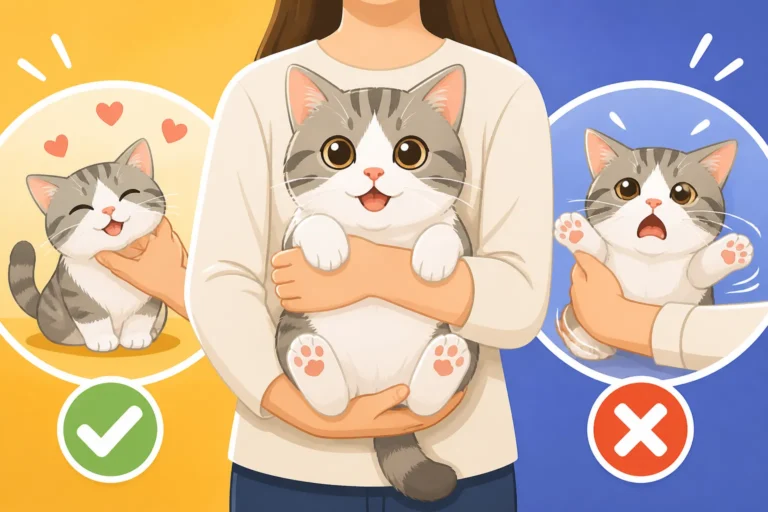
Sometimes, the "target" is you! Many Munchkins love to be up high with their people. If your favorite cuddle spot is on the sofa or bed, and your Munchkin repeatedly tries to jump up to join you, they're not just trying to reach furniture; they're trying to reach you. This is often when How Much a Munchkin Talks When It Wants Lifting becomes apparent, as they learn to communicate their desire to be brought up to your level.
Creating an Accessible Home
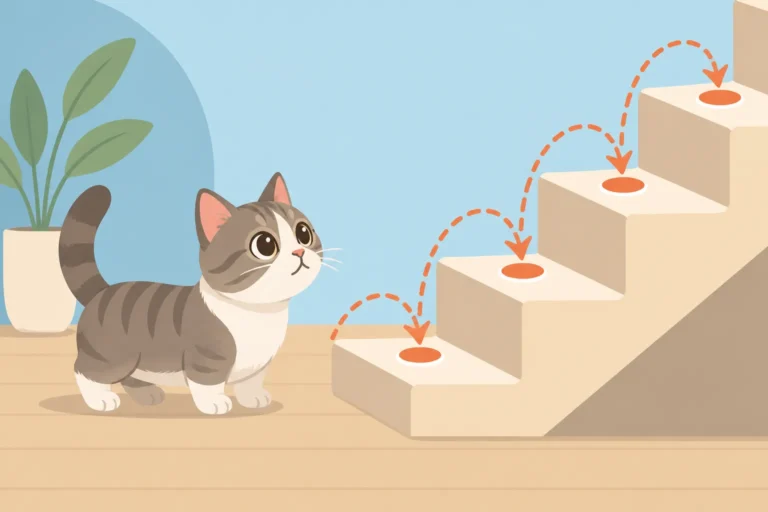
The best way to help a persistently jumping Munchkin is to make their environment more accessible. This means thinking about every piece of furniture, every window, and every cozy corner from their perspective. Ramps and steps are not luxuries; they are essential equipment for a Munchkin. You can find a wide variety of pet ramps and steps on Amazon designed for small dogs and cats, which are perfect for Munchkins. These allow them to ascend to sofas, beds, and even window perches without the strain of jumping. Remember, Ramps and Steps Are Munchkin Equipment, Not Luxuries!
Consider items like low-entry cat trees with closely spaced platforms, or even strategically placed ottomans and sturdy boxes that create a staircase effect. These modifications don't just reduce frustration; they also help protect your Munchkin's joints from the repeated impact of jumping and falling short. When setting up a cat tree, remember to consider Which Cat Tree Layout Suits a Munchkin to ensure the platforms are close enough for easy, safe ascent.
Here's a quick comparison of accessible solutions for Munchkins:
| Accessibility Solution | Best Use Case | Pros | Cons |
|---|---|---|---|
| Pet Ramps | Beds, sofas, window sills | Gentle incline, easy on joints, versatile | Can be bulky, takes up floor space |
| Pet Steps/Stairs | Sofas, chairs, lower beds | More compact than ramps, easy to position | Still requires some lifting of legs, can be steeper |
| Low-Entry Cat Trees | Vertical climbing, observation | Provides safe height, multiple perches | Needs careful platform spacing, can be expensive |
| Strategic Furniture | Creating "staircases" (ottomans, sturdy boxes) | Uses existing items, flexible, cost-effective | May not be aesthetically pleasing, can shift |
| Lift-Assisted Access | Direct interaction with owner (laps, beds) | Instant gratification, bonding experience | Relies on owner presence, doesn't build independence |
Remember that teaching them to use these aids might take a little patience. How to Teach a Munchkin to Use Steps often involves positive reinforcement and gentle guidance.
When Repetitive Jumping Becomes a Concern
While persistence is admirable, for a Munchkin, repeated jumping can sometimes cross the line from cute determination to a potential health concern. It's crucial for owners to understand when to intervene and how to recognize signs of strain.
Signs of Strain or Discomfort
Repeatedly attempting jumps that are too high, or constantly landing awkwardly, can put stress on a Munchkin's joints and spine. Unlike long-legged cats, whose bodies are designed to absorb impact more efficiently, a Munchkin's unique conformation means their joints, especially in their shoulders and elbows, bear a heavier load. If your Munchkin is trying the same jump repeatedly and showing signs of discomfort afterward, it's time to pay close attention.
Look for subtle cues: limping, reluctance to move, sensitivity when touched, or a change in their usual enthusiastic play. They might start avoiding certain areas they once tried to jump to, or become vocal after an attempt. What Happens When a Munchkin Misjudges a Jump isn't always just a harmless fall; it can lead to aches and pains over time. If you notice any of these signs, a vet visit is in order to rule out any underlying pain or developing joint issues. They might be trying the same jump not just out of instinct, but because they're struggling with the way they land or launch.
The Long-Term Impact on Joints
The constant impact and strain from repeated jumping, especially if landing awkwardly, can contribute to the premature development or worsening of conditions like osteoarthritis. While joint problems are a natural part of aging for many cats, the Munchkin's unique leg structure means they can be more susceptible to early wear and tear, particularly in their front legs. This is why Why a Munchkin's Shoulders Wear First is a significant concern for the breed.
To mitigate this, providing ramps and steps isn't just about convenience; it's a preventative measure for long-term joint health. Ensuring their diet supports joint health with appropriate supplements, as recommended by your vet, can also make a big difference. Regular, gentle exercise that doesn't involve high-impact jumps, like playing with wand toys at floor level, helps keep their muscles strong without putting excessive stress on their joints. You want to enable them to be an active, happy cat without inadvertently causing them harm down the line.
Ultimately, your Munchkin's repeated jumping attempts are a blend of innate feline drive, their unique physical makeup, and their intelligent efforts to understand and interact with their world. By providing accessible solutions and carefully observing their behavior, you can ensure they lead a happy, comfortable life, full of successful climbs – even if they happen via a ramp rather than a leap!
Disclaimer
This article is for general informational purposes only and does not constitute professional advice. Laws, prices and regulations vary by location and change over time. Consult a qualified professional for guidance on your specific situation.