How a Munchkin Changes Direction at Speed
Many people, when they first encounter a Munchkin cat, can't help but wonder if those adorable short legs mean they're going to be slow or clumsy. It's a natural assumption, seeing a cat built so differently from the long-legged athletes we typically imagine. But the truth is, Munchkins are surprisingly adept at navigating their world, and one of the most fascinating aspects of their movement is how skillfully they can change direction at full tilt. This guide will dive deep into the unique mechanics that allow these spirited cats to pivot and turn with remarkable speed and grace.
The Munchkin's Unique Agility and Low Center of Gravity
It's easy to look at a Munchkin and assume their short stature limits their overall agility. While they certainly have limitations when it comes to vertical leaps, their unique physique actually grants them a distinct advantage when it comes to speed and maneuverability on flat surfaces, particularly in tight spaces. Their low-slung bodies aren't just cute; they're a finely tuned machine for quick, ground-level navigation.
Understanding the Physics of a Low Profile
Think of it like a sports car versus an SUV. A sports car is built low to the ground for maximum stability and cornering ability, while an SUV is taller for clearance but less stable at high speeds around bends. Similarly, a Munchkin's short legs keep its center of gravity incredibly low to the ground. This isn't just a minor detail; it's a fundamental aspect of their biomechanics that dictates how they interact with their environment. Their body mass is distributed very close to the surface they're running on, which significantly reduces the leverage that centrifugal force can exert when they're trying to turn rapidly.
This inherent stability means that when a Munchkin is darting across the living room carpet, chasing a feather toy, it's far less likely to lose its footing or topple over than a long-legged cat might be when attempting the same sharp turn. Imagine a child running with their arms outstretched for balance versus a more stable toddler with a naturally low stance. The Munchkin embodies that low, stable, powerful stance, making abrupt changes in motion feel almost effortless to them. They use this to their advantage constantly, whether they're weaving through chair legs or making a surprise ambush from behind the curtains.
The effect of this low center of gravity is particularly noticeable during sudden stops and starts. A Munchkin can go from a full sprint to a dead stop, or abruptly shift direction, without a noticeable wobble or loss of momentum, all thanks to that close-to-the-ground stability. It’s like their body is hugged tightly to the floor, giving them an almost glued-on traction that many other cats don't possess in the same way. This is a crucial element that allows them to execute those surprising changes in direction.
Furthermore, this low profile means they have less "air" to contend with when moving at speed. There's less body mass extended upwards to be influenced by air resistance or to create instability. Every movement is compact and efficient, translating into energy that is primarily focused on propulsion and directional control. This makes them incredibly efficient little runners and dodgers, even if they aren't scaling the highest bookshelves.
Short Legs, Quick Pivots: The Mechanics of Turning
Now, let's talk about the actual mechanics of how those short legs allow for such quick pivots. When a Munchkin needs to change direction, they don't have long, sweeping limbs to swing around. Instead, their short legs allow for incredibly rapid, compact movements. Their front paws act almost like anchors, digging in and providing a pivot point, while their powerful hind legs drive them through the turn. This isn't a graceful, arcing turn; it's more of a quick, almost ferret-like dart and shift.
Their muscular development also plays a key role. Despite their short limbs, Munchkins often have strong, well-defined musculature, especially in their hindquarters. This allows them to generate significant propulsive force for acceleration and to quickly adjust their body alignment during a turn. They can effectively "dig in" with their front paws and then "push off" with their rear, executing a very tight radius turn that would be difficult for a cat with longer legs to manage without losing balance or momentum. This precise coordination is what allows them to appear so agile.
It’s truly a sight to behold when a Munchkin is in full play. They don't just run; they weave, they duck, and they spin. If you've ever watched a small, quick animal like a weasel or a ferret navigate a cluttered space, you'll see similarities in the Munchkin's movement pattern. They use their entire body, including their tail as a counterbalance, to facilitate these quick shifts. The tail acts like a rudder, helping them to adjust their trajectory mid-motion, which is essential for maintaining control during high-speed directional changes.
This ability to pivot quickly is also why they excel in games of chase on level ground. They can dodge around obstacles, cut corners sharply, and completely throw off a pursuer with their sudden shifts. It's not just about running fast in a straight line, but about the finesse and control they exhibit when modifying that path. This makes playtime with a Munchkin incredibly engaging, as they can surprise you with their unexpected maneuvers, zipping from one side of the room to the other with seemingly no effort at all.
Speed, Acceleration, and Maneuverability on the Flat
Despite popular belief, a Munchkin is far from slow. In fact, their unique build makes them surprisingly quick and incredibly maneuverable, especially on level surfaces. They have developed a distinct style of movement that maximizes their advantages and compensates for their physical differences, allowing them to keep up with their long-legged feline friends in many situations. Don't underestimate these compact athletes!
Surprising Straight-Line Speed
It's a common misconception that short legs automatically equate to slow speed. While a Munchkin might not cover as much ground with each stride as a Savannah cat, they compensate with a rapid leg turnover and a powerful, compact stride. They might not be built for sustained, long-distance sprinting, but in short bursts and across typical household distances, they can achieve truly impressive speeds. Imagine a low-slung drag racer; it's all about quick acceleration and raw power. This enables them to catch toys, pounce on unsuspecting dust bunnies, and zoom across a room in a blink.
Their powerful hindquarters are a major contributor to this speed. A Munchkin often has very strong, well-muscled back legs that provide a significant push-off force, propelling their low body forward with efficiency. This allows them to go from a standstill to a full sprint in just a few strides. The lack of excessive vertical movement in their gait means that almost all their energy is translated into horizontal propulsion, making their acceleration quite explosive. Many owners are genuinely surprised by How Fast a Munchkin Runs on Level Ground when they first witness it.
Furthermore, their compact body shape and low profile mean there's less mass to move against gravity, making them highly efficient. They're not expending energy on unnecessary vertical motion or a high-stepping gait. Every bit of power from their muscles goes into moving them forward or sideways. This efficiency allows them to maintain a surprising pace over short to medium distances within a home, easily keeping up with the action and ensuring they don't miss out on any fun.
The tail also plays a critical role in their stability and balance, particularly at higher speeds. While running, a Munchkin's tail acts as a dynamic counterbalance, shifting subtly to help maintain equilibrium as they propel themselves forward. This isn't just for show; it's a vital part of their biomechanics, allowing them to adjust their weight distribution on the fly. Without this natural rudder, those swift, straight-line dashes would be much harder to control, especially if they need to suddenly brake or adjust course slightly.
Cornering Like a Pro: How Munchkins Handle Turns
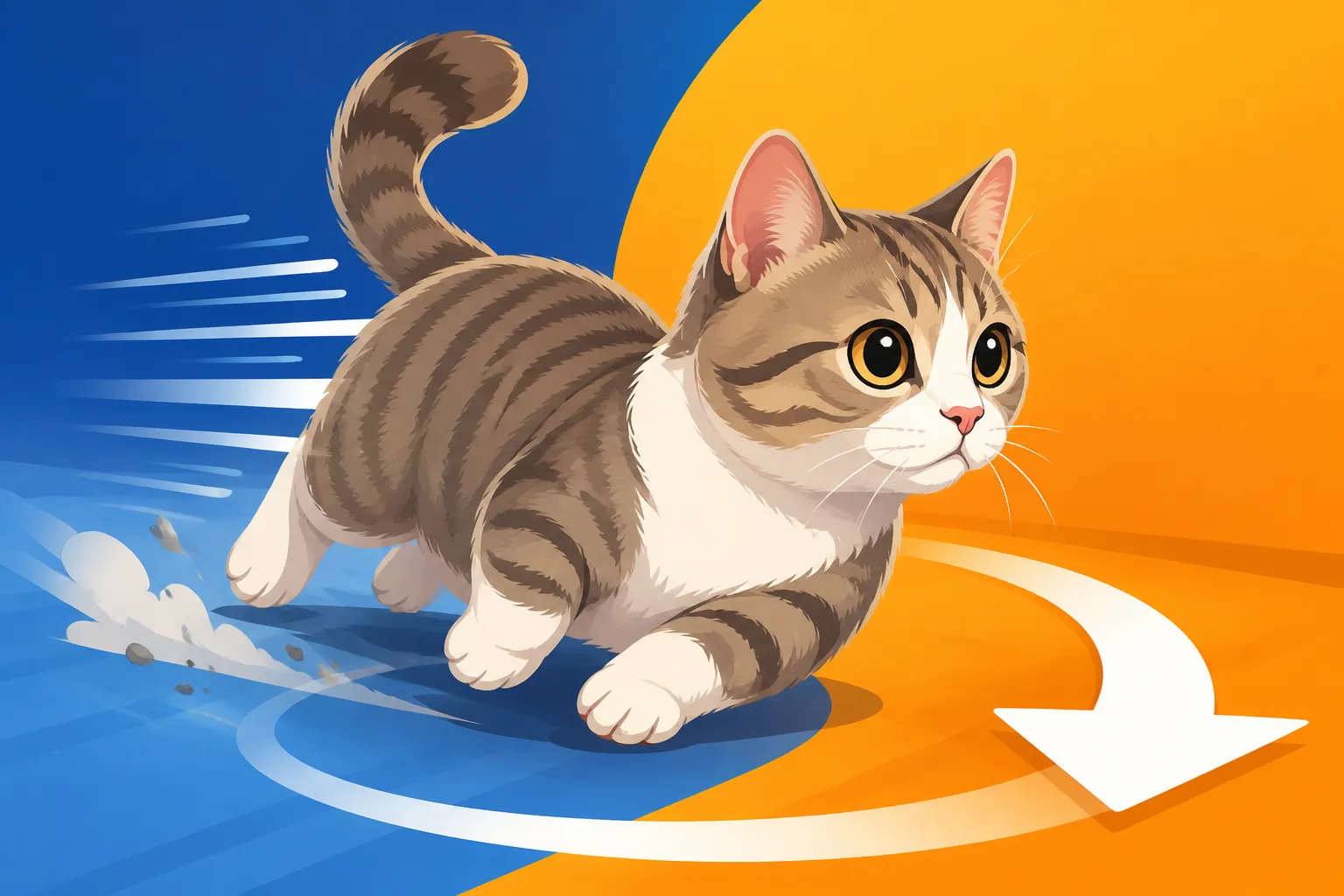
This is where the Munchkin truly shines in terms of maneuverability. When it comes to changing direction at speed, their low center of gravity and short limbs become an undeniable asset. Instead of having to lean dramatically and potentially lose balance, they can pivot almost on a dime. They achieve this by planting their front paws firmly, using them as a fulcrum, and then swinging their hindquarters around with a powerful push from their rear legs. It's a quick, controlled maneuver that looks incredibly agile. They don't just turn; they carve turns.
Imagine trying to navigate a tight hallway or weave through a maze of furniture. A long-legged cat might have to slow down considerably and make wider turns, but a Munchkin can execute sharp, almost ninety-degree shifts in direction without losing much momentum. Why a Low Center of Gravity Helps a Munchkin Corner becomes abundantly clear in these scenarios. They can zip around the legs of a dining table or duck under a low coffee table, changing trajectory instantly to keep up with a rolling toy or to evade a playful swipe from another pet. This makes them exceptional at games like "chase the laser pointer" or "hide-and-seek" with their favorite crumpled paper ball.
The action of their paws during a turn is particularly interesting. As they initiate a turn, the paws on the inside of the curve will grip and almost slide, allowing for a quick, controlled pivot. The outside paws push off, providing the necessary drive to complete the directional change. This coordinated paw work, combined with their low stance, gives them superior traction and control. They don't just rely on friction; they actively use their paw pads and claws to maximize grip and execute these sharp turns with precision.
This exceptional cornering ability means that even if another cat might be faster in a perfectly straight, open sprint, the Munchkin can often outmaneuver them in a confined or cluttered environment. Their ability to accelerate, stop, and change direction in an instant gives them a significant advantage in the "dogfight" of cat play. It allows them to maintain a constant level of engagement and surprise during playtime, making them incredibly entertaining companions to watch as they navigate their world with such distinctive grace.
The Role of Environment and Play in Agile Movement
While a Munchkin's natural build predisposes them to impressive ground-level agility, their environment and the type of play they engage in are crucial for nurturing and maintaining these skills. A thoughtfully designed home and engaging play sessions can truly bring out the best in their unique movement, allowing them to thrive and express their full athletic potential.
Creating a Munchkin-Friendly Playground
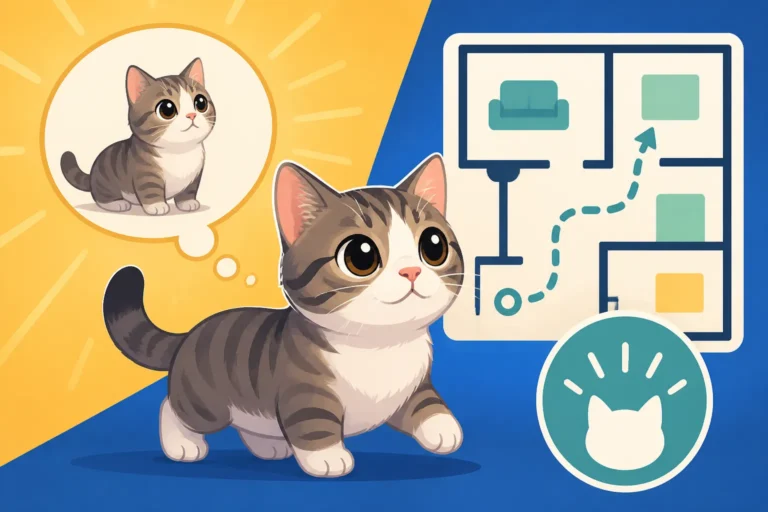
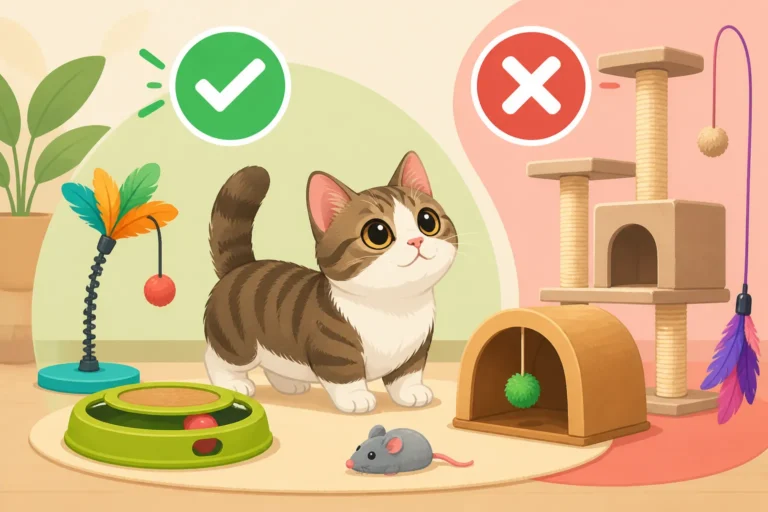
To truly let a Munchkin express its impressive cornering abilities, you need to create an environment that caters to its low-to-the-ground perspective. This means thinking about clear pathways and ensuring they have plenty of room to run and pivot without constantly bumping into obstacles that are too high to clear. Imagine their perspective: the world is a floor-level highway, and you want to ensure it's a smooth, engaging one. Consider adding low tunnels or soft obstacles that they can easily weave through, enhancing their natural inclination for darting and dodging.
One of the best things you can do is ensure that a significant portion of their play area has good traction. Slick surfaces like polished hardwood or laminate can be challenging for any cat, but for a Munchkin relying on quick pivots and powerful pushes, it can be particularly detrimental. Consider using rugs, carpet runners, or even dedicated pet play mats from places like Amazon to provide grip. This allows them to dig in with their paws and execute those sharp turns confidently, without the risk of slipping, which could lead to injury or simply discourage them from engaging in active play.
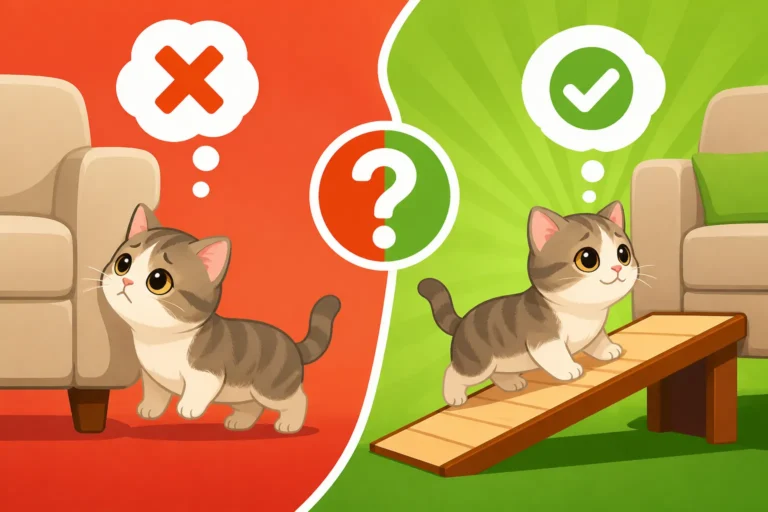
When it comes to furniture, think about creating accessible "steps" or platforms. While they're masters of floor-level movement, they still love to reach higher vantage points. Instead of expecting them to jump onto a sofa or bed, provide sturdy, low steps or ramps. This doesn't directly impact their cornering ability, but it integrates their vertical aspirations with their ground-level agility, allowing them to transition smoothly between different levels of their environment. How a Munchkin Uses Furniture as a Staircase is a common sight in well-adapted homes, and it highlights their cleverness in navigating their world.
Finally, consider the placement of their essentials. Food and water bowls, and especially litter boxes, should be easily accessible at floor level. If a Munchkin has to navigate complex routes or struggle with high-sided litter boxes, it can deter them from moving freely and confidently throughout their home. The goal is to remove any physical barriers that might inhibit their natural movement, encouraging them to run, play, and change direction without a second thought.
Encouraging Healthy Movement Through Play
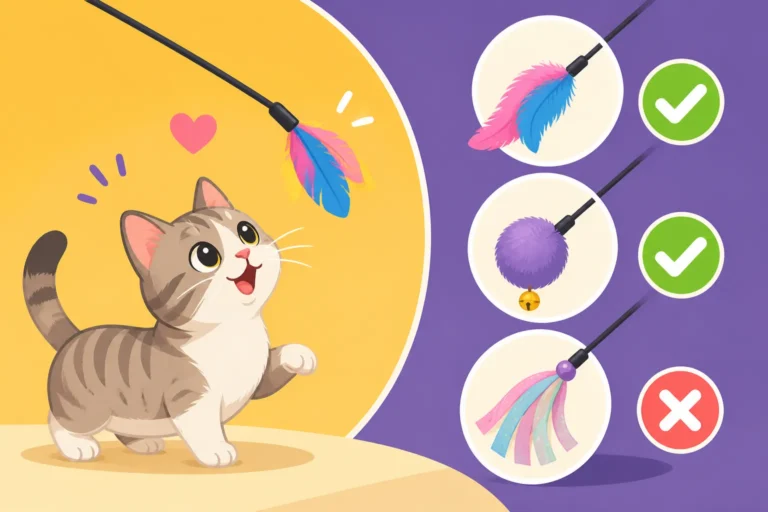
Engaging a Munchkin in the right kind of play is key to harnessing their natural agility and encouraging them to practice those impressive directional changes. Wand toys are absolutely fantastic for this purpose. You can drag them along the floor, making sudden turns and zig-zags, mimicking the unpredictable movements of prey. Watch as your Munchkin springs into action, using its low center of gravity to follow every twist and turn with remarkable precision. This type of play directly stimulates their instinct to chase and corner, providing excellent physical exercise.
Laser pointers, used with caution and always ending with a tangible reward (like a toy they can actually "catch"), are another excellent tool for encouraging agile movement. The fast, erratic movement of the light dot forces them to make rapid directional changes, practice quick stops, and unleash those powerful pivots. Just remember to occasionally "catch" the dot under a blanket or on a treat to prevent frustration, and then immediately offer a physical toy they can capture to satisfy their hunting instincts. This helps them burn off energy and refine their turning skills.
Rolling balls and other floor-level toys that can be batted and chased are also ideal. Their low profile means they can get right down to the toy's level, pushing it around and then making swift moves to intercept it as it changes direction. Look for toys that aren't too large or too light, offering just enough resistance to make the chase exciting. How Much Floor Level Play a Munchkin Needs often surprises new owners, but it's vital for their physical and mental well-being.
While it's wonderful to see your Munchkin performing these agile feats, it's also important to ensure supervised play to prevent overexertion or risky jumps. While they are agile on the flat, they aren't built for high jumps. Discourage them from attempting jumps that are clearly beyond their physical capabilities, especially onto hard surfaces. The focus should be on encouraging their ground-level athleticism and celebrated tight turns, not pushing them to do things that could strain their unique skeletal structure.
Limitations and Considerations for Their Unique Gait
While Munchkins are undeniably agile and swift on level ground, it's crucial for owners to understand that their unique physical conformation also comes with inherent limitations. Acknowledging these differences isn't about diminishing their capabilities, but about providing the best possible care and ensuring their long-term health and safety. Their "superpowers" are confined to a specific realm of movement.
Where the Agility Falters: Height and Stairs
For all their impressive ground-level agility, a Munchkin's primary physical limitation lies in vertical movement. Those short legs, which grant them such stability and cornering prowess, simply don't allow for high jumps. While a normal-legged cat might effortlessly leap onto a kitchen counter or a tall bookshelf, a Munchkin will struggle, or often fail, to reach even a standard chair or sofa in a single bound. They may try, bless their hearts, but their physics just don't allow it. How Many Inches a Munchkin Can Jump is significantly less than their longer-legged counterparts, and it's something owners must always keep in mind.
This vertical limitation can have significant implications for their safety and interaction with other household members. For instance, if a Munchkin feels threatened by a dog or a rambunctious child, their usual feline escape route – jumping to a high perch – is often unavailable. They are primarily restricted to floor level, which means they can't climb out of reach in the same way. This makes careful supervision and thoughtful home setup paramount to ensure they always have safe, accessible places to retreat, even if those places are only slightly elevated with the help of ramps or steps.
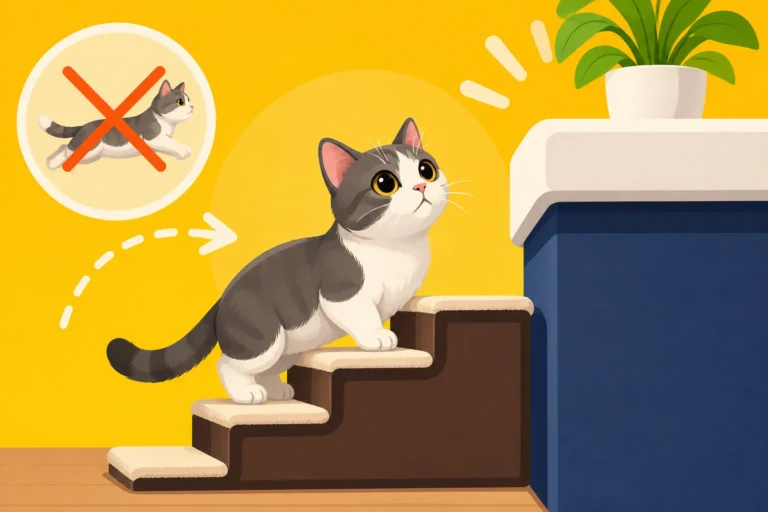
Stairs also present a particular challenge for Munchkins, not necessarily in terms of cornering, but in terms of repeated impact and strain. While some Munchkins can manage stairs, especially going up, the repeated jarring impact of descending them can be hard on their joints and spine over time. It’s an unnatural motion for their unique leg structure. Because of this, many owners choose to block off stair access or provide ramps for frequently used routes to protect their cat's long-term mobility. It's not that they can't do it, but whether they should do it regularly is another matter entirely for their long-term health.
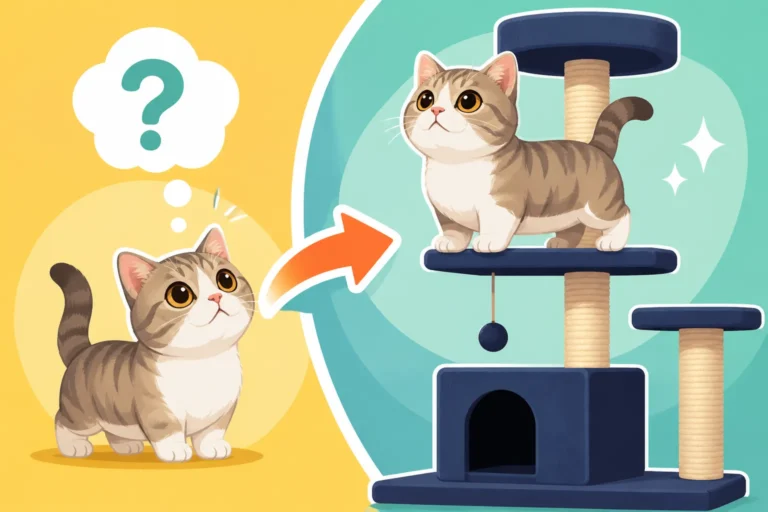
Therefore, while their agility on the flat is a joy to behold, owners must remember that a Munchkin's world is largely a horizontal one. Designing their environment to maximize their horizontal movement and providing gentle, low access to vertical spaces (like cat trees with closely spaced platforms or small ramps) is key to their well-being. Thinking about their "reachable" world helps prevent frustration and potential injuries, allowing them to enjoy their incredible ground speed and maneuverability without pushing their physical limits.
Maintaining Joint Health for Lifelong Agility
Given their unique bone structure and the way they move, maintaining optimal joint health is perhaps the single most important aspect of a Munchkin's long-term care, especially if you want them to continue those impressive turns and dashes well into old age. Their short legs mean that their joints, particularly in the shoulders and elbows, bear a different kind of load than those of a normal-legged cat. Every quick turn, every sudden stop, every playful pounce puts specific stress on these joints.
Weight management, therefore, isn't just about aesthetics; it's absolutely critical. Why an Overweight Munchkin Is in Real Trouble is not an exaggeration. Even a small amount of excess weight puts significantly more strain on those already uniquely stressed joints and spine. Imagine trying to perform quick, agile movements with a backpack full of bricks – that's what extra weight feels like to a Munchkin. It can exacerbate conditions like arthritis and reduce their ability to perform those quick directional changes, leading to a more sedentary lifestyle and further weight gain. A lean Munchkin is a mobile, happy Munchkin.
Regular veterinary check-ups are essential, with a particular focus on musculoskeletal health. Your vet should be palpating their spine and assessing their gait regularly to catch any early signs of discomfort or stiffness. While Munchkins aren't necessarily prone to more joint issues than other cats, the type of stress on their joints warrants proactive monitoring. Discuss joint supplements with your vet, especially as they get older, as these can provide crucial support for cartilage and joint fluid, potentially delaying the onset or severity of stiffness. How Arthritis Shows in a Munchkin's Front Legs can be subtle initially, but regular checks can help identify it.
Finally, continue to encourage appropriate, low-impact exercise throughout their lives. As they age, their agile turns might become a little slower, and their bursts of speed might be less frequent. It’s important to adapt playtime to their changing abilities, focusing on gentler floor-level games that still encourage movement without putting undue strain on their aging joints. Providing soft landings, ensuring ramps are not too steep, and offering comfortable, accessible sleeping spots will help your Munchkin maintain its unique zest for movement for as long as possible.
Disclaimer
This article is for general informational purposes only and does not constitute professional advice. Laws, prices and regulations vary by location and change over time. Consult a qualified professional for guidance on your specific situation.