Why Homozygous Munchkin Kittens Are Never Born
Munchkin cat genetics explain why kittens inheriting two copies of the dominant short leg gene fail to survive early gestation.
Know what to watch for.
Breed-specific conditions, screening and DNA tests, what surgery actually costs, and the daily habits that stretch a healthy lifespan.
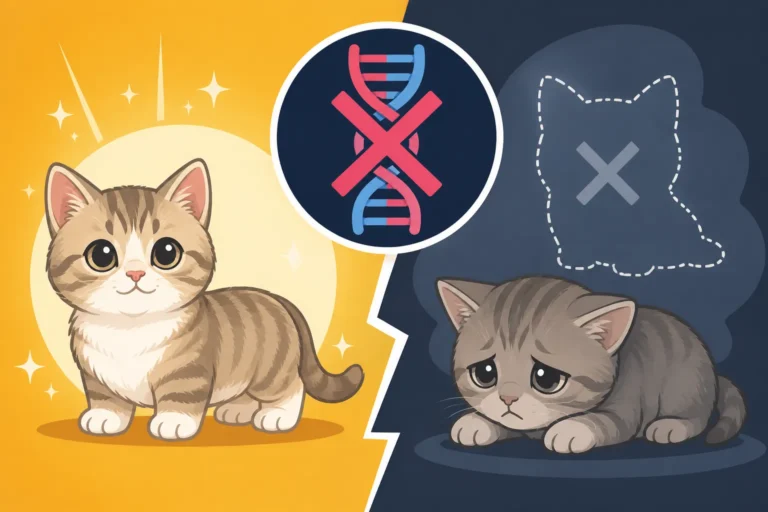
Munchkin cat genetics explain why kittens inheriting two copies of the dominant short leg gene fail to survive early gestation.
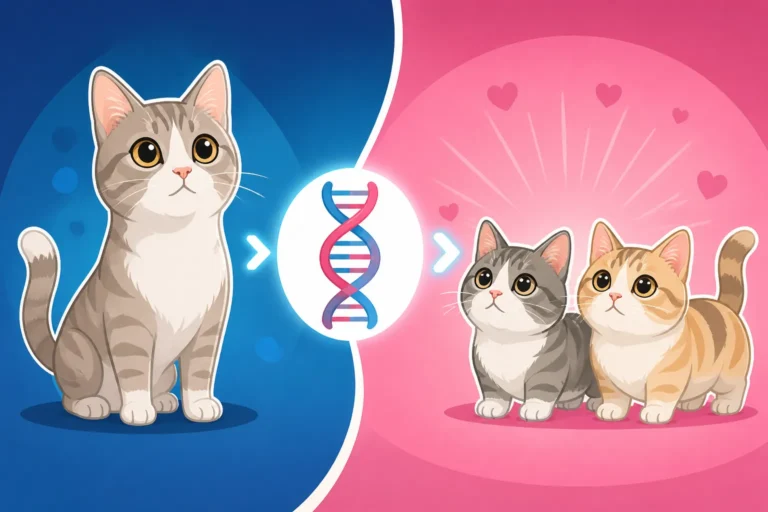
Munchkin cat genetics explain why embryos inheriting two copies of the short-leg gene fail to develop during early gestation.
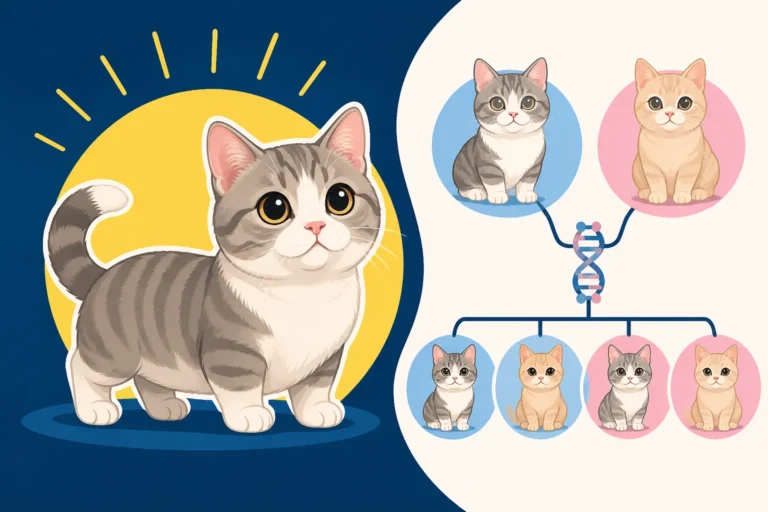
Autosomal dominant Munchkin cat dwarfism genetics explain short legs, chromosomes, and how this unique physical trait is inherited.
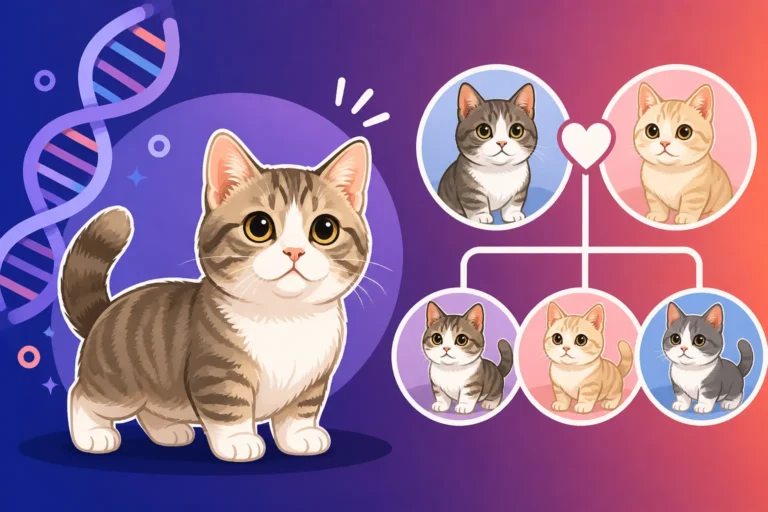
Munchkin dwarfism inheritance patterns, autosomal dominant genetics, and why the exact gene remains unmapped without a DNA test.
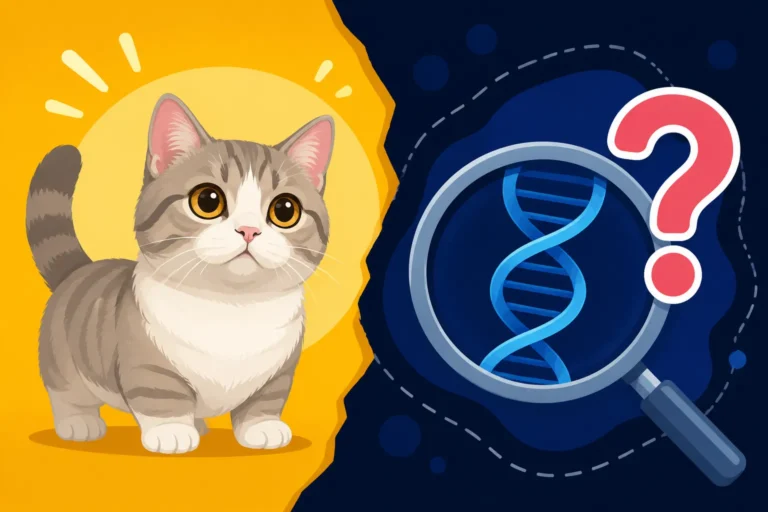
Munchkin cat short legs involve an autosomal dominant gene mutation that remains unidentified due to feline genomic complexity.

Munchkin cat genetic testing realities explain why commercial DNA tests for short legs remain unavailable for major breeders.

Munchkin breeder health declarations and ethical standards help buyers understand genetic conditions associated with dwarfism traits.
Munchkin cat lifespan data remains limited due to the breed origin in the 1980s and fragmented registry recognition by groups like TICA and CFA.

Munchkin cats typically live twelve to fifteen years, experiencing lifespans similar to normal domestic cats with proper care and health monitoring.
Well-bred Munchkin cats have a typical lifespan determined by genetics, pseudoachondroplasia mutations, and responsible outcrossing breeding practices.