How Early Lordosis Shows in a Munchkin Kitten
Early lordosis signs in a Munchkin kitten include an excessive inward spinal curvature and a sagging back that can compress internal organs.
Know what to watch for.
Breed-specific conditions, screening and DNA tests, what surgery actually costs, and the daily habits that stretch a healthy lifespan.
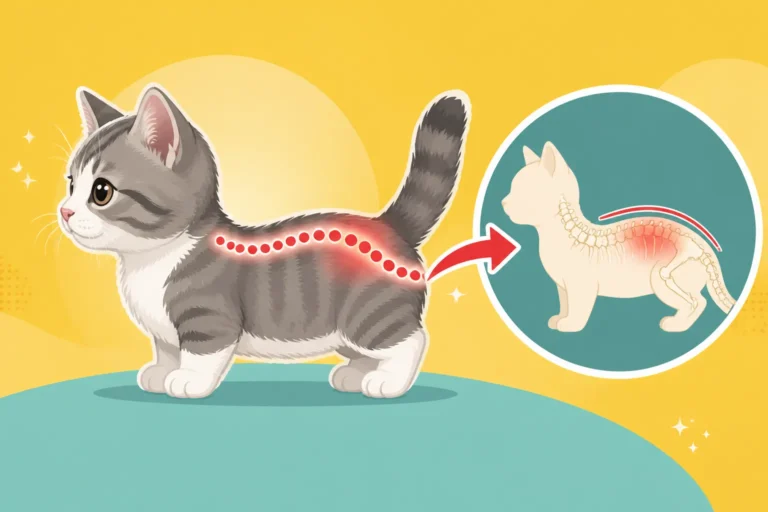
Early lordosis signs in a Munchkin kitten include an excessive inward spinal curvature and a sagging back that can compress internal organs.
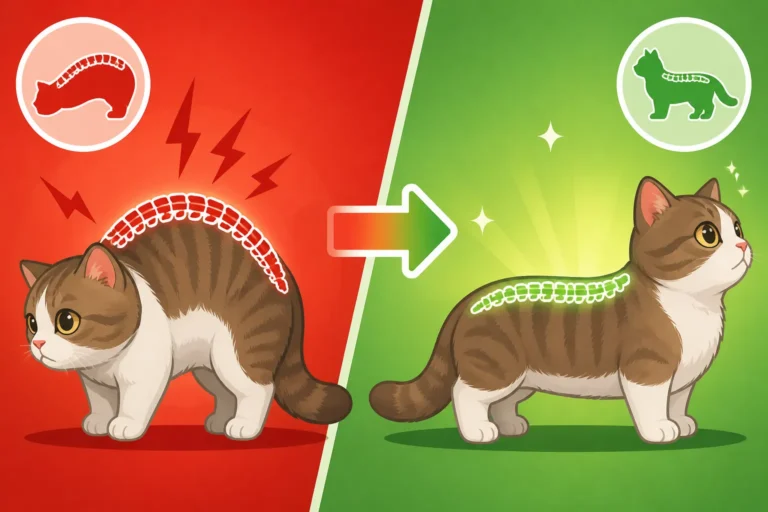
Lordosis causes an excessive inward curvature of the lower spine in Munchkins, changing body mechanics and organ position.
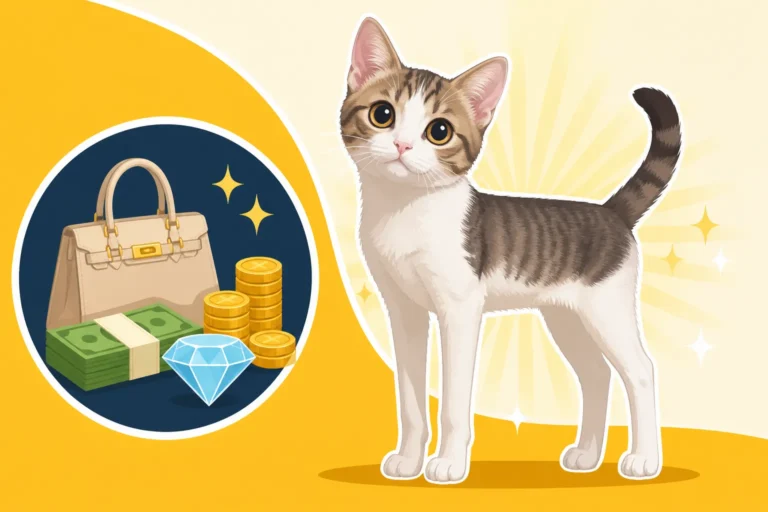
The short-leg gene is autosomal dominant and lethal in two copies, so breeders use carrier crosses, and some kittens in a litter have normal legs.
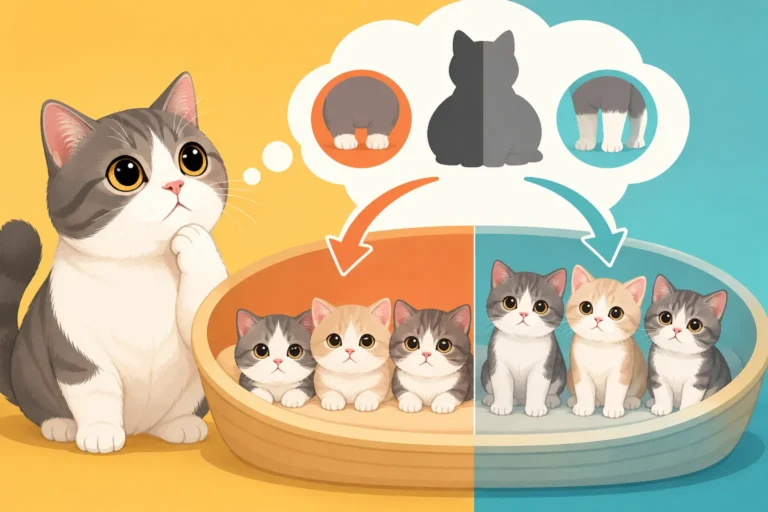
Munchkin cat pseudoachondroplasia and autosomal dominant inheritance explain why half of a litter has normal leg length.
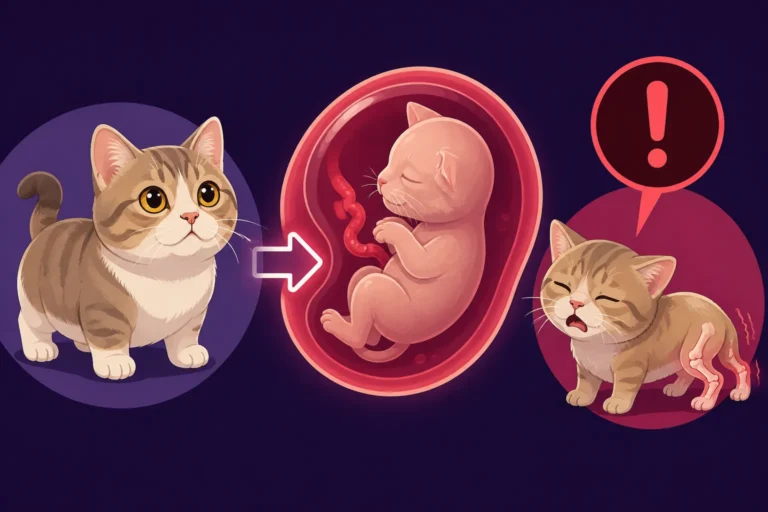
Homozygous Munchkin embryos inherit two copies of the short-leg gene, resulting in a lethal genetic combination before birth.
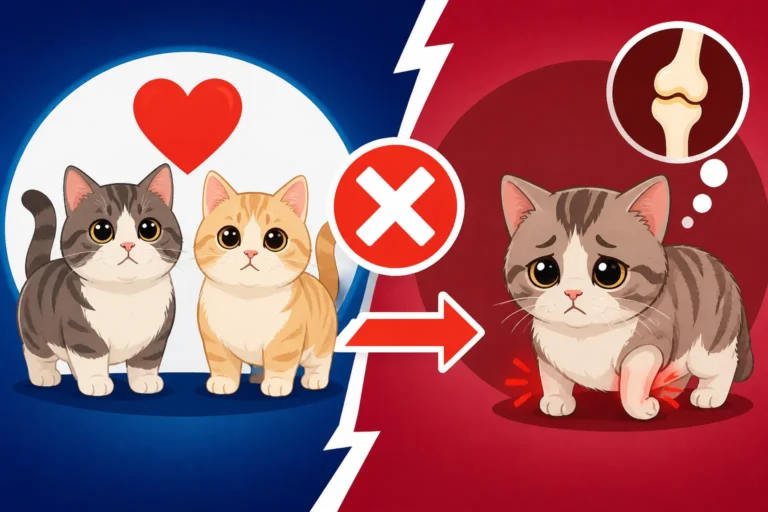
Munchkin cat genetics explain why breeding two short-legged parents causes fatal developmental issues and kills embryos in the womb.
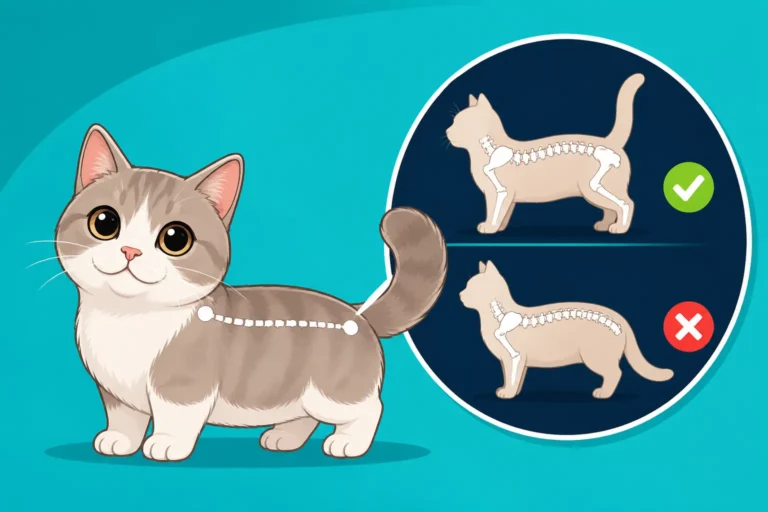
Munchkin cat dwarfism affects only the long bones in limbs, leaving the spinal column and vertebrae with normal structure.
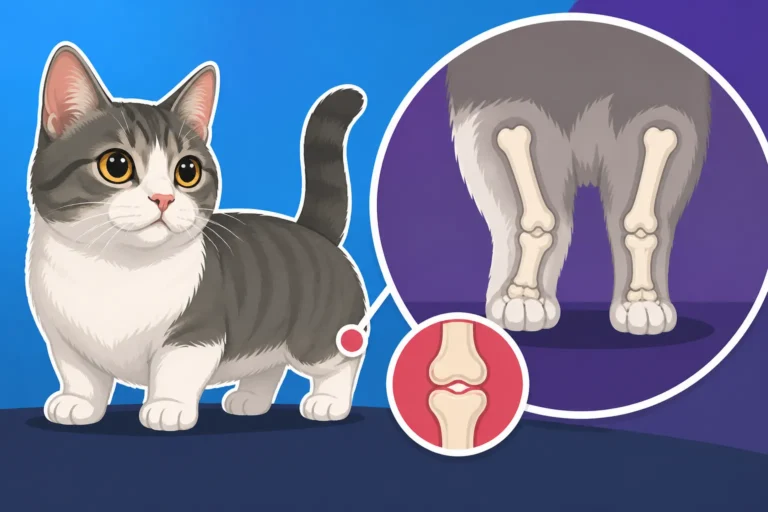
Pseudoachondroplasia affects cartilage growth in Munchkin cat limb bones, shortening legs while leaving the head and spine unaffected.
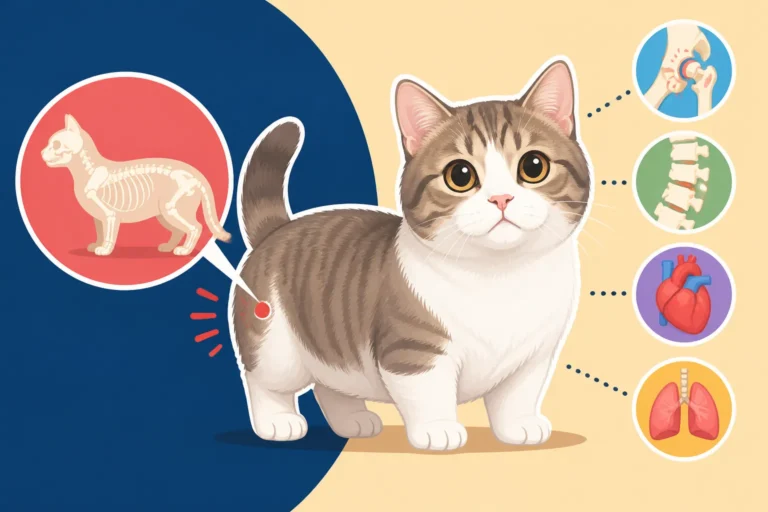
Munchkin cat health problems, including pseudoachondroplasia and lordosis, explained with facts about their unique anatomy.
Munchkin cat lifespan details, showing a typical range of twelve to fifteen years compared against other popular cat breeds.