What Happens to a Homozygous Munchkin Embryo
It's a question many people have when they first learn about the Munchkin cat: what happens if you breed two short-legged Munchkins together? The answer, unfortunately, is a deeply sad one, and it's at the very core of why responsible breeders adhere to strict ethical guidelines. Understanding the genetics behind this beloved breed isn't just academic; it's essential for ensuring the health and well-being of these unique cats. This guide will walk you through the specifics of what happens to a homozygous Munchkin embryo, shedding light on the genetic realities and the critical breeding practices that protect future generations.
Understanding the Munchkin Gene and Its Unique Inheritance
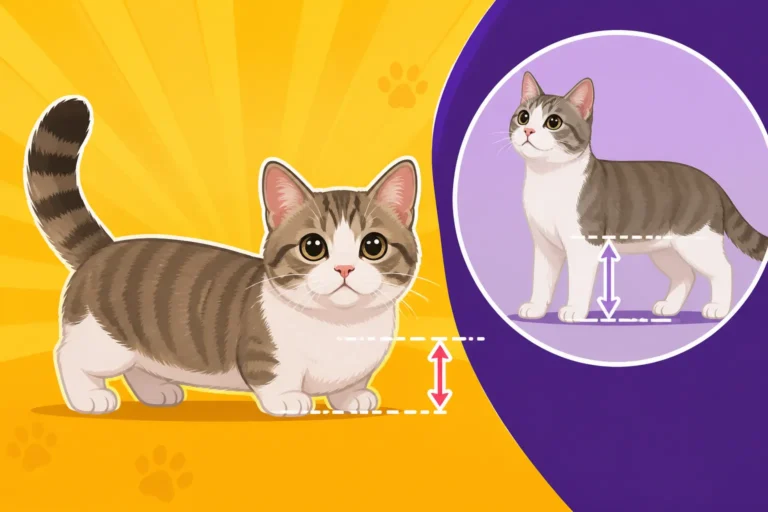
The short legs of a Munchkin cat are undeniably distinctive, and they're the result of a spontaneous genetic mutation. But unlike some traits, this particular mutation behaves in a very specific, and sometimes stark, way. It’s crucial to grasp these genetic fundamentals to truly understand the life cycle of a Munchkin cat, from conception to adulthood.
The Autosomal Dominant Trait Explained
When we talk about a trait being "autosomal dominant," it sounds a bit like a science lesson, but it's really quite straightforward once you break it down. "Autosomal" simply means the gene responsible isn't linked to sex chromosomes; it affects both male and female cats equally. "Dominant" means that you only need one copy of the mutated gene for the trait to be expressed. In the case of Munchkin cats, this means if a cat inherits just one copy of the short-leg gene (let's call it 'M' for Munchkin) from one parent and a normal gene ('m') from the other, it will have short legs. A cat with two normal genes ('mm') will have normal-length legs. This is why you'll often hear that Munchkin Dwarfism Is Dominant and Lethal in Two Copies. It's a key piece of the puzzle.
Imagine one parent is a short-legged Munchkin (Mm) and the other is a normal-legged cat (mm). Each kitten has a 50% chance of inheriting the 'M' gene and being short-legged, and a 50% chance of inheriting 'm' and having normal legs. This genetic reality dictates that How Munchkin Dwarfism Is Inherited is always from one parent at most.
Heterozygous vs. Homozygous: A Critical Distinction
This is where the story of the Munchkin embryo really comes into focus. A cat that inherits one copy of the short-leg gene (M) and one copy of the normal-leg gene (m) is called heterozygous (Mm). These are your typical, healthy short-legged Munchkin cats. They have the characteristic short legs, but their overall health and lifespan are generally comparable to other domestic cats, provided they are well-cared for. They are wonderful companions, zipping around on their little legs, adapting to their environment with remarkable agility.
However, if a kitten were to inherit two copies of the short-leg gene (MM), it would be homozygous for the Munchkin trait. This is the scenario that breeders actively avoid, and for a very good reason. The "lethal in two copies" aspect means that this homozygous combination is incompatible with life. It's a genetic lottery that no ethical breeder would ever risk, because the outcome is universally tragic.
Why Breeders Never Mate Two Short-Legged Munchkins
Given the lethal nature of the homozygous combination, you can probably guess why ethical breeders absolutely, unequivocally, never mate two short-legged Munchkin cats together. It's a fundamental rule of Munchkin breeding: Why Two Short Legged Munchkins Are Never Bred Together. If you have two heterozygous Munchkins (Mm x Mm) as parents, there's a 25% chance of the offspring being MM (homozygous lethal), a 50% chance of being Mm (heterozygous short-legged Munchkin), and a 25% chance of being mm (normal-legged cat).
This isn't just about avoiding a sad outcome; it's about responsible stewardship of the breed. Reputable breeders will always breed a short-legged Munchkin (Mm) with a normal-legged domestic cat (mm), often called an "outcross." This breeding strategy ensures that no kitten can ever inherit two copies of the 'M' gene. In such a pairing, every kitten will either be Mm (short-legged) or mm (normal-legged), eliminating the risk of homozygous embryos. This is Why Every Munchkin Litter Is a Carrier Cross and why half the litter typically has normal legs.
Any breeder who suggests breeding two short-legged Munchkins is either dangerously uninformed or deliberately irresponsible. It's a huge red flag that should make any prospective owner turn away immediately.
The Lethal Reality of the Homozygous Munchkin Embryo
Understanding the genetic shorthand is one thing, but truly grasping the implications of the homozygous Munchkin embryo is another. It's a somber aspect of the breed's genetics, but one that is crucial for any potential owner or enthusiast to acknowledge. This isn't just a theoretical outcome; it's a very real biological process that prevents certain kittens from ever being born.
What Happens When Two Short-Leg Genes Meet
When a Munchkin cat inherits two copies of the 'M' gene – one from each short-legged parent – the resulting embryo faces insurmountable developmental challenges. The specific mechanisms aren't fully understood, but the consensus among geneticists and veterinarians is that the double dose of the mutated gene disrupts crucial early embryonic development. This isn't just about legs; it seems to affect fundamental processes required for the formation and survival of a viable organism.
The 'M' gene, while responsible for the charming short legs in its single dose, becomes an overwhelming hindrance in its double manifestation. It's not simply that the legs become too short; rather, the entire developmental blueprint appears to be severely compromised, leading to a failure to thrive at the most basic cellular and structural levels. This severe genetic load means the embryo cannot develop beyond a very early stage.
Early Embryonic Loss: A Silent Occurrence
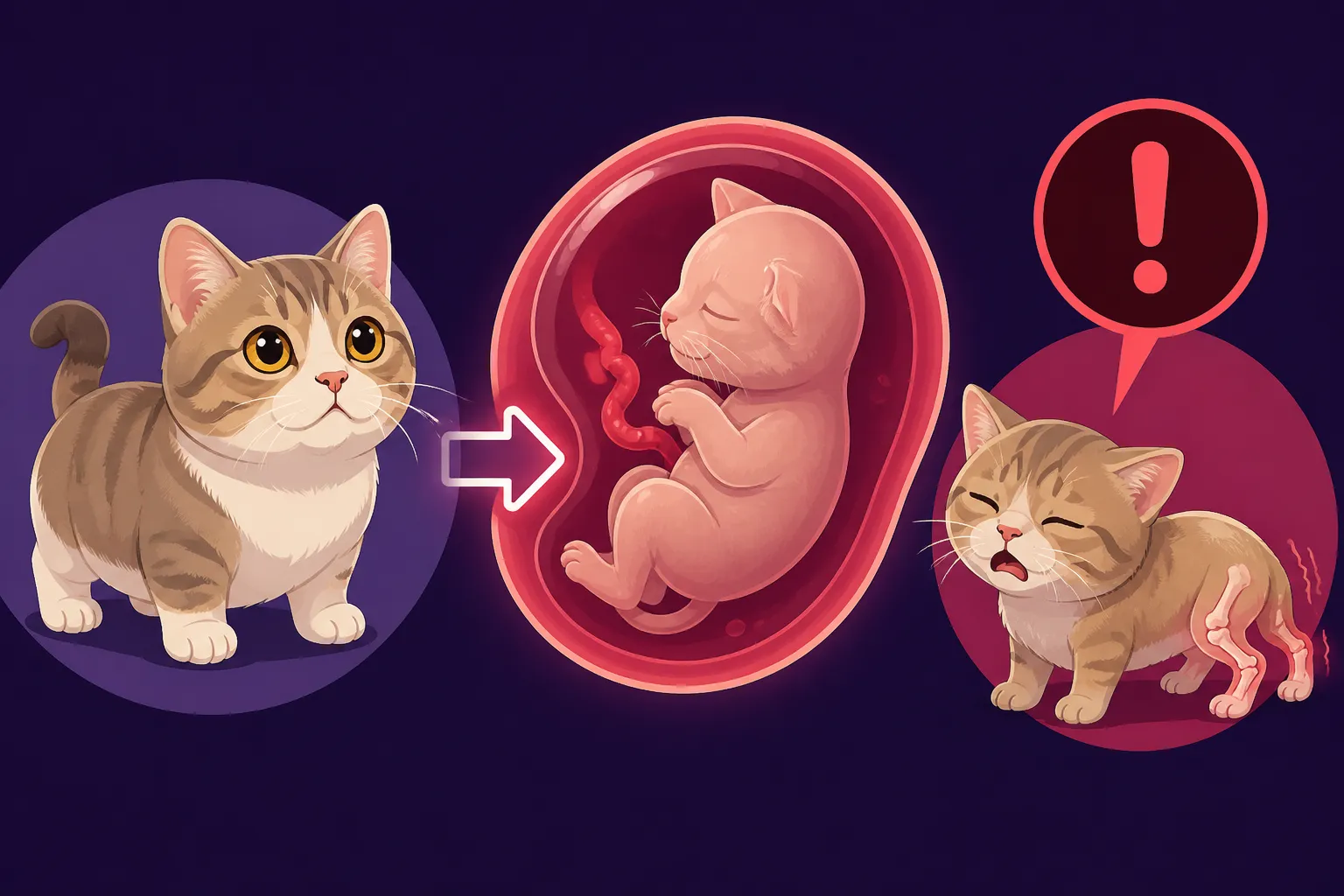
The sad truth is that a homozygous Munchkin embryo (MM) never develops into a live birth. These embryos are reabsorbed by the mother's body, typically very early in the gestation period. This is often referred to as "early embryonic loss." The queen (female cat) might conceive, but the tiny embryo simply fails to develop properly and ceases to exist long before it would be recognizable as a fetus, let alone a viable kitten.
For the queen, this event is usually silent and goes unnoticed. She doesn't experience a miscarriage in the traditional sense, as there's no visible fetal material expelled. The body efficiently reabsorbs the non-viable cells. This means that a breeder might not even know that a homozygous embryo was conceived, only noticing a slightly smaller litter than anticipated from the number of ovulations or the number of viable embryos seen on an early ultrasound. It's a natural, albeit tragic, way for nature to prevent the birth of a kitten that would never survive.
The Scientific Basis of the Lethal Gene
While the precise gene responsible for Munchkin dwarfism has not yet been isolated or identified – a common point of discussion, as explored in Why the Munchkin Gene Has Not Been Identified – its effects are clearly documented and understood within the realm of Mendelian genetics. The phenomenon of a gene being lethal in its homozygous dominant form is not unique to Munchkin cats. Many other species, including some dog breeds and even mice, have similar genes where a double dose proves fatal.
This understanding is derived from extensive observation of breeding outcomes, where the expected 25% of homozygous offspring from two heterozygous parents are consistently missing from live litters. This statistical anomaly is the strongest evidence for the gene's lethal effect. Researchers continue to work on identifying the specific gene, which would offer even more precise insights into the cellular mechanisms behind this embryonic failure. For now, the empirical evidence from breeding results is conclusive and guides all ethical breeding practices.
Impact on Litter Size and Breeding Outcomes
The lethal effect of the homozygous Munchkin gene has direct and observable consequences on litter sizes and the overall dynamics of breeding programs. It's not just a theoretical concept; it manifests in tangible ways for breeders, shaping their expectations and confirming the need for specific mating strategies.
Reduced Litter Sizes: The Unseen Toll
One of the most noticeable impacts of the homozygous lethal gene is on litter size. When two short-legged Munchkins (both heterozygous, Mm) are bred, a significant portion of the conceived embryos – statistically, about 25% – will be homozygous (MM) and will not survive to term. This means that, on average, these litters will be 25% smaller than they would be if all embryos were viable. For a cat that might typically have a litter of four kittens, this could mean only three live births are produced.
This reduction in litter size is a constant factor in Munchkin breeding if irresponsible pairings are made. Reputable breeders, by crossing a Munchkin (Mm) with a normal-legged cat (mm), completely bypass this issue. Their litters will contain only viable Mm (short-legged) and mm (normal-legged) kittens, meaning the litter size will reflect the total number of successfully implanted embryos, without the hidden loss of homozygous individuals. It highlights the direct consequence of genetic choices on the physical outcome of a litter.
Predicting Litter Composition: The Punnett Square in Action
For those familiar with basic genetics, the Punnett Square is a simple yet powerful tool for predicting the outcomes of genetic crosses. In the case of Munchkin cats, it vividly illustrates why certain breeding pairs are avoided.
Let's use 'M' for the dominant short-leg gene and 'm' for the recessive normal-leg gene:
Scenario 1: Two Short-Legged Munchkins (Mm x Mm)
| M | m | |
|---|---|---|
| M | MM (Lethal) | Mm (Short-legged) |
| m | Mm (Short-legged) | mm (Normal-legged) |
As you can see, 25% of the offspring are predicted to be MM, which are not viable. This means that for every four potential conceptions, one is lost. The remaining live kittens will statistically be 2/3 short-legged (Mm) and 1/3 normal-legged (mm). This dramatically alters the expected ratios among born kittens.
Scenario 2: Short-Legged Munchkin x Normal-Legged Cat (Mm x mm)
| m | m | |
|---|---|---|
| M | Mm (Short-legged) | Mm (Short-legged) |
| m | mm (Normal-legged) | mm (Normal-legged) |
In this ethical pairing, there are no MM combinations possible. Every single embryo has the potential to be viable. Statistically, 50% will be short-legged (Mm) and 50% will be normal-legged (mm). This is the safe and responsible way to breed Munchkins, ensuring maximum viability and preventing the inherent sadness of embryonic loss. This also answers questions like How Many Kittens in a Munchkin Litter Are Short Legged – it’s roughly half in a responsible pairing.
Why a Munchkin Litter Is Always a Carrier Cross
The term "carrier cross" in the context of Munchkins refers to the mandatory pairing of a short-legged Munchkin (who carries the 'M' gene) with a normal-legged cat (who does not carry the 'M' gene). This is the cornerstone of ethical Munchkin breeding. The normal-legged cat is essential because it guarantees that no 'M' gene is contributed from both sides, thus preventing the fatal MM combination.
This constant outcrossing also brings significant genetic benefits beyond simply preventing lethal embryos. It helps to maintain a wide and diverse gene pool, which is crucial for the long-term health and vitality of any breed. It helps prevent the accumulation of other genetic problems that can arise from inbreeding. Many registries, including TICA, which recognizes the Munchkin, specify that specific outcross breeds or even domestic short/long hairs can be used to ensure this genetic diversity. This practice ensures the breed continues to thrive responsibly. What a Munchkin Breeder Should Be Able to Show You will include proof of this ethical breeding.
Ethical Breeding Practices and Genetic Screening
For those considering bringing a Munchkin into their home, understanding ethical breeding practices isn't just a nicety; it's a necessity. The responsibility of ensuring the health of these cats falls heavily on breeders, and their commitment to avoiding homozygous lethal outcomes is paramount.
The Breeder's Responsibility: Preventing Homozygous Combinations
A truly responsible Munchkin breeder operates with a deep understanding of the breed's genetics. Their primary responsibility is to prevent the breeding of two short-legged Munchkins. This means that every breeding pair will consist of one short-legged Munchkin (Mm) and one normal-legged cat (mm). This isn't just a guideline; it's a non-negotiable ethical standard.
Breeders should be transparent about their breeding practices, openly discussing the genetics involved and explaining why they choose their specific pairings. They should be able to provide pedigrees that demonstrate a history of responsible outcrossing. If a breeder is vague about their breeding strategy, or worse, admits to breeding short-legged Munchkin to short-legged Munchkin, it is a significant warning sign that you should avoid them. This commitment to ethical breeding directly reflects the welfare of the kittens they produce.
The Importance of Outcrossing for Genetic Health
Outcrossing, as previously mentioned, is the practice of breeding a Munchkin to a normal-legged cat, usually a domestic short-haired or long-haired cat, or sometimes an approved pedigree breed. This is vital not only to prevent homozygous lethal embryos but also to bolster the overall genetic health of the Munchkin breed. Constant outcrossing introduces new genetic material into the line, which can help to:
- Reduce the risk of genetic diseases: A wider gene pool means a lower chance of two carriers for a specific recessive genetic disease being accidentally paired.
- Maintain vigor and vitality: Inbreeding can lead to "inbreeding depression," where immune function is weakened, and fertility decreases. Outcrossing helps keep the breed strong.
- Support healthy conformation: Beyond the legs, outcrossing helps ensure other aspects of the Munchkin's anatomy (like body length, head shape) remain healthy and conform to breed standards without being overly exaggerated due to limited genetics.
It’s worth noting that while some Munchkin crosses are accepted, others raise veterinary concerns, such as combining the Munchkin gene with the gene for Scottish Fold ears, as discussed in Why Munchkin Crosses Worry Veterinarians. Such pairings can stack skeletal mutations, leading to even greater health challenges.
What a Reputable Munchkin Breeder Should Tell You
When you're looking for a Munchkin kitten, a reputable breeder will be an open book. They should readily explain their breeding program, including the importance of only breeding short-legged Munchkins to normal-legged cats. They will talk about the Munchkin gene being autosomal dominant and lethal in two copies, clearly indicating their understanding of the genetics. They'll show you the parents, ideally demonstrating the normal leg length of the non-Munchkin parent or providing documentation.
They should also provide comprehensive health guarantees that cover inherited conditions, and be transparent about Which Diseases a Munchkin Breeder Must Declare. A good breeder wants to educate you, ensuring you're fully prepared for the unique needs of a Munchkin cat. They should also discuss the difference between short-legged and normal-legged kittens in a litter, clarifying What Happens to the Long Legged Munchkin Kittens and their value. Organizations like Healthy Paws, an pet insurance provider, often support responsible breeding practices by offering coverage plans that encourage proactive health management, though exclusions for congenital conditions may apply if not properly disclosed.
Addressing Common Misconceptions About Munchkin Embryos
The unique genetics of the Munchkin cat breed often lead to misunderstandings and sometimes even misinformation. It's important to clarify these points to ensure a full and accurate picture of what happens with Munchkin embryos and the breed in general.
Dispelling Myths About "Hidden" Homozygous Kittens
One common misconception is the idea that homozygous Munchkin kittens (MM) might somehow be born but are simply "weaker" or have more severe deformities. This is not true. As discussed, the homozygous combination is lethal at an embryonic stage. These embryos are simply not viable and are reabsorbed by the mother's body, never developing into living kittens. There are no "hidden" homozygous kittens suffering after birth; the genetic anomaly prevents them from reaching that stage.
Any claims otherwise are misinformed. The kittens that are born short-legged are all heterozygous (Mm) and generally healthy, assuming good breeding practices and no other inherited health issues. Their short legs are the only manifestation of the gene in a live animal. This distinction is crucial for understanding the true health profile of the breed.
Why the Munchkin Gene Has Not Been Identified
It might seem strange that with all this knowledge about its effects, the specific gene responsible for Munchkin dwarfism hasn't been precisely identified. This isn't due to a lack of effort but rather the complexities of feline genomics. Cats have complex genomes, and pinpointing a single gene responsible for a visible trait can be like finding a needle in a haystack, especially when the trait is an autosomal dominant one without a readily available "control" for direct comparison.
Researchers often rely on extensive genetic mapping and sequencing to locate specific mutations. While progress is continuously being made in feline genetic research, some traits remain elusive at the molecular level. The fact that the gene's effects are so well-documented through breeding patterns (Mendelian inheritance) means that breeders can manage the trait responsibly even without knowing the exact genetic sequence. However, identifying the gene could potentially lead to a DNA test for the trait, which would further enhance breeding practices by offering absolute certainty about a cat's genetic status. This would take away some of the guesswork about the 'm' or 'M' gene.
The Ethical Debate Surrounding the Munchkin Breed
Finally, it's impossible to discuss Munchkin genetics without touching upon the ongoing ethical debate surrounding the breed. Opponents of the breed often cite the lethal homozygous gene as a primary concern, arguing that any breed that results in embryonic death is inherently unethical. They might also worry about potential spinal issues, though Whether Munchkin Spinal Problems Are More Common Than in Other Cats is a debated topic.
Proponents, particularly responsible breeders and TICA (The International Cat Association) which grants the Munchkin championship status, counter that since ethical breeding practices completely eliminate the lethal homozygous outcome by never pairing two short-legged cats, the moral argument against embryonic death is moot. They emphasize that the heterozygous Munchkin (the cat we know and love) is a healthy, active cat, and that careful outcrossing ensures genetic diversity. They argue that many other breeds carry genes with negative health implications that are managed by responsible breeding, and the Munchkin is no different. The debate highlights the different perspectives on what constitutes ethical breeding, and it's a conversation worth understanding for anyone interested in the breed.
Ultimately, choosing a Munchkin cat means choosing a cat with unique physical characteristics born from a specific genetic mutation. Understanding the science, especially the part about the homozygous embryo, empowers you to make informed decisions and support responsible breeders who prioritize the health and welfare of every kitten.
Disclaimer
This article is intended for informational purposes only and does not constitute veterinary advice. Always consult with a qualified veterinarian for any health concerns or before making decisions about your pet's care.