What a Full Set of Munchkin Ramps Costs
Bringing a Munchkin cat into your life is an absolute joy, but it also comes with a unique set of considerations, particularly when it comes to their mobility. Many new owners, completely smitten by those adorable short legs, don't always fully grasp the impact this distinctive trait has on daily life until they see their little companion struggling to reach the sofa or peering longingly at the bed. This guide will meticulously break down the often-underestimated financial and practical aspects of outfitting your home with a full set of ramps and steps, ensuring your Munchkin can navigate their world safely and happily.
Why Ramps and Steps Are Non-Negotiable for a Munchkin
It’s easy to look at a Munchkin and simply see a cute, small cat. What's often overlooked is that their short legs aren't just a quirky feature; they are a fundamental difference in how they interact with their environment. Unlike a standard cat that can launch itself onto almost any surface, a Munchkin faces genuine physical barriers, making ramps and steps essential, not optional.
The Physical Limitations of Short Legs
Imagine trying to navigate a world built for someone much taller than you, where every chair, counter, and bed is just out of reach. That's a bit like a Munchkin's daily reality. While they are incredibly agile and creative at finding alternative routes, their short limbs simply don't allow for the powerful, vertical leaps that define typical feline behavior. They can run with surprising speed on the flat, often described as having a ferret-like gait, but when it comes to gaining elevation, they hit a wall. Expecting them to jump onto a standard sofa or bed is often asking the impossible, or at least, asking them to perform a series of strenuous, repeated efforts that aren't ideal for their long-term health. How High a Munchkin Can Actually Jump is a good read if you want to understand these limits in more detail.
Protecting Your Munchkin's Spine and Joints
Every jump, especially a jump down, places considerable stress on a cat's skeletal structure. For a Munchkin, with its unique conformation, this stress is amplified. Their longer-than-expected spine, combined with disproportionately short legs, means that landings can be jarring. Repeated impacts from jumping on and off furniture can contribute to early onset arthritis or exacerbate existing joint issues, particularly in their shoulders, elbows, and hips. Why a Munchkin's Spine Carries a Load a Normal Cat's Does Not delves into this in depth. Providing ramps and steps isn't about coddling; it's a proactive measure to protect their delicate joints and spine from the wear and tear of inappropriate jumping, potentially saving you significant veterinary costs down the line. It's an investment in their comfort and longevity.
Ensuring Mental Well-being and Independence
A cat thrives on exploration, high vantage points, and a sense of mastery over its territory. When a Munchkin is unable to reach favorite perching spots – whether it's the sunny windowsill, the top of a cat tree, or simply snuggling on your bed – it can lead to frustration, anxiety, and even a feeling of being excluded. Imagine wanting to join your family on the sofa but being physically unable to do so. Ramps and steps restore their independence, allowing them to access the places they instinctively desire. This access isn't just about physical convenience; it's vital for their emotional health, reducing stress and fostering a sense of security and belonging in their home. They can be incredibly smart about How a Munchkin Gets Where It Wants Without Jumping, but a little help goes a long way.
Understanding the Different Types of Ramps and Their Costs
When you start looking into ramps for your Munchkin, you'll quickly realize there's a whole world of options out there, each with its own advantages and price point. What you choose will depend on your budget, your home's aesthetic, and your cat's specific needs.
Pre-Made Pet Ramps and Stairs
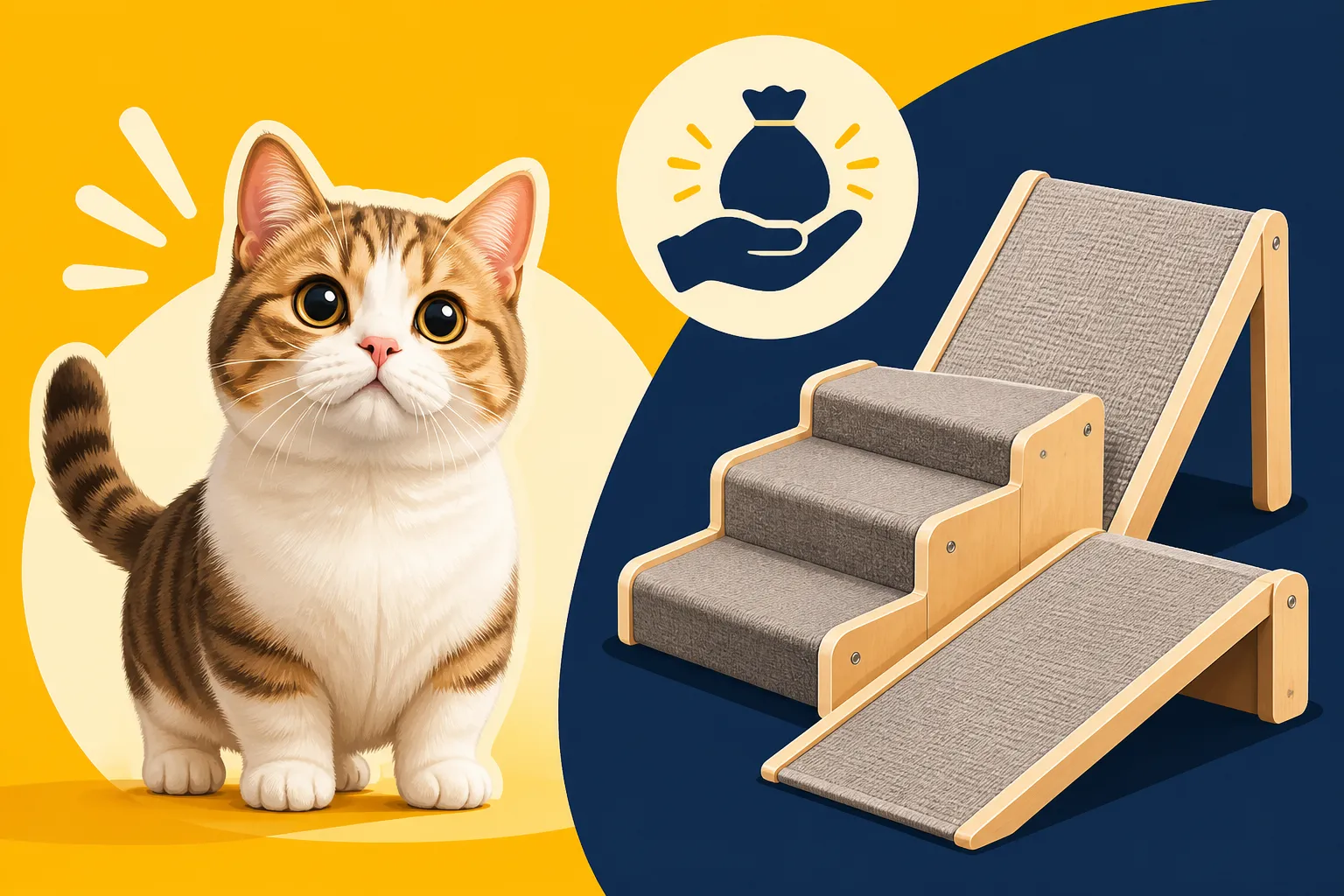
For many owners, the first stop is typically ready-made pet ramps and stairs. These are widely available from various pet supply retailers, both online and in brick-and-mortar stores. They come in a multitude of designs, often made from plastic, lightweight wood, or foam covered in carpet or fabric. You'll find everything from basic foldable plastic ramps, ideal for occasional use or travel, to more substantial carpeted wooden stairs designed to sit permanently next to a sofa or bed.
The advantage of these is their convenience and immediate availability. You can order one today and have it arrive in a few days. They also tend to be the most budget-friendly option when compared to custom work. However, their "one-size-fits-all" nature means they might not perfectly match your furniture's height or blend seamlessly with your home décor. Sometimes, the incline can still be a bit steep for a very short-legged Munchkin, or the surface might not offer enough grip. Checking reviews from other Munchkin owners, perhaps on sites like Chewy, can be really helpful here to gauge suitability.
Custom-Built Solutions and Their Price Tag
Sometimes, a standard pet ramp just doesn't cut it. Maybe your bed is unusually high, or you have a built-in window seat that needs a very specific incline and length to be accessible. This is where custom-built solutions come into play. These could involve hiring a local carpenter or handyman to design and construct ramps that integrate perfectly with your home environment.
The cost for custom work is, understandably, considerably higher than a pre-made ramp. It factors in the designer's time, the specific materials chosen (which you might want to match your existing furniture), and the labor for construction and installation. While it's a significant investment, a custom ramp offers unparalleled precision, stability, and aesthetic appeal. It can become a seamless part of your home, looking less like a pet accessory and more like an intentional design feature, ensuring maximum safety and usability for your Munchkin. This is truly part of What a Munchkin Owner Spends on Furniture Modifications.
Material Matters: From Carpeted to Wooden
The material of a ramp plays a huge role in its functionality, durability, and cost.
- Carpeted Ramps/Steps: These are popular because the carpet provides excellent traction, which is crucial for a short-legged cat. They often consist of a wooden or plastic base covered in a durable carpet. They tend to be moderately priced and are relatively easy for cats to use. The downside is that carpet can wear out, harbor pet dander, and can be harder to clean if soiled.
- Wooden Ramps: Solid wood ramps offer robust construction and a more furniture-like appearance. They can be stained or painted to match your decor. For grip, they typically feature carpeted strips, rubber treads, or a textured finish. Wooden ramps tend to be more expensive than plastic but offer superior longevity and stability. They're a good choice for high-traffic areas.
- Plastic Ramps: Generally the most affordable option, plastic ramps are lightweight and easy to move. They're often foldable, making them great for travel or temporary use. However, plastic can sometimes feel less stable, and the surface might be slippery, requiring additional non-slip mats or strips to be added by the owner. They might also not hold up as well to heavy daily use over many years.
- Foam Steps: While not strictly ramps, foam pet steps are often an alternative. They are soft, lightweight, and less intimidating for some cats. They are usually covered in washable fabric. They're generally on the lower end of the price spectrum but may not be as durable as wood and are typically only suitable for lower furniture heights.
Choosing the right material isn't just about cost; it's about what will best serve your Munchkin, offer the best grip, and withstand the daily pitter-patter of those little paws for years to come.
The True Cost of Outfitting a Multi-Level Home for a Munchkin
It's tempting to think you might just need "a ramp." However, a truly accessible home for a Munchkin usually requires much more than a single solution. The reality is that outfitting an entire home, especially one with multiple levels or various pieces of furniture, can quickly add up to a significant investment.
Key Areas Requiring Ramp Access
Think about your cat's favorite spots. Where do they sleep? Where do they watch the world go by? Where do they seek comfort or a sense of security? These are the primary areas that will likely need ramp or step access.
- Beds: Both your bed and any dedicated pet beds that are raised off the floor. Your Munchkin loves to snuggle, and denying them access to the primary sleeping area can be distressing. A sturdy set of steps or a gentle ramp next to the bed is usually essential.
- Sofas and Armchairs: These are often prime lounging and interaction spots. A ramp here allows your Munchkin to join you for cuddles without struggle. Consider whether one large ramp can serve multiple pieces of furniture or if each needs its own access point.
- Windowsills and Cat Trees: Many cats adore sitting on a windowsill to watch birds or basking in a sunbeam. Standard windowsills are often too high. Similarly, traditional cat trees are designed with large gaps between platforms, which are impossible for a Munchkin to navigate. You'll either need ramps leading up to the windowsill or a modified cat tree (or one specifically designed for shorter-legged cats, with closely spaced platforms).
- Other High Surfaces: Think about any other elevated spots your cat might desire, such as a favorite dresser top or a designated "cat shelf." While less common, these might also require consideration.
It's not just about getting up but also getting down safely. A cat that can get up somewhere but struggles to descend safely is still in a precarious situation.
Mapping Out a Safe and Accessible Environment
The process of making your home Munchkin-friendly is less about buying individual items and more about strategic planning and creating a cohesive network of accessible routes. It requires you to literally get down on your hands and knees and see your home from your cat's perspective.
Start by sketching a rough map of your home. Mark all the current "high-value" spots where your Munchkin likes to be or where you want them to be able to go. Then, identify the pathways they'll use. Do they need a ramp to get onto the sofa, then another to get from the sofa to a nearby bookshelf that leads to the windowsill? Why a Munchkin's Route to Everything Should Be Mapped is not an exaggeration.
You might find that a single ramp doesn't just serve one piece of furniture, but acts as a bridge or a stepping stone in a larger "cat highway." This kind of comprehensive planning helps you identify exactly how many ramps, steps, or creative furniture arrangements you'll need. It's often not just two or three items, but a collection of solutions working in harmony.
The Cumulative Expense of Multiple Ramps
This is where the "full set" cost can become surprising. You're not just buying one ramp for one item; you're often investing in several for different pieces of furniture and different rooms.
Consider a hypothetical scenario:
- One ramp for the master bed.
- Another ramp for the living room sofa.
- A set of steps for the cat tree in the sunroom.
- Perhaps a smaller, portable ramp for a guest bed or a specific chair.
Each of these can represent a separate purchase. If you opt for higher-quality, durable, or custom-made options, the individual costs stack up quickly. Even if you choose more affordable, pre-made plastic ramps, needing five or six of them will result in a cumulative total that is far beyond the price of a single ramp. This overall investment contributes significantly to the What a Munchkin Costs Over Thirteen Years of its life, going beyond food and vet care to encompass essential mobility infrastructure.
| Ramp/Step Purpose | Example Type | General Cost Indication (per item) | Number Needed (Estimate) | Cumulative Indication |
|---|---|---|---|---|
| Bedroom Access | Carpeted Wooden Ramp or Steps | Moderate | 1 | Moderate |
| Living Room Access | Fabric-Covered Foam Steps | Lower | 1-2 | Lower to Moderate |
| Cat Tree/Windowsill | Custom Wooden Steps or Shelves | Moderate to Higher | 1-3 | Moderate to Higher |
| Kitchen/Dining Chair | Small Plastic Ramp | Lower | 1 | Lower |
| Vehicle Travel | Foldable Lightweight Ramp | Moderate | 1 | Moderate |
| Total | Varies based on home & choices | Varies | 4-8+ | Significant |
This table illustrates how quickly the "full set" becomes a multi-item, substantial expenditure, rather than a single, minor cost.
Hidden Costs and Long-Term Considerations for Munchkin Mobility
The initial purchase of ramps and steps is just the beginning. Like any aspect of pet ownership, there are ongoing considerations and potential future expenses related to maintaining your Munchkin's mobility and ensuring their safety.
Maintenance, Cleaning, and Replacement Needs
Ramps and steps, especially those used daily, will experience wear and tear. Carpeted surfaces can fray, get dirty, or develop odors over time. Wooden ramps might need occasional cleaning, refinishing, or tightening of screws. Plastic ramps can crack or become less stable.
Consider the cleaning aspect: your Munchkin will be walking, rubbing, and potentially shedding on these surfaces. Regular vacuuming, spot cleaning, and occasional deep cleaning might be necessary. If a ramp or step becomes heavily soiled or damaged beyond repair, it will need to be replaced, incurring additional costs. This is not a one-and-done purchase; it's an ongoing commitment to their home environment.
Adapting for the Aging Munchkin
Just like humans, cats experience changes in mobility as they age. A Munchkin, whose joints and spine already carry a unique load, may be particularly susceptible to age-related conditions like osteoarthritis. A ramp that was perfectly manageable for a spry young adult Munchkin might become too steep or too difficult for a senior cat with stiff joints.
As your Munchkin enters their senior years, which for many cats can be around eight years old or even earlier for some, you might need to re-evaluate your existing ramps. You might need to add more gentle inclines, wider steps, or even switch to foam steps that are softer on their joints. What an Old Munchkin Stops Being Able to Do often includes struggling with even moderate inclines. This adaptation means potential further investment in new mobility aids or modifications to existing ones to ensure your beloved elder Munchkin can still access their favorite spots comfortably and without pain.
Potential Vet Bills from Missed Jumps
Despite your best efforts to provide ramps, cats are still cats. They can be impulsive, forgetful, or simply misjudge a jump, especially if they are startled or excited. A Munchkin attempting to jump down from a surface that is too high, or slipping on an uncarpeted ramp, could sustain an injury. These injuries could range from sprains and strains to more severe fractures or spinal issues, leading to unexpected and potentially significant veterinary bills.
While ramps drastically reduce this risk, they don't eliminate it entirely. It's a sobering thought, but part of the long-term cost consideration for a Munchkin is the potential for these kinds of accidents. Having a good pet insurance plan, such as one from Healthy Paws, can be incredibly beneficial here, helping to cover a portion of these unforeseen medical expenses. This kind of protection is crucial, as Whether Pet Insurance Covers a Munchkin's Spine is a common concern among owners.
Budgeting for Your Munchkin's Mobility Needs
Understanding the costs associated with Munchkin ramps and steps is one thing, but planning for them effectively is another. Whether you're a seasoned DIY enthusiast or prefer to buy ready-made, there are smart strategies to ensure your Munchkin has everything they need without breaking the bank.
DIY Solutions for the Handy Owner
For those with a bit of carpentry skill, access to tools, and a willingness to put in the time, building your own ramps and steps can be a significantly more cost-effective option. The primary expense will then shift from purchasing finished products to acquiring raw materials.
You might need plywood or solid timber for the structure, carpet remnants or durable fabric for traction, and basic hardware like screws, nails, and wood glue. You can customize the length, width, and incline to perfectly fit your furniture and match your home's aesthetic. There are plenty of online tutorials for building pet ramps that can be adapted for a Munchkin's specific needs. What Building Munchkin Steps Yourself Costs is mainly about materials and your time. This approach not only saves money but also offers the satisfaction of providing a bespoke solution perfectly tailored for your feline friend. Just ensure whatever you build is sturdy, stable, and has excellent grip for those little paws.
Shopping Smart for Pre-Made Options
If DIY isn't your strong suit, or you prefer the convenience of ready-made products, smart shopping is key. Don't just buy the first ramp you see.
- Compare Prices: Check various online retailers and pet stores. Prices can fluctuate, and different vendors might offer sales or discounts.
- Read Reviews: Pay close attention to reviews from other cat owners, especially those with smaller or short-legged breeds. They can offer insights into stability, incline, durability, and whether the ramp is genuinely cat-friendly.
- Look for Sales and Bundles: Keep an eye out for seasonal sales or bundles where you might get a discount for purchasing multiple items. Websites like Chewy often have promotions that can make buying several ramps more affordable.
- Consider Multi-Purpose Items: Sometimes, a sturdy, low-profile storage ottoman can double as a step stool or a landing platform, serving two functions and potentially saving you from buying a separate piece.
Remember that while a lower price is appealing, quality and safety are paramount. A cheap, flimsy ramp that your Munchkin won't use or that poses a safety risk is not a saving in the long run.
Considering Professional Installation or Custom Work
For some owners, particularly those who want a perfectly integrated solution or who lack the time and skill for DIY, investing in professional custom-built ramps or installation services is a worthwhile consideration. While this will undoubtedly be the most expensive option upfront, it can offer peace of mind.
A professional carpenter can ensure the ramps are structurally sound, perfectly fitted to your furniture, and designed with optimal inclines and anti-slip features. They can also ensure the ramps blend aesthetically with your home, preventing them from looking like obtrusive additions. This type of investment falls under the broader category of Why a Munchkin Budget Needs a Mobility Line, acknowledging that their unique physical needs necessitate specific financial planning. While it's a higher initial outlay, the resulting safety, durability, and seamless integration can make it a valuable long-term solution, reducing the need for replacements or repairs.
Disclaimer
This article is for general informational purposes only and does not constitute professional advice. Laws, prices and regulations vary by location and change over time. Consult a qualified professional for guidance on your specific situation.