Where a Munchkin Hides When It Cannot Get High
One of the trickiest things about sharing your home with a delightful Munchkin cat is learning to see the world from their unique perspective. As a veteran lifestyle blogger and a lover of these fascinating felines, I’ve heard countless stories, and experienced firsthand, the concern of owners watching their short-legged companions try to navigate a home built for normal-sized cats. Unlike their long-limbed cousins who can effortlessly leap onto a bookshelf or scale a towering cat tree, Munchkins face a very real physical limitation. This guide is here to help you understand where your Munchkin naturally seeks refuge when those coveted high spots are out of reach, and more importantly, how you can adapt your home to provide them with the secure, elevated havens they instinctually crave.
The Innate Need for Height: Why Every Cat Wants to Get Up High
Let's be honest, we all know cats love to climb. It’s not just a quirky habit; it’s deeply ingrained in their predatory and survival instincts. From the smallest domestic tabby to the largest jungle cat, getting to a high vantage point offers a triple threat of benefits: safety, observation, and territory marking. When a cat is up high, they feel secure from potential threats – whether that’s a boisterous dog, an inquisitive toddler, or even another cat in the household they might be avoiding. They can survey their domain, keeping an eye on everything happening below without being directly in the fray. It’s also a way for them to assert their presence, claiming a prime piece of real estate as their own.
For a Munchkin cat, this instinct is just as strong, but the physical reality of their What the Short Legs Actually Cost a Munchkin often makes it a frustrating, even impossible, endeavor. Imagine wanting desperately to reach a safe perch, feeling that deep-seated need for security, but your legs just won't cooperate. It’s a struggle many Munchkin owners witness, and it can leave them feeling a pang of guilt or concern for their pet's well-being. They can't simply make the kitchen counter, or reach the top of a standard cat tree. This inability to easily access elevated spots can make a Munchkin feel vulnerable, especially if they live in a multi-pet household or one with young, energetic children. They need a place to retreat, a sanctuary where they can feel safe and observe without being observed too closely, and when those traditional high spots are inaccessible, they have to get creative.
Where a Munchkin Cat Finds Sanctuary on the Ground
Since scaling the heights isn't always an option, Munchkins develop their own strategies for finding secure spots at ground level. Their cleverness and adaptability are truly remarkable, but these choices often highlight their limitations and the compromises they have to make. They’re looking for places that offer a sense of enclosure, protection, and a barrier from the hustle and bustle of daily life, even if those places aren't high up.
Underneath Furniture: The Classic Floor-Hugger Hideaway
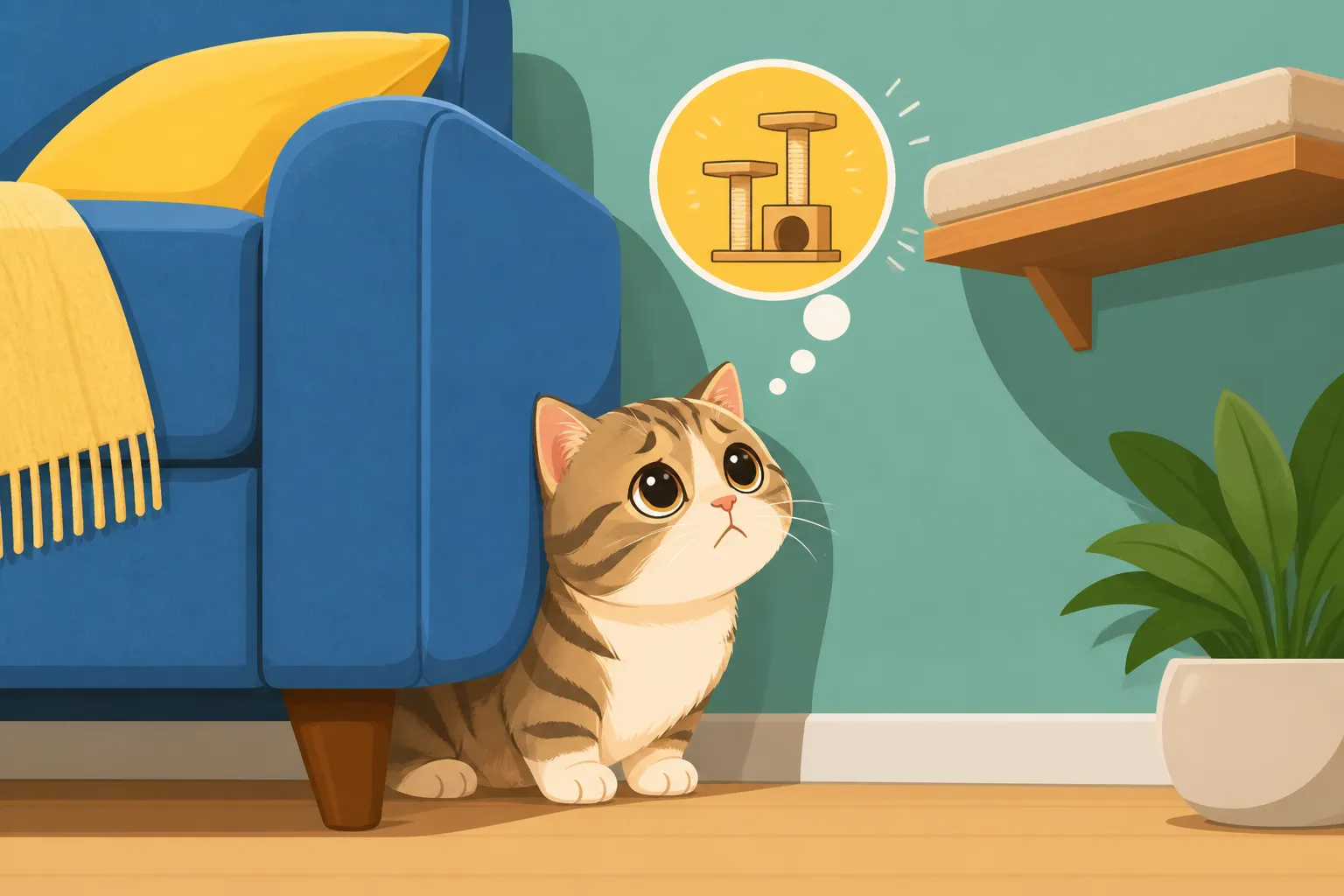
The most common retreat for a Munchkin who can't go up is to go under. Beds, sofas, and armchairs become their personal fortified castles. The low clearance of these items, which might be a nuisance for a taller cat, is perfect for a Munchkin. They can easily scoot underneath, finding a dark, enclosed space where they feel largely invisible and out of reach. It's a primal response: if you can't be above, be hidden.
I’ve seen Munchkins squeeze into astonishingly tight spots, tucked right against the frame of a sofa or deep under a bed skirt. This provides them with a sense of security, a boundary between them and the larger world. It's their version of a cozy cave. However, while these spots offer concealment, they don't provide the same observational advantage as an elevated perch. Your Munchkin might be safe, but they're also out of the loop, which can sometimes lead to anxiety or missed opportunities for interaction. Think about it: they can't see what's coming, only react when something gets too close.
Inside Enclosed Spaces: Cabinets, Cubbies, and Laundry Baskets
Beyond just squeezing under things, Munchkins are masters of finding or creating their own cozy, enclosed spaces. Cabinets with doors left ajar, low shelves in entertainment units, or even open laundry baskets can become prime real estate. The appeal here is the sense of being completely surrounded and protected. These spaces often provide a similar feeling to a nest or a den, offering warmth, darkness, and a feeling of being completely safe from the world.
I remember one family telling me about their Munchkin, Pip, who had claimed the lowest shelf of an open-cube storage unit as his own. He'd rearranged a few decorative boxes and made himself a snug little den, complete with a favorite blanket. He could still peek out and watch the family, but he was undeniably tucked away. Another cat, Mittens, had a fascination with a wicker laundry basket in the bedroom, preferring it over any expensive cat bed. These choices show their strong preference for a defined, safe territory that feels small and manageable, tailored to their size.
Quiet Corners and Behind Curtains: The Illusion of Invisibility
Sometimes, a Munchkin will simply choose a quiet corner of a room, especially one that's tucked away or partially obscured. Behind curtains, next to a large piece of furniture, or even in the crook of a doorway can offer a temporary reprieve. These aren't necessarily hidden in the same way as being under a bed, but they provide a sense of being out of the main thoroughfare and less noticeable.
The goal here is often to find a spot where they can "disappear" without truly being inaccessible. It's a subtle way of seeking solitude and reducing sensory input when they feel overwhelmed or just need a break. While effective for a moment, these spots offer minimal actual protection. If a curious child or another pet decides to investigate, the Munchkin has nowhere to go but to dart across the open floor, which can be stressful. Why a Munchkin Cannot Escape a Confrontation is a very real concern for these little guys.
Crafting Accessible Elevated Havens for Your Munchkin
Understanding where your Munchkin hides is the first step; the next is proactively creating spaces where they can hide, but in a way that truly serves their needs for security and observation. This is where we, as responsible Munchkin parents, need to get creative and adapt our homes to their unique physical structure. The goal is to provide safe, elevated spots that mimic the benefits a tall cat gets from jumping, without putting undue strain on their Why a Munchkin's Spine Carries a Load a Normal Cat's Does Not.
Ramps and Steps: Your Munchkin's New Best Friends
This is probably the most crucial adaptation for any Munchkin household. Ramps and steps are not luxuries; they are essential equipment that allows your short-legged cat to access higher surfaces safely and comfortably. Think of your sofa, your bed, a favorite armchair – these are all prime real estate that your Munchkin likely wants to reach.
For ramps, look for options that aren't too steep and have a non-slip surface. Carpeted ramps are fantastic because they provide traction and are soft on paws. You can find pre-made pet ramps on sites like Amazon, or if you're handy, you could even build your own. The ideal ramp will lead directly to the surface you want your Munchkin to reach. For steps, again, stability and a low rise are key. Individual steps should be wide enough for them to comfortably ascend and descend, and not too tall, to minimize any jumping impact. How Many Steps a Munchkin Needs to Reach a Bed will depend on the height of your bed, but generally, more, shallower steps are better than fewer, steeper ones.
Place ramps and steps strategically. If your Munchkin loves to snuggle with you on the sofa, put a ramp or set of steps right there. If they enjoy sleeping at the foot of your bed, ensure they have easy access. This eliminates the need for them to attempt risky jumps or to constantly solicit lifts, which, while cute, isn't always convenient for you or building their independence.
Modified Cat Trees and Wall-Mounted Shelves
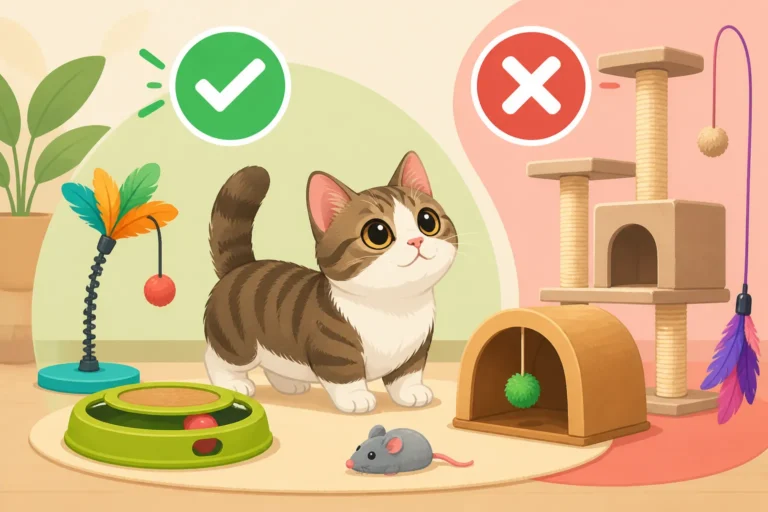
Standard cat trees often have platforms spaced too far apart for a Munchkin to comfortably jump between. But that doesn't mean cat trees are out! You can modify existing cat trees or look for ones specifically designed for older or less agile cats. Look for trees with:
- Closer-set platforms: The vertical distance between platforms should be easily manageable with a small hop, or even just a walk-up.
- Ramps between levels: Some cat trees incorporate ramps, making the ascent much easier.
- Sturdy, wide platforms: To give them a secure landing and resting space.
Alternatively, consider wall-mounted cat shelves, but with a Munchkin-specific twist. Instead of widely spaced shelves that require big jumps, create a staggered, staircase-like ascent with platforms that are only a few inches apart. This allows your Munchkin to gradually climb to a higher vantage point without any stressful leaps. Again, ensure all surfaces are non-slip and securely mounted. How Far Apart to Space a Munchkin's Steps is crucial here; think about small, incremental climbs rather than big stretches.
Low-Level Cubbies and Beds with a View
Sometimes, the best solution is to meet them halfway. Instead of trying to get them all the way to the ceiling, focus on providing accessible "middle ground" spots. Think about adding a low bookcase with an empty cubby at eye-level when sitting on the floor. Or perhaps a sturdy end table next to a window that they can reach via a ramp or a single step.
Another wonderful option is a "pet perch" designed for windowsills, which often come with steps or a ramp attached. These allow your Munchkin to enjoy bird-watching from a safe, elevated spot without you having to lift them or worry about them falling. The key is to think about their perspective: what looks like a small climb to you might be Mount Everest to them. By providing these intermediate, accessible elevated spots, you offer them the psychological benefits of height without the physical challenges.
| Feature | Standard Cat Hiding Spot | Munchkin Accessible Hiding Spot (Example) | Benefits for Munchkin |
|---|---|---|---|
| Height | High shelves, top of cat tree, kitchen counters | Sofa/bed with ramp, low window perch with steps, modified cat tree | Reduced joint strain, independence, observation |
| Enclosure | Cardboard boxes, open cabinets | Soft-sided pet carriers, enclosed pet beds at floor level | Feeling of security, warmth, safe retreat |
| Visibility | High vantage point for surveying room | Elevated cubby reachable by ramp, tiered wall shelves (closely spaced) | Sense of control, awareness of surroundings, less stress |
| Access Method | Jumping, stretching | Walking up ramps, climbing shallow steps, being lifted by owner | Prevents injury, promotes natural movement, builds confidence |
| Location | Anywhere vertical | Near favorite human spots, quiet corners with clear sightlines | Proximity to family, less feeling of isolation |
The Profound Impact of Accessible Hiding Spots on Your Munchkin's Well-being
Providing these safe, accessible havens isn't just about convenience; it's about profoundly impacting your Munchkin's overall quality of life and mental well-being. A cat that feels perpetually vulnerable because it cannot escape or survey its environment from a safe height is a cat living with underlying stress.
Reducing Stress and Increasing Security
Cats are creatures of habit and comfort, and a sense of security is paramount. When a Munchkin can't easily reach those traditional high perches, they can feel exposed and vulnerable. This constant feeling can lead to chronic stress, manifesting as behavioral issues or even physical health problems over time. Imagine always being at ankle height, constantly having to dodge feet, or never being able to retreat from a boisterous household dog.
By creating reachable elevated spots, you give your Munchkin a tangible sense of control over their environment. They know they have a safe place to retreat to, a spot where they can feel protected and watch the world from above. This vastly reduces their stress levels, allowing them to relax and thrive. It empowers them to make choices about their space, rather than being limited by their physical form.
Fostering Independence and Confidence
A Munchkin who always has to be lifted to reach a favorite spot might become overly reliant on their human, or worse, frustrated by their inability to do things independently. While they might be endearing when they ask to be picked up, true enrichment comes from being able to navigate their world on their own terms.
Ramps, steps, and well-placed low furniture empower them. They learn to trust the pathways you've provided, building confidence in their ability to move around their home safely. This independence translates into a more secure, well-adjusted cat. They don't have to wait for you to lift them; they can choose their own adventure, whether that's curling up on the sofa or surveying the garden from a window perch. It helps affirm their natural cat instincts despite their physical differences.
Preventing Conflict and Promoting Harmony
In multi-pet households, or homes with young children, accessible high spots are critical. A Munchkin cannot simply jump to escape a chasing dog or climb away from a curious, grabby toddler. They need vertical escapes that are within their physical capabilities. Why a Munchkin Has to Be Protected From Children and Dogs is a crucial point, and part of that protection comes from providing them with safe places to go that these other housemates cannot easily reach.
By strategically placing Munchkin-friendly cat trees or shelves, you give your short-legged cat a clear advantage. They can retreat to a safe zone where they won't be bothered, which reduces the likelihood of altercations or stress-induced aggression. This fosters a more harmonious home environment for everyone, as each pet has their designated safe space.
In essence, adapting your home to your Munchkin's unique needs isn't just about making things physically easier for them. It's about respecting their inherent feline instincts and providing them with the tools to live a full, happy, and confident life. They may have short legs, but they have the heart of a full-sized cat, deserving of all the comfort and security we can provide.
Disclaimer
This article is for general informational purposes only and does not constitute professional advice. Laws, prices and regulations vary by location and change over time. Consult a qualified professional for guidance on your specific situation.