How Wide a Munchkin’s Ramp Needs to Be
It's a common dilemma for Munchkin cat parents: you want your little fur baby to be able to reach their favorite spots, whether that's the cozy bed, the sun-drenched windowsill, or even just the top of the sofa, but you know jumping repeatedly isn't ideal for their unique physique. You've heard about ramps, but then you wonder, how wide does it actually need to be for them to feel safe and confident? This guide will dive deep into ramp width, making sure your Munchkin can navigate their world with ease and security.
Understanding the Munchkin's Unique Mobility Needs
When you think about a ramp for a pet, your mind might automatically picture a large, wide ramp suitable for a dog. But Munchkin cats have very specific mobility needs that differ significantly from longer-legged breeds, and even from other cats. Their distinctive short legs mean they move closer to the ground, and while they are surprisingly agile and quick on the flat, vertical challenges pose a different kind of hurdle.
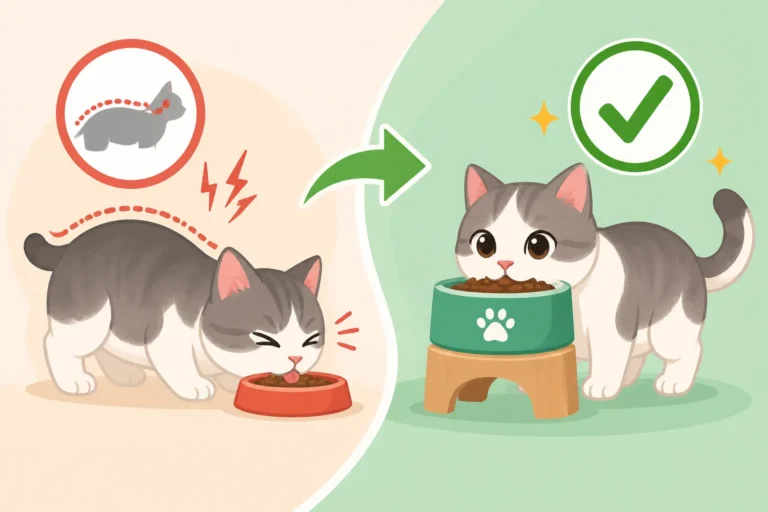
Standard pet ramps are often designed with a wider gait in mind, or for animals that can easily turn their bodies in a tighter space. A Munchkin, with its low center of gravity and short stride, needs a ramp that allows them to feel completely stable, without fear of slipping off the sides or having to contort their body to stay centered. This isn't just about getting up; it's about confidently coming down, too, which can often be more challenging for any animal. Ignoring these nuances can lead to a ramp that goes unused, or worse, causes anxiety or an accidental tumble, which is the last thing any of us want for our beloved felines. You might think, "How high a Munchkin can actually jump?" The truth is, they can jump, but repeated high jumps can put strain on their spine and joints over time, making ramps a crucial part of their daily environment.
Why Standard Pet Ramps Often Fall Short
Traditional pet ramps you find in big box stores are frequently too wide, too steep, or have a surface that's not quite right for a cat's paws. For a Munchkin, a ramp that’s excessively wide can feel like a vast, intimidating expanse. They might hesitate, unsure of where the edges are, or feel less secure without the slight 'hug' of a more appropriately sized ramp. Imagine walking down a hallway that's twice as wide as it needs to be – it feels less contained, less safe, right? It's similar for a short-legged cat. Conversely, a ramp that’s too narrow could make them feel cramped, especially if they need to adjust their footing or turn slightly.
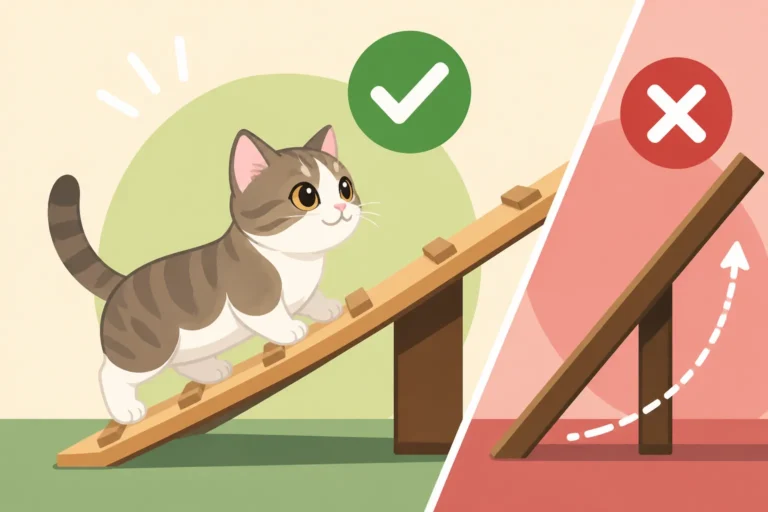
Furthermore, many standard ramps are designed for dogs to walk up, often with a rough, carpeted surface. While carpeting is good for grip, the pile might be too thick, or the texture might not appeal to a cat's delicate paws. If a ramp is too steep, it becomes a slippery slope even with good traction, and a Munchkin's short legs struggle to generate enough upward momentum without putting excessive strain on their front limbs. Remember, your Munchkin relies on stability, not brute force, to ascend. They might try to use two jumps where a normal cat uses one, but a well-designed ramp removes the need for this kind of compensatory movement.
The Importance of Stability and Confidence
A ramp isn't just a physical aid; it's a psychological one. When a Munchkin feels secure on a ramp, they're much more likely to use it consistently. This confidence comes from a combination of appropriate width, a gentle incline, and a non-slip surface. If a ramp wobbles, has too much give, or forces your Munchkin to walk tentatively, they'll quickly learn to avoid it. We've all seen cats who refuse to use a certain toy or bed; the same goes for a ramp. They need to trust it implicitly.
A stable ramp means your Munchkin can focus on moving forward, rather than worrying about their footing. This is especially vital when they are descending. Coming down from a height, even a small one, requires careful coordination, and a shaky or too-narrow ramp increases the risk of a misstep. Think about when you're carrying a full laundry basket and trying to go down stairs – you want a sturdy handrail! Our Munchkins don't have handrails, so the ramp itself must be their secure pathway. This peace of mind translates directly into their quality of life, allowing them full access to their favorite spots without the stress or physical strain. After all, "Why a Munchkin's Spine Carries a Load a Normal Cat's Does Not" is a serious concern, so anything we can do to reduce impact is a win.
The Ideal Ramp Width for a Munchkin
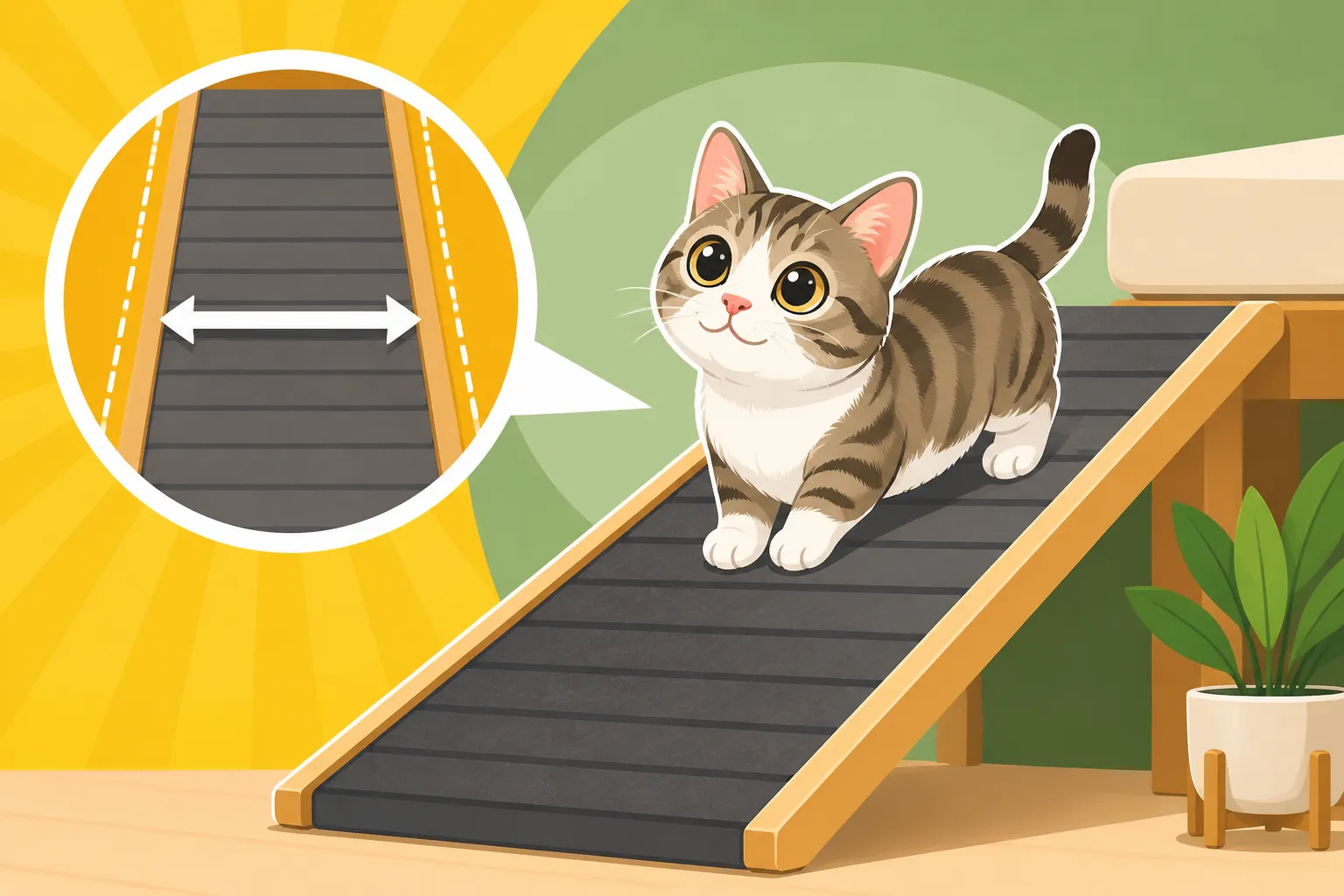
When it comes to the nitty-gritty of ramp dimensions, width is arguably as important as the incline itself. You're aiming for a sweet spot – wide enough for comfort and security, but not so wide it feels cavernous or takes up unnecessary space. Generally, for most adult Munchkin cats, a ramp width in the range of 8 to 12 inches (20 to 30 cm) tends to be ideal.
This range allows them sufficient room to walk without feeling constrained, to shift their weight, or even to pause briefly on the ramp if they choose. Anything narrower than 8 inches can start to feel precarious, especially if your cat has a slightly broader build or is a bit hesitant. On the other hand, going much wider than 12-14 inches isn't usually necessary and can make the ramp more cumbersome in your living space. Remember, we're not designing a highway for multiple cats to pass each other on, but a comfortable pathway for one.
Minimum Width for Comfort and Turning
For a single Munchkin cat, a minimum width of around 8 inches is typically sufficient. This allows for their body width, with a little extra room on either side for minor adjustments in their gait. Cats generally walk in a fairly straight line, but they might sway slightly or need to correct their balance, especially if they're still getting used to the ramp. A narrower ramp makes these small corrections more challenging.
However, if your Munchkin is on the larger side, perhaps a chunky male, or if they have a long coat that adds to their perceived bulk, you might want to lean towards 10 inches or more. Cats also like to turn around sometimes, even on a ramp, especially if they've gone up and then decided they want to come back down without reaching the top. While a full 180-degree turn isn't expected on a ramp, having enough space to slightly reorient themselves without feeling trapped is crucial for their comfort and confidence. If the ramp is leading to a small platform, the ramp's width should ideally be consistent with the platform's width to avoid a sudden change in surface area.
Considering Varying Body Sizes and Shapes
Not all Munchkins are built exactly alike, even with their characteristic short legs. You have males that can be quite a bit heavier than females, and some cats simply have a more robust build. An average adult male Munchkin might weigh somewhere in the range of 6-9 pounds, while a female could be 5-8 pounds, but these are just averages. A cat that leans towards the higher end of the weight spectrum or has a very dense coat will naturally occupy more space. How Much an Adult Male Munchkin Weighs and How Much an Adult Female Munchkin Weighs can vary, so consider your own cat's physique.
When selecting or building a ramp, take a good look at your specific cat. Do they seem particularly wide when they walk? Do they have a long, fluffy coat that makes them look bigger? If you have multiple Munchkins, and they vary in size, you'll want to choose a width that comfortably accommodates your largest cat. This ensures that all your furballs can use the ramp without issue. For instance, if you have a slender Munchkin and a slightly more rotund one, aim for the width that works for the latter.
The "Wiggle Room" Factor: More is Better for Confidence
When in doubt, a little extra width is almost always preferable to too little. Think of it as psychological "wiggle room." A wider ramp gives a cat a greater sense of security. They feel less constrained, less likely to accidentally step off the edge, and therefore more confident in using it. This is particularly true for kittens learning to use ramps, or for older Munchkins whose vision or balance might not be as sharp as they once were.
While a ramp that's 20 inches wide might be overkill and unnecessary, moving from 8 inches to 10 or 12 inches can make a noticeable difference in your cat's comfort level. It provides a more forgiving pathway, allowing them to focus on the ascent or descent rather than meticulously placing each paw. This added confidence means they'll integrate the ramp into their daily routine more readily, which is the ultimate goal. You want them to trot up and down without a second thought, making their lives (and yours!) a little easier and safer.
Factors Influencing Ramp Width Choice
Choosing the right ramp width isn't a one-size-fits-all situation; it really depends on a few key factors about your home and your Munchkin's specific needs. It's about blending practicality with optimal feline comfort and safety. Let's break down what you should consider when making this important decision.
Purpose of the Ramp
The primary use of the ramp is a major determinant of its ideal width.
- To a bed or sofa: For furniture access, a ramp leading to a bed or sofa can often be a bit wider, perhaps 10-12 inches. These are places your Munchkin will likely use frequently for rest and cuddles, and a slightly wider path offers maximum comfort and ease of use, especially if they're a bit sleepy. It gives them space to wander up and down without feeling rushed.
- To a window perch: If the ramp is leading to a window perch, you might be more constrained by the width of the window frame or the perch itself. In this case, you might opt for a slightly narrower ramp, perhaps 8-10 inches, to fit neatly into the space. Just ensure it's still comfortable for your cat. The goal is to get your Munchkin up to the window safely, so they can enjoy the view. How to Get a Munchkin Up to a Window Safely often involves ramps.
- To a litter box: For a litter box ramp, stability and ease of entry/exit are paramount. A ramp to a low-entry litter box might not need to be super wide, perhaps 8-10 inches, as the cat is generally just stepping in and out. The important thing here is a very gentle slope and excellent grip, as they’ll likely be moving quickly. Which Litter Box a Munchkin Can Actually Enter often requires a ramp, or at least a very low lip.
- As part of a larger climbing structure: If you're incorporating ramps into a custom catio or a multi-level cat tree (specifically designed for Munchkins), you might have more flexibility with width. In these scenarios, consistency across different ramps and platforms can be beneficial for your cat's confidence.
Placement and Available Space
Let's be real: our homes aren't always designed with cat ramps in mind! The physical space where you intend to place the ramp will significantly influence the maximum width you can accommodate.
- Doorways and Hallways: If a ramp needs to be placed near a doorway or in a narrow hallway, you might be limited to a narrower design, say 8-10 inches, to avoid creating an obstruction for humans. You still want to be able to walk past comfortably without tripping.
- Beside Furniture: When placing a ramp next to a sofa or bed, you'll need to measure the available floor space. Do you have 10 inches? 12 inches? 15 inches? A ramp that's too wide for the space will look awkward and could even impede traffic flow in the room. This is where you have to balance your Munchkin's optimal comfort with your own living requirements. Sometimes, a custom-built solution, or even a strategic furniture rearrangement, is the best way to get the ramp where it's needed. How to Set Up Ramps Around a Munchkin's House really depends on your home layout.
- Against Walls: A ramp placed flush against a wall will likely have more leeway in terms of width, as it's not interrupting a walkway. However, you'll still want to consider how far it protrudes into the room.
Multi-Cat Households or Other Pets
If you share your home with multiple Munchkins, or even other long-legged cats or small, calm dogs, the width of your ramp becomes even more important.
- Shared Use: While cats typically don't "share" ramps by walking side-by-side, a wider ramp (10-12 inches) can feel more welcoming in a multi-pet household. It allows for a quick descent if another pet approaches, without feeling cornered. It also reduces the chance of two pets trying to use it simultaneously and getting stuck or jostling each other.
- Introducing New Pets: If you plan on adding another pet in the future, it might be wise to opt for a slightly wider ramp from the start, saving you the hassle of replacing it later. Just ensure that any other pets you have are gentle and respectful of your Munchkin's space and their ramp access.
Material and Surface Considerations
The material and surface texture of the ramp are just as vital as its width. A perfectly wide ramp is useless if it's too slippery or uncomfortable for your Munchkin to use.
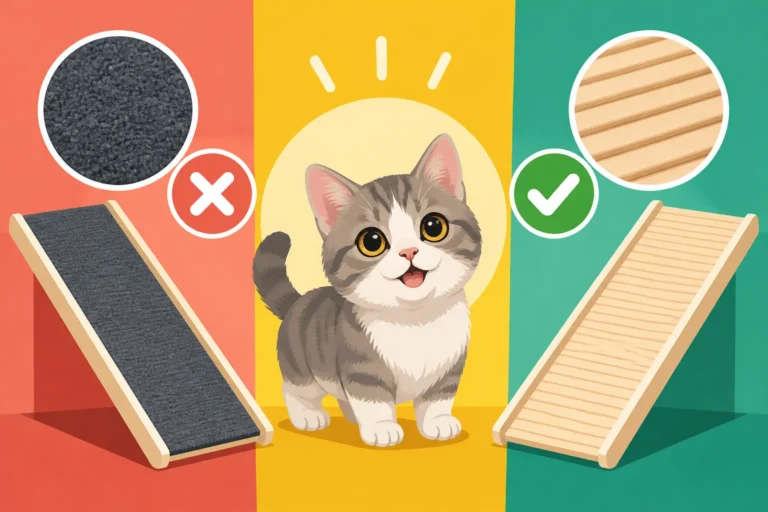
- Non-Slip is Non-Negotiable: Regardless of width, the surface must provide excellent traction. Carpet, ribbed rubber, or even textured fabric are good options. Avoid smooth wood, plastic, or linoleum. Cats rely on their claws for grip, and a slick surface makes them insecure.
- Cleanliness: Consider how easy the surface is to clean. Ramps can accumulate fur, dander, and sometimes even tracked-in litter. A washable or easily vacuumed surface is a big plus.
- Durability: Choose a material that will stand up to daily use. A flimsy ramp won't provide the stability your Munchkin needs and will quickly need replacing. Brands like Chewy and Amazon offer a variety of commercial ramps with different surface materials, so you can often find something that balances grip, cleanability, and durability.
DIY vs. Commercial Ramps and Width
Once you've settled on the ideal width for your Munchkin's ramp, the next step is deciding whether to buy a ready-made one or embark on a DIY project. Both options have their merits and drawbacks, particularly when it comes to customizability and cost.
Pros and Cons of Each in Terms of Customization
Choosing between a DIY and a commercial ramp largely boils down to how much specific customization you need, particularly for width, and your comfort level with tools.
Commercial Ramps:
- Pros: Generally convenient, ready to use out of the box (or with minimal assembly), often come with non-slip surfaces already integrated, and are designed to be sturdy. You can browse a wide variety online through retailers like Chewy or Amazon, comparing features and reading reviews. This saves you time and effort if you're not handy.
- Cons: Limited in terms of custom width. You're usually stuck with standard sizes, which might not be exactly what you determined as ideal for your Munchkin or your specific space. If you need something very specific – say, an 8.5-inch wide ramp or one that precisely matches the height of a quirky vintage armchair – a commercial option might not fit the bill perfectly. Prices can also vary, and getting a heavy-duty, cat-friendly commercial ramp can sometimes be a significant investment.
- Brand Mentions: You can find a good selection of pet ramps on Chewy and Amazon, offering various widths, materials, and lengths. Look for ones marketed for small dogs or even rabbits, as their size might be more appropriate than large dog ramps.
DIY Ramps:
- Pros: Ultimate customization! You can build a ramp to any specific width, length, or height you need, perfectly tailored to your Munchkin and your home. This is ideal if you have an unusual furniture height or a very particular space constraint. Building it yourself can also be very satisfying and potentially more cost-effective if you have materials on hand or can source them cheaply. You also have full control over the surface material, ensuring it's exactly what your cat prefers for traction.
- Cons: Requires tools, basic carpentry skills, and time. If you're not comfortable with measuring, cutting, and assembling, a DIY project can be frustrating or even dangerous. The finished product might not look as polished as a commercial one, and ensuring structural stability and a truly non-slip surface takes careful planning and execution. Plus, the initial outlay for tools if you don't already own them can sometimes negate the cost savings on materials. "What Building Munchkin Steps Yourself Costs" can quickly add up if you're starting from scratch.
Where to Find Suitable Commercial Options
When searching for a commercial ramp, expand your search beyond just "cat ramps." Often, ramps designed for small dogs, puppies, or even pets with mobility issues (like senior dogs) will be a better fit for a Munchkin's size and needs.
- Online Retailers: Websites like Amazon and Chewy are excellent places to start. Use search terms like "small pet ramp," "dog ramp for couch," "bed ramp for small animals," or "pet stairs with gentle incline." Pay close attention to the product dimensions, particularly the width and the incline angle, in the product descriptions. Look for customer reviews that mention use with small cats or toy dog breeds, as these often give good insights into suitability.
- Specialty Pet Stores: Some larger brick-and-mortar pet supply stores might carry a limited selection of ramps. The advantage here is being able to see and touch the product, assessing its stability and surface texture firsthand. However, the variety might not be as extensive as online.
- Consider Pet Stairs (with caveats): While this article focuses on ramps, some pet stairs can also work if they have very shallow, wide steps that are close together. However, traditional steps often require more joint impact than a smooth ramp, which is something to be mindful of for a Munchkin. If you choose stairs, ensure they are incredibly stable and have excellent traction on each step. Whether a Munchkin Prefers a Ramp or Steps often comes down to individual preference and the quality of the item.
Tips for Building Your Own Ramp to Ideal Width
If you decide to go the DIY route, here are some tips to ensure your ramp is perfectly suited for your short-legged friend:
- Measure Meticulously: Measure the height of the furniture or surface your Munchkin needs to reach, and the available space for the ramp's length and width. Remember, a shallower incline is better for a Munchkin, so you'll need more length for a given height. The width, as discussed, should be 8-12 inches.
- Choose Sturdy Materials: Plywood (at least 1/2 inch thick for the base), solid wood planks, or MDF are good choices for the structure. Ensure the wood is free of splinters and treated appropriately if it will be in a humid environment.
- Prioritize the Surface: This is critical. Forget aesthetics for a moment and focus on grip. Carpet scraps (low pile is best), rubber matting, or even non-slip stair treads can be securely glued or stapled to the ramp surface. Ensure there are no loose edges that a paw could catch on.
- Secure Fastenings: Use strong screws and wood glue to assemble the ramp, ensuring there's no wobbling. Test the ramp's stability by pressing down on it yourself before letting your cat use it.
- Anchor it if Possible: For maximum stability, consider adding non-slip pads to the feet of the ramp or even securing it to the furniture it leads to (if safe and practical). This prevents the ramp from shifting as your cat uses it.
- Gradual Introduction: Once built, introduce your Munchkin to the new ramp slowly. Use treats and praise to encourage them to explore it. You want them to associate it with positive experiences. How to Teach a Munchkin to Use a Ramp involves patience and positive reinforcement.
Building a ramp yourself can be a rewarding project that provides your Munchkin with a custom-fit, safe, and comfortable way to access their favorite spots. Just remember that safety and stability are your top priorities, even over perfect aesthetics.
Ramp Width Comparison Chart
To help visualize the different considerations for ramp width, here's a handy comparison chart.
| Ramp Purpose / Scenario | Recommended Width Range (Inches) | Key Considerations |
|---|---|---|
| General Furniture Access (Sofa, Bed) |
10-12 inches | Maximize comfort for frequent use. Allows slight body adjustments. |
| Window Perch Access | 8-10 inches | May be limited by window frame/perch width. Still needs to feel secure for steady ascent/descent to a smaller landing. |
| Litter Box Entry | 8-10 inches | Focus on low incline and excellent grip for quick, confident entry/exit. Cat's focus is on the box, not lingering on the ramp. |
| Multi-Cat Household | 10-12+ inches | Accommodates largest cat. Provides more space to prevent crowding if two cats are near the ramp, or for quick turns. |
| Limited Space Area (Hallway, Narrow Gap) |
8-10 inches | Prioritize human traffic flow. Ensure it's not a tripping hazard. Smallest acceptable width while still ensuring cat's comfort and safety. |
| Older/Less Agile Munchkin | 10-12+ inches | Extra width provides greater confidence and forgiveness for any slight unsteadiness. Combine with a very shallow incline. |
| Larger/Fluffier Munchkin | 10-12+ inches | Ensures ample space for their physical size without feeling cramped. Prevents rubbing against sides, which can be irritating. |
| DIY Ramp Project | Customizable (8-14 inches) | Allows for precise tailoring to space and cat, but requires careful planning for stability and surface material. Build with your specific Munchkin's needs and your home's layout in mind. |
Ultimately, the best width for your Munchkin's ramp is one that makes them feel utterly safe, comfortable, and confident every single time they use it. By considering these factors, you can create an accessible environment that truly enhances your short-legged companion's life.
Disclaimer
This article is for general informational purposes only and does not constitute professional advice. Laws, prices and regulations vary by location and change over time. Consult a qualified professional for guidance on your specific situation.