Which Surface a Munchkin’s Ramp Should Have
Bringing a Munchkin cat into your life means embracing their unique needs, and one of the biggest considerations is making your home accessible for their adorable, short legs. You want them to be able to reach their favorite sleeping spots, look out windows, and cuddle on the sofa just like any other cat, but without the strain or risk of injury. This guide will walk you through everything you need to know about choosing the perfect surface for your Munchkin's ramps, ensuring they navigate their world safely and happily.
The Critical Role of Ramp Surfaces for Your Munchkin's Mobility
It might seem like a small detail, but the surface of your Munchkin's ramp is genuinely critical. Think about it: a regular cat can leap, stretch, and balance with relative ease. Our little Munchkin friends, with their distinctive short legs, rely much more on continuous, stable traction as they ascend or descend. They don't have the same leverage or spring in their step to overcome slippery spots or awkward angles. Choosing the wrong surface isn't just an inconvenience; it can pose a real physical challenge and even a safety risk.
When a Munchkin encounters a ramp with an inadequate surface, they're forced to compensate in ways that can put undue stress on their body. They might struggle for grip, leading to awkward postures or even slips and falls. This is especially concerning given that Munchkins, while generally robust, do carry their unique build. Their spine, while normal length, takes on a different kind of load due to their shorter legs, making stability and smooth movement paramount. Why a Munchkin's Spine Carries a Load a Normal Cat's Does Not delves deeper into this. An unstable climb could exacerbate any underlying issues or simply make them anxious about using the ramp altogether, defeating its purpose.
Why Your Munchkin Needs Optimal Traction
The primary reason for a carefully chosen ramp surface is traction. Imagine trying to walk up a slightly sloped, polished floor in socks – it's doable, but you're probably going to move slowly and carefully, bracing yourself with every step. Now imagine doing that with much shorter legs, meaning your center of gravity is lower, but your push-off power is reduced. That's a bit like what a Munchkin experiences on a slick ramp. They need something their paws can truly grip onto, something that instills confidence rather than caution.
Without proper traction, your Munchkin might try to "scramble" up the ramp, putting excessive force on their front legs and shoulders. This repetitive strain, especially over years, can contribute to joint wear and tear, potentially leading to discomfort earlier in life. Their little paws have soft pads designed for gripping, but those pads are only effective if the surface offers something to grip. A good surface allows them to use their natural climbing instincts effectively, distributing their weight evenly and propelling themselves forward without hesitation. This smooth, fluid motion is key to protecting their delicate joints and spine.
Building Confidence and Preventing Accidents
Beyond the physical strain, there's the psychological aspect. A ramp that feels insecure or causes slips can quickly become a dreaded obstacle for your Munchkin. Cats are creatures of habit and comfort, and if a pathway isn't trustworthy, they'll simply avoid it. This means they might miss out on those cherished high-up spots you've created for them, or worse, they might try to jump from a dangerous height because the ramp feels unsafe to descend. Why a Munchkin Should Not Be Jumping Down Repeatedly offers more insight into the dangers of excessive jumping.
A well-surfaced ramp, on the other hand, empowers your Munchkin. They learn to trust the path, developing confidence in their ability to reach their desired destinations. This confidence translates into a happier, more independent cat who can fully enjoy their enriched environment. Accidents, like slips or falls, aren't just physically painful; they can be traumatizing, leading to a fear of heights or specific areas of the home. By ensuring their ramps are safe from day one, you're investing in their long-term physical and emotional well-being.
Essential Characteristics of an Ideal Ramp Surface
So, what exactly makes a ramp surface ideal for a Munchkin? It comes down to a few key characteristics that address their unique build and needs. You're looking for a balance of grip, comfort, durability, and ease of maintenance. It's not just about one factor; it's about how all these elements work together to create a safe and inviting pathway for your short-legged friend.
Superior Grip and Non-Slip Qualities
This is arguably the most important feature. The surface must provide consistent, reliable grip for your Munchkin's paws, whether they're going up or down. Think about materials that offer a slight texture or resistance, preventing any slipping or sliding. This isn't just about preventing dramatic falls; it's also about avoiding those tiny, almost imperceptible slips that make a cat tense up their muscles, increasing strain with every step.
A truly non-slip surface ensures that each paw placement is firm and secure, giving your Munchkin the confidence to move at their own pace without hesitation. This is particularly crucial if the ramp has any degree of incline. Even a gentle slope can become treacherous if the surface is too smooth. For pre-made ramps, check for features like ribbed carpet, rubberized treads, or textured fabric. If you're building your own or modifying an existing ramp, consider adding grip tape or a non-slip mat specifically designed for pets.
Paw Comfort and Gentle Texture
While grip is paramount, you also don't want a surface that's rough or abrasive on their delicate paw pads. Cats have sensitive paws, and a harsh texture could deter them from using the ramp. A good surface will feel soft enough to be comfortable, encouraging them to use it frequently, but still provide ample friction.
Materials like low-pile carpet or certain types of durable fabric offer this balance beautifully. They provide enough texture for grip without being scratchy or uncomfortable underfoot. Avoid very coarse textures that could irritate their paws or snag their claws. The goal is a surface that feels inviting, not punishing. Especially for older Munchkins or those with sensitive paws, comfort can make all the difference in their willingness to use the ramps you've provided.
Durability and Easy Maintenance
Let's be realistic – cats can be messy. From shedding fur to tracking litter or even the occasional hairball, their pathways need to be easy to clean. An ideal ramp surface should be durable enough to withstand regular use and cleaning, without degrading quickly or losing its non-slip properties. You don't want to be replacing the ramp surface every few months.
Look for materials that are resistant to wear and tear, and easy to vacuum, wipe down, or even spot clean. Washable fabrics or rubber surfaces that can be wiped with a damp cloth are excellent choices. Consider how often you'll need to clean it and choose a material that fits your lifestyle. A durable, easy-to-maintain surface ensures the ramp remains a functional and hygienic part of your home for years to come.
Popular Ramp Surface Materials and Their Suitability
Now that we understand what makes an ideal ramp surface, let's explore some common materials you might encounter and weigh their pros and cons for your Munchkin. Each material has its own characteristics, and the best choice for you might depend on your specific ramp, your cat's preferences, and your budget.
Carpeted Ramps
Carpet is a perennial favorite for pet ramps, and for good reason. It offers excellent traction and a comfortable, familiar feel for most cats.
- Pros: Carpet provides superb grip, mimicking surfaces your cat is already comfortable walking and scratching on. It’s soft on paws, helping to cushion their steps and absorb some impact, which is especially beneficial for a Munchkin's joints. It also comes in a wide variety of colors and textures, allowing you to match it to your home decor. Many commercial pet ramps available on sites like Chewy and Amazon come carpeted. How to Set Up Ramps Around a Munchkin's House often recommends carpeted options for this very reason.
- Cons: The main downside to carpet is cleaning. It can trap fur, dirt, and dander, and accidents like hairballs or litter tracked from the box can be harder to spot clean completely. Over time, carpet can also wear down, especially in high-traffic areas, potentially losing some of its grip. You might need a good vacuum or a small carpet cleaner for maintenance.
- Best Use: Carpeted ramps are fantastic for indoor use, particularly for ramps leading to sofas, beds, or window perches. Opt for a low-pile, dense carpet rather than shag, as long fibers can snag claws and make cleaning more difficult.
Rubberized or Textured Plastic Ramps
These ramps often feature a molded rubber surface or a textured plastic designed to enhance grip. They are a sturdy and practical choice.
- Pros: Rubberized surfaces offer fantastic, consistent traction. They are incredibly durable, water-resistant, and very easy to clean – a quick wipe with a damp cloth usually does the trick. This makes them a hygienic option, especially if your Munchkin is prone to litter box mishaps or has a long coat that might pick up debris. Which Litter Sticks to a Munchkin's Belly is a good read if this is a concern. Textured plastic provides similar benefits, often being lighter weight.
- Cons: Some cats might find the texture of rubber less appealing than soft carpet, especially if it's very bumpy or firm. While great for grip, it doesn't offer the same cushioning effect as carpet. Aesthetically, they might look more utilitarian than a carpeted ramp, which might not suit every home.
- Best Use: Ideal for areas where durability and easy cleaning are priorities, such as near food and water bowls, or in a catio. They're also excellent for outdoor ramps if your Munchkin has a secure, enclosed outdoor space. Many ramps for cars or outdoor pet access are made from these materials.
Wood or Laminate with Added Grip
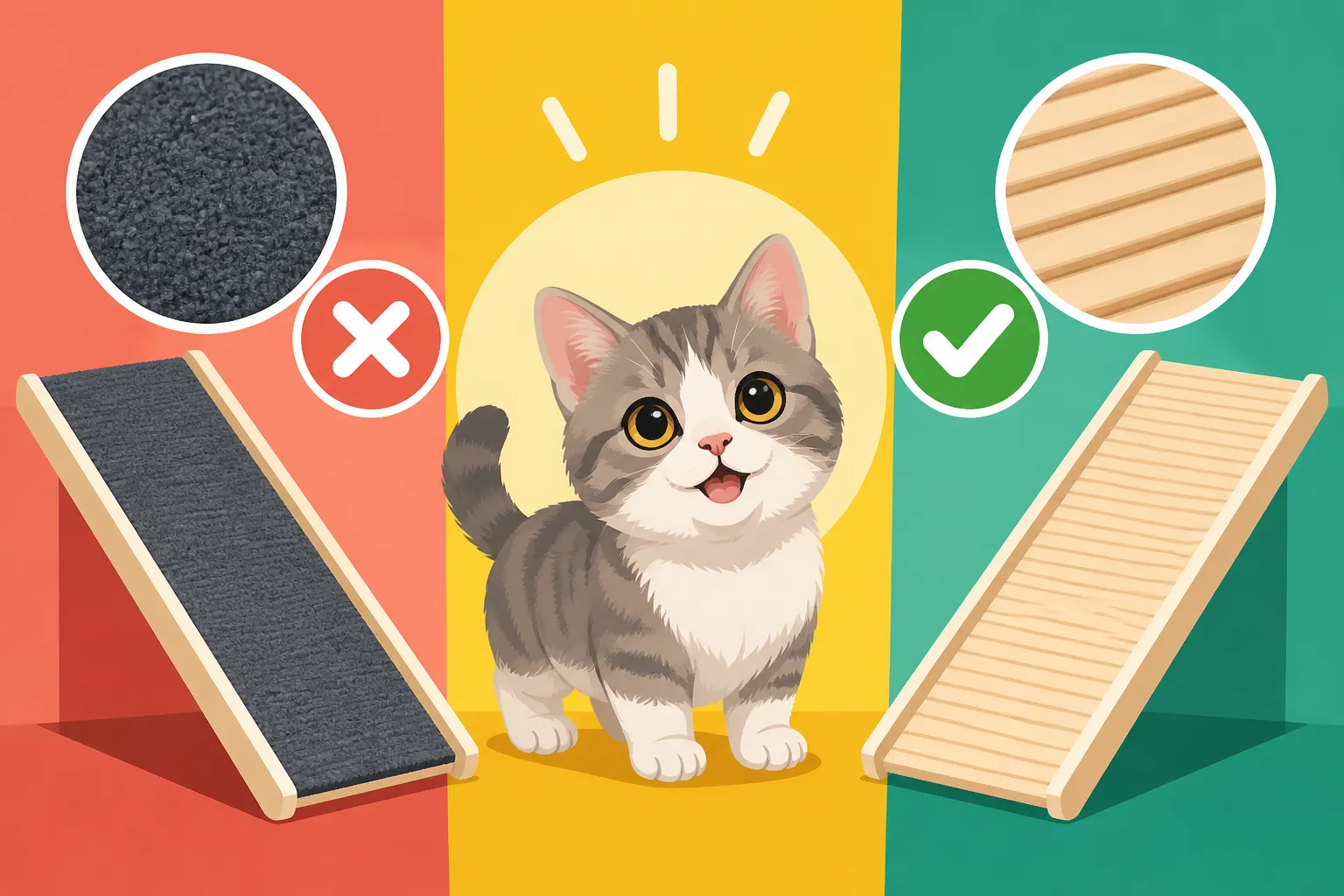
While sleek and stylish, bare wood or laminate ramps are usually too slippery on their own for a Munchkin. However, they can be a great base for DIY grip solutions.
- Pros: Wood and laminate are durable and can look very attractive, blending seamlessly with many home interiors. They offer a rigid, stable structure for the ramp itself. If you're building a ramp, these materials are often easy to work with.
- Cons: Critically, plain wood or laminate offers virtually no natural grip for a cat's paws. It's too smooth and can be very dangerous, leading to slips and falls. They must be augmented with a non-slip surface.
- Best Use: As a base material for a DIY ramp, onto which you would then firmly attach carpet, rubber treads, or non-slip strips. You could find pet-safe anti-slip tapes or mats on platforms like Amazon to make these surfaces suitable.
Here's a quick comparison of these common ramp surface materials:
| Material | Grip/Traction | Paw Comfort | Durability | Ease of Cleaning | Aesthetic Appeal | Notes |
|---|---|---|---|---|---|---|
| Low-Pile Carpet | Excellent | High | Medium | Medium | High | Familiar, soft, good for joints. Can trap fur/dirt. |
| Rubberized/Textured Plastic | Excellent | Medium | High | High | Medium | Very durable, hygienic. Might be less appealing to some cats. |
| Wood/Laminate (plain) | Poor | Low | High | High | High | Requires added grip. Good as a sturdy base. |
| Non-Slip Strips/Tape | Excellent | Low-Medium | High | High | Varies | Best used to augment other surfaces. Can be slightly rough. |
Crafting the Perfect Ramp: DIY and Adaptations
Sometimes, the perfect ramp isn't something you buy off the shelf. It's often about adapting what you have or creating something tailored specifically for your Munchkin and your home. Don't be afraid to get a little creative – your Munchkin will thank you for it!
Adding Non-Slip Elements to Existing Ramps
If you already have ramps or pet stairs that your Munchkin isn't quite trusting, or that seem a bit slick, you don't necessarily need to replace them entirely. There are many ways to enhance their surface and make them safer. This can be a cost-effective solution and allows for customization.
One popular method is to apply pet-safe anti-slip strips or stair treads. These often come with an adhesive backing and are made from textured rubber or a similar grippy material. You can cut them to size and apply them horizontally across the ramp at regular intervals, creating individual steps of traction. This is especially useful for wooden or plastic ramps. Just make sure the adhesive is strong enough to stay put but doesn't leave a nasty residue if you ever need to remove it. You can often find a good selection of these on sites like Chewy or Amazon.
Another option is to cover the entire ramp surface with a piece of durable, low-pile carpet or a non-slip rubber mat. You can secure these with strong, pet-safe adhesive spray, heavy-duty double-sided tape, or even small, recessed screws if the ramp material allows. When using screws, ensure they are flush with the surface and won't snag paws or claws. This full coverage provides consistent traction and often adds a layer of comfort. Remember to consider How Steep a Munchkin's Ramp Can Be when adding these elements, as a very steep ramp needs even more aggressive grip.
Considerations for DIY Ramp Building
If you're handy, building a ramp from scratch can give you complete control over its design, incline, and surface. This is where you can truly tailor the ramp to your Munchkin's exact needs and your home's aesthetics. When planning your DIY ramp, think about the core structure first. Plywood or sturdy MDF are common choices for the ramp itself, providing a solid, stable base.
For the surface, you can then choose to lay down carpet, secure a rubber mat, or even use outdoor turf if the ramp is for an enclosed catio. When attaching your chosen surface, make sure it's absolutely secure and doesn't buckle or shift when your cat walks on it. Any movement could spook your Munchkin or lead to a fall. Consider rounded edges and smooth transitions where the ramp meets the floor or furniture to prevent snags or trips. Don't forget that the height and length of the ramp are just as important as the surface, ensuring a gentle incline that's manageable for short legs. How to Anchor a Ramp So a Munchkin Trusts It is a great resource if you're going the DIY route.
Maintaining Optimal Ramp Surfaces
Even the best ramp surface won't stay perfect forever without a little care. Regular maintenance is crucial to ensure your Munchkin's ramps remain safe and inviting. For carpeted ramps, a weekly vacuuming can remove loose fur and dirt, preventing buildup that could reduce traction. Spot clean any spills or accidents immediately to prevent stains and odors. If the carpet starts to look matted or worn in high-traffic areas, it might be time to replace that section of carpeting to restore optimal grip.
For rubberized or textured plastic ramps, simply wiping them down with a damp cloth and a mild, pet-safe cleaner will keep them hygienic and grippy. Over time, rubber can sometimes dry out or crack, especially if exposed to sunlight, so keep an eye out for signs of degradation. Non-slip strips or tapes might also need occasional inspection; if the edges start to peel or the texture wears smooth, they should be replaced.
Beyond the surface, regularly check the ramp's stability. Ensure all fasteners are tight and there's no wobbling. A stable ramp, regardless of its surface, is fundamental to your Munchkin's safety and confidence. A well-maintained ramp will serve your short-legged companion faithfully for years, allowing them to enjoy all the heights of their home without worry. And remember, consistent good nutrition can support joint health, helping them to continue using their ramps easily as they age.
Disclaimer
This article is for general informational purposes only and does not constitute professional advice. Laws, prices and regulations vary by location and change over time. Consult a qualified professional for guidance on your specific situation.