How a Munchkin’s Leg Length Is Measured
A Munchkin’s short legs can look dramatically different depending on posture, age, coat, and camera angle, so a quick glance or tape-measure guess can be misleading. This guide explains what leg length means, what can be measured at home, how breeders and veterinarians assess the whole cat, and when a change in movement deserves attention.
What leg length means in a Munchkin
There is more than one useful measurement
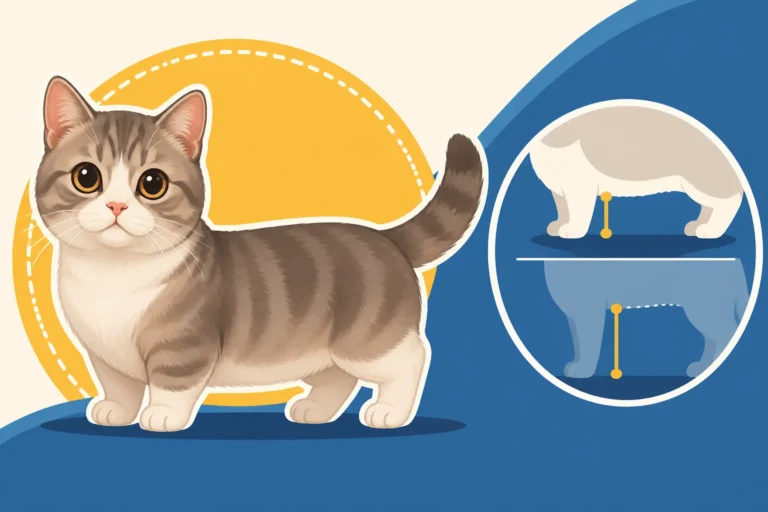
“Leg length” can mean several things: the visible height from the floor to the body, the length of a particular limb bone, or the overall proportion of the legs compared with the cat’s body. Those are not interchangeable. A cat sitting low to the ground may look shorter-legged than the same cat standing squarely, while a long coat can make the body appear lower or fuller than it is.
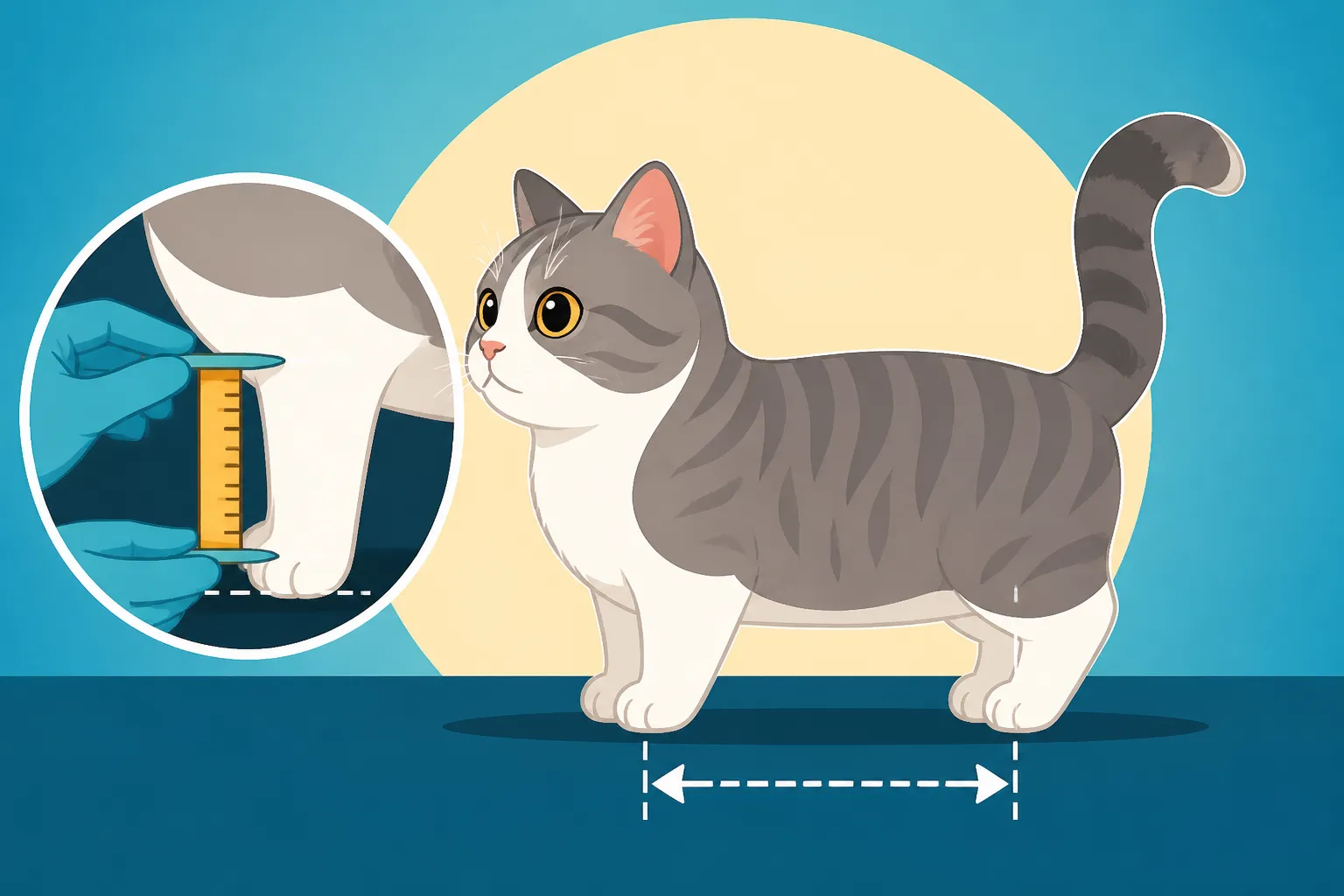
For a simple home observation, you can record the floor-to-body clearance while the cat stands naturally on a level surface. This gives you a rough, repeatable picture of how high the underside of the body sits above the floor. It does not reveal the length of individual bones or tell you whether the limbs are healthy. A vet would need to examine the cat and, if there is a medical reason, may recommend imaging.
It also helps to know that a cat’s legs are made up of several sections and joints. A single measurement cannot explain whether a limb is proportioned normally, angled differently, or being held in an unusual way. If you are comparing a kitten’s growth over time, use the same surface, posture, and measuring method each time, and write down the date rather than relying on memory.
Show descriptions are not a household measuring scale
Munchkins may be described using terms such as standard, super short, or rug hugger. These labels refer to relative leg length and appearance, but they should not be treated as universal ruler measurements. A label alone does not tell you the cat’s exact limb dimensions, gait, health, or ability to move around comfortably.
The breed’s general appearance is about proportion as well as shortness. Two cats with similar visible clearance can still look different because of body size, stance, bone structure, coat, and how they carry themselves. For background on the breed’s proportions, see What a Munchkin Looks Like Against the TICA Standard and What a Standard Munchkin Leg Length Is.
This is why a seller’s claim that a kitten has a particular “leg length” should be treated as a description, not a medical assessment. If you are deciding whether a kitten is a good fit, watch it walk and play on a non-slip surface, and ask how its movement has been evaluated. Why to Watch a Munchkin Kitten Walk in Person explains why seeing the kitten move can tell you more than a posed photo.
How to make a useful home measurement
Set up a calm, level measuring spot
Choose a level floor with good light and enough room for the cat to stand without feeling cornered. A hard, slippery floor can make a cat widen its stance or crouch, which changes the apparent clearance. A non-slip mat or rug can help, and a familiar surface may make the cat more relaxed. If you are shopping for basic pet supplies, you might compare a suitable mat from a local store with options available through Chewy; the main thing is that the surface stays flat and does not slide.
Let the cat settle before taking any measurements. Do not pull the legs into position or hold the cat upright. A relaxed, natural stance is more informative than a forced pose, and forcing a joint can make the cat uncomfortable or cause a misleading result. If the cat is restless, take a short video instead and try again later.
A practical approach is to have one person calmly engage the cat while another records the measurement. Keep the session brief and reward calm behavior. If the cat resists, stop. There is no benefit in turning a rough home observation into a stressful wrestling match.
Record visible clearance consistently
For a simple baseline, place a ruler or measuring tape beside the cat without pressing it against the body. Observe the vertical distance from the floor to the underside of the torso while the cat stands naturally. Take the reading from the same general area each time, and note that it is a visual clearance measurement, not a bone-length measurement.
A side-on photo or short video can make the record more useful. Include the cat’s whole body, keep the camera level with the cat rather than pointing sharply down, and use the same location and approximate distance each time. A phone held overhead can distort proportions, while a close-up taken from floor level can exaggerate the legs or body. Consistent framing is more helpful than trying to make a photo look dramatic.
You could keep a brief record like this:
| What you record | How to do it consistently | What it can tell you |
|---|---|---|
| Date and age | Write down the date and the cat’s age | Provides context for later comparisons |
| Standing posture | Photograph the cat from the side while relaxed | Shows stance and visible body clearance |
| Floor-to-body clearance | Measure beside the cat without touching or stretching it | Gives a rough home comparison over time |
| Walking video | Film a few natural steps on a non-slip surface | May help you notice changes in gait |
| Notes on behavior | Record reluctance, stiffness, or a change in activity | Helps you describe concerns to a veterinarian |
A kitchen scale or measuring tape is not a substitute for a veterinary exam. If you already use Chewy for routine supplies, you may find it convenient to look for a simple measuring tool there, but the method matters more than the brand or the number of decimal places.
What a breeder or veterinarian assesses
Proportion, alignment, and movement matter together
A useful assessment looks beyond a ruler reading. A knowledgeable breeder or veterinarian may consider how the legs sit beneath the body, whether the cat stands comfortably, and whether it moves freely. They may also look at body condition, muscle tone, and the way the cat uses its front and hind limbs during ordinary walking and play.
For a pet owner, the most helpful questions are practical: Does the cat walk willingly? Does it place its feet evenly? Is it able to turn, play, and get to the resources it needs? Does it appear to avoid particular movements? A short-legged build does not mean every movement difference indicates pain, but a new or worsening difference is worth discussing with a vet.
A breeder should be able to explain how they assess kittens without presenting a single measurement as proof of health. Ask to see the kitten move, and ask about the parents’ movement and veterinary history. The guide What a Munchkin Breeder Should Be Able to Show You covers the kinds of records and observations a buyer can reasonably request. For how a clinician may evaluate the limbs, see How a Vet Assesses a Munchkin's Leg Conformation.
Imaging is for clinical questions, not home grading
X-rays may be useful when a veterinarian is investigating a specific concern, such as pain, an injury, unusual limb alignment, or a change in mobility. Imaging can show structures that a home measurement cannot. It is not something an owner can interpret reliably from a photo, and it should be recommended by a vet based on the cat’s history and examination.
A breeder’s visual category or a home measurement cannot rule out a medical issue. Likewise, a cat that looks especially low to the ground is not automatically unwell. The vet will consider the full picture: how the cat moves, whether the limbs are painful, how the joints feel, and whether the observed build is consistent with that individual cat.
If you are looking for more context on the breed’s leg structure, Why a Munchkin's Legs Are Short but Its Body Is Not explains the distinction between short legs and a short body. How Short a Munchkin's Legs Actually Are offers a related look at the question of leg length, while Why a Munchkin's Gait Looks Different focuses on movement rather than measurement.
When a measurement or movement change deserves attention
Compare the cat with itself, not with a picture online
Online photos can be misleading. Cats may be sitting, crouching, stretching, or photographed from an angle that changes how short the legs appear. Fur can hide the outline of the body, and a kitten’s proportions change as it grows. Comparing your cat with a staged image or a different cat is unlikely to give you a reliable health answer.
Instead, compare the cat with its own earlier records. If the body clearance appears different in a new photo, first check whether the surface, stance, camera angle, or coat is different. A single observation is not enough to conclude that the legs have changed. A repeated change in posture or movement is more useful information to share with your vet.
You may also notice a change in the activities the cat chooses. Perhaps it stops using a ramp, hesitates before stepping into the litter box, or avoids a favorite play routine. Those observations can matter more than a small difference on a ruler. For a related discussion of movement and comfort, read Whether a Munchkin's Gait Is Painful.
Watch for functional changes and seek veterinary advice
Contact your veterinarian if your cat develops new limping, persistent stiffness, reluctance to walk, sensitivity when handled, or a sudden change in activity. A cat that is struggling to reach food, water, resting spots, or a litter box also needs practical help, regardless of the reason. Do not try to diagnose the cause by repeatedly bending or stretching the legs.
For a planned appointment, bring your notes and a few short videos showing the cat walking naturally. Include details about when you first noticed the change and whether it is getting better, worse, or staying the same. If you have been using a particular measuring setup, mention that too, while being clear that the measurement is only a home observation.
It is reasonable to ask the veterinarian what they are evaluating and whether any further examination is needed. The goal is not to find one perfect leg-length number. It is to understand your cat’s individual build, notice changes early, and make sure the cat can move comfortably through everyday life.
Disclaimer
This article is for general informational purposes only and does not constitute professional advice. Laws, prices and regulations vary by location and change over time. Consult a qualified professional for guidance on your specific situation.