Whether a Munchkin’s Gait Is Painful
It’s a question that weighs heavily on the hearts of many Munchkin cat owners, and understandably so: is their unique, low-slung gait actually causing them pain? When you watch a Munchkin trot across the living room, there's no denying it looks different from a long-legged cat, and that difference often sparks concern, fueled by both love for our pets and the ongoing debates surrounding the breed. This guide aims to thoroughly explore the Munchkin’s distinctive walk, delving into its mechanics, addressing common concerns, and most importantly, helping you discern between a normal, happy waddle and genuine signs of discomfort.
Understanding the Munchkin Gait: What Makes It Unique?
The very first thing anyone notices about a Munchkin cat is their short legs. It's their defining characteristic, the genetic mutation that sets them apart. And because their legs are significantly shorter than those of a typical feline, their movement is inherently different. It’s not just a matter of reduced height; it’s a whole new way of navigating the world, and it understandably raises questions about whether this particular adaptation causes discomfort.
The Anatomy Behind the Walk
At its core, the Munchkin's short stature is due to a form of dwarfism called pseudoachondroplasia. This affects the long bones of the legs, meaning they don't grow to the same length as in other cats. Crucially, Why a Munchkin's Legs Are Short but Its Body Is Not, their spine and body length remain proportionate to a regular cat, which means the short legs are supporting a standard-sized torso. This creates a unique anatomical challenge and a distinct center of gravity. Think of it like a sports car versus an SUV; both are vehicles, but their proportions dictate different handling.
A Munchkin's front legs often appear slightly bowed, which is a characteristic feature of the breed, not necessarily a defect in itself. This bowing helps accommodate the shorter bone structure and allows for proper weight distribution. When a Munchkin moves, its stride length is naturally much shorter than that of a long-legged cat. They compensate for this by taking more steps, creating a faster patter of paws. They don't typically exhibit the graceful, flowing stride of a Persian or a Siamese; instead, it's a bustling, scuttling kind of movement that is all their own. Understanding these anatomical realities is key to understanding their movement, and it helps us appreciate that "different" doesn't automatically equate to "painful."
Why It Looks Different: The Ferret-Like Trot
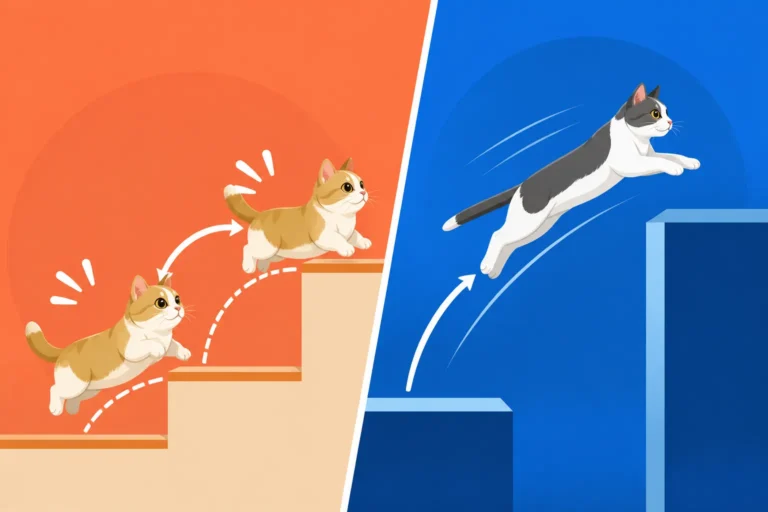
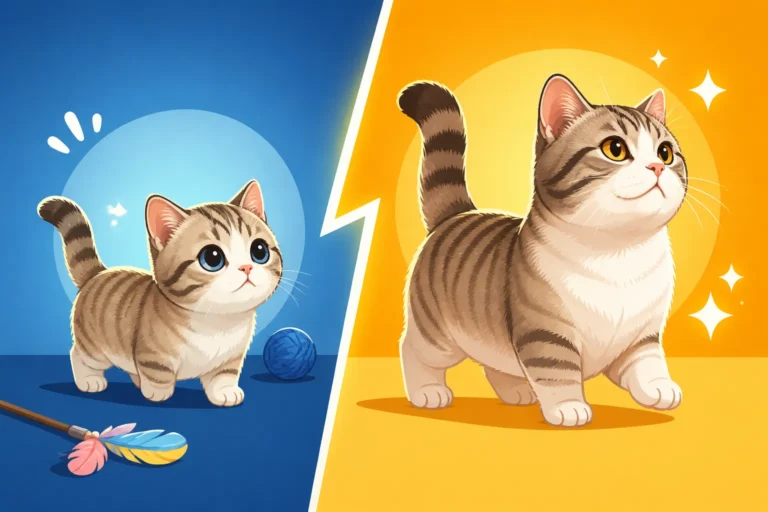
If you've spent any time observing a Munchkin in full flight, you've probably noticed their distinctive run. It's often described as a "ferret-like trot" or even a "weasel-like scurry." Instead of the elegant, high-stepping gait of a standard cat, Munchkins tend to stay very low to the ground, almost "skimming" across the floor. Their short legs churn rapidly, propelling their body forward with surprising speed and agility, especially on flat surfaces. How Fast a Munchkin Runs on Level Ground can be quite a revelation for new owners.
This unique movement isn't just for show; it's a functional adaptation. Their low center of gravity actually gives them an advantage when turning corners quickly. Why a Low Center of Gravity Helps a Munchkin Corner means they can change direction with impressive precision, often outmaneuvering longer-legged playmates. You'll see their entire body lean into the turn, a fluid motion that uses their short limbs effectively. While it might look less "cat-like" to some, this method of locomotion allows them to explore, play, and interact with their environment much like any other cat, just with a different physical expression. The key is to distinguish this natural, adapted movement from movements that are forced or indicative of distress.
Is the Munchkin Gait Inherently Painful? Addressing the Controversy
This is perhaps the most sensitive and frequently asked question about the Munchkin breed, and it's surrounded by a fair amount of debate. The core of the concern stems from the fact that their short legs are a result of a genetic mutation, and historically, some forms of dwarfism in animals have been associated with pain and health issues. However, the specific type of dwarfism in Munchkins, pseudoachondroplasia, is distinct from other forms.
The Veterinary Perspective: A Range of Opinions
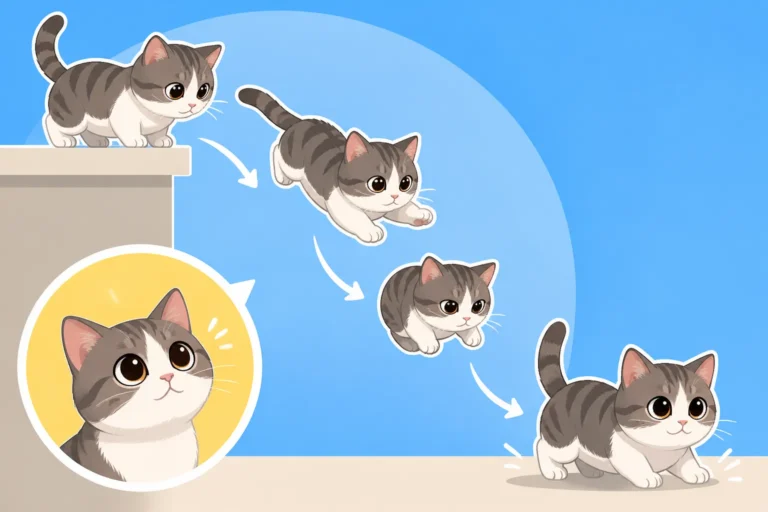
It's no secret that veterinarians hold varying opinions on the Munchkin breed, and whether their gait is inherently painful is a significant part of that discussion. Some veterinary professionals express strong concerns, arguing that the altered limb structure places undue stress on their joints and spine, potentially leading to pain and degenerative conditions over time. They often point to the potential for early onset arthritis, particularly in the shoulders and elbows, as these joints bear the brunt of their unique movement patterns and impacts from jumping down. Why a Munchkin's Shoulders Wear First and What Repeated Landing Does to a Munchkin's Elbows are common concerns.
On the other hand, many vets who regularly treat Munchkins and breeders who closely monitor their cats maintain that a well-bred Munchkin, free from other skeletal deformities like severe lordosis or pectus excavatum, does not necessarily experience pain from its short legs or gait. They emphasize that the cat's anatomy is designed to function with these shorter limbs, and as long as they are structurally sound, the cat adapts its movement naturally. They stress the importance of careful breeding to avoid compounding genetic issues and highlight that many Munchkins live full, active lives without overt signs of pain. It's a complex issue with passionate arguments on both sides, making it crucial for owners to understand how to observe their own cat.
Owner Observations vs. Medical Assessment
For a loving Munchkin owner, distinguishing between a normal, quirky gait and one that causes pain can be challenging. Many owners report their Munchkins are incredibly active, playful, and show no signs of discomfort in their daily activities, whether it's chasing toys or wrestling with a littermate. They often seem blissfully unaware that their legs are any different, adapting their environment and play style seamlessly. They develop ingenious ways to get where they want, using furniture as steps rather than making high leaps. How a Munchkin Uses Furniture as a Staircase is a perfect example of this adaptation.
However, owner observations, while invaluable for understanding a cat's baseline behavior, aren't a substitute for professional medical assessment. Cats are masters at hiding pain, an evolutionary trait that kept them safe from predators in the wild. A slight stiffness, a reluctance to play a certain way, or a subtle change in how they jump might go unnoticed by an owner but could be picked up by a vet during a thorough examination, especially one focusing on orthopedic health. This is why regular vet check-ups, even for seemingly healthy Munchkins, are paramount, as well as being highly attuned to How to Judge a Munchkin's Quality of Life.
Here's a quick comparison to help differentiate:
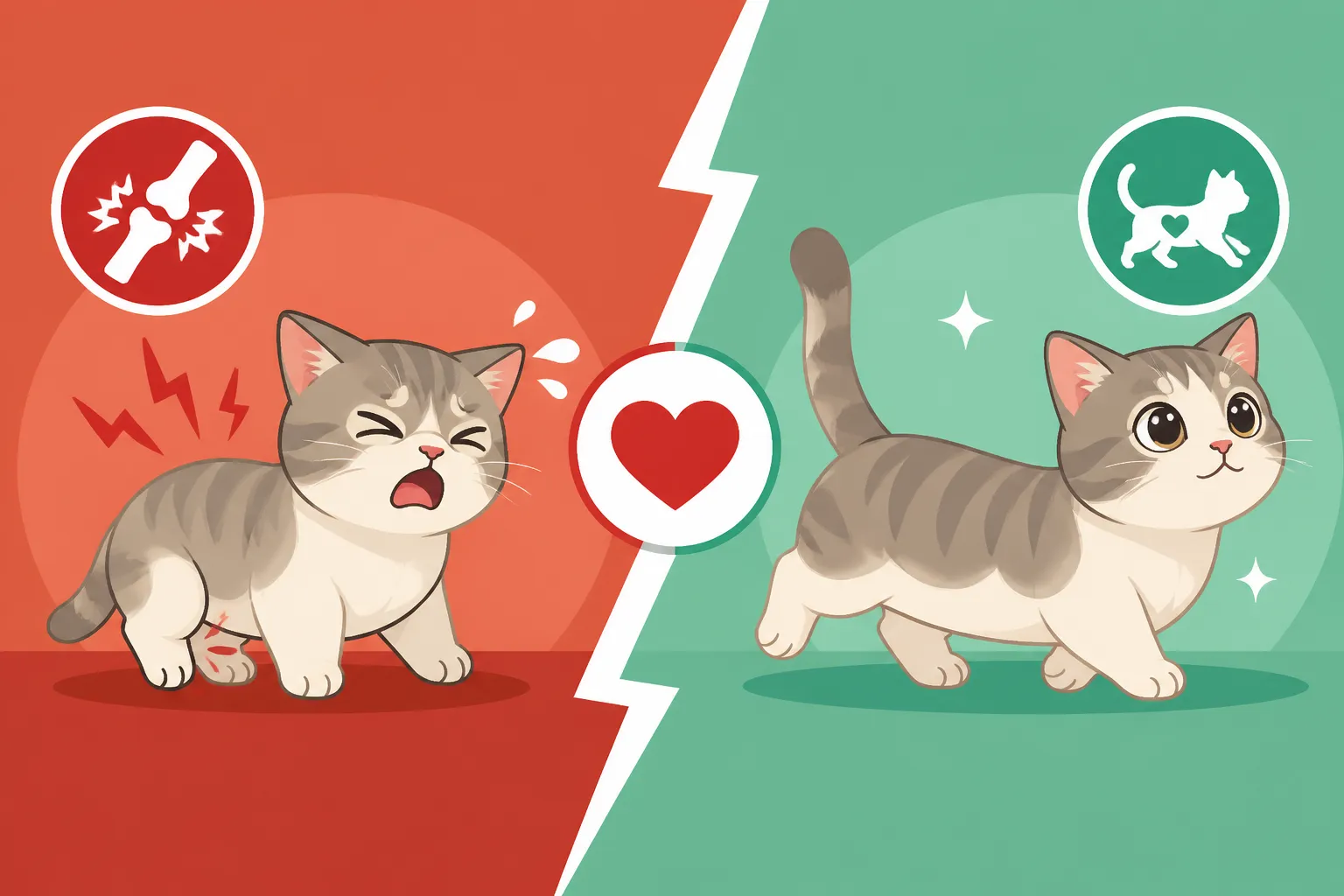
| Characteristic | Normal Munchkin Gait | Potentially Painful Gait |
|---|---|---|
| Speed & Agility | Surprisingly fast, darting, quick turns, playful bursts | Reluctant to run, slower, stiff, hesitant to change direction |
| Body Posture | Low to the ground, fluid body movements, balanced | Hunched, stiff, asymmetrical weight bearing, head held low |
| Limb Movement | Rapid, synchronized patter, full range of motion | Stiff, dragging paws, limping, uneven stride, reduced flexion |
| Jumping/Climbing | Uses steps/ramps, calculated low jumps, playful attempts | Avoids jumping, struggles to ascend/descend, cries out |
| Behavioral Cues | Energetic, engaged, purring, relaxed when resting | Lethargic, withdrawn, irritable, reluctance to be touched |
| Vocalization | Normal meows, purrs during play | Excessive meowing, hissing, growling when moved or touched |
Recognizing Signs of Discomfort or Pain in a Munchkin
Given that Munchkins have a unique gait, it can be tricky to tell if your cat is in pain or simply moving in its characteristic way. The key is to look for changes from your individual cat's norm and to understand what constitutes true signs of discomfort rather than just the breed's typical movement. Remember, their 'normal' looks different, but pain signs often echo those of any other cat, just sometimes expressed more subtly.
Subtle Changes in Movement
The very first indicators of discomfort often appear as subtle shifts in how your Munchkin moves. It's rarely a sudden, dramatic limp unless there's an acute injury. Instead, you might notice:
- Reluctance to jump or use ramps/steps: Your cat, who previously used its ramp to the sofa with ease, now hesitates, tries a few times, and gives up, or meows for you to lift them. Why an Old Munchkin Stops Using Its Ramp could be a sign of pain, not just aging.
- Stiffness, especially after rest: After a long nap, your Munchkin might get up slowly, take a few stiff steps, or seem to "warm up" before moving more freely. This is a classic sign of arthritis.
- Altered gait beyond the norm: While their trot is naturally unique, watch for unevenness, a slight limp, favoring one leg, or a decreased range of motion in their joints. Does one leg seem to swing differently? Are their shoulders moving less freely than before?
- Decreased playfulness or activity: If your normally rambunctious Munchkin is playing less, not chasing toys as enthusiastically, or preferring to nap more than usual, it could be a sign that movement is becoming uncomfortable. How Much Floor Level Play a Munchkin Needs often needs to be adjusted as they age if pain sets in.
- Difficulty with grooming: A Munchkin's short legs already make it difficult to groom their back half thoroughly. If they stop trying altogether, or if you notice mats developing more rapidly in areas they used to manage, it could be that stretching and bending have become painful. Which Parts of Itself a Munchkin Cannot Reach are often the areas most affected when pain sets in.
These changes are often incremental, which is why regular, thoughtful observation is so important. Keeping a mental or even written log of your cat's activity levels can help you spot these subtle shifts before they become pronounced problems.
Behavioral Clues Beyond the Gait Itself
Pain isn't always about how they move; it's also about how they behave, how they interact with you and their environment. Cats are experts at masking pain, so you need to be a detective to spot these signs.
- Hiding or withdrawal: A cat in pain will often seek solitude, retreating to quiet, out-of-the-way spots. They might become less social, avoiding interactions they once enjoyed. This can be particularly concerning if your Munchkin is usually affectionate.
- Changes in appetite or litter box habits: While these can indicate many health issues, a sudden decrease in appetite or a reluctance to use the litter box (perhaps because it's painful to step in or out) can be associated with pain. Always ensure How Low a Munchkin Litter Box Entry Should Be is appropriate.
- Increased irritability or aggression: A cat that is usually docile might become snippy, hiss, or bat at you when touched, especially if you inadvertently touch a painful area. They might also become less tolerant of other pets or children.
- Excessive licking or chewing at a particular body part: This is a clear sign that something is bothering them in that area. It could be a joint, a paw, or even their lower back.
- Reluctance to be picked up or handled: If your Munchkin suddenly resists being lifted, or cries out when you do, it’s a strong indication of discomfort, particularly if it involves their back or hips. How to Lift a Munchkin Correctly becomes even more crucial if they are experiencing pain.
- Changes in sleeping posture or location: If they start sleeping in odd positions or choose new spots that don't require any climbing or stretching, they might be trying to find a comfortable position that alleviates pressure on a sore spot.
- Vocalization: While some cats become quieter when in pain, others might vocalize more, with low moans, purrs that sound "off," or even growls when moving or being handled.
If you observe any of these signs, it's always best to consult your veterinarian. Describe everything you've noticed, even if it seems minor. Early detection of pain or discomfort can lead to earlier intervention and better management, significantly improving your Munchkin's quality of life.
Supporting a Munchkin's Mobility and Comfort
Once you understand the unique aspects of a Munchkin's anatomy and how to spot potential signs of pain, the next step is proactive care. Our goal as Munchkin parents is to ensure they live full, comfortable, and joyful lives, and that often means making some thoughtful adjustments to their world and their care routine.
Environmental Adaptations for Easier Movement
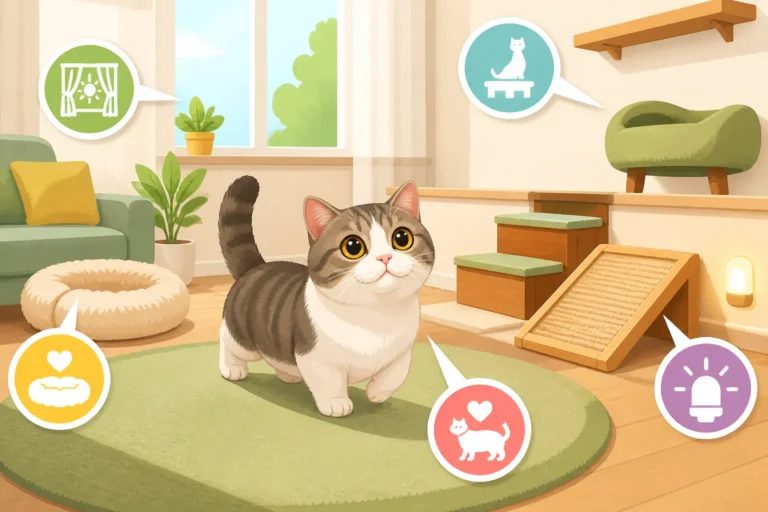
The most impactful thing you can do for a Munchkin, whether they're showing signs of pain or not, is to create an environment that caters to their short stature. This isn't about coddling them; it's about making their world accessible and reducing strain on their unique physique.
- Ramps and steps are non-negotiable: Seriously, ramps and steps are your Munchkin's best friends. Every sofa, bed, and even certain window sills should have an easy, low-gradient ramp or a set of stable, shallow steps. This prevents them from repeatedly jumping down from heights, which can put significant stress on their shoulders, elbows, and spine. Where a Munchkin Most Needs a Step is typically any elevation they love to be on. There are many options available on platforms like Amazon, offering a variety of styles to blend with your decor.
- Low-entry litter boxes: As discussed, reaching into a high-sided litter box can be a painful ordeal for a cat with short legs, especially if they have any joint discomfort. Opt for litter boxes designed for senior cats or those with cut-down fronts. This allows them to walk in and out easily, reducing the chance of accidents outside the box or unnecessary strain.
- Floor-level food and water: While some cats benefit from raised bowls, for a Munchkin, it's often best to have their food and water bowls easily accessible at floor level. Or, if they have shoulder issues, slightly raised bowls might help them avoid bending too far down, but this needs to be chosen carefully. The main point is to avoid them having to stretch or strain.
- Safe landing zones: Even with ramps, a Munchkin might occasionally jump. Ensure that any popular landing spots from furniture are well-cushioned with rugs or soft mats to absorb impact and protect their joints.
- Carpeted or non-slip flooring: Hard, slippery floors like laminate or tile can be challenging for Munchkins to gain traction, especially when they're darting around or trying to jump. Rugs, runners, or carpeted areas provide much-needed grip and make movement easier and safer, particularly as they age.
By adapting their environment, you're not just preventing potential pain; you're also empowering your Munchkin to be an independent, confident cat who can navigate their home without undue struggle. How to Rearrange a Room So a Munchkin Can Climb offers excellent ideas for making your home more Munchkin-friendly.
Proactive Health Management
Beyond environmental tweaks, a proactive approach to your Munchkin's health is paramount in preventing and managing pain.
- Weight control is crucial: This cannot be emphasized enough. Every extra gram of weight puts additional strain on a Munchkin's already challenged joints and spine. Why an Overweight Munchkin Is in Real Trouble is a topic every Munchkin owner needs to understand deeply. Work with your vet to determine the ideal weight for your cat and stick to a strict feeding regimen. Measured portions and healthy, appropriate cat food are key.
- Regular veterinary check-ups: Beyond the standard annual wellness visit, consider discussing specific joint and spinal health checks with your vet. They can monitor for early signs of arthritis or other orthopedic issues, such as Lordosis Is the Spinal Curve the Munchkin Argument Is About. Don't be afraid to ask for a thorough palpation of their spine and limbs. What a Munchkin Breeder Should Be Able to Show You often includes a discussion of health clearances, which are good to review.
- Joint supplements: Many veterinarians recommend starting joint supplements (like glucosamine and chondroitin) in Munchkins, especially as they approach middle age, as a preventative measure. Discuss with your vet the best type and dosage for your cat. These can help support cartilage health and reduce inflammation.
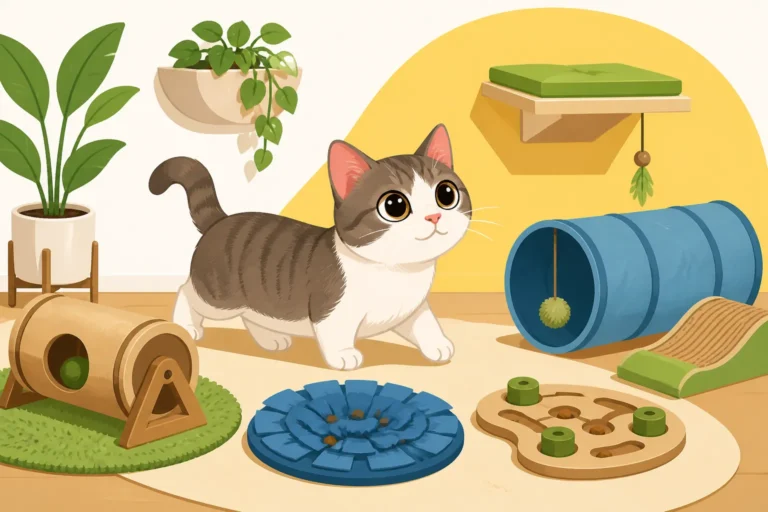
- Appropriate exercise and play: Encourage plenty of floor-level play that doesn't involve high jumps or strenuous, repetitive movements. Wand toys, laser pointers, and small rolling toys are excellent for engaging their hunting instincts without undue strain. Which Toys Work at a Munchkin's Height are the best choices. Maintaining muscle mass through gentle play is important for supporting their joints.
- Regular grooming: As Munchkins can struggle to groom their own hindquarters, regular brushing and even occasional sanitary clips are vital to prevent matting, which can pull on their skin and cause discomfort, or hide skin issues.
- Early intervention: If you do notice any of the subtle signs of pain or discomfort, don't wait. A prompt vet visit can mean the difference between minor management and a more advanced, debilitating condition. There are many safe pain relief options available for cats, and catching issues early can vastly improve their long-term comfort.
By combining a thoughtful, adapted home environment with proactive veterinary care and attentive observation, you can significantly enhance your Munchkin's comfort and ensure they enjoy a long, happy, and pain-free life, full of their unique, adorable waddles and scampers.
Disclaimer
This article is for general informational purposes only and does not constitute professional advice. Laws, prices and regulations vary by location and change over time. Consult a qualified professional for guidance on your specific situation.