Why a Munchkin Uses Two Jumps Where a Cat Uses One
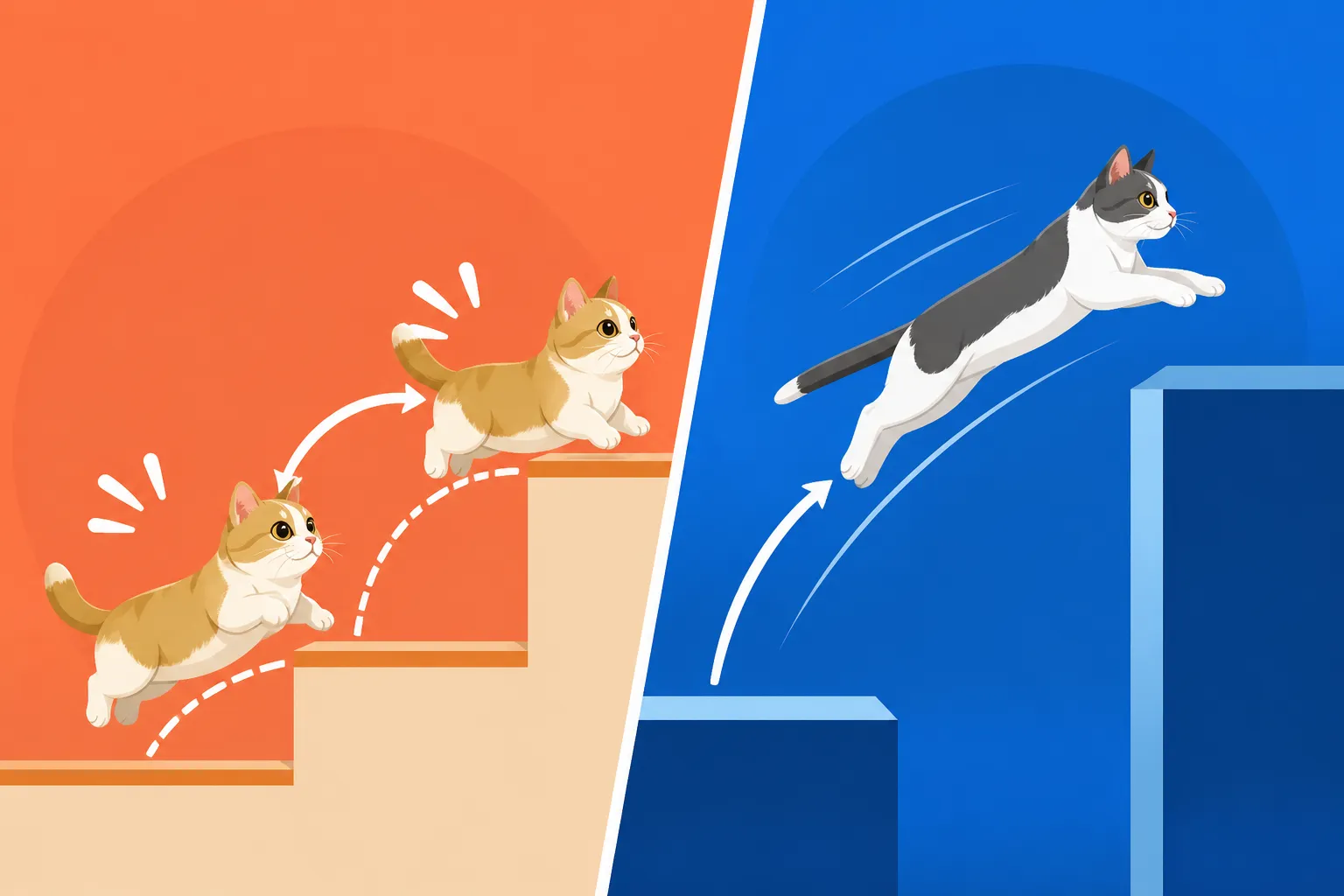
It’s a common sight for anyone who shares their home with a Munchkin cat: you see your little dynamo eyeing the sofa, a kitchen chair, or even a low windowsill. Where a long-legged cat would spring up in one fluid, almost effortless motion, your Munchkin hesitates, perhaps takes a running start, lands on a footstool, then pauses before launching themselves to the next level. This guide is all about delving into why our adorable short-legged companions often need two (or more!) jumps to reach places a regular cat conquers in one, and what that means for their well-being and how we support them.
The Unique Physics of a Munchkin's Jump
The world looks different when you're only a few inches off the ground, and for a Munchkin, every vertical ascent is a carefully calculated endeavor. Their unique anatomy means they approach jumping with a completely different strategy than their longer-legged cousins.
Understanding Pseudoachondroplasia and Its Impact
The defining characteristic of a Munchkin cat, their adorable short legs, comes from a genetic mutation known as pseudoachondroplasia. This isn't just about being "small"; it's a specific type of dwarfism that primarily affects the long bones of the legs. Unlike true achondroplasia, which can have wider systemic impacts, pseudoachondroplasia in Munchkins generally means their body length and head size are proportional to a normal cat, but their limbs are significantly shortened.
This genetic difference has profound implications for their biomechanics. A typical cat's powerful leap relies on the leverage and elasticity of long leg bones and strong muscles, allowing them to coil their body and spring upwards with impressive force. For a Munchkin, the shorter leg bones mean less leverage, and thus, less explosive power to generate vertical momentum. Their muscles are still strong, but the mechanics are simply different. It's like trying to jump a high fence with much shorter stilts – you just can't get the same height in one push. We've talked before about What Pseudoachondroplasia Does to a Munchkin's Legs and how it fundamentally shapes their physical capabilities.
The Compromised Springboard
Imagine a champion high-jumper. They need long, strong legs to propel them upward. A cat's hind legs act as incredible springs, allowing them to absorb energy when crouching and then release it in a burst of upward force. This "springboard" effect is crucial for achieving significant vertical height in a single bound.
For a Munchkin, that powerful springboard is compromised. Their hind legs are simply too short to create the same degree of leverage and extension. They can still jump, and they are surprisingly agile horizontally, but their vertical reach is inherently limited. This means that instead of a direct ascent, they often need to break down the climb into smaller, more manageable steps. They might jump to a slightly lower surface, regain their balance, and then launch again. This multi-stage approach isn't a sign of weakness, but rather a brilliant adaptation to their unique physical structure. They're not failing to jump high; they're simply optimizing their jumps for their body.
Core Strength and Landing Mechanics
Jumping isn't just about the upward motion; it's also about the landing. A cat’s powerful legs and flexible spine are designed to absorb the shock of landing, distributing the impact safely. For Munchkins, while their shorter legs mean they're generally landing from a lesser height per jump, the cumulative effect of multiple jumps can still be considerable.
Their front legs, in particular, often bear the brunt of the landing force. This repeated impact, especially if they are frequently jumping down from furniture without steps or ramps, can put extra strain on their shoulders and elbows. Over time, this kind of repetitive stress can contribute to wear and tear on these joints. Understanding Why a Munchkin's Elbows Take the Landing is vital for appreciating the daily demands on their small frames. Owners need to be mindful of how their Munchkin is navigating their environment and consider ways to cushion their landings or provide alternative, gentler descent options.
Strategic Climbing: How Munchkins Compensate
While a Munchkin might not be able to leap onto the tallest bookshelf in one go, don't underestimate their determination and ingenuity. They are incredibly clever at navigating their world, and their approach to vertical challenges is a testament to their adaptable nature.
The Art of the Intermediate Step
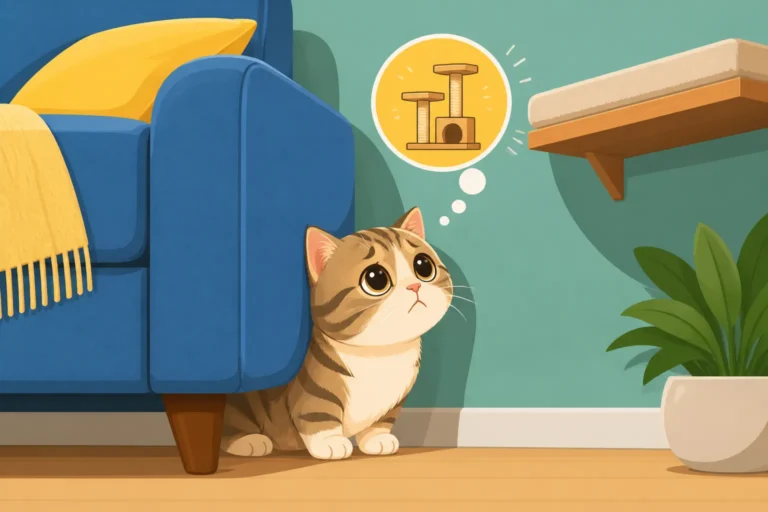
Since one big leap isn't usually an option, Munchkins become masters of the intermediate step. They don't see a tall piece of furniture as one insurmountable obstacle, but rather as a series of smaller, more achievable platforms. An ottoman becomes a launchpad to the sofa. A stack of sturdy books next to a low table can become a staircase to the windowsill. A strategically placed cat tree with closely spaced platforms is a godsend.
They're constantly scanning their environment for these opportunities. You might notice your Munchkin circling a piece of furniture, evaluating angles, and looking for the lowest point of entry or the most stable intermediate surface. They transform their home into a navigable landscape, using every available surface to their advantage. It's a prime example of How a Munchkin Uses Furniture as a Staircase to get where they want to go. This clever problem-solving is one of the most endearing and impressive aspects of their behavior.
Assessing the Environment for Opportunities
Cats are natural hunters and observers, and this inherent curiosity and analytical mind are amplified in a Munchkin when it comes to navigating vertical spaces. They don't just blindly attempt a jump; they assess. They'll often take a moment, crouch, wiggle their hindquarters, and size up the distance and height.
This assessment isn goes beyond just the immediate jump. They're calculating the entire route to their desired destination. If the goal is the top of a cat tree, they're not just looking at the first platform; they're considering the sequence of jumps, the stability of each landing, and the easiest path. This mental mapping is a constant process, and it informs their actions. It's truly fascinating to watch them in action, meticulously planning their ascent.
Why Repetition Isn't Always a Failure
Sometimes, you might see your Munchkin attempt the same jump multiple times, perhaps not quite making it or landing awkwardly, only to try again almost immediately. To an outsider, this might look like a failure or frustration, but it's often part of their learning and problem-solving process.
Each attempt provides valuable information. Was the surface slippery? Was the angle wrong? Did they not get enough momentum? They're testing their limits, refining their technique, and gathering data about their environment. It's a form of persistent experimentation. Of course, there's a point where repetition can become dangerous or indicate genuine difficulty. As owners, we need to observe carefully. If they repeatedly struggle or seem distressed, it’s a sign that the obstacle is too high or requires a modification in the environment. We’ve previously explored Why a Munchkin Tries the Same Jump Repeatedly and how to interpret their efforts.
The Risks and Realities of Multiple Jumps
While Munchkins are incredibly resourceful, their compensatory jumping style isn't without its potential drawbacks. As responsible owners, understanding these risks allows us to create a safer and more comfortable environment for them.
Increased Strain on Joints and Spine
Every jump, regardless of how small it is, generates an impact force that travels through a cat's skeletal system. For a Munchkin, who often relies on multiple smaller jumps to achieve height, this means repeated impacts on their joints. Their front legs, in particular, are subject to significant strain upon landing. Think of the cumulative effect of hundreds of tiny shockwaves traveling through their elbows, shoulders, and wrists every day.
Over time, this repetitive stress can contribute to the accelerated wear and tear of cartilage and bone, potentially leading to conditions like osteoarthritis at an earlier age than in a long-legged cat. This is why we pay close attention to signs of stiffness or discomfort, as Munchkins might be more prone to developing Whether a Munchkin Gets Arthritis Earlier. Furthermore, while their spine is typically of normal length, it still bears the load of their body, and constant jarring from jumping can be a concern. It’s a sad reality that Why a Munchkin's Spine Carries a Load a Normal Cat's Does Not due to their unique conformation. Ensuring gentle access to all desired locations is key to mitigating these potential issues.
Misjudged Jumps and Potential Injuries
Even the most agile Munchkin can misjudge a jump. Perhaps a paw slips on a smooth surface, or they over- or under-estimate a distance. When a long-legged cat misjudges a jump, they often have the flexibility and leg length to recover mid-air or absorb the impact more easily. For a Munchkin, with their limited leg extension, a misjudged jump can lead to a less controlled fall.
If they're attempting a two-step ascent to a sofa and slip on the second jump, they might fall from a height equivalent to the top of the sofa, rather than just the height of the first step. This increases the risk of sprains, strains, or even fractures. It’s always worrying to see What Happens When a Munchkin Misjudges a Jump, and it highlights the importance of making their environment as safe and predictable as possible. Preventing these falls is far better than treating the resulting injuries.
Owner Responsibility in Facilitating Access
The truth is, a Munchkin will try to get to where they want to go, even if it means repeatedly struggling or risking injury. Their natural cat instincts to climb, explore, and survey their territory from a high vantage point are just as strong as any other cat's. It's our responsibility as their human companions to ensure they can do so safely and comfortably.
This means proactively creating pathways and aids. It's not about preventing them from jumping altogether, but rather about providing safe alternatives that reduce strain and the risk of injury. Thinking about Ramps and Steps Are Munchkin Equipment, Not Luxuries isn't just about spoiling your cat; it's about providing essential tools for their long-term health and happiness. By understanding their limitations and their clever ways of compensating, we can anticipate their needs and adapt our homes to suit their unique abilities.
Creating a Munchkin-Friendly Vertical World
Making your home a haven for your Munchkin means thinking vertically, but with their short legs in mind. It's about designing a space where they can explore, play, and rest comfortably without unnecessary strain or risk.
Essential Furniture Modifications
You don't necessarily need to completely overhaul your living room, but a few strategic modifications can make a world of difference. Think about what your Munchkin tries to jump onto most frequently. Is it the sofa? Your bed? A particular chair?
For sofas and beds, consider placing a sturdy ottoman, a low bench, or even a stack of robust, heavy books (secured so they can't tumble) next to them. These act as perfect intermediate steps, reducing the height of the jump significantly. If you have open shelves, consider placing some lower ones that they can easily reach, perhaps with soft bedding, turning them into cozy, accessible perches. These simple additions allow your Munchkin to enjoy all the comforts of home, just like any other cat, but in a way that respects their physical limitations.
Investing in Ramps and Pet Stairs
While furniture modifications are great, purpose-built pet ramps and stairs are often the safest and most reliable solutions for Munchkins. These are designed with gentle inclines or shallow steps that minimize impact and strain on their delicate joints and spine. When looking for ramps, prioritize ones with a non-slip surface, like carpet or textured fabric, to ensure good traction. The angle should be gradual enough that your Munchkin doesn't feel like they're climbing a mountain.
Pet stairs should have wide, shallow steps to prevent them from having to stretch too much or feeling unsteady. You can find a wide variety of options on sites like Amazon, from collapsible ramps to multi-step pet stairs that blend in with home decor. It might take a little patience to teach your Munchkin to use them, but the effort is well worth it for their long-term health. We've offered guidance on How to Teach a Munchkin to Use a Ramp if you need a little help getting started.
Strategic Placement of Resources
Beyond just access to furniture, think about where you place your Munchkin's everyday resources. Cats inherently like to eat and drink in a safe, comfortable spot. If their food and water bowls are on the floor, ensure they don't have to stretch uncomfortably or crouch too low, which can strain their neck and shoulders. Raised bowls can be helpful, but even floor-level ones should be in an easily accessible, quiet area. Consider a low-profile watering fountain, or a simple ceramic dish they can approach without undue effort. Why a Munchkin's Food and Water Belong at Floor Level is a topic we've covered previously, highlighting the importance of thoughtful placement.
Also, think about their litter box. A high-sided box, while great for containing litter, can be a real struggle for a Munchkin to enter and exit comfortably. Opt for low-entry litter boxes that allow them to walk in easily, reducing the need to jump or strain. By mindfully arranging their environment, we ensure our Munchkins can live full, happy, and pain-free lives, even if it means a couple of extra jumps to get there!
| Aspect | Long-Legged Cat | Munchkin Cat |
|---|---|---|
| Leg Length | Standard, strong, and flexible | Shortened due to pseudoachondroplasia |
| Primary Jumping Strategy | Single, powerful leap to desired height | Utilizes multiple, smaller "steps" or intermediate jumps |
| Vertical Reach | High, often reaching countertops or tall cat trees | Limited direct vertical reach; compensates with strategy |
| Impact on Joints | Designed for efficient force distribution on landing | Increased repetitive strain on front legs and shoulders |
| Need for Ramps/Steps | Generally low, unless mobility issues arise | High, essential for safety and long-term joint health |
| Environmental Adaptation | Minimal required for vertical access | Crucial; requires strategic furniture, ramps, and safe pathways |
Disclaimer
This article is for general informational purposes only and does not constitute professional advice. Laws, prices and regulations vary by location and change over time. Consult a qualified professional for guidance on your specific situation.