Where the Record Holding Munchkin Lived
If you’re trying to pin down where the famous shortest Munchkin cat lived, the answer is Napa, California. The record holder was Lilieput, a female Munchkin whose small stature brought her international attention. Here’s what is known about her home, what the record actually measured, and why a cat’s record-breaking height tells you very little about whether a Munchkin is right for your household.
Lilieput lived in Napa, California
The record holder was a cat named Lilieput
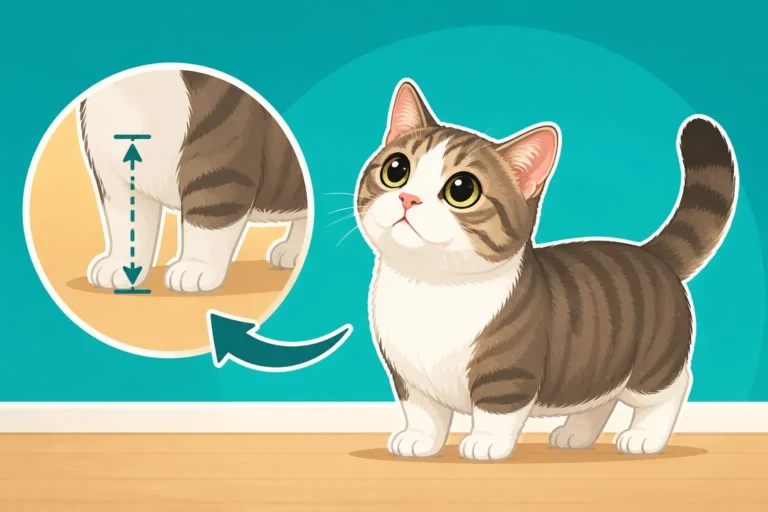
Lilieput was a female Munchkin from Napa, California, in the United States. She became known for her exceptionally short height, measured from the ground to the top of her shoulders. Guinness World Records lists her as the shortest cat ever recorded, at 13.34 centimeters, or 5.25 inches.
That measurement is easy to picture as a kind of overall “cat height,” but it doesn’t mean Lilieput was only that long or that she was unusually tiny in every respect. It refers to her standing height at the shoulders. A cat’s body length, weight, and general build are separate measurements, and one record figure can’t describe all of them.
If you’ve seen a short-legged cat online and wondered whether it might be Lilieput, the location and record alone won’t identify it. The record belongs to one particular cat; it is not a label that applies to every Munchkin with very short legs. For the broader record history, see Which Munchkin Holds the Shortest Cat Record.
Napa is the known home location, not a public attraction
“Napa, California” is the useful answer to where Lilieput lived. It identifies her home city, not a public site where visitors can see her or a landmark connected to the record. A record holder is still someone’s companion animal, and a private home address should not be treated as a destination.
That distinction matters because internet searches can blur together a cat’s hometown, the place where a measurement took place, and the location of an official record-keeping organization. Those are not necessarily the same thing. In Lilieput’s case, the commonly cited home location is Napa; that does not establish that her record measurement happened at a particular Napa landmark.
So if you’re asking because you’re curious about the cat’s story, Napa is the answer. If you’re hoping to visit a “shortest cat” exhibit, don’t assume one exists. The record is a piece of information about Lilieput, not an attraction or an invitation to find her former household.
What the location does and doesn’t tell you
Lilieput’s Napa connection gives the record a real-world setting, but it doesn’t explain why she was so short. A place of residence isn’t evidence about her genetics, veterinary history, or day-to-day mobility. Nor does it tell us how she navigated furniture, whether she used steps, or what kind of care she needed.
It’s also worth separating a record from a breed standard. A record recognizes an individual measurement; a breed standard describes the features expected in a show cat. The Munchkin breed’s defining feature is its short legs, but individual cats vary in size, proportions, and movement. For a useful comparison, What a Munchkin Looks Like Against the TICA Standard covers the breed description rather than an extreme individual record.
What Lilieput’s record measured
The shoulder-height measurement
Lilieput’s reported measurement was 13.34 centimeters, or 5.25 inches, from the floor to her shoulders. It’s a specific figure, not a general measure of how much space a Munchkin takes up or how small one feels when you pick it up. A cat can have short legs and still have a body of ordinary length.
That’s why it helps to read the number precisely. If a listing or social media post says a cat is “five inches tall,” ask what was measured and how. Was it standing height at the shoulder? Is it an estimate based on a photo? Or is it an official measurement? Those details can make the difference between a documented record and a catchy description.
For more detail about the figure itself, see How Tall the Record Holding Munchkin Measured. And if you’re curious about the process used to verify the claim, How Guinness Measured the Shortest Munchkin explores how a record measurement differs from a casual estimate.
Why photos can be misleading
Photos of very short cats can make their proportions look even more dramatic. A low camera angle, a nearby object for scale, or a cat sitting instead of standing can all change how tall the animal appears. Without a consistent point of reference, comparing one photo with another is mostly guesswork.
A standing cat is also not a measuring stick. Its posture changes: it may crouch, lean, stretch, or shift its weight. A careful measurement needs a repeatable method and a clearly defined point, which is why an official record carries more weight than an image caption.
This is useful context if you’re evaluating a kitten advertised as “the next Lilieput” or “the smallest Munchkin.” Those phrases may be intended to attract attention rather than make a verifiable claim. A responsible breeder should be willing to discuss the kitten’s health, movement, parentage, and veterinary care—not just its height or how unusual it looks in a photograph.
Has another Munchkin surpassed her?
Lilieput is still identified as the record holder in the Guinness listing commonly associated with the shortest cat ever. That doesn’t mean no shorter cat has ever existed; it means a later cat has not displaced her in the recognized record. A claim of a new record would need to be independently measured and formally verified to carry the same significance.
Record titles can also change, so it’s sensible to distinguish between “the shortest cat ever recorded” and “the shortest cat someone has seen.” The latter may be a personal observation. It doesn’t establish a record, especially if the cat’s measurement method and identity are unknown. For the record’s status and comparisons, see Whether Any Munchkin Has Beaten That Record.
| Question | What the record tells you | What it does not tell you |
|---|---|---|
| Where did Lilieput live? | Napa, California | Her exact private address |
| What was measured? | Height from the ground to her shoulders | Her full body length or weight |
| How tall was she? | 13.34 centimeters, or 5.25 inches | The typical height of a Munchkin |
| Does the record describe every Munchkin? | No; it refers to one cat | That all Munchkins are equally short |
| Is Napa a public viewing location? | It is her reported home city | That visitors can see the cat or a related exhibit |
What the record means for people considering a Munchkin
A record is not a guide to normal breed size
The shortest-cat record is an exceptional individual measurement, not a target for breeders or a promise about what a Munchkin kitten will become. Even within the same breed, kittens can differ in leg length and overall build. A cat’s proportions also change as it grows, so a very young kitten’s appearance doesn’t necessarily predict its adult size.
If you’re comparing Munchkins with other cats, try not to let a headline or a striking picture stand in for a full understanding of the breed. Short legs are the visible feature, but a prospective owner also needs to consider everyday access around the home, grooming, weight management, veterinary care, and the cat’s comfort moving from place to place.
It can help to read about the breed beyond the record itself. How a Munchkin Differs From a Dwarf Cat explains why the terminology matters, while Whether Buying a Munchkin Is an Ethical Decision looks at the welfare questions people often weigh before choosing a kitten.
Think about practical care, not just unusual appearance
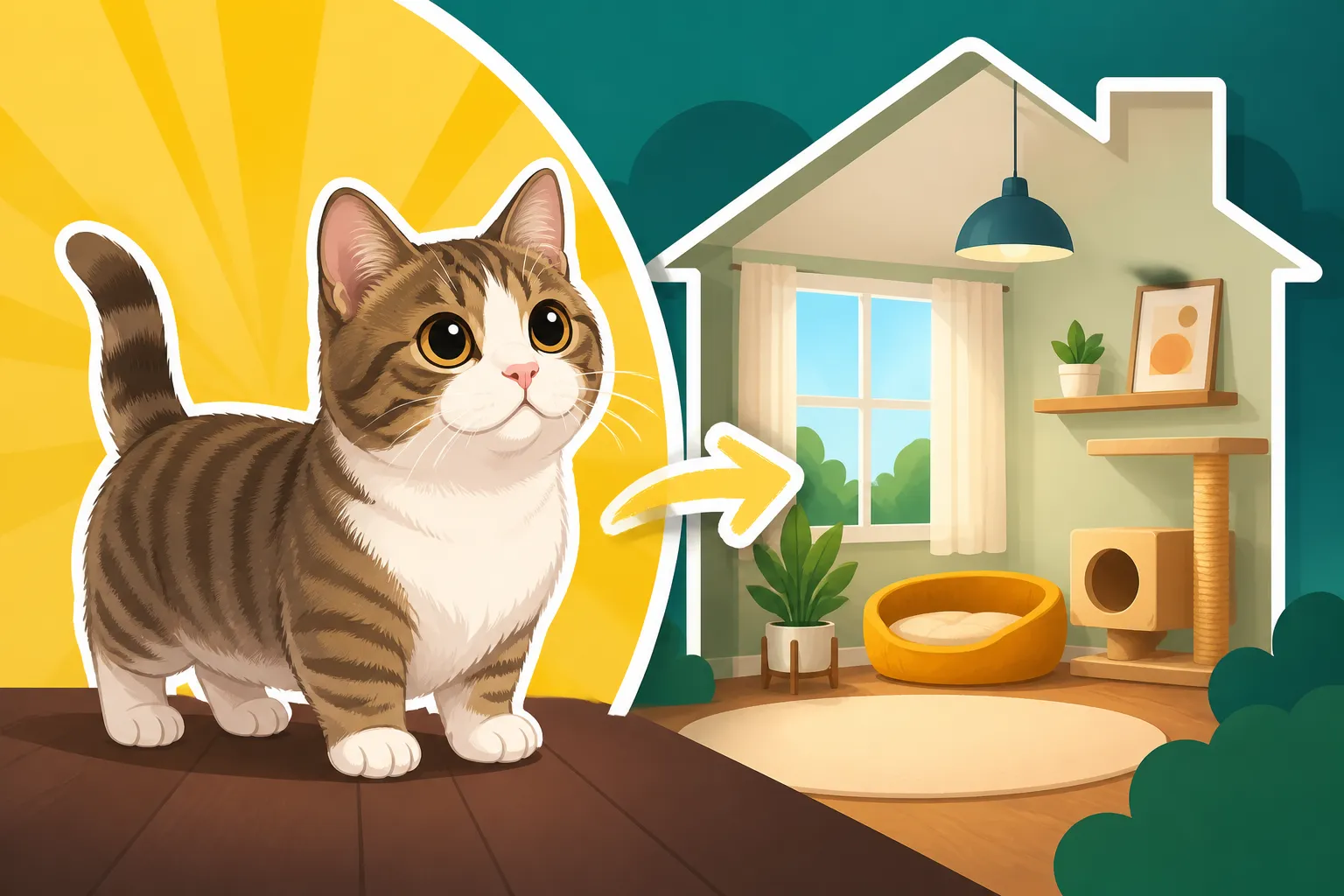
Imagine a Munchkin trying to reach a favorite sofa, a high-sided litter box, or a windowsill. The individual cat may manage some obstacles easily and struggle with others, but the home still needs to work for its body and habits. Low-entry litter boxes, stable steps, clear floor paths, and easy-to-reach food and water can make daily routines less frustrating.
A shopper browsing Chewy or another pet-supply retailer can check product measurements before buying a box, ramp, or set of pet steps. The product name alone won’t tell you whether the entry is low enough or whether the steps will feel steady under your cat’s paws. Measure the cat’s usual routes and the furniture height, then compare those measurements with the item’s specifications.
The same practical approach applies to grooming. Some cats need help keeping their hindquarters clean or preventing tangles, particularly if their coat is long. A brush or grooming tool from Chewy may be convenient to compare, but the right choice depends on the cat’s coat and tolerance for handling. Keep grooming calm and brief, and ask a veterinarian or groomer for help if mats are tight or the cat seems uncomfortable.
Choose a cat for the life you can provide
The appealing part of a record story is that it makes one cat memorable. The harder, more useful question for a future owner is whether they can provide a safe, comfortable life for the individual cat in front of them. Ask about the kitten’s movement, veterinary checks, family history, and the breeder’s approach to health and placement. Watch the kitten walk and play on a level surface rather than judging it only while it is sitting or being held.
A thoughtful home setup can make a real difference. For example, if a cat likes sleeping beside you, a stable route to the bed may be more useful than repeatedly lifting the cat up and down. If it spends time in a favorite window, arrange a safe, accessible perch. Chewy can be one place to compare ramps, litter boxes, and grooming supplies, but products should fit your home and your cat—not a generic checklist.
If you’re living with a Munchkin already, the record can be a fun conversation starter, but it is not a standard your cat needs to match. Your cat’s comfort, mobility, and personality matter more than whether it is unusually small. For a broader owner perspective, What Munchkin Owners Wish They Had Known offers a helpful next read.
Disclaimer
This article is for general informational purposes only and does not constitute professional advice. Laws, prices and regulations vary by location and change over time. Consult a qualified professional for guidance on your specific situation.