Why a Munchkin Owner Books a Groomer for the Hindquarters
It's a common frustration for Munchkin cat owners: you adore your little low-rider, but there are certain parts of them they just can't seem to reach to groom themselves. Specifically, we're talking about their hindquarters, an area critical for hygiene but notoriously difficult for short-legged cats to maintain. This guide will walk you through exactly why a professional groomer often becomes an indispensable part of your Munchkin's care routine, focusing on this challenging region and how to ensure your furry friend stays clean, comfortable, and healthy.
The Unique Grooming Challenges of a Munchkin's Anatomy
Munchkin cats are truly special, but their charmingly short legs, a hallmark of the breed, present some undeniable physical limitations when it comes to self-grooming. Unlike their long-legged cousins, a Munchkin simply can't twist, contort, and reach every part of their body with the same ease.
Limited Reach and Natural Contortions
A typical cat, blessed with long, flexible limbs and a supple spine, can perform impressive acrobatic feats to keep itself pristine. They can stretch, arch their backs, and twist their bodies to lick every patch of fur, from the top of their head to the very tip of their tail. This is an innate behavior, crucial for their health and well-being.
However, for a Munchkin, these natural contortions are a physical impossibility, particularly when it comes to their backside. Their short legs mean they lack the leverage and reach to effectively clean the fur around their anus, under their tail, their inner thighs, and often even their lower belly. You might observe your Munchkin making valiant attempts, bending awkwardly or giving a quick, frustrated swipe, but invariably, they'll fall short. It's not a lack of trying or laziness; it's a genuine anatomical limitation. Which Parts of Itself a Munchkin Cannot Reach
This constant inability to reach can be frustrating for your cat. Grooming is a calming, instinctive act for felines, and being thwarted can lead to stress or simply giving up, leaving those critical areas unattended. For us owners, it translates into a unique responsibility to pick up where nature leaves off.
The "Low Rider" Effect and Coat Length
Another significant factor contributing to hindquarter grooming challenges is the Munchkin's characteristic "low rider" stance. While their body length is generally proportional to that of an average cat, their short legs mean their belly and hindquarters sit much closer to the ground. This dramatically increases the chances of these areas coming into contact with environmental elements.
Think about a trip to the litter box. A normal-legged cat might step into the litter, do its business, and then step out with minimal contact between its body fur and the litter itself. A Munchkin, however, is almost guaranteed to have its lower belly and hindquarters sweep through the litter. This means tracking more litter particles around the house, and more importantly, increasing the risk of fecal matter or soiled litter clinging to their fur. Why a Munchkin Carries Litter on Its Underside
This issue is undeniably amplified for long-haired Munchkins. Their luxurious, flowing coats, while beautiful, become a literal magnet for everything on the floor and in the litter box. Feces, urine, and litter can easily get tangled in the longer strands, forming clumps that are not only unsightly and smelly but also incredibly difficult for the cat to dislodge. Even short-haired Munchkins aren't entirely immune; their dense fur can still trap debris, leading to discomfort and potential health problems if not regularly inspected and cleaned. Regardless of coat length, consistent vigilance and intervention are key. Why a Munchkin's Belly Fur Needs Checking
Unseen Dangers: Health Risks from Neglected Hindquarters
When a Munchkin's hindquarters aren't properly maintained, it's not just a matter of aesthetics or a slight odor. There are significant health implications that can quickly escalate from minor irritations to serious medical conditions, causing your cat considerable pain and discomfort.
Matting, Skin Irritation, and Pain
One of the most common and painful consequences of neglected hindquarter fur is matting. Mats aren't just simple tangles; they're dense, felt-like clumps of fur that form when shed hair becomes hopelessly intertwined and isn't brushed out. In areas of friction, like the inner thighs or under the tail where movement is constant, mats can form incredibly quickly. They pull on the underlying skin, causing constant discomfort and pain, similar to having your hair constantly tugged.
Beneath these tight mats, the skin is deprived of air and becomes a breeding ground for problems. Trapped moisture, dirt, and bacteria can lead to severe skin irritation, redness, and inflammation. These can quickly progress to painful open sores, called "hot spots," which are prone to infection. How Skin Problems Start Under a Munchkin's Mats Your cat might try to scratch or bite at these painful areas, only making them worse.
Attempting to remove severe mats at home, especially in such a sensitive area, is fraught with danger. The skin underneath can be incredibly thin and fragile, and it's all too easy to accidentally cut your cat with scissors, leading to an emergency vet visit. Mats are not just a cosmetic nuisance; they are a welfare issue that significantly impacts your Munchkin's comfort and mobility. Whether Matting Becomes a Health Problem in a Munchkin
Fecal Accumulation and Infection Risk
Perhaps the most critical health risk associated with neglected hindquarters is fecal accumulation. As we've discussed, a Munchkin's physical limitations make thorough post-litter box cleaning a challenge. This means it's not uncommon for small pieces of fecal matter, or even larger clumps, to get caught in the fur around the anus and inner thighs.
Beyond the obvious unpleasantness of odor and unsanitary conditions, persistent fecal tagging poses a serious health threat. The fecal matter carries bacteria that, when in constant contact with the skin, can lead to painful skin infections. More alarmingly, these bacteria can migrate into the urinary tract, causing urinary tract infections (UTIs), which are incredibly uncomfortable and require veterinary treatment. They can also contribute to anal gland issues, another painful condition that needs professional attention.
This problem is exacerbated if your Munchkin has softer stools or experiences diarrhea, as the likelihood of fecal matter clinging to their fur increases dramatically. Waiting until a severe build-up occurs means your cat is already suffering from discomfort, potential infection, and the grooming process will be much more stressful. Proactive and consistent cleaning, often requiring professional help, is essential to prevent these serious health complications.
Why a Professional Groomer is the Best Solution
Given the unique anatomical challenges and the health risks involved, it quickly becomes clear that a professional groomer isn't a luxury for a Munchkin owner, but rather a vital part of their cat's overall care plan. They bring a level of expertise, equipment, and calm handling that's difficult to replicate at home.
Expertise in Sanitary Clips and Safe Handling
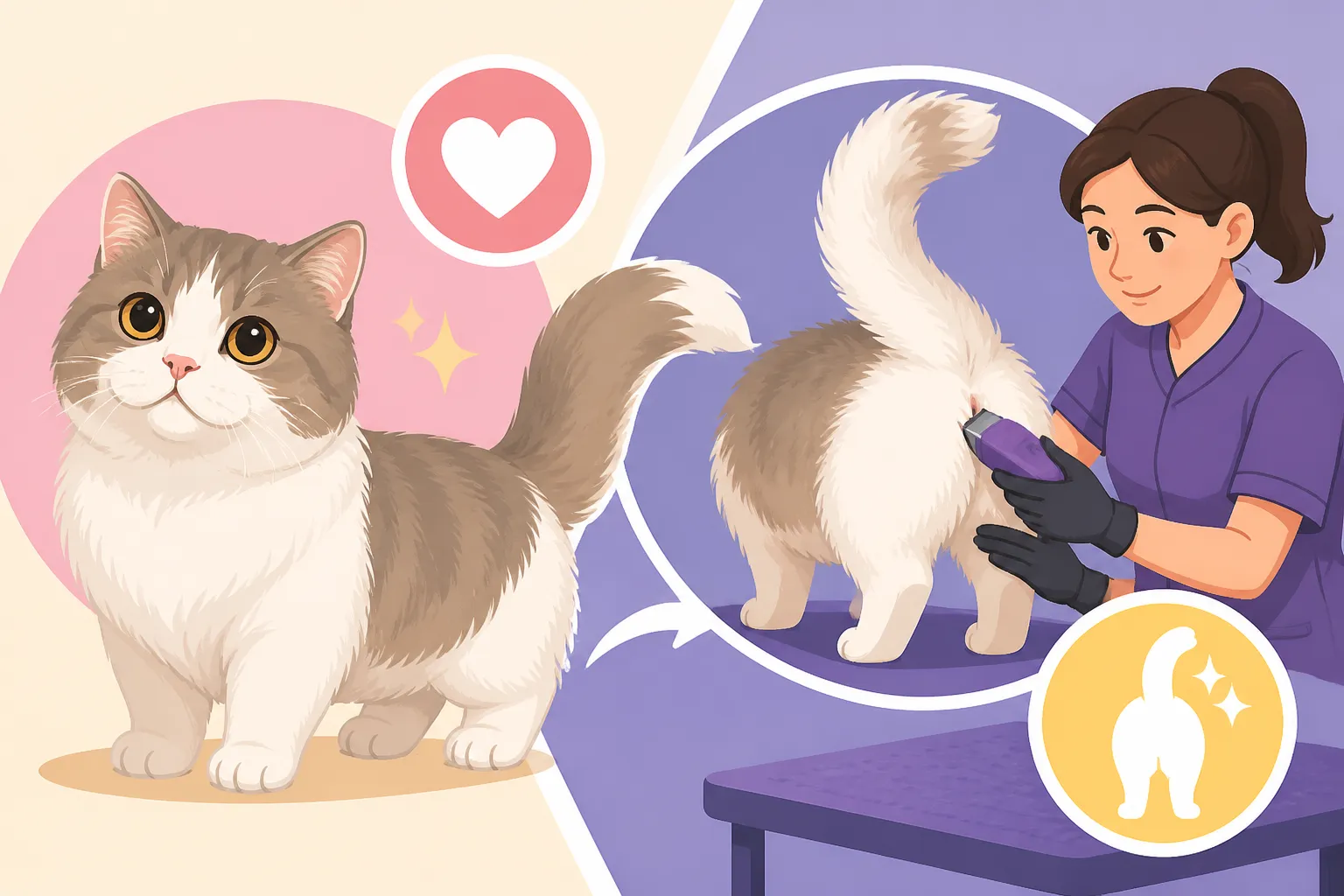
The primary service a groomer offers to address these hindquarter issues is often referred to as a "sanitary clip" or "hygiene trim." This involves carefully and meticulously trimming the fur around your Munchkin's anus, vulva, or penis, and often the inner thighs, to create a short, clean area. This prevents fecal matter from clinging, reduces the likelihood of matting, and allows for much easier self-cleaning (or owner assistance) if any mess does occur.
The reason a professional is indispensable for this task is multi-faceted. Firstly, they possess the right tools: specialized clippers with various blade sizes designed for delicate skin, which are much safer and more efficient than household scissors or clippers not meant for cats. They work in well-lit environments, allowing them to see clearly and avoid accidental nicks or cuts on thin, sensitive skin – a real and dangerous risk when attempting this at home. Secondly, groomers are trained in safe and humane cat handling techniques. They understand feline body language, stress signals, and how to gently restrain a cat to complete the trim with minimal fuss and maximum safety. How to Bathe a Munchkin Without Straining Its Back
Their expertise also means they can spot other potential issues, such as early signs of skin irritation, fleas, or even anal gland problems, which they can then alert you to, prompting an early veterinary check-up. This proactive approach can save your Munchkin from a lot of discomfort and you from costly emergency vet bills.
Reducing Stress, Saving Time, and Ensuring Well-being
Let's be honest: attempting to groom a cat's hindquarters at home is usually a wrestling match that neither party enjoys. Cats are naturally protective of their sensitive areas, and even the most compliant feline can become a squirming, scratching mess when faced with scissors or clippers near their tail. This creates a highly stressful experience for both you and your pet, potentially damaging the bond you share.
A professional groomer, with their calm demeanor and efficient techniques, can often complete a sanitary clip quickly and with significantly less stress for your Munchkin. This saves you considerable time and effort, freeing you from a messy, frustrating chore. More importantly, it ensures your cat remains clean and comfortable without enduring a traumatic experience. Regular professional grooming helps maintain consistent hygiene, preventing the build-up of mats and fecal matter that can cause so much discomfort and lead to veterinary issues. This consistent preventative care can even be something discussed with pet insurance providers like Healthy Paws, as maintaining good health through regular grooming can contribute to fewer medical problems down the line.
Groomers can also offer valuable advice on at-home maintenance between visits, recommending specific brushes or wipes that you might find readily available at retailers like Chewy, ensuring your Munchkin stays pristine. And, of course, a healthy coat starts from within, so ensuring your Munchkin gets proper nutrition from quality foods will only make grooming easier and more effective. Ultimately, professional grooming for your Munchkin's hindquarters is an investment in their long-term health, comfort, and your peace of mind.
Practical Steps for Munchkin Grooming Success
Deciding to use a professional groomer for your Munchkin's hindquarters is a fantastic step towards their optimal health and comfort. But like any service, choosing the right provider and preparing your cat properly can make all the difference in ensuring a positive and effective experience.
Selecting the Right Professional for Your Munchkin
Finding the right groomer is paramount, especially for a breed with specific needs like the Munchkin. Your priority should be to seek out a groomer who is experienced with cats, ideally one who specializes in felines or has a dedicated cat-only section of their salon. Cat grooming is distinct from dog grooming; it requires different tools, techniques, and a nuanced understanding of feline behavior and stress signals. A groomer who primarily handles dogs may not have the gentle touch or specific knowledge required for a cat, let alone a Munchkin.
Don't hesitate to ask detailed questions: "What is your experience with short-legged breeds or cats with mobility challenges?" "How do you handle anxious or fearful cats?" "Can you describe your sanitary clip process?" It's also wise to check reviews, ask for testimonials, or even seek recommendations from other Munchkin owners in online communities or from your veterinarian. A good groomer will be transparent, willing to discuss their methods, and should prioritize your cat's comfort and safety. Remember, while cost is a factor, the cheapest option isn't always the best when it comes to the delicate care of your beloved pet. How Much a Groomer Charges to Clip a Munchkin's Rear
Complementary Home Care and Scheduling
While professional grooming handles the tricky parts, consistent, gentle home care plays a vital role in maintaining your Munchkin's hygiene and comfort between appointments. Daily or every-other-day light brushing of the accessible areas, particularly their back and sides, can prevent surface mats from forming and keep their coat healthy. This also acclimates your cat to being handled, making professional grooming sessions less stressful. Getting a Mat Out of the Part a Munchkin Cannot Reach
The frequency of professional sanitary clips will depend on your Munchkin's individual needs, including their coat length, activity level, and how prone they are to matting or getting messy. Long-haired Munchkins might need a trim every 6-8 weeks, while short-haired ones might manage longer intervals. Discuss this with your groomer to establish a suitable schedule. Making grooming a positive experience from a young age, with plenty of treats and praise, can also make a huge difference in how your Munchkin accepts handling throughout its life. How to Get a Munchkin Used to Being Handled
Here's a quick comparison to help you weigh the options:
| Aspect | DIY Hindquarter Grooming | Professional Hindquarter Grooming |
|---|---|---|
| Safety for Cat | High risk of accidental nicks/cuts, especially with mats or squirming. | Low risk with experienced groomer, specialized tools, and techniques. |
| Effectiveness | Often incomplete or superficial due to cat's resistance and owner's lack of skill/visibility. | Thorough and precise sanitary clip, tailored to individual needs. |
| Stress Level | High for both cat and owner, can create negative associations with handling. | Significantly lower for cat due to professional handling; minimal for owner. |
| Tools & Equipment | Household scissors (dangerous), basic clippers (can pull/burn skin). | Professional-grade clippers, various blade sizes, specialized tables, calming techniques. |
| Time & Effort for Owner | Significant, often frustrating, potentially messy, and may need repeat attempts. | Minimal time/effort for owner; convenient and reliable. |
| Mat Prevention | Limited ability to access deep or developing mats effectively. | Proactive removal of mats and prevention of future matting. |
| Health Risk Reduction | Higher risk of skin irritation, fecal matter remaining, and infections. | Significantly reduces risk of infections, skin issues, and discomfort. |
Ultimately, entrusting your Munchkin's hindquarter grooming to a professional ensures they receive the specialized care their unique anatomy demands, leading to a happier, healthier, and cleaner cat.
Disclaimer
This article is for general informational purposes only and does not constitute professional advice. Laws, prices and regulations vary by location and change over time. Consult a qualified professional for guidance on your specific situation.