Why a Boarding Cattery Has to Adapt a Pen for a Munchkin
Leaving your beloved Munchkin cat in a boarding cattery can be a source of real anxiety for any pet parent. Many standard catteries are designed with average-sized, long-legged felines in mind, which often means their facilities aren't automatically safe or comfortable for a short-legged Munchkin. This guide will walk you through the specific reasons why catteries need to make adaptations, what those essential modifications look like, and how you can work with your chosen facility to ensure your unique little friend has a stress-free and secure stay.
The Physical Realities: Why Standard Cattery Pens Don't Work for Munchkins
It's easy to assume all cats can navigate a typical cattery setup, but for a Munchkin, their distinct physical characteristics mean they often struggle where other cats wouldn't even blink. Their famously short legs, while endearing, fundamentally change how they interact with their environment, making many common cattery features inaccessible or even dangerous.
The Challenge of Elevated Platforms and Perches
Most catteries proudly feature multi-tiered pens with shelves, perches, and cubbies at various heights, designed to give cats vertical space to explore, rest, and observe. For a typical cat, these are wonderful enrichment opportunities, allowing them to survey their domain from above or find a quiet, elevated retreat. However, for a Munchkin, these higher levels often become frustrating barriers.
A Munchkin's maximum jump height is significantly lower than that of a long-legged cat. While they are surprisingly agile and can launch themselves onto a sofa or a low chair, reaching platforms a foot or two off the ground might be completely out of their league. Imagine your cat endlessly attempting to jump onto a shelf, failing repeatedly, and potentially injuring themselves with awkward landings. This isn't just disheartening for them; it can lead to stress, desperation, and even physical strain on their joints over a prolonged stay. A standard cattery, therefore, inadvertently creates an environment where a significant portion of the pen's usable space is simply out of reach, leaving your Munchkin feeling confined and unable to access comforts that other cats take for granted. You might wonder How High a Munchkin Can Actually Jump, and the answer is usually not high enough for standard cattery perches.
Litter Box Accessibility: More Than Just a Box
One of the most critical aspects of any cat's comfort and hygiene is easy access to their litter box. For a Munchkin, this isn't just about knowing where the box is; it's about physically being able to get in and out without struggle. Many standard litter boxes, especially those with high sides designed to contain litter scatter, present a significant hurdle for a short-legged cat.
A Munchkin's belly often sits much closer to the ground than a standard cat's, making it difficult to step over a tall lip without straining their back and hind legs. For an older Munchkin, or one with any pre-existing joint sensitivities, this can be genuinely painful. If a cat finds it too hard or uncomfortable to enter their litter box, they might start eliminating outside of it, leading to hygiene issues in the pen, and considerable stress for the cat. A cattery needs to understand that a small step or ramp might be essential, or, more simply, they need to provide a low-entry litter box designed for senior cats or those with mobility issues. This ensures cleanliness and prevents unnecessary discomfort for your Munchkin. The article Why a Munchkin Needs a Litter Box It Can Walk Into goes into more detail on this specific challenge.
Food and Water Stations at the Right Level
Just like litter boxes, the placement and height of food and water bowls are crucial for a Munchkin's well-being. Standard catteries might place bowls on a low shelf or directly on the floor. While floor-level placement might seem ideal, some cats, especially those with certain spinal conformations, can find bending their neck excessively uncomfortable over long periods. Conversely, placing bowls on a slightly raised surface that a long-legged cat finds perfectly normal can mean your Munchkin has to strain their neck uncomfortably upwards or even stand on their hind legs just to eat or drink.
The ideal setup for a Munchkin involves bowls that are slightly elevated, but not so high that they become a stretch. This allows them to eat and drink in a more natural, comfortable posture, reducing strain on their neck and shoulders. Imagine having to contort yourself for every meal; it quickly becomes tiring. A cattery that caters to Munchkins will ensure that their food and water bowls are placed in a way that respects their unique stature, promoting good hydration and nutrition without added physical stress. Companies like Chewy offer a variety of bowl stands that could easily adapt a standard bowl to the right height.
Essential Adaptations for a Munchkin-Friendly Boarding Environment
Ensuring a Munchkin's comfort and safety in a boarding cattery isn't about grand renovations, but rather thoughtful, practical adjustments. These adaptations make all the difference, transforming a potentially stressful environment into a welcoming temporary home.
Creating Multi-Level Access with Ramps and Steps
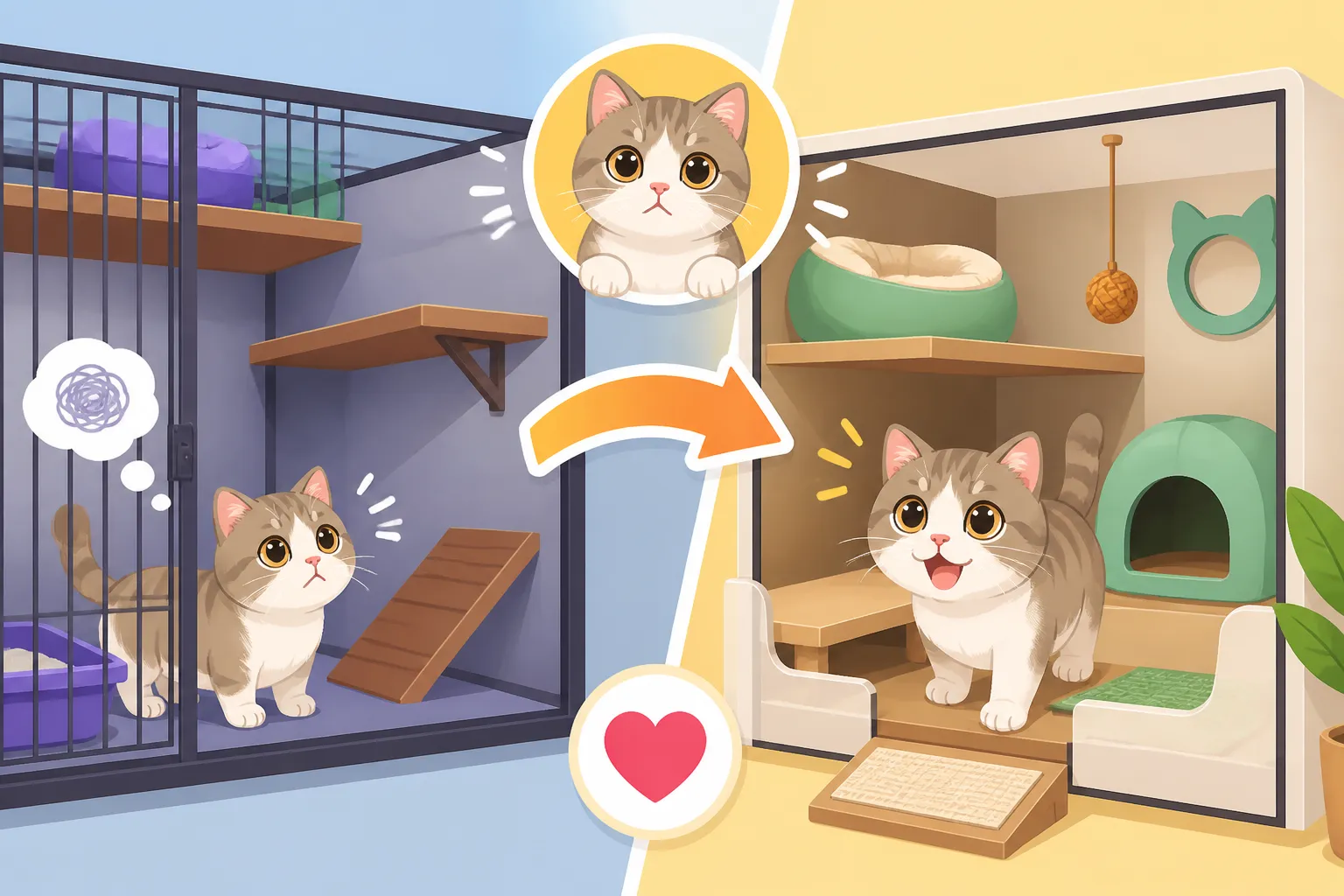
The cornerstone of a Munchkin-friendly cattery pen is providing accessible vertical navigation. Since high jumps are out, ramps and steps become indispensable. Instead of expecting a Munchkin to leap onto a shelf, a cattery can install sturdy, low-gradient ramps or a series of shallow steps that allow them to ascend and descend with ease.
These ramps or steps should be wide enough to feel secure, have a non-slip surface, and lead directly to any elevated platforms, beds, or hiding spots. This might mean custom-built wooden ramps or commercially available pet stairs strategically placed within the pen. For instance, if a cattery uses standard cat trees, they might need to add extra, closely spaced platforms or connect existing ones with a gentle ramp. This ensures that every part of the pen, from a cozy upper bed to a sunny perch, is within comfortable reach for your short-legged friend. Proper ramp placement can dramatically improve a Munchkin's quality of life in a cattery, allowing them to explore and choose their resting spots freely, just like any other cat. Learn more about how to set these up in How to Set Up Ramps Around a Munchkin's House.
Rethinking Resting and Hiding Spots
While ramps address vertical movement, the types and locations of resting and hiding spots also need consideration. A typical cattery might provide a tall cat condo or a high-up cubby, which, as we've discussed, might be inaccessible. Even if accessible via a ramp, some Munchkins might prefer the security of being closer to the ground.
A Munchkin-adapted pen should include multiple ground-level hiding spots and cozy beds. This could be a small, enclosed cat cave placed directly on the floor, a soft bed tucked under a low shelf, or even a simple cardboard box. These low-lying retreats offer a sense of security and privacy, which is particularly important in a new, unfamiliar environment like a cattery. They also prevent the Munchkin from feeling exposed or vulnerable, especially if they can't easily reach higher vantage points. Ensuring they have a choice of comfortable, easily accessible places to rest and hide significantly reduces stress and promotes a more relaxed stay.
Ensuring Safe Play and Enrichment
Play and mental stimulation are vital for any cat's well-being, especially during a boarding stay. For Munchkins, however, the type and placement of toys and enrichment items need specific thought. Standard catteries might hang toys from high perches or use tall scratching posts that a Munchkin simply cannot reach or effectively use.
A Munchkin-friendly pen should focus on floor-level and low-to-the-ground enrichment. This means toys that can be batted and chased along the floor, puzzle feeders that are easily accessible without stretching or climbing, and scratching pads or low horizontal scratchers instead of tall vertical posts. Wand toys can be great, but the person playing needs to keep the wand at a height where the Munchkin can comfortably jump or bat without straining. Interactive toys that stimulate their natural hunting instincts, placed where they can easily engage, are perfect. Think tunnels and crinkle balls on the floor. Offering varied, accessible play keeps them physically active and mentally stimulated, helping to burn off energy and reduce boredom during their stay.
Partnering with Your Cattery: Advocating for Your Munchkin's Care
As a Munchkin owner, you are your cat's best advocate. Finding the right cattery and communicating your cat's specific needs effectively is paramount to ensuring a safe and comfortable boarding experience. It's not enough to assume; you need to engage directly and ensure they understand the unique requirements of your short-legged companion.
Pre-Booking Consultations and Cattery Tours
Before you even think about booking, a thorough consultation and a tour of the cattery are absolutely essential. This isn't just about checking cleanliness; it's about assessing their understanding and willingness to accommodate a Munchkin. Ask specific questions: "How do you handle cats with mobility challenges?" "Can you show me a pen that would be suitable for a cat that can't jump high?"
During the tour, observe the pens. Are there any existing ramps or low steps? Are the litter boxes low-entry? How high are the lowest resting platforms? Don't be shy about explaining why these details matter for your Munchkin, referencing their physical needs. A good cattery will be receptive, ask clarifying questions, and be transparent about what they can and cannot provide. If they seem dismissive or assure you "all cats are the same," it's a red flag. Look for a cattery that genuinely understands that Why a Munchkin's Spine Carries a Load a Normal Cat's Does Not and what that implies for their movement. This proactive approach helps you gauge their suitability before committing.
Providing Detailed Care Instructions
Even after a thorough consultation, it's crucial to leave detailed, written instructions. Don't rely solely on verbal agreements. This document should explicitly outline your Munchkin's needs regarding mobility, feeding, and any other unique behaviors.
Your instructions should include:
- Mobility notes: Clearly state maximum jumping height and emphasize the need for ramps/steps to access all levels. Specify which pieces of furniture or platforms your Munchkin uses at home.
- Litter box specifics: Reiterate the need for a low-entry box and placement. Mention how often they usually go and any cleaning preferences.
- Feeding: Detail diet, portion sizes (perhaps even weighed portions, as How Many Calories a Munchkin Needs to Stay Off Its Joints is important), and preferred bowl height. If using a specific food, make sure they have clear instructions for its preparation and serving.
- Grooming: Note if your Munchkin needs assistance grooming their hindquarters or belly due to their short legs, which can be a problem. This is a common issue, as discussed in Why a Munchkin's Belly Nearly Touches the Floor.
- Play and interaction: Describe their favorite toys and preferred methods of play.
- Health: Any existing health conditions, medications, or behavioral quirks.
A comprehensive document ensures that nothing is overlooked, especially if different staff members are caring for your cat.
Emergency Protocols and Veterinary Contacts
While we all hope for an uneventful stay, it's vital to prepare for the unexpected. Ensure the cattery has your up-to-date contact information, including emergency numbers. Crucially, provide the contact details for your regular veterinarian. This ensures that in case of an emergency, your cat can be taken to a vet who already knows their history and specific needs, especially if they have any underlying conditions related to their unique conformation.
Discuss the cattery's emergency procedures. What happens if your cat shows signs of illness or injury? What is their protocol for contacting you? Who makes decisions if you can't be reached immediately? If you have pet insurance, like Healthy Paws, make sure the cattery knows this and understands the process for veterinary care and claims. Being prepared for emergencies gives you peace of mind and ensures your Munchkin receives prompt and appropriate care should the need arise.
Beyond the Stay: Ensuring a Stress-Free Experience for Your Short-Legged Friend
A successful cattery stay for a Munchkin isn't just about what happens during their time there; it's also about preparing them for it and monitoring their well-being afterward. Taking these extra steps can make a big difference in their overall experience.
Familiar Comforts from Home
Cats, by nature, are creatures of habit and territory. Being in an unfamiliar environment can be unsettling for any feline, and a Munchkin is no exception. Bringing a few familiar items from home can provide a much-needed sense of security and continuity, helping them adjust to their temporary digs.
Consider packing items like:
- Their favorite bed or blanket: The familiar scent and texture can be incredibly comforting.
- A favorite toy: Something they love to play with at home, especially a soft or interactive one that smells like you.
- A worn piece of your clothing: Your scent can be a powerful anxiety reducer.
These items offer emotional anchors, reminding them of their safe home and beloved humans. Even if the cattery provides excellent bedding and toys, having their own familiar things can significantly reduce stress and help them settle in more quickly. This simple act acknowledges their emotional needs, not just their physical ones.
Observing Your Munchkin's Behavior Post-Boarding
Once your Munchkin is back home, it's important to observe their behavior closely for a few days. Even with the best cattery care and adaptations, a change in environment can be stressful, and some cats show signs of this stress after they return.
Look for:
- Changes in appetite or thirst: Are they eating and drinking normally?
- Alterations in litter box habits: Are they using their litter box consistently, or are there any accidents outside it?
- Changes in energy levels or mobility: Are they moving around as usual, or do they seem stiff, lethargic, or reluctant to use their ramps or steps? What an Old Munchkin Stops Being Able to Do can be a concern if they're acting older than their years.
- Behavioral changes: Are they more withdrawn, clingy, vocal, or hiding more than usual?
Most cats will take a day or two to fully decompress and return to their normal routines. However, if any of these signs persist for longer than a few days, or if you notice any physical lameness or discomfort, it's wise to contact your veterinarian. Early detection of any issues, whether physical or behavioral, can prevent them from escalating.
Cattery Adaptation Checklist for Munchkins
To help you when speaking with catteries, here's a handy checklist of essential adaptations for a Munchkin-friendly pen:
| Feature | Standard Cattery Setup (Potential Issue) | Munchkin-Friendly Adaptation (Solution) |
|---|---|---|
| Elevated Platforms | High shelves, perches, tall cat trees | Ramps or shallow steps to all elevated areas |
| Litter Boxes | High-sided, difficult to enter | Low-entry litter boxes (e.g., senior cat boxes) |
| Food & Water Bowls | Floor-level or too high on shelves | Slightly raised bowls at comfortable height |
| Resting Spots | Mainly elevated cubbies | Multiple ground-level beds and hiding spots |
| Scratching Surfaces | Tall vertical posts | Horizontal scratchers, low vertical posts |
| Toys & Enrichment | Hanging toys, high cat tree accessories | Floor-level toys, accessible puzzle feeders |
| Flooring | Slippery surfaces (laminate, tile) | Non-slip mats or rugs for traction |
| Cattery Staff Training | General cat care | Awareness of Munchkin mobility and spinal needs |
Choosing to board your Munchkin requires a bit more research and conversation than with a long-legged cat, but with the right preparation and a cattery willing to adapt, your short-legged companion can have a comfortable and safe stay while you're away.
Disclaimer
This article is for general informational purposes only and does not constitute professional advice. Laws, prices and regulations vary by location and change over time. Consult a qualified professional for guidance on your specific situation.