What a Munchkin’s Prairie Dog Posture Tells You
One of the most charming and often-talked-about behaviors of a Munchkin cat is their unique "prairie dog" posture, where they sit bolt upright on their hind legs, peering intently at their surroundings. It’s a sight that melts hearts and sparks curiosity, leaving many owners wondering what exactly prompts this adorable stance and if it's always a sign of well-being. This guide delves deep into the reasons behind this distinctive behavior, helping you understand your short-legged companion better and ensuring their comfort.
Unpacking the Prairie Dog Posture: What It Looks Like
When you first witness a Munchkin adopting its signature "prairie dog" sit, it’s hard not to smile. This isn't just a casual sit; it's a deliberate and often prolonged posture that really sets them apart from other felines. Understanding the nuances of this stance can offer insights into your cat's health and emotional state.
The Visual Cues of a Munchkin's Sit
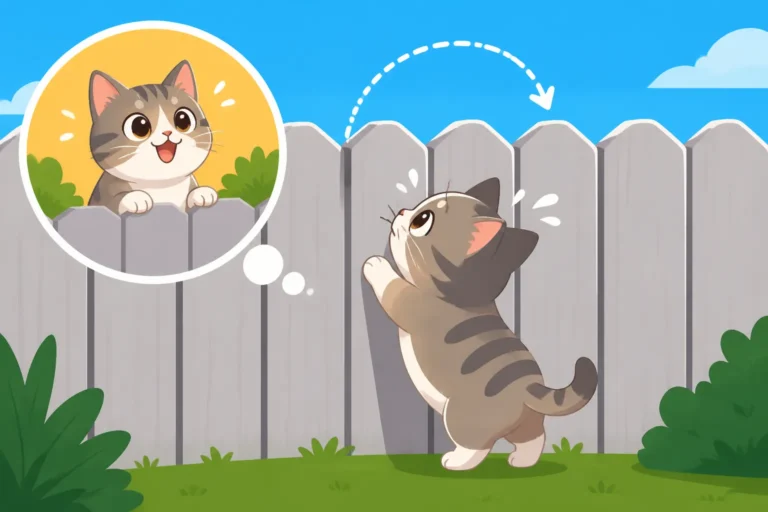
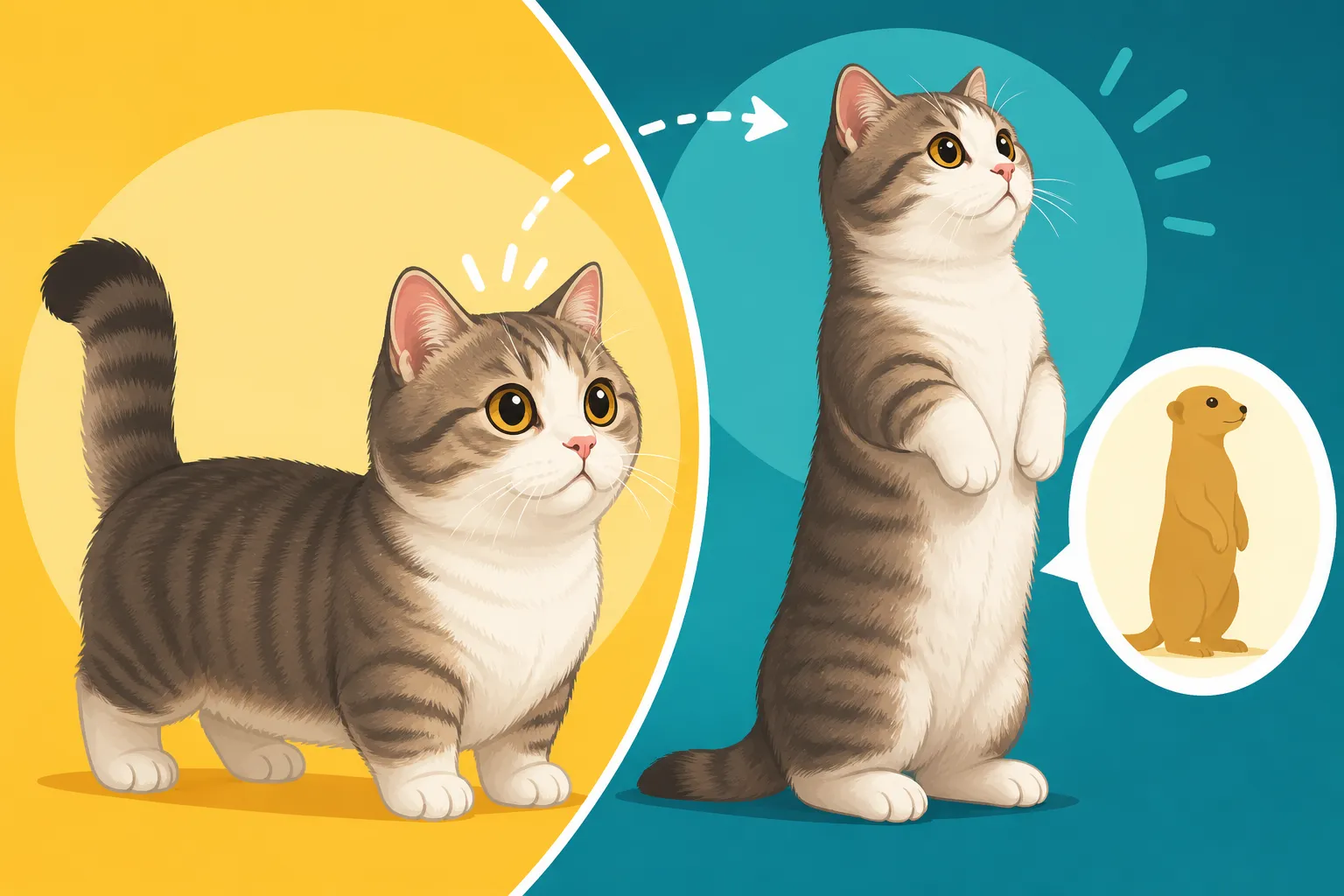
Imagine a tiny, furry meerkat standing guard, and you've got a pretty good picture of a Munchkin in its prairie dog posture. They push up from a sitting or even lying position, extending their spine and pulling their torso vertical. Their hind legs are typically splayed slightly for balance, forming a stable tripod, while their front paws are often tucked neatly against their chest or dangle delicately in front. Their tail might act as a further counterbalance, subtly twitching for equilibrium. The head is held high, ears swiveled, eyes wide and focused, taking in everything around them. It's a moment of complete stillness and intense concentration, usually broken only when their curiosity is satisfied or a new, more interesting distraction appears. This posture is truly unique among domestic cats, a direct result of their distinctive anatomy and an endearing quirk that makes Munchkin owners adore them even more.
This specific body language isn't just cute; it serves a purpose. While other cats might stretch or stand on their tiptoes to get a better view, a Munchkin's short legs make these maneuvers less effective for gaining significant height. Instead, they leverage their strong hindquarters and flexible spines to achieve this vertical lift. It’s an adaptive behavior, a clever workaround to their physical limitations, allowing them to engage with their environment in a way that truly maximizes their sensory input. When your Munchkin adopts this pose, they're not just being cute for the camera; they are actively engaging with their world, trying to see, hear, or smell something that has piqued their interest.
How Long a Munchkin Holds That Sit
The duration of a Munchkin's prairie dog sit can vary greatly, from a fleeting moment to several minutes, depending on the individual cat and the compelling nature of what they’re observing. Sometimes, it’s just a quick pop-up, a momentary assessment of a sound in the next room or a sudden movement outside the window, before they drop back down to resume their previous activity. These brief stands are often driven by immediate, transient stimuli. They're like a quick mental 'check-in' with their surroundings, a rapid data-gathering exercise. For instance, if a leaf brushes against the window or a distant siren wails, a Munchkin might quickly assume the posture, process the information, and then relax once they've deemed it non-threatening or uninteresting.
However, if the object of their attention is particularly captivating, such as a bird flitting past the window, a new person entering the room, or a tasty treat being prepared, your Munchkin might hold the posture for a much longer period. They become statuesque, their whole being focused, often swaying slightly as they absorb every detail. In these instances, the longer duration indicates a deeper level of engagement and sustained interest. It's not just a quick glance; it's a full surveillance operation. As a cat blogger, I’ve seen my own Munchkin hold this pose while intensely watching me chop vegetables, clearly hoping for a dropped morsel! Understanding How Long a Munchkin Holds That Sit can give you clues about what's truly holding their attention and if they're comfortable doing so.
Why Munchkins Adopt This Unique Stance: Instinct and Adaptation
The prairie dog posture isn't just a charming habit; it's deeply rooted in a Munchkin's instincts and their clever adaptation to their unique physical structure. While all cats are curious creatures, Munchkins have developed a specific method to satisfy this innate drive for observation.
Enhanced Vision and Environmental Awareness
For a cat with short legs, the world can feel a bit like a dense jungle. Furniture legs become mighty trees, and a low coffee table can feel like a mountain range blocking their view. This is where the prairie dog sit truly shines. By standing upright on their hind legs, Munchkins gain a significant boost in their eye level, allowing them to see over obstacles that would otherwise completely obscure their vision. Imagine trying to navigate a crowd when you're only three feet tall; you'd naturally want to stand on something or stretch upwards to get a clearer view. Your Munchkin does the same thing, but without needing external aid. This improved vantage point is crucial for them to fully comprehend their immediate environment, whether it's identifying a perceived threat, tracking a toy, or simply satisfying their immense curiosity about what's happening just beyond their usual line of sight.
This posture isn't merely about gaining height; it's about comprehensive environmental awareness. From this elevated position, even if only by a few inches, they can scan a wider area, picking up subtle movements or changes in their surroundings that they would otherwise miss at floor level. It's their way of conducting a thorough "sweep" of their domain. This behavior allows them to feel more secure and in control, as they can better anticipate events, be it the arrival of a loved one or the sudden appearance of a vacuum cleaner. It’s a primary method for them to gather visual information efficiently, making up for what their stature might naturally limit.
The Natural Instinct to Observe and Scan
Cats, by nature, are both predators and, in certain situations, prey. This dual instinct means they are constantly monitoring their surroundings, scanning for potential food sources or lurking dangers. For a Munchkin, whose short legs mean they can't simply jump onto a high perch or scale a tall cat tree as effortlessly as a long-legged cat, the prairie dog sit becomes an invaluable tool for this innate surveillance. It allows them to maintain that crucial observational advantage without expending excessive energy or risking a difficult landing. Think of it as their personal, portable lookout tower. They're fulfilling a deep-seated feline need to be aware of their territory and everything within it.
This posture is a direct manifestation of their powerful inquisitiveness. When a new sound, smell, or sight captures their attention, their first impulse is often to elevate themselves to investigate more thoroughly. It’s their equivalent of craning one's neck. From observing the subtle changes in your facial expressions to tracking a fly buzzing near the ceiling, the upright sit enables them to process stimuli more effectively. It allows them to engage with the world from a different perspective, often making them appear more engaged and intelligent. Indeed, many owners report that their Munchkins seem almost human-like in this stance, reinforcing the connection they feel with these unique cats. For a deeper dive into their natural upright stance, you might enjoy reading Why a Munchkin Sits Up Like a Meerkat.
Balance and Stability on Hind Legs
One might wonder how a cat, especially one known for its short legs, can maintain such a stable upright posture. The answer lies in their remarkable balance and the specific conformation of their hindquarters. Despite their abbreviated limbs, Munchkins possess surprisingly strong and well-muscled hind legs that act as a sturdy base. Their compact body, often described as semi-cobby, provides a low center of gravity, which further aids in stability. When they stand up, they often slightly spread their hind legs and may use their tail as a counterbalance, much like a tightrope walker uses a pole. This combination allows them to hold the posture with impressive stillness, even for extended periods, without appearing wobbly or strained.
This inherent stability is a testament to their physical adaptation. While the gene responsible for their short legs impacts limb length, it doesn't necessarily compromise the strength or structural integrity of their posterior. The musculature in their thighs and hips is well-developed, enabling them to push off and hold themselves vertically. Other cat breeds might attempt a similar stance, but few can maintain it with the same effortless grace and duration as a Munchkin. It’s a unique physiological trait that enhances their ability to interact with their environment and express their inherent curiosity, showcasing their resilience and adaptability.
Is the Prairie Dog Sit a Sign of Discomfort or Normal Behavior?
This is a really common question, and one that Munchkin owners understandably worry about. When you see your cat in such an unusual pose, it’s natural to wonder if they’re straining or if it’s causing them any long-term issues. Let's break down how to interpret this iconic posture.
Assessing the Health Aspect of the Sit
For the vast majority of healthy Munchkin cats, the "prairie dog" sit is considered a completely normal and often endearing behavior. It's an adaptive posture, a natural solution to their physical makeup, allowing them to gain a better view of their surroundings. Their spine, while supporting a load a normal cat's does not, is generally considered flexible enough to accommodate this occasional stance without immediate issue. Most Munchkins will pop up, observe, and then return to all fours without any signs of discomfort. It's simply one of their behavioral tools, much like a long-legged cat's ability to leap onto a high shelf. Whether the Prairie Dog Sit Strains a Munchkin's Spine is a frequent concern, but it's important to differentiate between a healthy, natural behavior and a symptom of an underlying problem.
However, it's crucial for owners to be observant. While the posture itself is usually fine, any changes in how your Munchkin performs it, or accompanying signs, could indicate discomfort. If your cat suddenly starts struggling to get into the position, holds it for unusually short periods, or cries out when attempting it, these are red flags. Similarly, if they seem stiff or reluctant to move after performing the sit, it warrants attention. The key is knowing your cat's baseline behavior. If they've always done it effortlessly and continue to do so, it's likely just them being their adorable, curious selves.
Observing Your Munchkin for Signs of Pain
Distinguishing between normal behavior and a cry for help requires careful observation on your part. A healthy Munchkin will typically adopt the prairie dog posture fluidly, hold it with a relaxed demeanor, and then transition smoothly back down. There should be no hesitation, no trembling, and certainly no vocalization like a meow or whimper associated with the movement. If you notice any of these accompanying signs, it could be an indicator that something is amiss. Perhaps their joints are stiffening, or they have a subtle spinal discomfort that makes the posture less comfortable than it once was.
Beyond the act of sitting up, pay attention to their overall mobility and demeanor. Are they still playful? Do they still enjoy their usual activities? Any reluctance to jump (even their smaller jumps), stiffness after resting, or changes in gait when walking could be connected to spinal or joint issues that the prairie dog sit might exacerbate or reveal. If you see your Munchkin struggling, or if their posture seems labored, it’s always best to consult with your veterinarian. They can perform a physical examination, potentially palpate the spine, and offer advice. Knowing How a Vet Watches a Munchkin Walk can also help you understand what signs to look for yourself.
The Role of the Munchkin's Spine in This Posture
The Munchkin's unique conformation means their spine does indeed carry a load that is distributed differently than in a cat with standard leg length. When they adopt the prairie dog posture, their spine is essentially bearing their full body weight in a vertical alignment. For healthy Munchkins, their well-muscled backs and inherent flexibility generally allow them to do this without pain or injury. However, the constant pulling of abdominal muscles and the pressure on the intervertebral discs are legitimate concerns that dedicated breeders and veterinarians keep an eye on. This is why issues like lordosis, a severe inward curvature of the spine, are sometimes discussed in relation to the breed, though it's not directly linked to the prairie dog sit itself, but rather an underlying condition.
It's vital to remember that not all Munchkin spines are created equal, and good breeding practices aim to minimize any predispositions to spinal problems. A responsible breeder will be transparent about the health of their lines and can often show you documentation of their breeding cats' spinal health. Understanding Why a Munchkin's Spine Carries a Load a Normal Cat's Does Not gives you a deeper appreciation for the unique anatomical considerations of the breed. While the prairie dog sit is natural, maintaining your Munchkin's ideal weight and providing a supportive environment are crucial steps in protecting their spinal health throughout their lives.
Environmental Factors Influencing the Prairie Dog Sit
The environment a Munchkin lives in plays a huge role in how often and why they might adopt their signature upright stance. Their surroundings can either encourage this behavior or, if not optimized, lead to frustration.
High-Value Targets and Curiosity Triggers
Munchkins are incredibly curious little creatures, and their short stature means they're constantly looking for ways to get a better view of their world. The prairie dog sit is almost always triggered by something that has piqued their intense interest. It could be a bird fluttering past the window, a fascinating dust bunny skittering across the floor, or the crinkle of a treat bag in the kitchen. For them, sitting up offers a momentary elevation that makes all the difference in gaining a clearer perspective. They’re assessing, observing, and processing, driven by that insatiable feline curiosity.
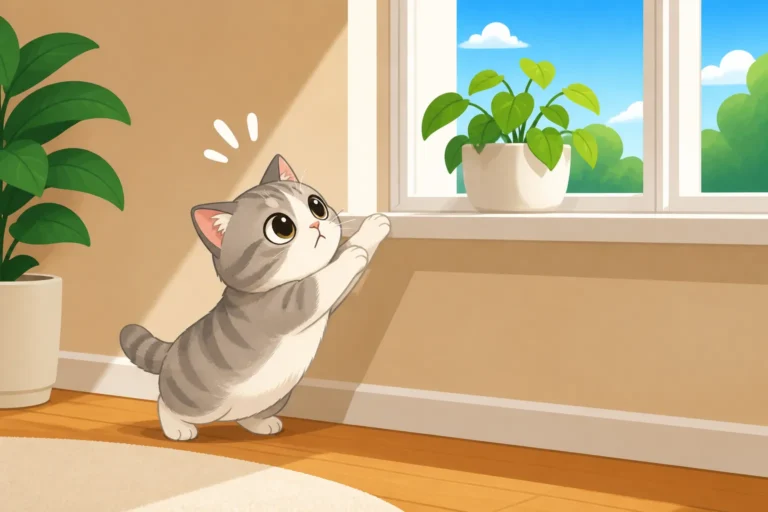
Consider your own home: where do you notice your Munchkin performing this sit most often? Is it by a window? Near the pantry? Or perhaps when you’re rustling through a package delivered from Amazon? These "high-value targets" are the immediate motivators. They want to know what's going on, and if jumping isn't an option, or they just need a quick peek, the prairie dog sit is their go-to maneuver. It’s a testament to their intelligence and adaptability, finding unique solutions to navigate their surroundings. Understanding What a Munchkin Is Looking At When It Sits Up will help you anticipate these moments.
The Need for Elevated Views in a Low-Lying World
While the prairie dog sit offers a temporary solution for a Munchkin to gain height, it doesn't replace the need for permanent, accessible elevated spaces. Imagine only being able to see the world from ankle height most of the time. It can be frustrating! Munchkins, like all cats, appreciate having various vantage points to survey their territory, feel secure, and simply enjoy the view. However, traditional cat trees with widely spaced platforms are often unusable for them. This means owners need to be creative.
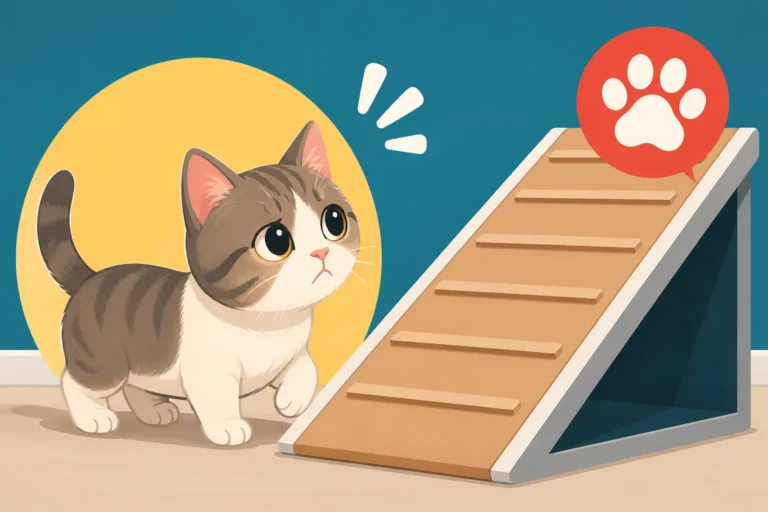
Providing accessible steps, ramps, or low-level cat trees with closely spaced platforms can make a huge difference in their quality of life. Instead of constantly relying on their upright sit, which can be tiring, they can use these aids to reach a comfy window perch or a higher bed. You can find many options for cat stairs and ramps on Amazon, making it easier to adapt your home. A well-designed environment lessens the physical strain and mental frustration of being unable to reach desired spots. Learning How to Get a Munchkin Up to a Window Safely is a great step in providing these necessary modifications.
Interaction with Other Pets and People
The prairie dog posture isn't just about seeing the environment; it's also a powerful tool for social interaction. A Munchkin might stand up to get a better look at a new visitor, assess the intentions of a larger dog, or simply to make eye contact with you when they want attention or food. In a multi-pet household, it can be their way of getting a quick overview of what the other animals are doing, especially if a larger cat or dog is blocking their view. It offers a sense of being part of the action, rather than always being relegated to ankle height.
When interacting with humans, a Munchkin might use this sit to "ask" for something. If they want to be picked up, for example, standing upright might be their way of making themselves more visible and signaling their desire. It’s a polite and effective communication strategy. Likewise, if they're observing a child playing, the upright stance gives them a better vantage point to understand the child's movements and reactions, offering a sense of safety through observation. Understanding What a Munchkin Does When a Dog Approaches can show you how this posture serves a crucial role in their interactions.
Encouraging Safe Observation and Enrichment
Providing a stimulating and safe environment for your Munchkin is paramount. While their prairie dog sit is adorable, we want to ensure they have alternatives and support to maintain their health and happiness.
Providing Accessible Vantage Points
Since Munchkins can't leap to great heights like their long-legged cousins, it's our job to bring the heights down to them. This means thinking horizontally and in gentle inclines rather than vertical leaps. Investing in quality pet ramps or steps is non-negotiable for a Munchkin household. These can be placed next to sofas, beds, or windowsills, allowing them safe and easy access to their favorite elevated spots. Look for ramps with a gentle slope and non-slip surfaces, which you can easily find on sites like Amazon. For cat trees, seek out designs with platforms that are closely spaced, forming a kind of staircase rather than large gaps. This allows them to scale it gradually, satisfying their natural desire for vertical space without putting undue strain on their little legs or spine.
Beyond ramps and steps, consider furniture arrangement. Can you create a "cat highway" using low bookshelves, sturdy ottomans, or even strategically placed sturdy storage cubes that allow your Munchkin to gradually ascend to a higher vantage point? The goal is to create a multi-level environment where they can safely explore and survey their domain. This not only caters to their natural instincts but also reduces the physical stress of constant jumping or standing on hind legs to see. Remember, a Munchkin might only be able to jump a few inches, so every modification counts!
Interactive Play at Floor Level
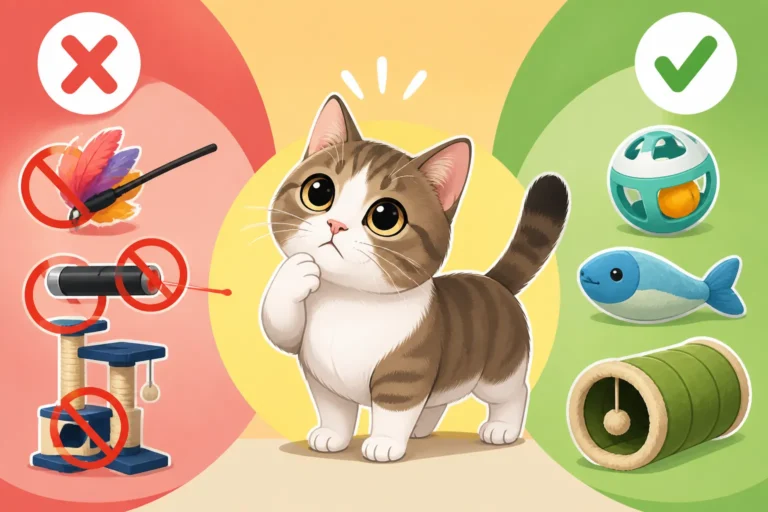
While providing accessible heights is important, it's equally crucial to remember that Munchkins are happiest and healthiest when playing at floor level. Their unique gait, often described as a ferret-like scamper, means they are incredibly quick and agile on flat surfaces. Prioritize interactive toys that engage them horizontally, encouraging chases, pounces, and quick changes of direction without requiring strenuous jumping. Think wand toys with long strings that can be dragged along the floor, laser pointers that lead them on a ground-level chase, or small rolling toys they can bat around. These types of toys tap into their natural hunting instincts and provide excellent exercise without putting stress on their joints or spine.
Avoid toys that primarily encourage high jumping or stretching upwards, as these can place unnecessary strain on their front legs and back. Instead, focus on enriching their ground-level experience with puzzle feeders they can manipulate, crinkle balls, and even tunnels they can zoom through. The aim is to create an engaging playground that celebrates their unique abilities rather than forcing them into movements that are unnatural or potentially harmful. For more ideas on suitable entertainment, you’ll find some great suggestions in Which Toys Work at a Munchkin's Height.
Regular Vet Checks and Spinal Health Monitoring
Even if your Munchkin seems perfectly healthy and loves its prairie dog sit, regular veterinary check-ups are absolutely essential. Your vet can monitor their overall health, assess their spinal alignment, and check for any early signs of joint issues that might not be immediately obvious to you. During these visits, be sure to mention your Munchkin's prairie dog posture, especially if you have any concerns or have noticed changes in how often or how long they perform it. The vet can evaluate their gait, muscle tone, and flexibility, providing you with peace of mind or detecting potential problems early.
As Munchkins age, just like any cat, they can become more prone to conditions like arthritis, particularly in their shoulders and elbows, which take the brunt of any impact from even small jumps or repetitive motions. Regular check-ups become even more vital then. Your vet might recommend supplements or lifestyle adjustments to support joint health. In some cases, if concerns about spinal health arise, X-rays or other imaging might be suggested. Don't hesitate to discuss these preventative measures with your vet; early detection and intervention are key to ensuring your Munchkin lives a long, comfortable, and happy life. To ensure a thorough assessment from the start, consider Why a Munchkin Kitten Needs an Early Vet Check.
Healthy vs. Concerning "Prairie Dog" Sits
It's important to be able to tell when your Munchkin's adorable posture is just them being their unique selves, and when it might be signaling something more serious. Here's a quick guide to help you differentiate:
| Feature | Healthy "Prairie Dog" Sit | Concerning "Prairie Dog" Sit |
|---|---|---|
| Effort | Fluid, seemingly effortless movement to rise and lower. | Hesitant, labored, or struggling to get into position. |
| Duration | Varies, but sustained periods are calm and stable. | Unusually brief, or held rigidly for extended periods. |
| Comfort | Relaxed demeanor, no visible tension or shaking. | Trembling, stiffness, or visible discomfort. |
| Vocalization | Silent or occasional happy chirps. | Meowing, whimpering, or growling during or after the posture. |
| Recovery | Smooth transition back to all fours, no limping or stiffness. | Stiff gait, limping, or reluctance to move afterwards. |
| Frequency | Occasional, curiosity-driven; part of normal repertoire. | Suddenly frequent, or a new behavior in an older cat. |
| Overall Mood | Playful, engaged, otherwise normal. | Withdrawn, lethargic, or showing other signs of pain/illness. |
Disclaimer
This article is for general informational purposes only and does not constitute professional advice. Laws, prices and regulations vary by location and change over time. Consult a qualified professional for guidance on your specific situation.