How to Teach a Child to Lift a Munchkin
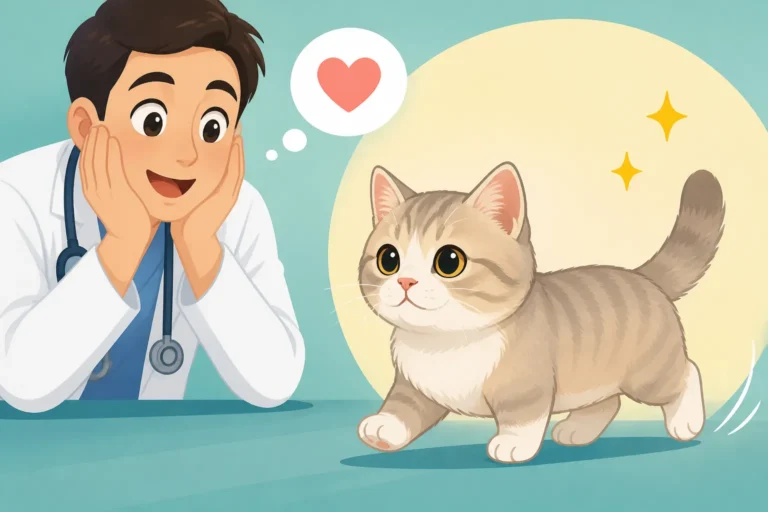
It’s a natural, heartwarming sight: your child reaching out to lovingly pick up your furry family member. But when that beloved pet is a Munchkin cat, that sweet instinct can, unfortunately, lead to accidental injury if not guided properly. Munchkins have unique anatomical needs, and teaching kids the right way to lift them is not just about manners, it’s about protecting their delicate little bodies. This guide will walk you through the specifics of safely teaching your child how to interact with and, when absolutely necessary, lift your Munchkin cat without causing harm.
Understanding Why Lifting a Munchkin is Different (and Crucial to Get Right)
Before we even get to the "how-to," it's absolutely vital for both parents and children to grasp why lifting a Munchkin requires special consideration. These aren't just small cats; their unique dwarfism, or pseudoachondroplasia, means their legs are significantly shorter, but their spine is still a normal length. This creates a different weight distribution and a spine that can be more vulnerable to strain if not supported correctly.
Imagine carrying a heavy backpack. If you hold it only by one strap, the weight pulls and twists your body uncomfortably. Now imagine that backpack is your Munchkin's normal-length body, and the "straps" are its short legs, which aren't designed to bear unsupported dangling weight. A normal-legged cat can often brace itself or shift its weight to accommodate a less-than-perfect lift, but a Munchkin has less leverage and a body that's lower to the ground, making correct support paramount. Without proper technique, there’s a risk of putting undue stress on their spine, shoulders, and hips. You want to avoid any position that could compress their organs or twist their back, especially if they have underlying conditions like lordosis, which is a spinal curvature. For more on this, you can read Why a Munchkin's Spine Carries a Load a Normal Cat's Does Not.
It's not about making Munchkins sound fragile, but rather acknowledging their distinct physiology. Their legs are certainly strong for their size – they are surprisingly fast on the flat and can corner with impressive agility – but they aren't built for hanging unsupported. When a child, or even an adult, lifts a Munchkin improperly, they might instinctively grab them under the armpits, leaving their hindquarters to dangle. This position places immense pressure on the shoulder joints and can hyperextend the spine, which is exactly what we want to prevent. Even a seemingly innocuous lift can cause discomfort over time, potentially contributing to conditions that manifest as the cat ages.
Essential Ground Rules for Kids and Munchkins
Before your child even thinks about attempting a lift, there are fundamental rules of engagement that need to be firmly established and consistently reinforced. These aren't just good pet etiquette; they're vital for your Munchkin's safety and comfort, and for building a respectful relationship between child and cat.
Always Supervise Interactions
This is the golden rule, no exceptions. Small children, especially toddlers, simply don't have the motor control or understanding of an animal's vulnerability to be left alone with any pet, let alone a Munchkin. Their natural curiosity and often clumsy movements can inadvertently harm a cat that cannot easily escape or defend itself. A Munchkin, due to its short legs, cannot easily climb out of a child's reach, making supervision absolutely critical. You, as the parent, need to be present and actively engaged, guiding their hands, their tone, and their overall approach. Think of yourself as the cat's advocate and the child's teacher in these moments.
As children get older, the level of direct supervision might decrease slightly, but it should never disappear entirely. Even an older child needs reminders and checks to ensure they're consistently using the correct lifting technique and respecting the cat's boundaries. It's about instilling a lifelong habit of gentle, thoughtful interaction.
Teach Gentle Floor-Level Interaction First
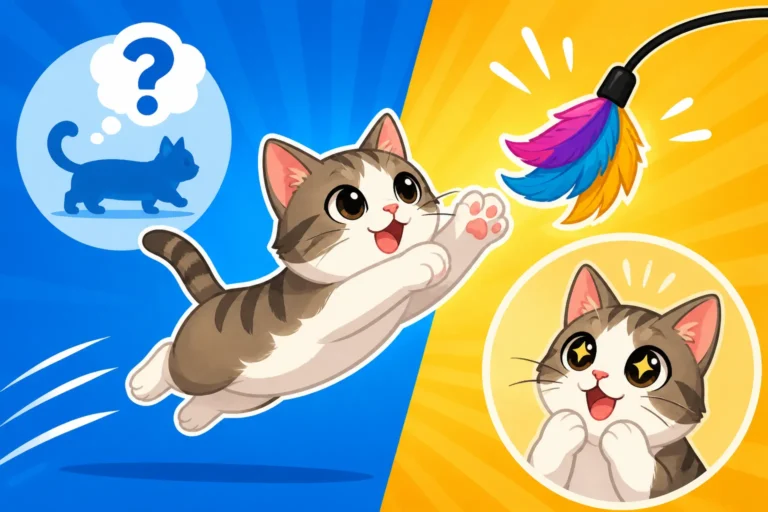
Before any lifting is attempted, focus on teaching your child how to interact with your Munchkin at its level. Encourage them to sit on the floor, offering a hand for the cat to sniff, and petting it gently along its back or head. This helps build trust and allows the cat to initiate contact. Show them how a Munchkin enjoys chasing toys along the floor, like wand toys that keep the play at an accessible height. Many parents find success with a variety of low-to-the-ground toys, some of which you can easily find on Amazon.
This groundwork is crucial because it teaches the child that not all interaction requires picking up the cat. It respects the Munchkin's natural movement and provides enrichment without putting any strain on its body. When a child learns to read a cat's body language – a twitching tail, flattened ears, or an attempt to move away – they develop empathy and understand when to give the cat space, which is far more important than knowing how to lift it.
The "Ask Permission" Rule
Establish a clear rule: your child must always ask an adult for permission before attempting to lift the Munchkin. This serves multiple purposes. First, it ensures that an adult is present to supervise and guide the lift. Second, it teaches the child to be mindful and consider the cat's well-being, rather than simply grabbing it on impulse. Third, it allows the adult to assess the situation – is the cat sleeping? Is it eating? Is it already stressed? – and determine if it's an appropriate time for interaction.
Make sure your child understands that "no" doesn't mean you don't love the cat; it means you're protecting it. Explain that sometimes kitty just wants to relax or play on its own. Reinforce that the cat gets to decide if and when it wants to be handled. If your Munchkin is actively trying to get away or showing signs of discomfort, then it’s definitely not the time for a lift. Teaching this respect for the cat's autonomy is vital for a healthy, long-lasting relationship.
Step-by-Step Guide: The Proper Way to Lift a Munchkin
When it's deemed appropriate, and with an adult's full supervision, it's time to teach your child the correct, two-handed method for lifting a Munchkin. Patience and repetition are key here. Start by practicing with a stuffed animal that is roughly the size and weight of your Munchkin before ever attempting to lift the actual cat. This takes the pressure off both child and cat during the learning phase.
Preparing for the Lift
The approach is just as important as the lift itself. Teach your child to:
- Get Down to Their Level: Rather than looming over the cat, have your child sit or kneel on the floor near the Munchkin. This makes the child less intimidating and encourages the cat to feel safe. A Munchkin's world is already at ankle height, so meeting them there is always a good starting point.
- Approach Gently and Calmly: No sudden movements or loud noises. Extend a hand slowly, allowing the Munchkin to sniff and acknowledge their presence. If the cat rubs against their hand, that’s a good sign of acceptance. If the cat seems hesitant or tries to move away, respect that signal and try again later, or simply engage in floor-level play instead.
- Communicate Softly: Encourage your child to use a gentle, reassuring voice. Talking to the cat helps create a calming environment and lets the cat know what's happening. Simple phrases like "Hello, kitty" or "Are you ready for a cuddle?" can work wonders.
The Two-Handed Technique: The Only Way
This is the most critical part. Explain and demonstrate this technique repeatedly, first with the stuffed animal, then with you demonstrating on the cat while the child watches, and finally, with the child attempting under your direct, hands-on guidance.
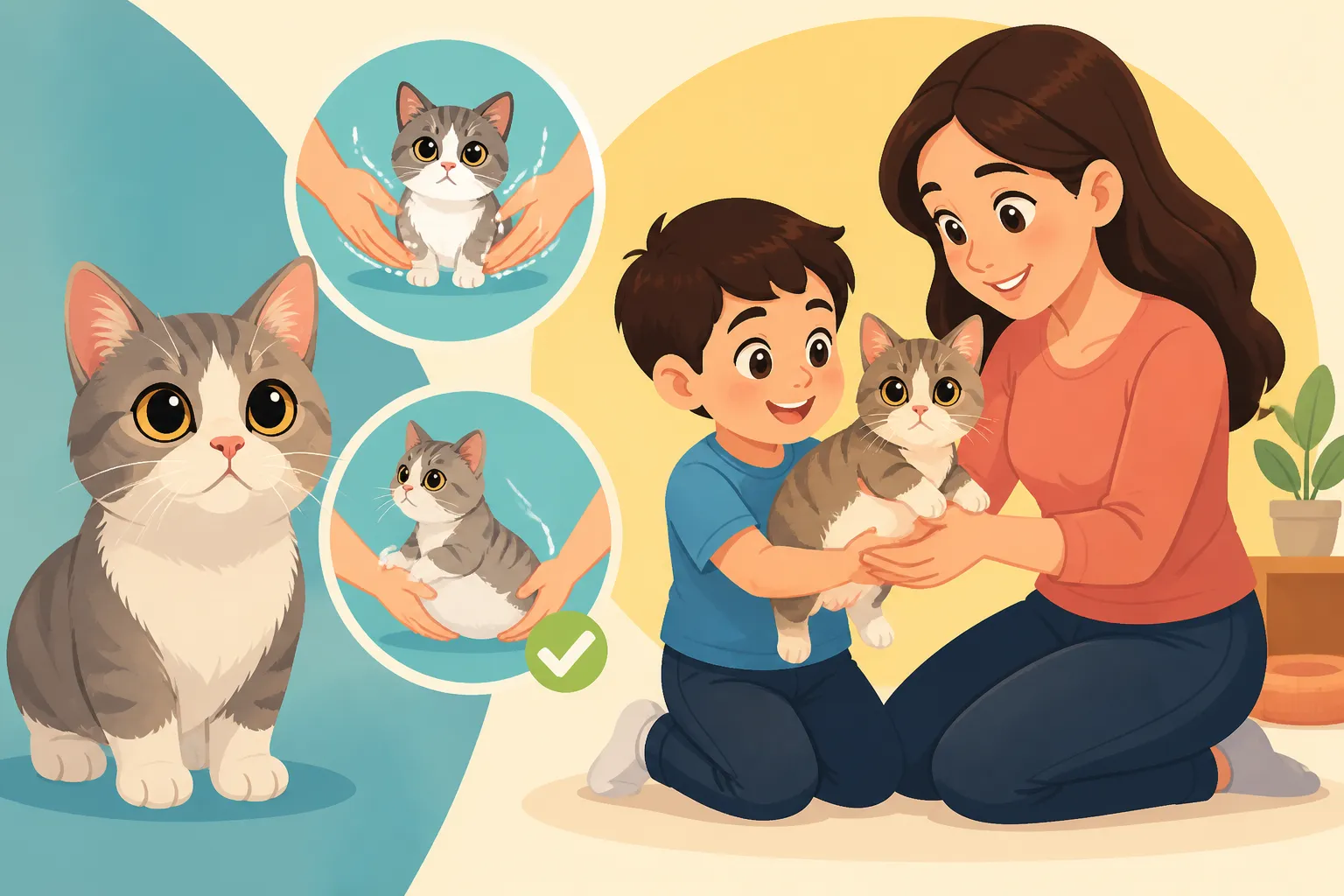
- Support the Front: Instruct your child to gently slide one hand under the Munchkin's chest, right behind its front legs. The palm should be supporting the cat's ribcage, and the fingers should wrap slightly around its body, not just gripping its legs. This supports the upper body and prevents the front legs from dangling. Think of it as cradling the cat's torso.
- Support the Rear: Simultaneously, the other hand must go under the Munchkin's hindquarters. This means sliding the second hand under its belly and bottom, ensuring that its entire rear half, including its back legs, is fully supported. This is vital to protect the spine and hips, preventing any unsupported dangle that could strain the back.
- Lift Level and Close: Once both hands are firmly in place, instruct your child to lift the Munchkin smoothly and levelly. The cat should remain in a horizontal or slightly cradled position, as close to the child's body as possible. The goal is to avoid any sagging in the middle of the cat's body or any sudden upward jerking. The less distance the cat is lifted, the better. Remind them: you're not lifting it to eye level; you're lifting it just enough to hold it securely and briefly. This is exactly how you would How to Lift a Munchkin Correctly.
- Hold Securely, Not Tightly: The grip should be firm enough to be secure, but never tight or restrictive. The cat should feel safe and supported, not squashed. Teach your child to watch for signs of discomfort from the cat, like struggling or vocalizing, and to immediately lower the cat if these occur.
Lowering the Munchkin Safely
The descent is just as important as the lift. Rushing this step can negate all the careful work put into the lift.
- Reverse the Lift: Guide your child to slowly and smoothly lower the Munchkin back down, keeping both hands supporting its body.
- Feet First: Emphasize that the Munchkin's paws should be placed firmly on a stable surface (the floor, a low bed, or a ramp) before the child releases their hands. Never drop or let the cat jump from a height, even a small one. Remember Why Coming Down Is Harder Than Going Up for a Munchkin and the strain it can put on their joints.
- Gentle Release: Once the cat's feet are on the ground and it’s stable, the child can gently slide their hands away. Reward the child with praise for a job well done.
This practice needs to be consistent. Every single time your child interacts with the Munchkin and attempts to lift it, you need to be there to ensure the technique is correct. Over time, it will become second nature, turning a potential hazard into a safe and loving interaction.
When Not to Lift and Alternative Interactions
Lifting a Munchkin should not be the primary mode of interaction, especially for children. It should be reserved for specific situations, and even then, executed with extreme care. Teaching children when not to lift is just as important as teaching them how.
Recognizing "No-Lift" Situations
There are clear times when lifting is completely off-limits, regardless of how well your child knows the technique:
- When the Cat is Resting or Sleeping: Interrupting a cat’s rest can cause stress and is simply impolite. Teach your child to respect the cat's need for downtime.
- When the Cat is Eating or Using the Litter Box: These are private moments for any animal. Disturbing a Munchkin during these times can lead to anxiety or even avoidance of its food or litter area.
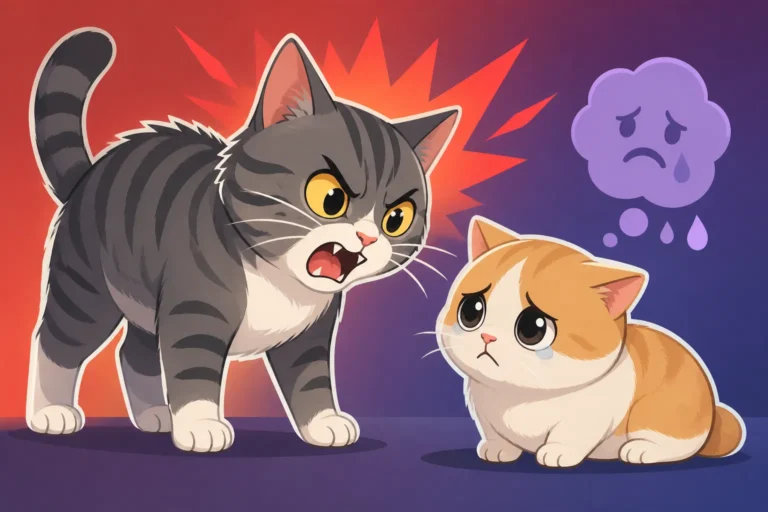
- When the Cat Shows Discomfort: If your Munchkin pulls away, flattens its ears, hisses, growls, or tries to bite, these are clear signals to stop. Teach your child to recognize these signs and to back off immediately. Forcing interaction is never acceptable.
- If the Cat is Unwell or Injured: A Munchkin experiencing pain, stiffness, or recovering from an injury is particularly vulnerable. Lifting it could exacerbate the problem. An older Munchkin, for example, might be starting to stiffen up from arthritis, and an incorrect lift could cause significant pain. You can read more about caring for an older cat in Caring for a Munchkin Past Ten.
- During Play with Another Pet: If the Munchkin is interacting with another cat or a very calm, cat-friendly dog, it’s best not to interfere by lifting it, as it could disrupt their social dynamics or put the Munchkin in a vulnerable position.
Promoting Floor-Level Fun
The best interactions between children and Munchkins often happen right on the floor. Encourage games that allow the Munchkin to use its natural agility without needing to be picked up.
- Wand Toys and Laser Pointers: These are fantastic for engaging a Munchkin’s predatory instincts. Your child can sit or kneel and dangle a feather wand, letting the Munchkin pounce and chase across the floor. Laser pointers also provide endless entertainment and can be easily guided from a seated position. Many excellent options for these types of toys are available on Amazon.
- Rolling Toys and Puzzle Feeders: Small balls, crinkle toys, or even crumpled paper balls can provide hours of fun. Puzzle feeders are also great for mental stimulation and slow down eating, which is beneficial for a breed where weight control is so important. Your child can help set up these feeders at floor level.
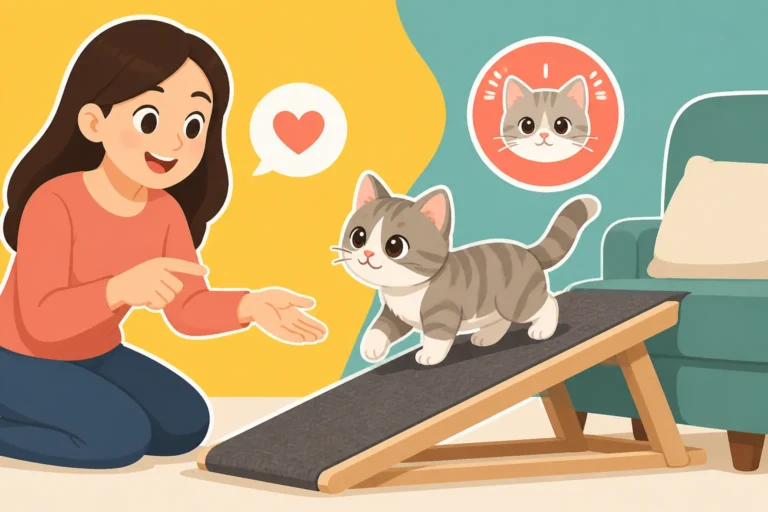
- Cuddle Time on the Sofa (with Assistance): Instead of lifting the cat onto the sofa, consider using cat-friendly ramps or steps that the Munchkin can use to climb up on its own. These ramps can be purchased from retailers like Amazon or even built yourself. This allows the Munchkin to join the family on furniture without any strenuous jumps or risky lifts. You can find more information about What Ramps for a Munchkin Cost to Buy and How to Teach a Munchkin to Use Steps. Once the cat is settled, your child can enjoy petting and gentle cuddles alongside you.
- Supervised Lap Time: If your Munchkin is a lap cat, encourage your child to sit on the floor or a very low stool, allowing the cat to come to them and jump onto their lap if it chooses. This respects the cat's choice and limits any potential strain from being lifted.
Remember, the goal is to foster a loving, respectful, and safe environment for both your child and your Munchkin cat. By emphasizing gentle, floor-level interaction and teaching the correct lifting technique only when necessary, you're setting everyone up for a lifetime of happy companionship.
Summary of Safe Lifting Practices for Munchkins
To ensure your Munchkin's safety and comfort when a child interacts with it, keep these key points in mind:
| Action | Do | Don't |
|---|---|---|
| Before Lifting | Always supervise. Teach floor-level interaction first. Ask adult permission. |
Leave unsupervised. Force interaction. Lift without permission. |
| Approach | Get down to the cat's level. Approach gently and calmly. Use soft voice. |
Loom over the cat. Make sudden movements or loud noises. Grab impulsively. |
| Lifting Technique | Use two hands: one under chest, one under hindquarters. Lift level and close to body. |
Grab by front legs/armpits only. Let hindquarters dangle. Lift high or jerkily. |
| Holding | Hold securely but gently. Watch for signs of discomfort. |
Hold too tightly or restrictively. Ignore signs of stress. |
| Lowering | Lower smoothly with both hands. Place paws on surface before releasing. |
Drop or allow to jump from height. Release hands before paws are stable. |
| "No-Lift" Times | Respect rest, eating, litter time. Provide safe retreats (e.g., How to Get a Munchkin Up to a Window Safely). |
Disturb during private moments. Force interaction if cat shows distress. |
| Alternative Play | Encourage wand toys, laser pointers, floor games. Use ramps for furniture access. |
Rely solely on lifting for interaction. Expect cat to jump to high places. |
Disclaimer
This article is for general informational purposes only and does not constitute professional advice. Laws, prices and regulations vary by location and change over time. Consult a qualified professional for guidance on your specific situation.