What That Judge Said About the Munchkin
The Munchkin debate is often reduced to one dramatic moment: a judge resigning after the breed entered a registry’s development program. The judge was Dr. Solveig Pflueger, a geneticist and cat-show judge who objected to deliberately breeding cats for short legs. Here’s what her objection meant, what it did not establish, and why the argument still matters to prospective owners.
Who was the judge who objected to the Munchkin?
Dr. Solveig Pflueger’s role in the controversy
Dr. Solveig Pflueger was a geneticist involved with The International Cat Association, or TICA, and served as a judge. She became widely associated with the early Munchkin controversy after the registry accepted the breed into its development program in 1994. Her resignation was a highly visible expression of opposition within the cat fancy, not simply a disagreement about how a cat should look in a show ring.
That distinction matters. A judge’s role is not only to assess a cat’s appearance against a standard. In this case, the concern was about whether a registry should support the deliberate breeding of a physical trait caused by a genetic change. Pflueger’s objection is generally described as a welfare and breeding-ethics concern: she questioned whether making short legs a selected feature was responsible when the long-term consequences were not well established.
People sometimes ask for the exact sentence she used. The story is frequently retold in simplified form, and wording attributed to her can vary. It is more careful to explain the substance of her position than to present a polished sentence as a verified verbatim quotation. For related background on the resignation itself, see Which Judge Resigned Over the Munchkin and Why a Judge Resigned Over the Munchkin.
Why the 1994 decision drew attention
TICA’s 1994 decision brought the Munchkin into a formal breed-development process. That did not mean that every cat association accepted the breed, nor did it end the argument about whether it should be bred. It meant that TICA had chosen to evaluate and develop a standard for the cats within its own registry structure. The registry decision and the ethical debate were connected, but they were not the same thing.
For critics, the concern was that a distinctive appearance was being made into a breeding goal even though the short-legged trait affects skeletal development. For supporters, the existence of short-legged cats and their reported ability to live active lives were reasons to study and evaluate them rather than dismiss them outright. The disagreement was about what evidence should be enough to justify breeding, and who should bear the burden of proof.
A registry’s recognition can also be misunderstood as a health endorsement. It is not a guarantee that every animal in a breed is healthy, that all breeders follow strong practices, or that every veterinary concern has been resolved. To understand what the original registry decision involved, read What TICA Registered the Munchkin As in 1994.
What did Pflueger’s objection mean?
A concern about breeding for a physical trait
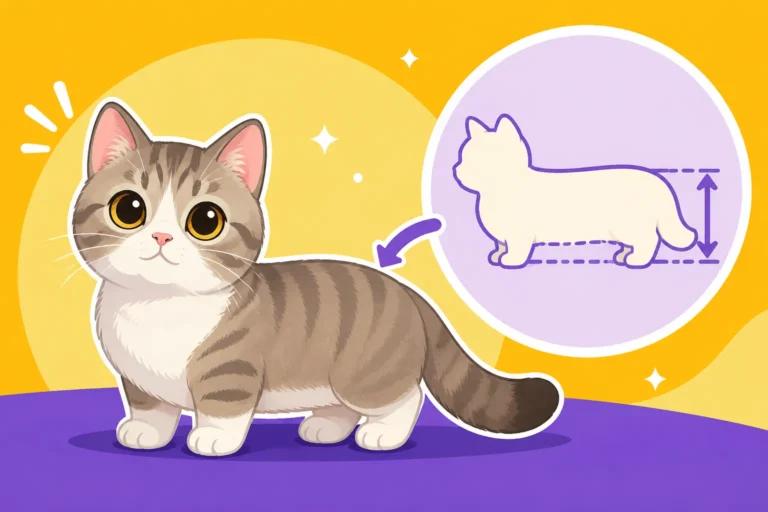
The central issue was not simply that Munchkins have short legs. The deeper question was whether humans should intentionally select and reproduce a trait that changes a cat’s normal limb proportions. Pflueger’s position is commonly understood as a warning against treating an inherited structural difference as an attractive feature without adequately addressing possible effects on movement, comfort, and long-term health.
That is an ethical argument, not proof that every Munchkin is in pain or unable to function. Individual cats vary, and a cat’s outward appearance alone cannot tell an owner how it feels or what health problems it may develop. At the same time, an individual cat that seems playful does not settle the broader question of whether breeding the trait is justified across generations.
This is why discussions of the breed often become heated. One person may point to a lively cat chasing a toy across the floor; another may ask whether the animal’s structure could place unusual demands on its limbs or joints over time. Both observations can be sincere, but neither by itself answers the breeding-policy question. For a broader overview of the competing welfare positions, see What Welfare Bodies Say About the Munchkin and Why Vets Disagree About the Munchkin.
What the objection did not prove
Pflueger’s resignation did not establish that every Munchkin has a particular spinal disorder, develops arthritis early, or experiences daily pain. A protest by a knowledgeable judge is significant because it highlights a serious concern, but it is not the same thing as a controlled study of health outcomes. Likewise, the fact that some Munchkins appear active is not enough to show that the breed carries no added risk.
The careful answer is that a visible structural trait deserves attention, while the extent and frequency of associated health problems require evidence. That evidence can be difficult to assemble when the population is limited, breeding practices differ, records are incomplete, and studies do not follow large groups of cats over their full lives. The debate therefore includes both scientific questions and ethical judgments about how much uncertainty is acceptable.
A useful way to approach claims about the breed is to separate them into three categories: what has been observed in an individual cat, what research has shown across a population, and what a person believes breeders ought to do under uncertainty. Keeping those categories distinct helps prevent an emotional argument from becoming an unsupported medical claim.
Why the disagreement continues
Breed recognition is not the same as broad acceptance
TICA later granted the Munchkin championship status, but recognition by one registry does not mean universal acceptance across cat organizations. Different associations set their own policies, and some have declined to register the breed. Those positions reflect differences in standards, priorities, and views on breeding for altered body structure, rather than one single worldwide ruling.
This also explains why people can encounter very different descriptions of the Munchkin depending on where they look. A breed registry may discuss its standard and show status, while a welfare organization or veterinary professional may focus on the ethical implications of reproducing the trait. Neither perspective should be mistaken for a complete account of every individual cat’s condition.
Championship status can make a breed more visible and establish formal judging criteria, but it does not settle the underlying welfare argument. It should not be read as proof that every concern has been disproven. For a closer look at what recognition changed, see What Championship Status Changed for the Munchkin. The position of another major registry is discussed in Why CFA Refuses to Register the Munchkin.
Why there is no simple verdict
The Munchkin debate combines evidence, uncertainty, and values. Evidence can help answer questions about health and function, but the decision about whether a trait should be deliberately bred also involves a judgment about acceptable risk. Some people believe responsible outcrossing and careful monitoring can reduce concerns. Others argue that a trait tied to a structural difference should not be promoted as a breed feature at all.
That is why a short slogan rarely helps. “They’re all unhealthy” is too sweeping, while “they’re just like any other cat” can dismiss legitimate questions about conformation and mobility. A more grounded conversation asks what is known, what remains uncertain, how breeders screen and disclose health issues, and whether the cat can perform ordinary activities comfortably.
The disagreement also helps explain why the phrase “recognized breed” should not end a prospective owner’s research. Registration is one piece of context. It does not replace a careful review of a breeder’s records, a veterinary assessment, or an honest evaluation of whether the household can meet the cat’s needs.
What prospective owners can take from the judge’s warning
Ask about the individual cat, not just the breed label
If you are considering a Munchkin, ask the breeder to explain the kitten’s family history, veterinary checks, and any known mobility or structural concerns. Ask to see the kitten moving naturally on a level surface, rather than relying only on posed photographs. Notice whether it walks, turns, plays, and gets to food and water without persistent difficulty. A video can help you observe ordinary movement, but it cannot replace an in-person veterinary examination.
Be especially wary of anyone who treats questions about health as an insult or offers absolute assurances. No breeder can promise that a kitten will never develop a health problem. A careful breeder should be willing to discuss the limits of available information, explain how kittens are assessed, and provide clear records rather than relying on breed enthusiasm alone.
You can also ask what happens when a kitten has a health or conformation concern. Responsible placement means more than finding a buyer; it means being candid about what is known and ensuring that the animal’s needs come first. For a broader guide to the moral questions involved, see Whether Buying a Munchkin Is an Ethical Decision.
Consider the home environment and ongoing care
A cat’s daily experience depends partly on the home around it. Low-entry litter boxes, secure routes to favorite resting spots, and stable steps or ramps can make access easier. A Munchkin should not have to make repeated, risky jumps simply to reach a bed, sofa, or window perch. Watch how the cat chooses to move, and adjust the setup if it avoids a route or seems uncomfortable using it.
Practical equipment can be found through many pet retailers, including Chewy, but the important thing is fit and stability rather than the retailer. A ramp that slides on a smooth floor may be less useful than a simple, firmly anchored set of steps with a grippy surface. Chewy may be one place to compare pet stairs, low-entry litter boxes, or grooming supplies; check the product details and make sure the item suits the cat’s size and movement.
Care also includes keeping the cat at a healthy body condition and arranging regular veterinary visits. If grooming becomes difficult, especially around the hindquarters, gentle brushing and a plan for professional help can prevent mats from turning into a painful problem. Chewy carries a range of general pet-care supplies, but products cannot substitute for a veterinarian’s assessment when a cat is stiff, reluctant to move, or behaving differently. Changes in gait, play, appetite, grooming, or litter-box habits are worth discussing with a veterinary professional.
Pflueger’s objection remains relevant because it asks a question that goes beyond whether a particular Munchkin is charming or lively: what responsibilities come with deliberately breeding for a physical trait? The most useful response is neither to dismiss the concern nor to assume the worst about every cat. It is to take the welfare questions seriously, look for specific evidence, and make decisions with the individual animal’s comfort and long-term needs in view.
Disclaimer
This article is for general informational purposes only and does not constitute professional advice. Laws, prices and regulations vary by location and change over time. Consult a qualified professional for guidance on your specific situation.