Where a Munchkin Can Be Walked Without Meeting a Dog
We all want our beloved Munchkins to experience the joys of the outdoors, feeling the sun on their fur and sniffing new scents. But for many Munchkin owners, the thought of an unexpected dog encounter during a walk is a genuine source of anxiety and dread. Their unique physical characteristics make them particularly vulnerable, leading to a constant worry about finding truly safe spaces. This guide aims to alleviate that stress by helping you identify and create environments where your Munchkin can explore without the overwhelming risk of meeting a dog.
The Unique Vulnerabilities of a Leash-Walked Munchkin
It's a common misconception that all cats can handle the outdoors equally, or that a leash offers universal protection. For a Munchkin, whose very form is defined by its shortened limbs, the external world presents a different set of challenges, especially when it comes to potential interactions with other animals. Understanding these vulnerabilities is the first step toward ensuring their safety.
The Physical Disadvantage of Short Legs in an Emergency
Imagine being in a situation where your only defense is to run or climb, but your legs simply aren't built for speed or vertical escape. That's the reality for a Munchkin when faced with a threat. Their signature short legs, while endearing, drastically limit their ability to escape danger quickly. A long-legged cat can often outrun a perceived threat, scramble up a tree in seconds, or leap onto a fence. A Munchkin cannot. They might be surprisingly nimble on flat ground, darting and weaving, but when it comes to sustained speed over varied terrain or gaining elevation, they are at a severe disadvantage.
This means that a sudden encounter with a dog, even a small or seemingly friendly one, can quickly turn disastrous. The Munchkin simply lacks the physical tools to create distance or find refuge. If a dog decides to chase, even playfully, a Munchkin's short legs mean it cannot outpace its pursuer. Furthermore, unlike their long-legged feline cousins who can easily launch themselves onto a high perch or scale a fence, a Munchkin's jumping ability is severely limited. They might be able to manage a sofa or a low chair with a bit of effort, but a tall fence, a tree trunk, or even a rapidly approaching human's arms are often out of reach. This inability to ascend means they are essentially trapped at ground level, which is precisely where any dog would encounter them. Why a Munchkin Cannot Climb Away From Anything is a critical read for any owner considering outdoor excursions.
The Instinctual Mismatch Between Cats and Dogs
Cats and dogs, despite often coexisting peacefully in homes, have fundamentally different predatory and defensive instincts. A cat's natural response to perceived danger is typically flight – to run, hide, or climb to safety. If cornered, a cat will often resort to hissing, swatting, and biting, but their primary instinct is to escape. Dogs, on the other hand, especially those with strong prey drives, might perceive a running or struggling small animal as something to chase or "play" with, even if they have no malicious intent.
This instinctual mismatch is particularly dangerous for a Munchkin. If a dog approaches quickly, even with wagging tail, a Munchkin might perceive it as a threat and attempt to flee. This action, interpreted by a dog with a chase instinct, can trigger a pursuit. Because the Munchkin cannot run fast enough or climb high enough, the situation can escalate rapidly. Even a gentle dog, if it corners a frightened Munchkin, could cause injury through accidental roughhousing or simply overwhelming the smaller cat. A dog's playful pounce, which might be harmless to another dog, could be devastating to a Munchkin's delicate frame, especially their spine. This isn't about blaming dogs; it's about understanding the inherent dangers of mixing these two species in an uncontrolled outdoor setting where a Munchkin simply cannot defend or escape effectively. What a Munchkin Does When a Dog Approaches highlights their typical responses.
The Unpredictability of Other Dogs and Their Owners
One of the biggest anxieties for any pet owner in a public space is the unpredictability of other animals and, frankly, other people. You can train your Munchkin meticulously, ensure they have the best harness, and practice recall, but you cannot control every loose dog or every distracted owner. Even dogs generally considered "good" or "friendly" can have off days, react unexpectedly to a strange small animal, or simply be too boisterous for a delicate Munchkin.
We've all seen dogs off-leash in areas where they shouldn't be, or owners who aren't paying attention. A sudden, unexpected encounter can occur in moments, leaving you with little time to react. The sight of a dog running toward your Munchkin, even if you know the dog, can be heart-stopping. For a Munchkin, who literally cannot escape a confrontation, this unpredictability is not just a nuisance; it's a significant safety hazard. This is why relying on the assumption that other dogs will be leashed, well-behaved, or under control is a risk many Munchkin owners simply aren't willing to take. The stress of constant vigilance also detracts from any enjoyment you and your cat might otherwise get from an outdoor excursion.
Identifying Truly Safe Walking Environments
Given the inherent risks, the key to walking a Munchkin safely outdoors lies in creating or finding environments where dog encounters are either impossible or extremely unlikely. This often means thinking outside the traditional "walk around the block" scenario and focusing on controlled, contained spaces.
Private, Fenced Yards: The Gold Standard for Safety
Without a doubt, the absolute safest place to take your Munchkin for an outdoor stroll is your own private, securely fenced yard. Here, you have complete control over the environment. There are no unexpected dogs, no stray cats, and no cars. This allows your Munchkin to explore natural scents, feel grass beneath their paws, and bask in the sunshine without any of the major external threats.
Before considering your yard, however, it's crucial to inspect the fencing thoroughly. Are there any gaps a determined cat could squeeze through? Is the fence high enough that a cat can't jump over it (even a Munchkin might find a way up a lower fence with enough motivation or a helping branch)? Are there any areas where they could dig under? Remember, while Munchkins aren't known for their jumping prowess, they are still incredibly curious and agile when motivated. Double-check gates for secure latches. If you have any trees or structures near the fence line, ensure they don't offer an easy escape route. For some owners, investing in a "cat fence" topper, which angles inward to prevent climbing, can add an extra layer of security. The peace of mind that comes from knowing your Munchkin is safe within their own territory is invaluable.
Catios and Secure Enclosures: Dedicated Outdoor Havens
If you don't have a securely fenced yard, or you want to expand your Munchkin's outdoor access even further, a catio or a similar secure outdoor enclosure is an excellent option. These are specifically designed, enclosed spaces that attach to your home or stand alone in your yard, providing fresh air and stimulation in a completely safe environment.
Catios can range from simple, window-mounted boxes to elaborate, multi-level structures with ramps, shelves, and scratching posts. Many companies offer modular catio kits, often found on platforms like Amazon, that are relatively easy to assemble. Alternatively, a handy DIY enthusiast could build one to custom specifications. The beauty of a catio is that it keeps your Munchkin contained and protected from all external threats – not just dogs, but also cars, other predators, and even parasites. It allows them to observe birds, feel the breeze, and enjoy the sights and sounds of the outdoors without any risk. When designing or choosing a catio, consider what a Munchkin needs: easy access via a low entry point, plenty of horizontal platforms or ramps instead of tall vertical climbs, and a solid roof to prevent anything from getting in. What a Munchkin Sized Catio Needs offers more specific guidance. These dedicated spaces transform a potentially dangerous outdoor desire into a safe, enriching experience.
Screened Porches and Enclosed Patios: Semi-Outdoor Sanctuaries
For those without a full yard or a dedicated catio, a securely screened porch or an enclosed patio can serve as a wonderful compromise. These spaces offer fresh air, natural light, and new smells while still providing a physical barrier against dogs and other animals. The key here is the word "securely." Screens must be intact, without rips or holes that a cat could enlarge or slip through. Doors should latch securely, and any gaps around the edges of the enclosure should be sealed.
While not as exposed to nature as a catio, a screened porch still provides a valuable "in-between" space. Your Munchkin can lounge in the sun, watch the world go by from a safe distance, and enjoy the outdoor ambiance. You can enhance the experience by adding cat-friendly plants (ensure they are non-toxic), small scratching posts, and comfortable bedding. This creates a mini outdoor retreat where your Munchkin can relax without you constantly worrying about a sudden intrusion from a neighboring dog or an unexpected leash escape. It's a great option for apartment dwellers or those with smaller outdoor spaces.
Early Morning or Late Night Walks in Very Secluded Areas
This option comes with significant caveats and should only be considered if the above, safer environments are truly impossible, and only with extreme caution. The idea is to choose public areas that are known to be extremely quiet and deserted during very specific, off-peak hours, such as predawn or very late at night. Think of a local park that's usually bustling, but at 4 AM, it's completely empty.
However, this is still a calculated risk. There's no guarantee that a dog walker won't be out at the same time, or that a stray dog won't be roaming. Furthermore, the darkness adds its own layer of risk, making it harder for you to spot potential dangers. If you ever choose this route, you must:
- Scout the location thoroughly at various times before taking your Munchkin.
- Go with a reliable, escape-proof harness that fits your Munchkin perfectly. Which Harness Fits a Munchkin's Body is crucial reading.
- Maintain constant, hyper-vigilant awareness of your surroundings.
- Have a clear escape plan or a quick way to scoop your Munchkin up if you spot even a distant dog. Knowing How to Lift a Munchkin Correctly is vital.
- Understand that even with these precautions, a risk remains. For a Munchkin, Why a Munchkin Cannot Outrun a Dog Outdoors is a stark reality.
For these reasons, this approach is generally not recommended as a primary strategy, but rather as a last resort for very occasional, supervised outings in truly exceptional circumstances. The stress on both you and your cat might outweigh the benefits.
Strategies for Minimizing Risk and Maximizing Enjoyment
Even when you've chosen the safest environment, there are still practical steps you can take to ensure your Munchkin's comfort and security. From selecting the right gear to training for unpredictable moments, these strategies help build confidence and reduce anxiety for both of you.
Choosing the Right Harness and Leash
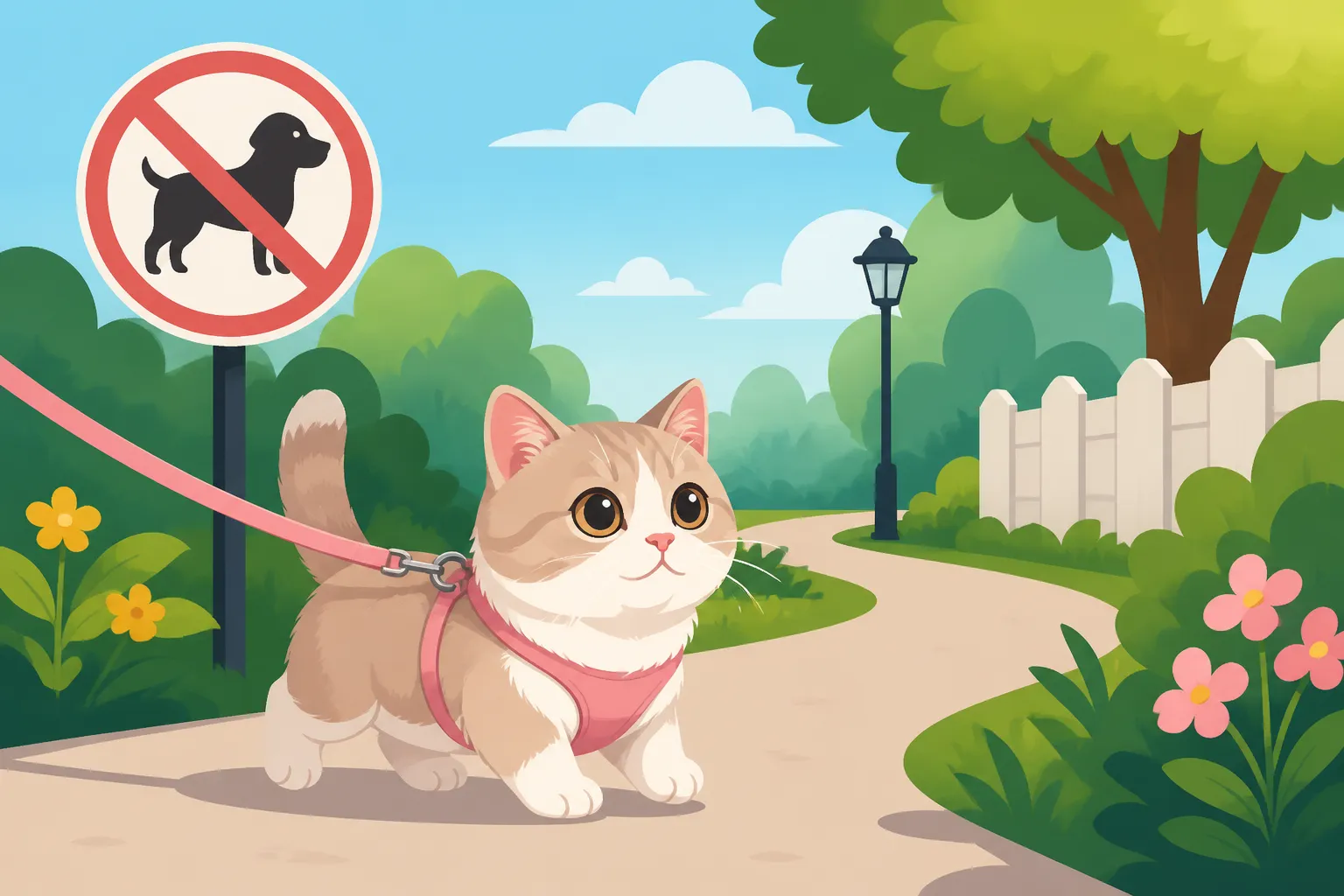
A proper-fitting harness is non-negotiable for any cat venturing outdoors, and doubly so for a Munchkin. Their unique body shape means that a standard harness designed for a longer-bodied cat might not fit snugly or securely. You need a harness that is escape-proof, meaning it's difficult for them to wiggle out of, even when startled.
Look for harnesses that are H-shaped or vest-style, offering broad coverage and multiple adjustment points around both the neck and chest. The fit should be snug but not tight, allowing two fingers to comfortably slip underneath. Pay close attention to the area behind their front legs; this is a common escape point. Many owners find harnesses specifically designed for small dogs or even rabbits sometimes offer a better fit for a Munchkin's compact frame than standard cat harnesses. Brands available on Amazon and other pet supply retailers often carry a variety of sizes and styles, so take measurements of your Munchkin before purchasing. Introduce the harness gradually indoors, allowing them to get used to wearing it for short periods before attaching a leash. A lightweight, flexible leash is also important, one that won't feel heavy or restrictive for your small cat. How to Get a Munchkin Used to Being Handled is a great precursor to harness training.
Vigilance and Situational Awareness in Less Controlled Environments
If you ever find yourself in a situation that isn't completely enclosed (such as a very secluded public park during off-hours), your vigilance becomes your primary defense. You must be constantly scanning your surroundings, not just for dogs, but for anything that could pose a threat – sudden noises, other people, or even fast-moving vehicles if you're near a road.
This means putting away your phone, resisting the urge to get engrossed in a book, and truly focusing on your Munchkin and the environment. Listen for barking dogs in the distance, watch for approaching people, and be aware of potential hiding spots or escape routes (even if they're just into your arms). Keep your Munchkin close to you at all times, ideally on a shorter leash, and be ready to pick them up instantly if you spot a dog. Remember, a Munchkin's low profile means they can be easily overlooked, and their inability to quickly cover ground makes them particularly vulnerable to unforeseen circumstances.
Training for Recall and Emergency Procedures
Even in the safest environments, having a strong recall or an "emergency pickup" cue can be a lifesaver. Training your Munchkin to come to you when called, using positive reinforcement with high-value treats, can be incredibly beneficial. Practice this indoors first, then in your secured yard or catio. The goal is for them to associate your call with something wonderful, making them eager to return to you.
Beyond recall, training an emergency procedure is also smart. This could be a specific sound or phrase that signals "come immediately for a treat and a cuddle," which you follow by swiftly scooping them into your arms or a waiting carrier. Practice picking them up gently and securely, ensuring they are comfortable with being handled in this way. In a true emergency, every second counts. If you need to quickly get your Munchkin to safety, knowing they won't struggle or resist being picked up will make the process much smoother and less stressful for everyone involved.
Avoidance Techniques and Planning Your Routes
If you must utilize a public space, even a secluded one, careful planning and avoidance are key. This involves understanding the habits of local dog owners and choosing your times and routes accordingly. Are there specific trails or parts of a park that are known "dog-walking" areas? Avoid them completely. Are there certain times of day when more dogs are out? Schedule your Munchkin's outing for different times.
Think about the terrain. While a Munchkin is surprisingly agile, overly rough or uneven ground can be harder on their short legs. Stick to relatively flat, clear paths within your chosen safe zone. Consider carrying a small, soft-sided carrier with you – one that your Munchkin is familiar with – that you can quickly place them into if an unexpected situation arises. This creates an instant safe haven. The more you plan and anticipate, the less likely you are to be caught off guard, and the more relaxed both you and your Munchkin will be during your outdoor time.
Alternatives to Traditional Outdoor Walks for Munchkins
Sometimes, despite our best intentions, a truly safe outdoor walking environment just isn't feasible. But that doesn't mean your Munchkin has to miss out on mental stimulation and new experiences. There are fantastic alternatives that offer all the enrichment without any of the inherent risks of dog encounters.
Cat Backpacks and Strollers: Experiencing the World Safely
One of the most popular and effective ways to introduce your Munchkin to the wider world without putting them at risk is through a cat backpack or a pet stroller. These allow your cat to observe their surroundings from a safe, elevated, and enclosed position, completely protected from other animals and environmental hazards.
Cat backpacks often have clear domes or mesh windows, giving your Munchkin a panoramic view. Pet strollers, much like baby strollers, provide a comfortable, wheeled compartment. Both allow you to take your Munchkin to a variety of places – a quiet park, a walk around a shopping center (if pets are allowed), or simply a stroll down your street. They get to experience new sights, sounds, and smells, which can be incredibly enriching for an indoor cat, without ever touching the ground where a dog might be. This also gives them the benefit of "going on an adventure" with you, strengthening your bond. There's a wide range of options available on Amazon, from simple carriers to elaborate strollers, so you can find one that suits your Munchkin's comfort and your personal style.
Indoor Enrichment: A World of Adventure Within Four Walls
Ultimately, the most important thing for a Munchkin's well-being is a stimulating and enriching environment, whether indoors or out. If outdoor walks are too risky, or simply not your cat's cup of tea, you can create a vibrant world of adventure within your home. Munchkins are intelligent, playful cats who thrive on interaction and exploration, even with their physical limitations.
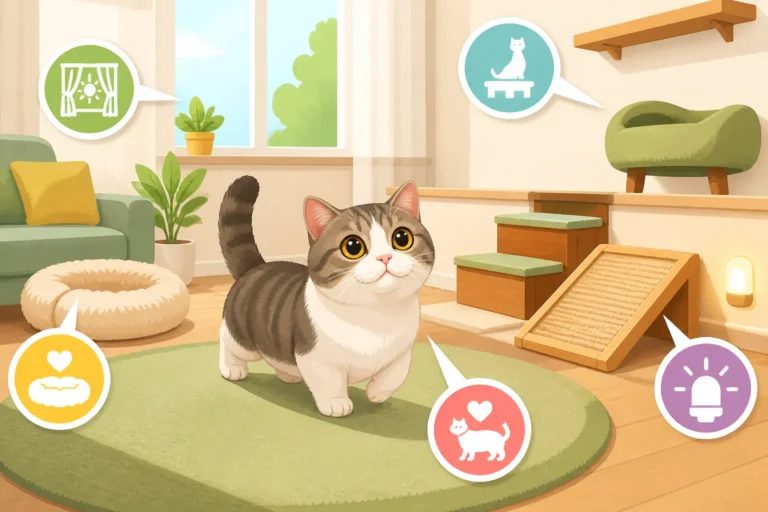
Focus on vertical spaces they can reach safely: low cat trees with closely spaced platforms, ramps leading to windowsills, or modular climbing systems designed for small cats. Provide a variety of toys that cater to their ground-level play style, like wand toys, crinkle balls, and puzzle feeders. Regularly rotate toys to keep things fresh. Interactive play sessions with you are vital for their physical and mental health. Create cozy hiding spots and observation perches at their height. Even something as simple as opening a window (with a secure screen!) to let in fresh air and bird songs can be enriching. Remember, How a Munchkin Gets Where It Wants Without Jumping is often by finding creative, low-impact routes, so design your home with their unique mobility in mind. A well-designed indoor environment can provide endless fascination and keep your Munchkin happy, healthy, and safe from any dog encounters.
| Environment | Safety Level (Dog Encounters) | Pros | Cons | Best For |
|---|---|---|---|---|
| Private Fenced Yard | Highest | Complete control, natural exploration | Requires secure fencing, daily checks | Homeowners with secure yards |
| Catio/Secure Enclosure | High | Dedicated safe space, constant outdoor access | Initial cost, construction/assembly, space commitment | Owners wanting permanent, guaranteed safe access |
| Screened Porch/Patio | Medium-High | Fresh air, natural light, some protection | Still vulnerable to airborne threats (insects), screen integrity | Apartment/condo dwellers with screened spaces |
| Cat Backpack/Stroller | High | Mobility, new sights/smells, owner control | Limited physical exercise for cat, requires owner effort | Exploring new places safely, travel |
| Indoor Enrichment | Highest | Zero dog risk, always available | No fresh air/natural elements, requires owner creativity | All Munchkins, especially those with no outdoor access |
| Secluded Public Area (Off-hours) | Low-Medium | New smells, mental stimulation (limited) | High risk of unexpected dogs, constant vigilance needed | Occasional, highly controlled, last resort outings |
Disclaimer
This article is for general informational purposes only and does not constitute professional advice. Laws, prices and regulations vary by location and change over time. Consult a qualified professional for guidance on your specific situation.