Why Half the First Munchkin Litter Had Short Legs
When Sandra Hochenedel found a pregnant, short-legged stray cat named Blackberry under a truck in Rayville, Louisiana back in 1983, she had no idea she was about to become the accidental founder of one of the most distinctive and debated cat breeds in the world. The arrival of Blackberry’s first litter brought with it a fascinating genetic puzzle that would shape the future of these charming felines, leaving many to wonder why, exactly, half of those first kittens emerged with the same adorable, short legs as their mother. This guide will delve into the initial discovery and the genetic principles that explain this consistent and unique inheritance pattern.
The Unexpected Arrival of Short Legs
Imagine the surprise! Most cats give birth to litters where all the kittens look pretty much alike in terms of their physical build, aside from differences in color or pattern. But for Sandra Hochenedel, the experience with Blackberry was anything but ordinary. She rescued this unique cat, who stood out immediately because of her noticeably shorter-than-average legs. At the time, it was simply a charming quirk, a sweet little cat with an unusual stance, but certainly not recognized as a "breed" or even a known genetic trait in the domestic cat population.
Blackberry's Chance Encounter
Blackberry’s story begins with her discovery as a stray. She was just another cat in need of a home, but her distinctive short stature set her apart. Sandra, being a kind soul, took her in, not knowing that this act of compassion would literally change the landscape of the cat fancy. Blackberry was a domestic shorthair, otherwise healthy and normal in every way, except for those adorably stubby legs. This wasn't the result of an injury or a developmental issue; it was clearly her natural conformation, something she was born with. It was simply a mystery waiting to be unraveled, a unique genetic signature quietly carried in her DNA.
A Unique Inheritance
When Blackberry was found, the idea that her short legs were due to a specific, heritable genetic mutation wasn't widely known or discussed in the cat community. Short-legged cats had popped up sporadically throughout history, but none had led to the establishment of a formal breed. Blackberry represented a spontaneous mutation, a change in her genetic code that gave her those distinctive limbs. The real question, then, wasn't just how she got them, but if she could pass them on to her offspring, and if so, in what manner. Her impending motherhood held the key to understanding this fascinating biological twist.
The First Litter and Its Surprising Outcome
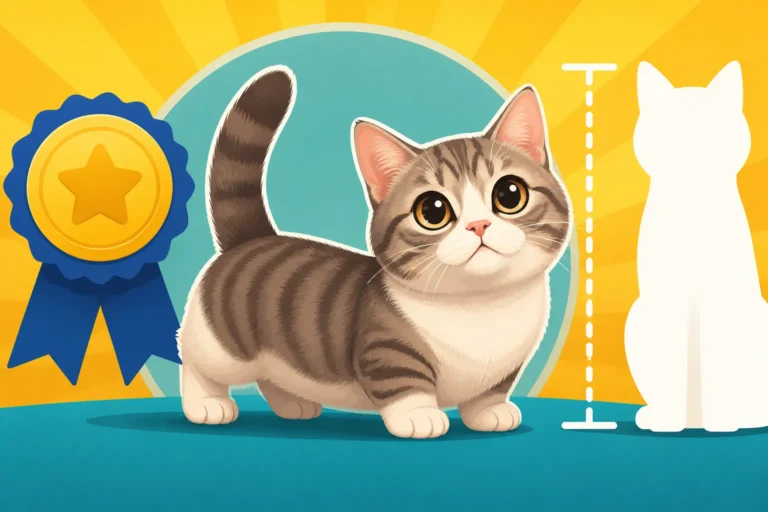
The true revelation came when Blackberry gave birth to her kittens. This moment was pivotal, confirming that her short legs weren't just a random occurrence in one cat, but a trait that could be inherited. Observing her litter allowed Sandra Hochenedel and later Kay LaFrance, who received one of Blackberry's short-legged sons, Toulouse, to begin piecing together the genetic puzzle. Blackberry and Toulouse Are the Two Cats Behind Every Munchkin.
The Discovery of Short-Legged Kittens
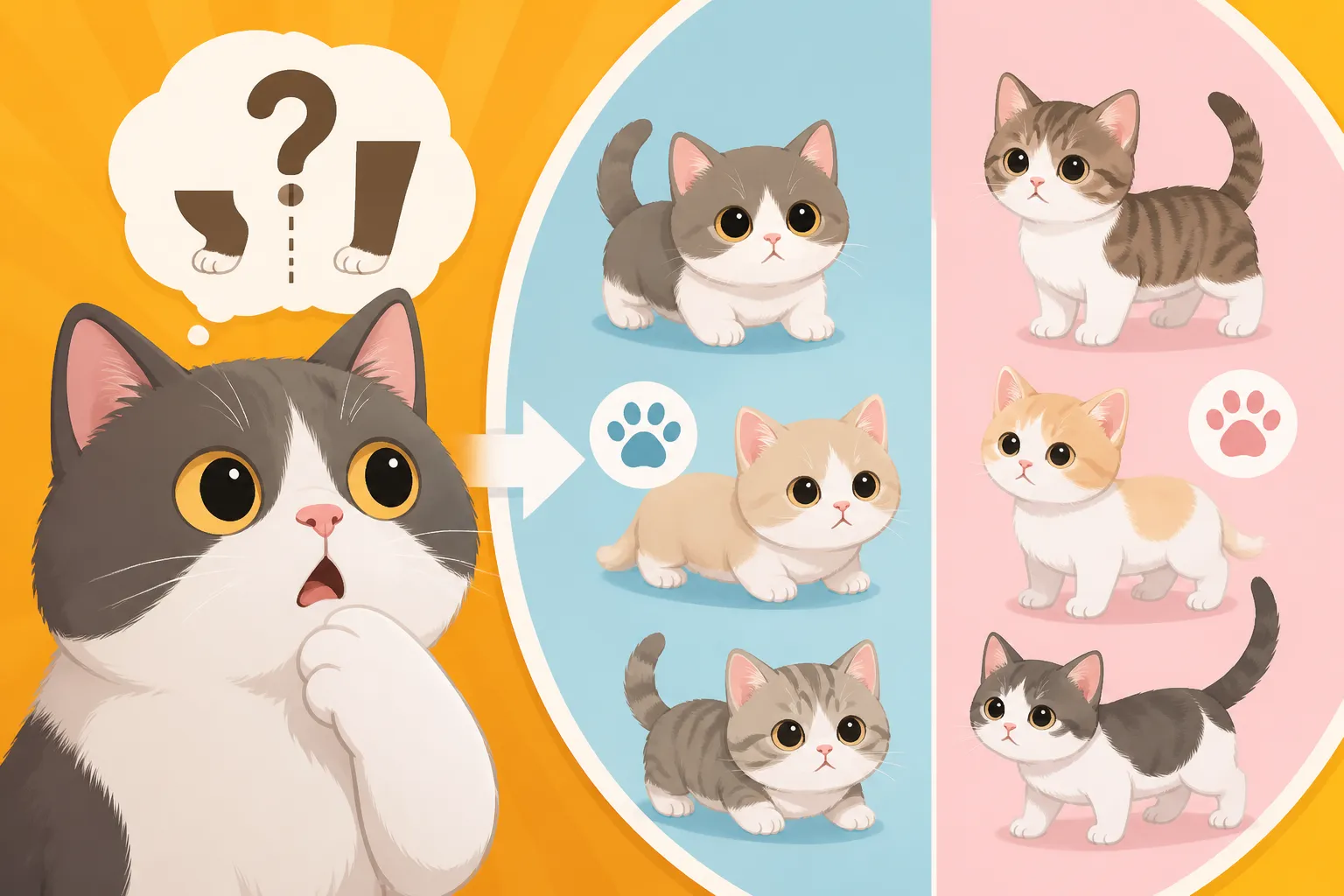
When Blackberry's first litter arrived, it was a moment of immense curiosity and, likely, delight. Lo and behold, among the tiny, squirming newborns, approximately half of them shared their mother's signature short legs! The other half presented with legs of a perfectly normal length, just like any other domestic cat. This wasn't a case of all or nothing; it was a distinct split, almost a perfect 50/50 division. This observation was the first real clue that whatever caused Blackberry's unique appearance was being passed down through her genes, and it followed a very specific pattern of inheritance. It was clear that the trait wasn't completely dominant in the sense that all offspring would inherit it, nor was it recessive and hidden.
A Consistent Pattern
As Blackberry continued to have litters, and as other short-legged cats like Toulouse began to produce offspring, the pattern became unmistakably clear and consistent: breed a short-legged Munchkin to a normal-legged cat, and roughly half of the kittens would have short legs, while the other half would have normal-length legs. This wasn't a one-off fluke; it was a reliable genetic outcome. This consistent half-and-half split immediately pointed towards a specific mode of genetic inheritance, suggesting that the gene for short legs was dominant but also hinting at another crucial piece of the puzzle: the impossibility of receiving two copies of that dominant gene. Understanding this predictability would become the bedrock of responsible Munchkin breeding programs, helping breeders to anticipate litter outcomes and manage the health of their cats.
Unraveling the Genetic Mystery: Autosomal Dominant Inheritance
The scientific explanation for the 50/50 split lies in the fascinating world of genetics, specifically in how the Munchkin trait is inherited. This isn't just a random occurrence; it's a predictable genetic outcome that breeders carefully work with. Understanding the terms "autosomal" and "dominant" is key to grasping why half of that initial litter had short legs. How Munchkin Dwarfism Is Inherited.
Introducing the Gene
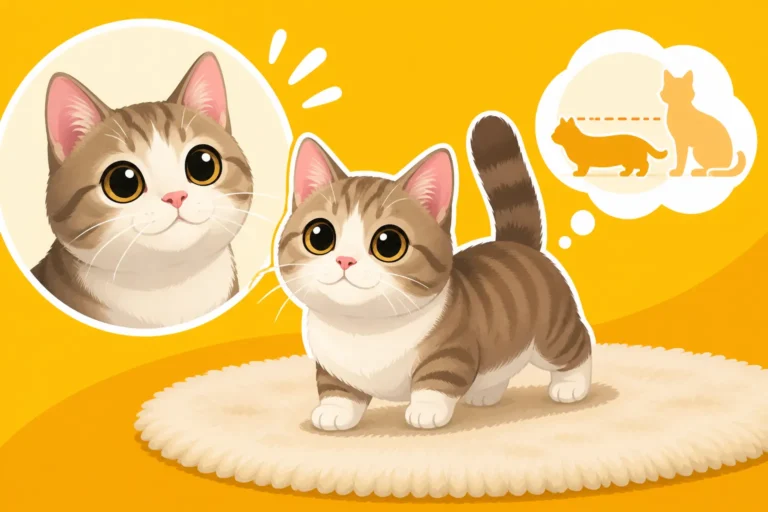
The short legs of a Munchkin cat are caused by a specific gene mutation. This mutation results in a condition known as pseudoachondroplasia, a form of dwarfism that primarily affects the long bones of the legs. Importantly, the Munchkin's body length and spine are typically of normal size, distinguishing them from other forms of dwarfism. This particular gene is quite powerful; even a single copy of it is enough to manifest the short-legged trait. This characteristic is what breeders refer to when they discuss the "Munchkin gene." This gene is often abbreviated as 'M' for Munchkin, with 'm' representing the normal-legged allele.
Why "Dominant" Matters
The term "dominant" in genetics means that if an individual inherits even one copy of a particular gene (allele), the trait associated with that gene will be expressed. In the case of Munchkin cats, if a cat inherits just one copy of the short-leg gene (let's call it 'M'), it will have short legs. A cat with two copies of the normal-leg gene (mm) will have normal length legs. However, a crucial aspect of the Munchkin gene is that inheriting two copies of the dominant short-leg gene (MM) is lethal, meaning such an embryo would not develop or survive to birth. This explains What Two Copies of the Munchkin Gene Do. Therefore, all short-legged Munchkin cats are heterozygous – they carry one copy of the short-leg gene (M) and one copy of the normal-leg gene (m), making their genetic makeup 'Mm'. This heterozygous state is vital because it directly impacts the outcome of their litters. Why Munchkin Dwarfism Is Called Autosomal Dominant.
Why "Autosomal" Matters
When we say the Munchkin trait is "autosomal," it means the gene responsible for the short legs is located on one of the non-sex chromosomes. In cats, like in humans, chromosomes come in pairs. One pair determines sex (X and Y), and the rest are autosomes. The autosomal nature of the Munchkin gene means that its inheritance isn't linked to the cat's sex; male and female kittens are equally likely to inherit the short-leg trait. This simplifies the genetic prediction considerably, as you don't need to factor in whether the kitten will be male or female when calculating the probability of leg length. This ensures a consistent 50/50 split across genders within a litter.
The Role of the Normal-Legged Parent
Understanding why half the litter had short legs isn't just about the Munchkin parent; the normal-legged parent plays an equally critical role in ensuring this precise genetic outcome. The breeding strategy employed by responsible Munchkin breeders is entirely based on this genetic understanding.
The Outcross Breeding Strategy
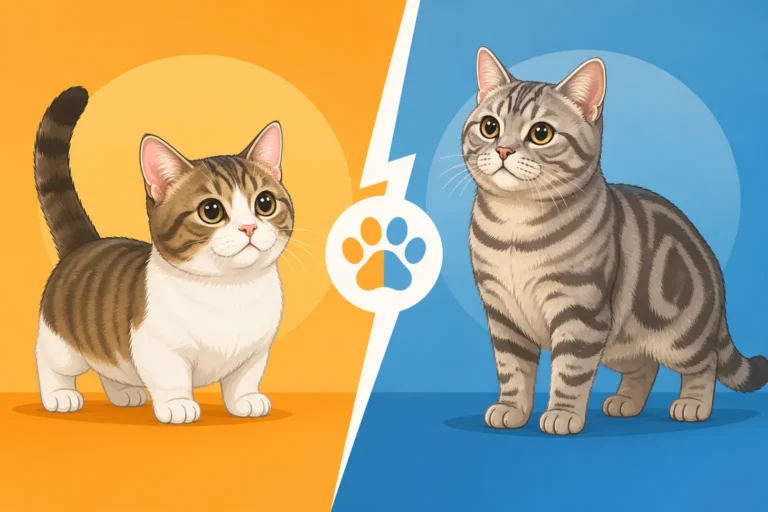
A cornerstone of ethical Munchkin breeding is the practice of outcrossing. This means a short-legged Munchkin cat (always heterozygous, Mm) is always bred to a normal-legged domestic cat (homozygous for normal legs, mm). Why a Munchkin Is Always Bred to a Normal Legged Cat. This strategy is not just about producing viable kittens; it's essential for the health and genetic diversity of the breed. By constantly introducing genes from the wider domestic cat population, breeders help to keep the Munchkin gene pool broad and healthy, reducing the risk of accumulating other genetic issues that can arise from narrow breeding practices. This practice is also why the Munchkin gene pool stays wide, a crucial factor in maintaining a robust breed. Early owners of Munchkins, even before they understood the genetics deeply, would have naturally seen this occur by breeding a short-legged cat to a normal-legged one. You can find essential kitten supplies and further information on cat genetics on platforms like Chewy, which can be helpful resources for owners and aspiring breeders alike.
Genetic Contribution from Each Parent
Let's break down what each parent contributes to the kittens' genetic makeup. The normal-legged parent (mm) can only pass on a 'm' (normal-leg) gene to its offspring. There's no other option from that side. The short-legged Munchkin parent, being heterozygous (Mm), can pass on either an 'M' (short-leg) gene or a 'm' (normal-leg) gene, with a 50% chance for each. When these possibilities combine, we get the precise outcomes observed in those first litters, and every Munchkin litter since. This combination dictates the leg length of each kitten, ensuring a beautiful mix of both short-legged and normal-legged offspring, each with their own unique charm. It’s a natural process that highlights the elegance of genetic inheritance.
Punnett Squares and Probability in Early Munchkin Litters
To truly grasp the predictability of the Munchkin litter, there's no better tool than a simple Punnett Square. This diagram, taught in basic biology, visually demonstrates the probability of genetic outcomes and perfectly explains the 50/50 split.
Visualizing the Possibilities
Let's set up a Punnett Square to represent a typical Munchkin breeding, where a short-legged Munchkin (Mm) is bred with a normal-legged domestic cat (mm).
Here's how it works:
- The Munchkin parent contributes either an 'M' or an 'm' allele.
- The normal-legged parent contributes only an 'm' allele.
Let's see the combinations:
| m (normal-legged parent) | m (normal-legged parent) | |
|---|---|---|
| M (Munchkin parent) | Mm (Short-legged) | Mm (Short-legged) |
| m (Munchkin parent) | mm (Normal-legged) | mm (Normal-legged) |
As you can see from the table, there are four possible combinations for the offspring, each with an equal probability.
- Mm: This kitten inherits the dominant 'M' gene from the Munchkin parent and the 'm' gene from the normal-legged parent. It will have short legs.
- Mm: This is the same outcome, again resulting in a short-legged kitten.
- mm: This kitten inherits the 'm' gene from both parents. It will have normal-length legs. Why Half a Munchkin Litter Has Normal Legs.
- mm: Again, an 'm' from both, resulting in a normal-legged kitten.
This clearly illustrates that statistically, 50% of the kittens will inherit the 'Mm' genotype and thus display short legs, while the other 50% will inherit the 'mm' genotype and have normal-length legs. This isn't just a theory; it’s what actually happened in Blackberry’s first litter and is consistently observed in all Munchkin litters bred according to these principles. Finding reliable pet products for both short-legged and normal-legged cats, such as specific litter boxes that accommodate varying leg lengths, is easy with retailers like Chewy.
The Outcome for Each Kitten
Each kitten in the litter has an individual chance of inheriting one of these two genotypes. It's like flipping a coin for each kitten. You might have a litter of six kittens, and it's possible to get three short-legged and three normal-legged, but it's also possible to have four short-legged and two normal-legged, or vice-versa, just by chance. The 50/50 split is the average expectation over many litters. Genetically, there are only two paths: either the kitten gets the 'M' from the Munchkin parent and is short-legged (Mm), or it gets the 'm' from the Munchkin parent and is normal-legged (mm). There is no "in-between" leg length; it's either the full expression of the short-leg trait or no expression at all. This binary outcome makes the Munchkin's inheritance particularly straightforward to predict and understand, unlike traits that might involve multiple genes or incomplete dominance.
The Implications for the Breed's Future
The understanding of the Munchkin's genetic inheritance wasn't just a scientific curiosity; it was foundational to the establishment and acceptance of the breed, shaping breeding practices and ongoing discussions about its welfare.
Maintaining Genetic Diversity
The requirement to outcross Munchkins to normal-legged domestic cats (DSH/DLH) for every generation is a unique aspect of their breeding program. This strategy, driven by the lethal homozygous gene, means that the Munchkin breed is constantly infused with new genetic material. Unlike many purebreds that often suffer from limited gene pools and a higher incidence of breed-specific genetic diseases, the Munchkin's outcross requirement actually helps maintain a remarkably broad and healthy gene pool. This genetic refresh helps to mitigate issues that can arise from inbreeding and ensures that the breed remains robust, reducing the concentration of deleterious recessive genes. This wide genetic base is often highlighted by breeders as a positive health aspect of the breed, distinguishing them from breeds with more closed studbooks. Why the Munchkin Gene Pool Stays Wide.
Ethical Considerations and Continued Discussion
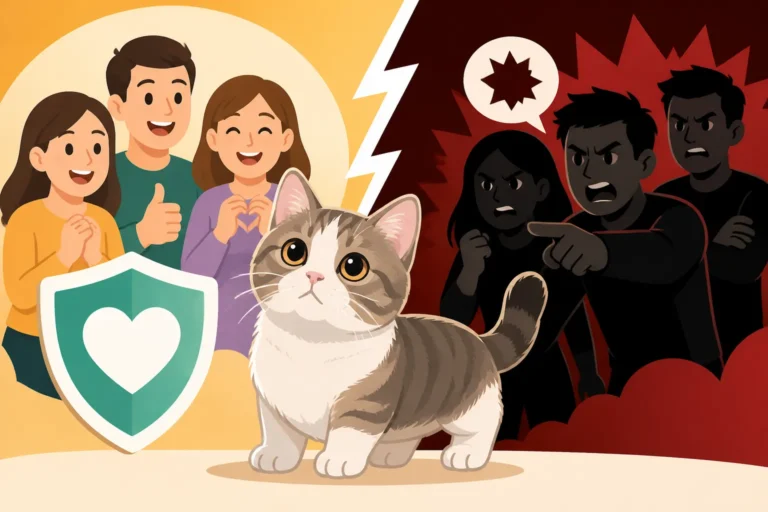
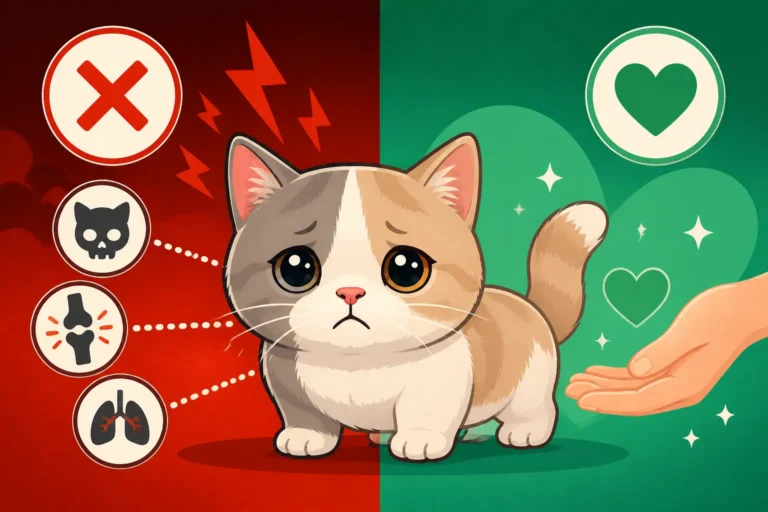
Despite the clear genetic understanding and the outcrossing strategy, the Munchkin breed remains a subject of considerable debate, particularly among veterinary professionals and animal welfare organizations. The primary concern revolves around the ethics of intentionally breeding for a genetic mutation that causes a physical anomaly—short legs—which some argue could predispose the cats to certain health issues, particularly related to their spine and joints. Why Vets Disagree About the Munchkin. While proponents argue that Munchkins are generally healthy, active cats with no significant mobility issues, critics point to potential long-term orthopedic challenges. This ongoing dialogue underscores the importance of responsible breeding practices, thorough health screening, and careful consideration for the cats' quality of life. Owners are encouraged to seek out reputable breeders who prioritize health and adhere to ethical breeding standards, and to stay informed on any new studies or recommendations regarding Munchkin health. Providing enrichment items that are easily accessible to a short-legged cat, available from places like Chewy, is also a key part of responsible ownership. Which Studies Exist on Munchkin Health.
Disclaimer
This article is for general informational purposes only and does not constitute professional advice. Laws, prices and regulations vary by location and change over time. Consult a qualified professional for guidance on your specific situation.