When the Munchkin Was First Shown to the Public
The Munchkin’s first public appearance is often confused with its formal recognition as a cat breed. The two events happened years apart: the short-legged cats were presented at a New York cat show before TICA began evaluating the breed. Here’s what that early showing did—and did not—mean, and how it fits into the Munchkin’s longer history.
When the Munchkin first appeared in public
The 1991 Madison Square Garden show
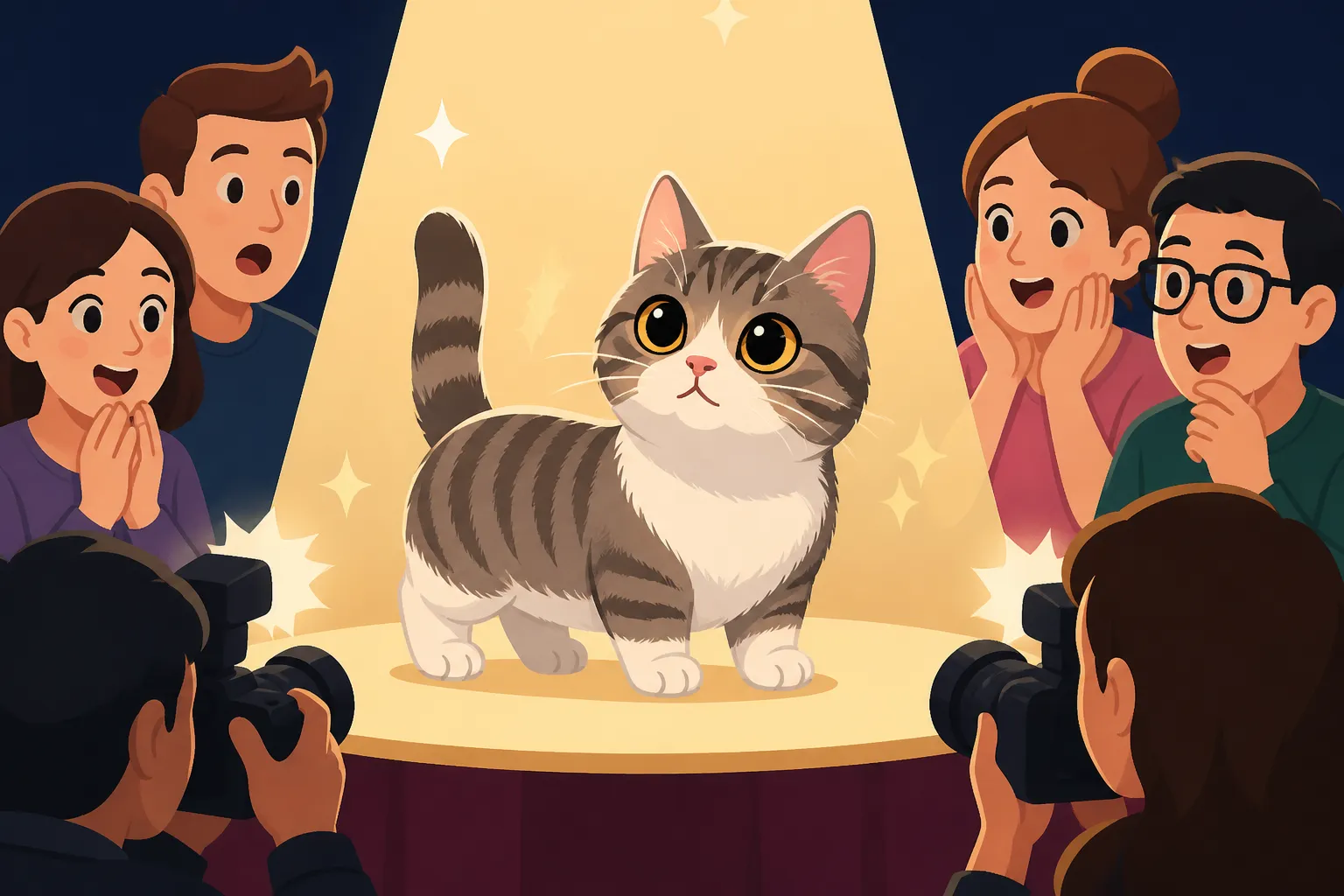
The Munchkin is generally described as having made its first public showing at a cat show held at Madison Square Garden in New York in 1991. The cats drew attention because their legs were noticeably shorter than those of ordinary domestic cats, while their bodies remained proportionate. For many visitors, this was their first chance to see short-legged cats presented together as a distinct type.
That first appearance was a public introduction, not a formal declaration that the Munchkin was an established breed. A cat can be shown to the public without having a recognized breed standard, championship status, or acceptance by every registry. It helps to keep those stages separate when reading accounts of the Munchkin’s early history.
The show also gave the public a chance to react to the cats themselves. Some people found their build charming and unusual; others immediately questioned whether deliberately breeding for short legs was fair to the animals. That debate did not begin with later breed recognition—it was already part of the Munchkin’s public story. For more on the first audience’s response, see How the Public Reacted to the First Munchkin Show.
A public debut is different from breed recognition
The 1991 show is best understood as an introduction to the cats, not as a registry milestone. Breed recognition involves a more formal process: a registry may evaluate whether cats breed consistently, consider a proposed standard, and decide whether to allow the breed into one or more of its programs. These decisions can take years, and different registries can reach different conclusions.
That distinction matters because “first shown,” “accepted for development,” and “given championship status” are sometimes blurred together. A Munchkin could be seen in a show hall before the breed had completed the steps required to compete for championship titles. The show helped make the cats visible; it did not settle the question of how the cat fancy would treat them.
For a useful comparison, What TICA's 1994 Program Meant for the Munchkin covers the later development stage, while When TICA Gave the Munchkin Championship Status explains the subsequent move to championship competition. Those events belong to the breed’s timeline, but they were not the same as its public debut.
What visitors saw at the first showing
Short legs, familiar domestic-cat features
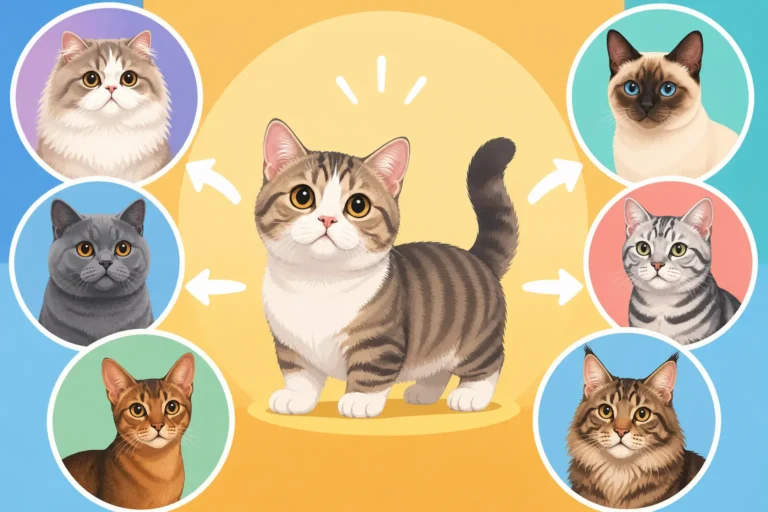
The feature that caught people’s eyes was the Munchkin’s short legs. The cats otherwise looked like domestic cats, rather than like a wholly different kind of animal. Their bodies were not meant to be miniature in every dimension; the defining visual difference was their leg length. Coat type, color, and pattern could vary, reflecting the breed’s relationship to the broader domestic-cat population.
That mix of familiar and unfamiliar is part of what made the early showing memorable. Visitors could recognize the cats as cats, yet see a body shape they might not have encountered before. The reaction could be immediate: someone might be fascinated by the way a Munchkin moved, while another person wondered whether its limbs could support everyday activity comfortably.
The show setting also encouraged comparison. People could watch the cats walk and move rather than relying on a photograph, which can flatten proportions or hide how an animal uses its body. Later discussions about judging and breed standards would formalize some of those comparisons. What the TICA Munchkin Standard Asks For explains the features the registry’s standard addresses.
The Louisiana story behind the cats
The 1991 appearance did not mark the beginning of the Munchkin’s history. The breed’s commonly told origin story starts earlier, in Louisiana, with a short-legged cat found by Sandra Hochenedel. A cat named Blackberry became central to the story, and one of her short-legged kittens, Toulouse, was given to Kay LaFrance. Their descendants helped establish the early Munchkin population.
That background is useful because it explains why a group of short-legged cats could be presented at a major public event: there was already an effort to develop and document the type. The show was a visible moment in a process that had begun with individual cats and breeding decisions, not a sudden discovery made in New York. You can read more in What Happened in Rayville That Started the Munchkin and How Two Cats Founded the Whole Munchkin Breed.
The breed’s development also involved outcrossing with domestic cats. That was part of maintaining a broader breeding population rather than relying on a tiny pool of related cats. For more on the reasoning behind that approach, see Why Domestic Cats Were Used as Munchkin Outcrosses. The historical detail is relevant because it places the 1991 showing within a longer effort to define what a Munchkin was, and how the population would be managed.
How the first showing fits into the Munchkin timeline
From public interest to registry evaluation
A public debut can create attention, but attention alone does not establish a breed. After the Munchkin was shown, the next important steps involved registry processes and discussions about how the cats should be classified. Those discussions included questions about whether the Munchkin’s distinctive legs could be bred responsibly, how its characteristics should be described, and what evidence a registry should consider.
TICA began working with the Munchkin through its new-breed development process in the 1990s. That process was separate from the 1991 show. It was a registry’s way of assessing and documenting a proposed breed over time, rather than simply reacting to a public display. The difference is much like the difference between introducing a new product at an exhibition and having an independent organization evaluate it against defined criteria.
Not every cat registry agreed with TICA’s approach. Acceptance by one organization did not require acceptance by another, and the Munchkin continued to divide opinion among breeders, judges, and cat enthusiasts. Why a Judge Resigned Over the Munchkin looks at one particularly visible expression of that disagreement.
A quick timeline
| Period | Event | What it meant |
|---|---|---|
| 1980s | Short-legged cats in Louisiana became the foundation of the Munchkin story | The early population and breeding history took shape |
| 1991 | Munchkins were publicly shown at Madison Square Garden | The cats received a prominent public introduction |
| 1990s | TICA evaluated the Munchkin through a development program | The breed entered a formal registry process |
| 2000s | TICA granted championship status | Eligible Munchkins could compete for championship titles within that registry |
This timeline is intentionally simple. The early history is sometimes recounted with different emphases, and the key point is that the first show came before later registry milestones. If you are comparing accounts, check whether a writer is talking about the cats’ first public appearance, entry into a registry program, or eligibility for championship competition.
Why the 1991 debut still matters
It made the debate visible
Before the Munchkin appeared before a broad audience, questions about short-legged cats could remain an abstract discussion among people familiar with the breeding program. A public show put the cats in front of visitors and judges, where their appearance and movement could be observed directly. That visibility helped turn the Munchkin into a subject of wider conversation.
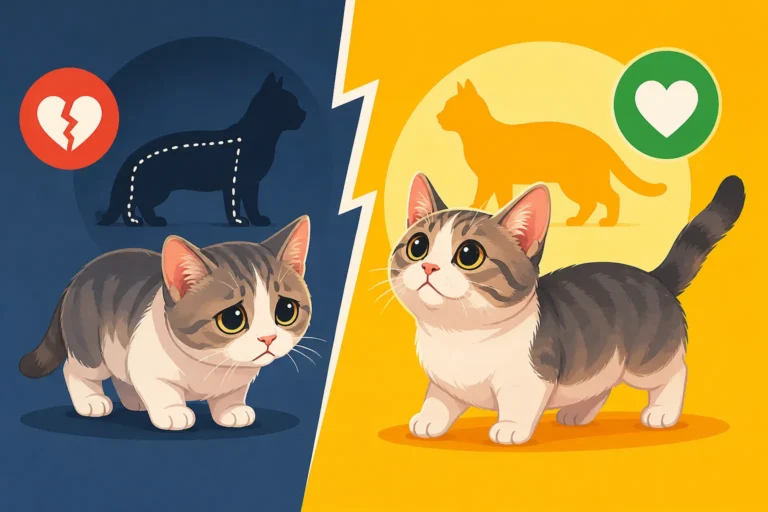
Public attention, however, does not answer welfare questions by itself. A cat looking lively in a show ring cannot tell an observer everything about its long-term health, comfort, or mobility. Conversely, a distinctive appearance alone does not prove that an individual cat is suffering. Responsible discussion has to distinguish what can be observed at an event from what requires veterinary assessment, careful records, and broader health evidence.
That is why the 1991 appearance remains a landmark but not a final verdict. It marks the moment the breed became widely visible, while the questions raised by its development continued afterward. The public debut is a starting point for understanding the controversy, not a substitute for examining it.
The show is history, not a care guide
For someone considering a Munchkin today, the story of the Madison Square Garden show may explain how the breed entered the public eye, but it does not answer the practical questions of daily care. A short-legged cat may benefit from an accessible litter box, stable routes to favorite resting spots, and a home layout that does not require repeated high jumps. Individual needs vary, so a veterinarian can help assess a particular cat’s mobility and health.
Household setup can be easier to plan when you think about the cat’s actual movements rather than relying on assumptions based on breed labels. If you are comparing low-entry litter boxes or grooming tools, Chewy is one place where shoppers can review product dimensions and descriptions; check that a particular item suits the cat’s size and access needs. Chewy listings can also help you compare ramp or step designs, but a product being marketed for cats does not automatically make it stable or suitable for every home.
The same practical check applies to food and water placement. A bowl should be comfortable for the individual cat to use, and changes to diet or weight should be discussed with a veterinarian when there are health concerns. Chewy may be useful for comparing everyday supplies, but the 1991 show itself offers no guidance about which equipment a Munchkin needs. That comes from observing the cat at home and responding to its comfort, habits, and veterinary advice.
Disclaimer
This article is for general informational purposes only and does not constitute professional advice. Laws, prices and regulations vary by location and change over time. Consult a qualified professional for guidance on your specific situation.