Whether Munchkin Supporters Threatened Anyone
The Munchkin debate can get heated quickly, especially when questions about animal welfare are mixed with arguments about personal motives. But did Munchkin supporters actually threaten anyone? This guide separates the documented controversy from claims that are harder to verify, explains what should count as a threat, and offers a careful way to assess accounts without treating disagreement as proof.
What the Munchkin controversy was about
A dispute over breeding, welfare, and recognition
The Munchkin became controversial because its defining short legs are associated with a genetic mutation affecting limb development. Supporters have argued that short-legged cats can be active, affectionate pets and that responsible breeding and veterinary care matter. Critics have questioned whether deliberately breeding for a body trait that changes a cat’s movement is ethically acceptable, even if an individual cat appears healthy.
That disagreement is about more than a breed standard. It touches on the responsibilities of breeders, the limits of selective breeding, and how much weight to give a cat’s apparent quality of life when assessing a trait that may create physical challenges. Those are emotionally charged subjects, but a strong disagreement over them is not, by itself, evidence that anyone made a threat.
The Munchkin’s acceptance by some cat organizations and rejection by others has helped keep the dispute visible. The history is often discussed alongside the TICA debate and a judge’s resignation. For more background, see TICA Took the Munchkin In and a Judge Resigned Over It and Why a Judge Resigned Over the Munchkin. Those events help explain why people speak of a contentious history; they do not automatically establish that supporters threatened a person.
Why a judge’s resignation is not proof of a threat
A resignation can follow a deeply held professional or ethical disagreement. It can also attract public attention, especially when it concerns a breed that people feel strongly about. But the fact that a judge resigned does not establish that supporters pressured, intimidated, or threatened them. To make that more serious claim, there would need to be specific evidence about what was said or done, who was responsible, and how the judge or another person was affected.
Retellings can blur those distinctions. One account might describe harsh criticism; another might call the same exchange “harassment.” A later retelling may use “threat” without quoting the words, identifying a time or place, or explaining whether the claim came directly from the person involved. Each step can make a story sound more certain than the underlying evidence supports.
The judge’s own position and the wider history deserve careful treatment. What That Judge Said About the Munchkin can help readers understand the ethical objection, while What Forty Years Have Done to the Munchkin Argument places the continuing dispute in a broader context. Neither a strong objection nor a dramatic account should be treated as proof of conduct that has not been independently established.
Did Munchkin supporters threaten anyone
What can responsibly be said
The responsible answer is cautious: claims that Munchkin supporters threatened someone should not be presented as established fact unless they are backed by clear, specific evidence. The public controversy is well known; a substantiated account of a threat is a separate matter. A story may mention angry responses or personal criticism, but that alone does not show that someone made a credible threat of harm.
This distinction matters because “threat” is often used loosely in online arguments. Someone saying “I strongly disagree with you,” “I will challenge that decision,” or “I’m going to make my criticism public” may be unpleasant or confrontational, but those statements are not necessarily threats of violence or other harm. Conversely, a direct statement of intent to cause harm should not be dismissed as ordinary debate merely because it appeared during a breed controversy.
When no reliable details are provided, it is fair to say that the claim is unverified, unclear, or unsupported by the information being presented. It is not fair to confidently name a person as a threat-maker based on rumor, anonymous comments, or a chain of retellings. It is also not fair to turn the absence of a well-substantiated public account into proof that no supporter, in any setting, ever behaved badly.
A useful distinction between criticism and intimidation
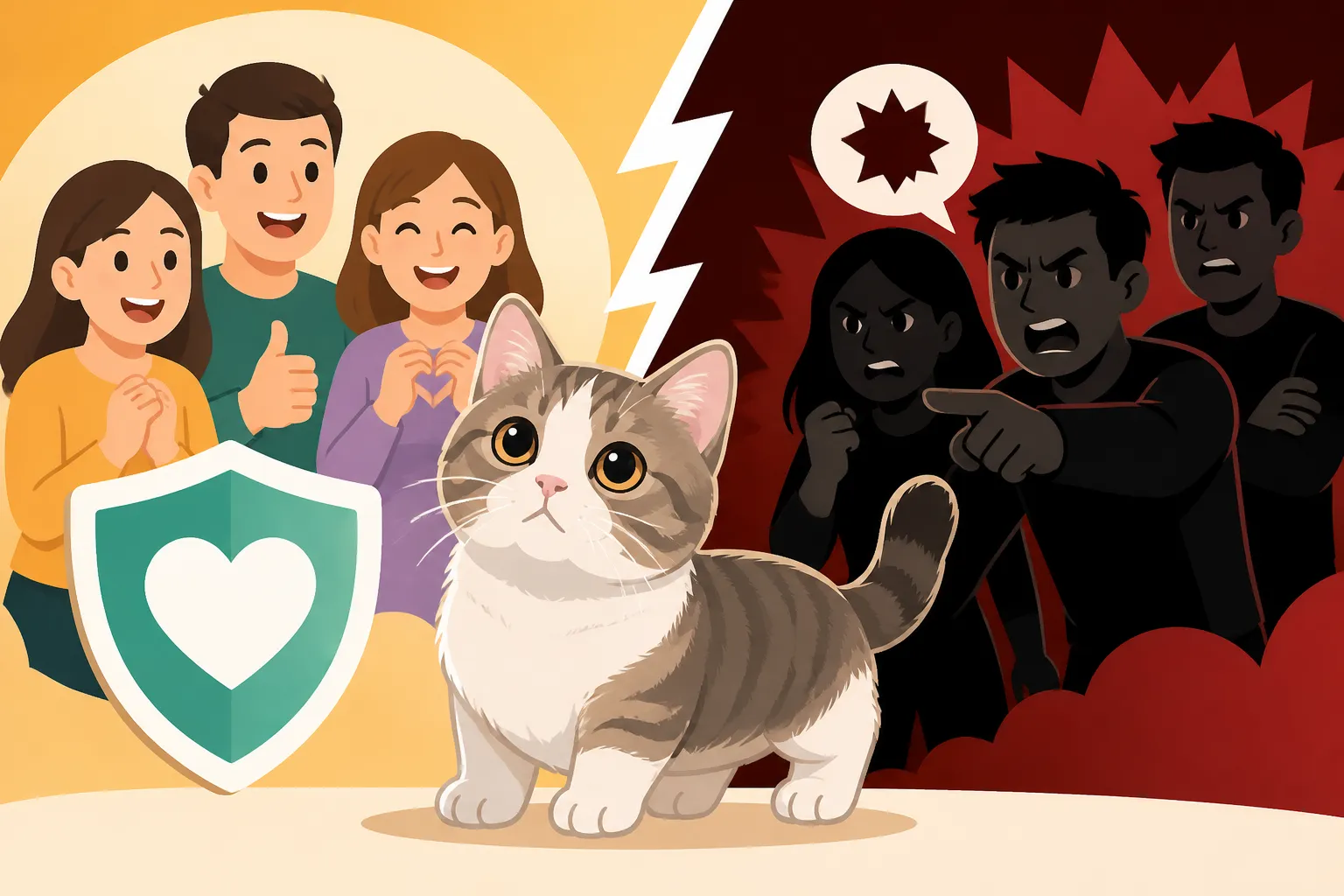
A critic may feel attacked when people challenge their views, especially if the criticism becomes personal or arrives in a flood of messages. That experience can be upsetting and may deserve attention. Still, criticism, harassment, and threats are not interchangeable categories.
| Conduct | What it may involve | What it does not prove on its own |
|---|---|---|
| Disagreement | Challenging someone’s position or decision | A personal threat |
| Sharp criticism | Insults, blame, or angry language | Intent to cause physical harm |
| Harassment | Repeated unwanted contact or targeted abuse | A credible threat, unless threatening content is present |
| Threat | A specific communication expressing intent to cause harm or another serious consequence | That all supporters share the conduct of one person |
The categories can overlap. For example, repeated messages might include a direct threat, in which case it would be misleading to describe the matter as “just criticism.” But the details matter: the words used, the context, whether the message was repeated, whether it identified a target, and whether there was evidence of intent or capacity to act.
That is why a label without details is hard to evaluate. “Supporters threatened the judge” is a broad accusation. A careful account would explain whether the statement was direct or secondhand, what was said, when it happened, and whether there is a record or a named firsthand witness. Without that, readers should avoid repeating the accusation as settled history.
How to evaluate claims about threats
Look for identifiable, firsthand evidence
When you encounter a claim, start by asking where it came from. Is it a direct statement by the person who received the message? Is there a dated letter, email, public post, or other record? Is the wording quoted in context? Has the claim been repeated by people who witnessed the event, or is every version tracing back to one vague retelling?
A screenshot can be useful, but it is not automatically conclusive. It may be cropped, missing context, or impossible to verify. A paraphrase can be even harder to assess because it leaves out the exact language. If the claim is serious, look for enough detail to understand what happened without exposing private information or encouraging further targeting.
It also helps to distinguish evidence that a message existed from evidence about who sent it. An account using a supporter’s name may not belong to that person. A message posted in a discussion group may not represent a whole organization or community. A single person’s conduct, if established, should be attributed to that person rather than generalized to everyone who supports the breed.
Watch for wording that grows stronger with each retelling
A story sometimes changes as it travels. “People were angry” becomes “the judge was harassed,” then “supporters threatened the judge.” That progression may reflect new evidence, but it may also reflect increasingly forceful wording. Check whether the later version adds verifiable details or merely uses a stronger label.
Be especially careful with posts that ask readers to choose sides before presenting evidence. A person can be wrong about a claim without acting maliciously, and someone’s position on Munchkin breeding does not tell you whether their account of an incident is accurate. The same standard should apply to supporters and critics: an accusation should be supported regardless of which side it favors.
For a broader view of why people disagree, see Why the Munchkin Divides the Cat Fancy More Than Any Breed and What Welfare Bodies Say About the Munchkin. These discussions help explain the stakes people attach to the issue. They should not be used as substitutes for evidence about a particular alleged incident.
Why the distinction matters to the wider debate
Personal accusations can drown out welfare questions
When a debate becomes a dispute about who is a bully or who has been threatened, the underlying animal-welfare questions can disappear. People may stop discussing breeding choices, mobility, veterinary assessment, and quality of life. Instead, they focus on defending a camp or condemning the other one.
That shift is understandable. Personal accusations feel urgent, and nobody wants to see someone intimidated. But an unsupported claim can damage reputations and make a difficult discussion even more hostile. At the same time, dismissing a specific, documented threat as “just breed drama” can discourage people from reporting genuine abuse. Careful language protects both concerns: take credible evidence seriously, and do not present unclear allegations as fact.
The ethical debate remains worth discussing on its own terms. A person can support a Munchkin while acknowledging that the breed raises welfare questions. A person can oppose breeding Munchkins without making assumptions about every breeder or owner. And a person can criticize a decision without engaging in intimidation. Those positions are not mutually exclusive.
Keep claims about people separate from claims about cats
The welfare of individual cats should be assessed through relevant evidence, not through the character of people on either side of the debate. Likewise, a person’s position on the breed does not prove that the person is kind, cruel, honest, or dishonest. Those shortcuts may feel persuasive in an argument, but they do not answer the underlying questions.
Readers exploring the ethics of ownership can also consider Whether Buying a Munchkin Is an Ethical Decision and What Munchkin Breeders Say About the Welfare Objection. These topics address the broader disagreement without requiring an unverified claim about someone’s conduct to carry the argument.
So, did Munchkin supporters threaten anyone? The fairest answer is that a claim of threats needs specific, credible evidence before it can be treated as fact. The controversy and the strong opinions around it are real; they do not, by themselves, prove that a threat occurred. Distinguishing documented conduct from heated disagreement makes the discussion more accurate—and leaves more room to focus on the cats and the choices that affect them.
Disclaimer
This article is for general informational purposes only and does not constitute professional advice. Laws, prices and regulations vary by location and change over time. Consult a qualified professional for guidance on your specific situation.