What Munchkin Breeders Say About the Welfare Objection
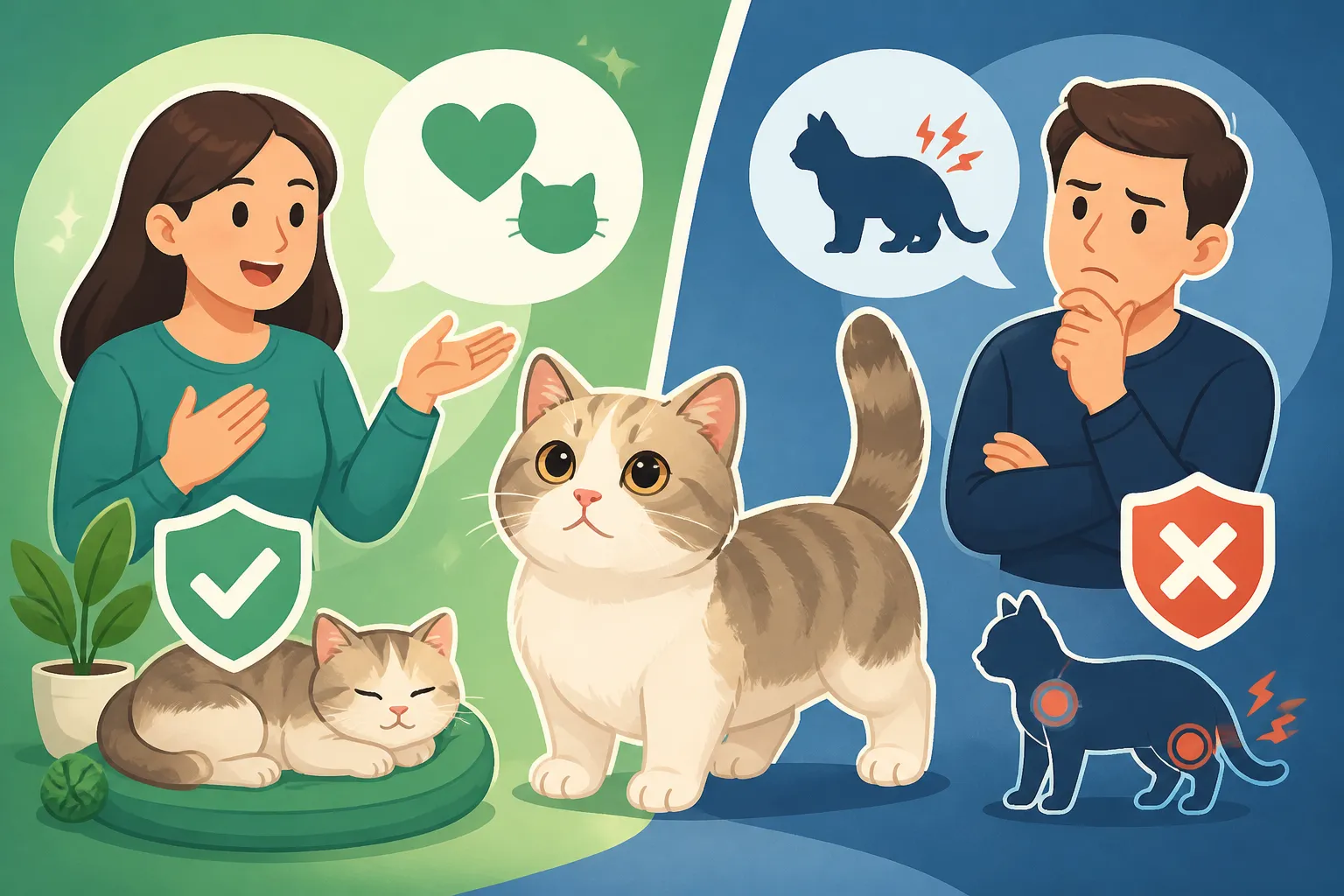
A Munchkin breeder may say that short legs do not automatically mean a cat is in pain, and that many Munchkins play, run, and enjoy ordinary family life. Those points matter, but they do not settle the welfare question. This guide explains breeders’ main arguments, what critics challenge, and how to weigh individual cats’ needs against concerns about breeding for a body shape.
What Munchkin breeders typically argue
Short legs do not automatically mean poor quality of life
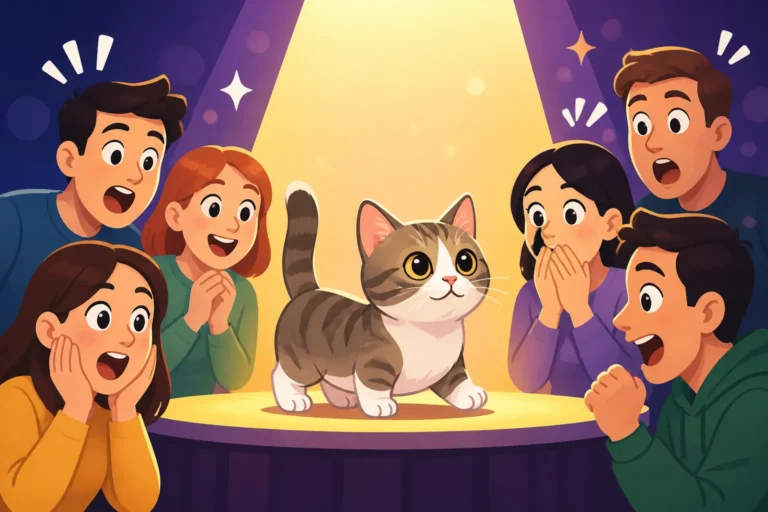
Some breeders distinguish between a visible physical trait and a proven welfare problem in every individual cat. They may point to Munchkins they have watched playing, chasing toys, exploring their homes, and seeking affection. To them, an active cat that eats, grooms, rests comfortably, and moves willingly is not necessarily suffering simply because its legs are shorter than those of other cats.
That distinction is worth taking seriously. A cat cannot explain its experience in words, and a short-legged appearance alone does not tell an owner whether that particular animal feels pain. An individual Munchkin’s movement, behavior, body condition, and veterinary findings all matter. A cat that happily chases a toy across a room is giving useful information about what it can do, even though playfulness cannot rule out every health concern.
Breeders may also argue that Munchkins retain many ordinary cat behaviors. Short legs do not make every Munchkin unable to run, play, or climb onto low furniture. But abilities vary between individuals, and a cat’s success with one activity does not prove it can do everything a longer-legged cat can. For a closer look at perception and behavior, see Whether a Munchkin Knows It Is Different.
The disagreement is partly about what counts as evidence. Owners and breeders may rely on close observation of cats they know. Critics often ask for broader, systematic evidence that can compare health and function across enough cats to identify patterns. Both kinds of information can be valuable, but they answer different questions: a personal account describes one cat, while a well-designed study can help assess how commonly a problem occurs.
Careful breeding and outcrossing are part of the defense
Breeders who support Munchkins may say that responsible breeding can reduce avoidable risks. They may describe selecting healthy cats, monitoring kittens as they grow, avoiding pairings they consider unsafe, and being candid with prospective owners about the breed’s needs. Some also stress that Munchkins have been bred with normal-legged cats rather than only with other short-legged cats.
That last point is often raised as a way to maintain a broader gene pool and avoid breeding two short-legged cats together. It is relevant to how breeders plan litters, but it does not answer every welfare objection. A breeding practice can help manage one genetic risk without proving that deliberately producing the defining physical trait has no welfare cost. The inheritance and breeding questions are explored in How Munchkin Dwarfism Is Inherited and Why a Munchkin Is Always Bred to a Normal Legged Cat.
A careful breeder may also say that kittens should be assessed as individuals rather than treated as identical examples of a breed. They may monitor movement, chest shape, spinal development, and general health, and may decide not to sell or breed a kitten with a concerning finding. That kind of responsibility can matter greatly to the welfare of the cats in a particular litter.
Still, a buyer should look for more than assurances. Ask what health information the breeder keeps, how kittens are examined, what happens if a kitten has a suspected problem, and whether the breeder will discuss concerns after the sale. A willingness to answer specific questions is more useful than a broad claim that a line is “healthy.” For more context on the debate among veterinarians, see Why Some Vets Refuse to Recommend a Munchkin.
What critics say breeder arguments do not resolve
A happy individual does not settle a population-level question
One common breeder argument is that their cats appear content and capable. That observation can be sincere and meaningful. But critics point out that seeing one playful cat cannot establish how often pain, mobility limits, or other difficulties occur across the breed. A cat may enjoy play while still having trouble reaching a high surface, grooming a hard-to-reach area, or moving comfortably as it ages.
This is the difference between judging an individual and evaluating a breeding population. A particular Munchkin may be energetic and healthy, while the broader question remains whether selecting for short legs increases the chance of limitations or health problems. Conversely, a concern raised about a breed does not mean every individual cat has that problem. Keeping those two levels separate helps prevent both blanket condemnation and overly confident reassurance.
Critics also question whether owners can reliably identify subtle discomfort. Cats may change how they move or play without making an obvious show of pain. A cat that stops jumping might be adapting to its body or environment, or it might be uncomfortable for a separate reason. Neither interpretation should be assumed without considering the cat’s history and, when appropriate, a veterinary assessment.
That is why quality-of-life judgments should be based on several signs together: willingness to move, changes in grooming, play, appetite, social behavior, and comfort during ordinary activities. A careful, ongoing assessment is more informative than a single snapshot. How to Judge a Munchkin's Quality of Life offers a useful framework for thinking about those everyday observations.
The welfare concern includes the reason the trait is bred
The debate is not only about whether a particular cat can live comfortably. It also concerns whether humans should deliberately select for a body structure that may restrict some movements or create additional care needs. Critics argue that a breed’s popularity or affectionate personality does not, by itself, justify breeding for a physical feature if that feature carries a meaningful risk of harm.
Breeders may respond that cats with short legs can still have active lives and that careful selection can support good health. Critics may reply that claims about careful breeding need strong, transparent evidence, especially when information about long-term outcomes is limited. In other words, the disagreement is not simply “breeders care” versus “critics do not.” It is also a disagreement about what level of evidence is enough before a physical trait is intentionally reproduced.
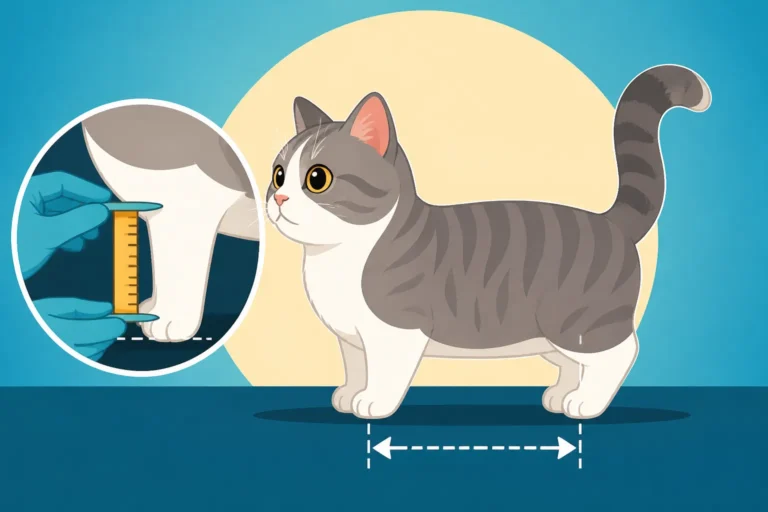
The practical effects can be easy to underestimate. A Munchkin may need accessible routes to favorite resting spots, a litter box it can enter comfortably, and regular attention to grooming areas it may struggle to reach. Those adaptations do not automatically mean the cat has a poor life. But they are part of the real care picture, and potential owners should consider whether they can provide them consistently.
For instance, an owner might arrange low steps to a sofa, choose a low-entry litter box, and keep play opportunities at floor level. Chewy is one place owners may look for everyday supplies such as grooming tools or accessible litter boxes, but choosing suitable equipment depends on the individual cat and the layout of the home. A product being marketed for cats does not guarantee that its height, shape, or surface will work well for a particular Munchkin.
How to assess the arguments without relying on slogans
Separate what is observed from what is proven
When a breeder says, “Our cats are active,” ask what that means in practice. Do the cats move comfortably on different surfaces? Can they reach resting places without repeated failed jumps? Does the breeder keep veterinary records or movement videos over time? Specific observations are easier to evaluate than a general statement about a line being healthy.
Then separate those observations from broader claims. A video of a kitten playing can show how that kitten moves at that moment, but it cannot establish how the cat will fare in adulthood or how common a particular condition is across a population. Similarly, a report of a health problem in one Munchkin may justify concern and further investigation, but it cannot show how frequently that problem occurs.
This does not mean personal experience is worthless. A breeder who has raised multiple generations may notice patterns that deserve attention. But experience is strongest when it is recorded, described precisely, and shared openly—including findings that are disappointing or inconvenient. If a breeder only presents the most charming videos and avoids questions about health, that is a reason to slow down rather than assume the best.
Ask how the breeder handles uncertainty. A thoughtful answer may acknowledge that evidence is incomplete, explain what checks are performed, and describe what information is not yet known. A confident promise that a kitten will never develop a problem is less reassuring than a clear account of what the breeder can and cannot establish.
Look at the individual cat and the home it will live in
If you are considering a Munchkin, watch the cat move rather than relying only on photographs. Notice whether it walks and turns willingly, whether its movement looks consistent, and whether it can access food, water, litter, and resting places without strain. Ask to see the kitten’s parents moving, too. A brief visit cannot diagnose a health condition, but it can help you form more grounded questions for the breeder and a veterinarian.
Think through your home from the cat’s height. A favorite bed on a tall frame, a litter box with a high entrance, and food placed on a counter may be ordinary choices for some households but frustrating obstacles for a cat with shorter legs. A few thoughtful changes can make everyday life easier, though they should not be treated as a cure for an underlying medical problem.
Owners may use stores such as Chewy to find practical items, but the important step is checking whether each item suits the cat. A ramp needs a stable base and a surface the cat will use; a low-entry box still needs enough room and appropriate sides to contain litter. Chewy may be one convenient option for browsing those categories, while advice from a veterinarian or experienced feline professional can help identify what is appropriate for a specific animal.
Keep watching after the cat comes home. A new reluctance to jump, changes in grooming, unusual stillness, or reduced interest in play can have many possible causes. Rather than assuming a change is “just how Munchkins are,” make a note of what has changed and discuss it with a veterinarian. A care routine should be responsive to the individual, not built around a stereotype of what the breed can or cannot do.
A balanced way to understand the welfare objection
The strongest breeder case and its limits
The strongest version of the breeder position is not that short legs have no possible consequences. It is that short legs alone do not prove that every Munchkin is suffering, that individual cats can be active and affectionate, and that responsible breeding and attentive care may help protect their welfare. That case is more persuasive when breeders provide concrete health information, describe limitations honestly, and make decisions based on the cats rather than appearance or demand.
Its limit is that good intentions and healthy-looking examples do not, on their own, resolve the broader ethical question. Breeding responsibly within a system does not automatically establish that the system’s defining trait is harmless. Nor does an individual cat’s good life demonstrate that every Munchkin has the same experience. Those questions require evidence that can distinguish individual variation from broader patterns.
Critics’ strongest case is that intentionally breeding for a physical trait deserves scrutiny when it may affect mobility or create extra care needs, particularly when long-term evidence is limited. The limit of that argument is that a general welfare concern should not be turned into an unsupported claim that every Munchkin is in pain or unable to enjoy life. The cat in front of you still deserves an individual assessment.
This is why the Munchkin remains a point of disagreement among people who care about cats. The discussion involves evidence, animal welfare, breeding ethics, and the difference between a cat adapting well and a trait being harmless. Why the Munchkin Divides the Cat Fancy More Than Any Breed and What Forty Years Have Done to the Munchkin Argument explore how those disagreements have developed.
Questions to ask before making a decision
If you are speaking with a breeder, try to move beyond “Are Munchkins healthy?” Ask how kittens are assessed, what health issues have appeared in the breeder’s lines, whether any kitten has been withheld from sale or breeding for a health reason, and what documentation is available. Ask what the breeder recommends for grooming, furniture access, and litter-box setup. Clear answers help you understand both the kitten and the responsibilities that may come with it.
Also ask yourself whether you are comfortable with the uncertainty that remains. You may decide that an individual Munchkin’s needs fit your household, or you may decide that you would rather adopt a cat without a deliberately selected mobility-related trait. Either decision can be made thoughtfully. The key is not to let cute photos, strong opinions, or one reassuring anecdote replace a careful look at welfare and day-to-day care.
Before committing, consider your home, household members, and ability to adapt routines over the cat’s lifetime. If you travel often, have steep stairs, or expect the cat to reach high furniture unaided, those details deserve attention. A low, accessible setup and a plan for veterinary care are practical parts of the decision, not afterthoughts. Whether Buying a Munchkin Is an Ethical Decision provides another perspective on weighing those choices.
Ultimately, breeders’ accounts can help explain why they support the breed, but they are not a substitute for independent evidence or individual veterinary assessment. Listen to what breeders say, ask how they know it, and make room for information that complicates the story. The most responsible answer may be less tidy than either “all Munchkins suffer” or “there is no welfare issue”: each cat matters, and the ethics of producing the trait remain a separate question.
Disclaimer
This article is for general informational purposes only and does not constitute professional advice. Laws, prices and regulations vary by location and change over time. Consult a qualified professional for guidance on your specific situation.