Whether a Munchkin’s Legs Change as It Grows
It's a common concern for new Munchkin cat owners, or those simply curious about the breed: do those adorable short legs stay the same length, or do they somehow change as the cat grows up? The truth is, the unique leg length of a Munchkin is set from a very early stage and does not change in its fundamental structure as they mature, though their body proportions will shift. This guide will delve into the genetics, growth patterns, and common misconceptions surrounding Munchkin leg development.
The Foundations of Munchkin Leg Development
Understanding how a Munchkin’s legs develop starts right at the genetic level. This isn't a trait that emerges suddenly or changes drastically; it's an inherent part of their biology from the very beginning.
Understanding the Genetic Mutation
The defining characteristic of a Munchkin cat – their distinctively short legs – is the result of a spontaneous genetic mutation. This mutation causes a condition known as pseudoachondroplasia, which affects the long bones of the legs. Importantly, this isn't a disease that manifests later in life; it's a fundamental aspect of their skeletal structure that is present from conception. The gene responsible for this trait is dominant, meaning only one copy is needed for the cat to display the short-legged phenotype. However, it's also considered lethal in two copies, which is why Munchkin Dwarfism Is Dominant and Lethal in Two Copies. This genetic blueprint dictates that the growth plates in their leg bones develop differently, leading to the shorter limbs we associate with the breed. There's no external factor or dietary intervention that can alter this genetic programming once it's set.
Early Indicators in Kittens
When a Munchkin kitten is born, the short legs are already present, though they might not be as immediately obvious as they become a few weeks later. Experienced breeders can often tell the difference between short-legged and normal-legged kittens in a litter within the first few days. By two to three weeks of age, the distinctive shortness of their legs becomes quite clear to the eye. This is when their mobility starts to increase, and you can truly see the unique way they move compared to their normal-legged siblings. At this stage, the growth plates in their leg bones have already begun their altered development, meaning the cat's eventual adult leg length relative to its body is essentially determined. There isn't a phase where their legs are "normal" and then suddenly shorten; the difference is there from the start. This early observation is crucial for breeders in assessing the kittens and determining their type, as it sets the stage for their future physical characteristics.
Growth Spurts and Leg Length Stability
While a Munchkin cat certainly grows in overall size and body mass, the length of their legs remains consistent with their genetic predisposition. The perception of change often comes from how their body grows around these established limb lengths.
The Illusion of Change
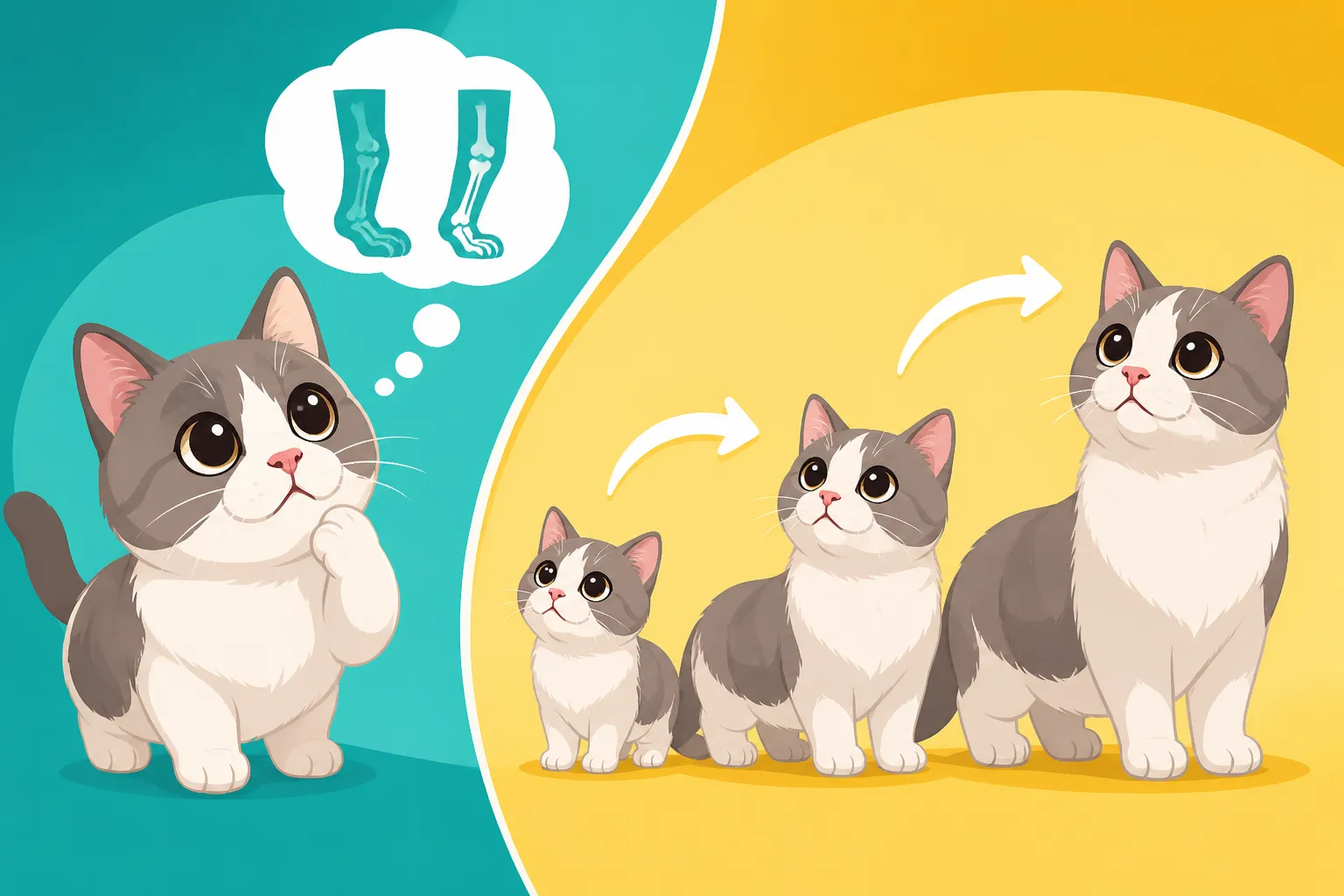
One common misconception is that a Munchkin's legs might get shorter as they grow, or that their body "outgrows" their legs. What actually happens is that the cat's torso and overall body length increase significantly during their growth period, while the growth of their leg bones is inherently restricted by the pseudoachondroplasia gene. This means that as the body lengthens and deepens, the proportion of the legs relative to the expanding torso can make the legs appear even shorter than they did when the cat was a tiny kitten. It's not that the legs themselves are shrinking, but rather that the rest of the body is catching up and developing at a more typical feline rate. Why a Munchkin's Legs Are Short but Its Body Is Not delves into this fascinating aspect of their unique anatomy. This visual shift can lead owners to believe the legs are changing, when in reality, it's the surrounding body mass and length that are creating a different overall silhouette. Think of it like a child whose head looks very big as a baby, but as their body grows, the head-to-body ratio normalizes—the head didn't shrink, the body grew larger around it.
Final Leg Length by Adulthood
A Munchkin cat typically reaches its full adult size, including its final leg length, by around 9 to 12 months of age. Just like other cat breeds, there might be a bit of filling out and muscle development for another few months, but the skeletal growth is largely complete. Once they reach this maturity, the length of their legs will remain static for the rest of their lives. This is why breeders typically grade a Munchkin's legs at around 12 weeks of age, as the pattern of growth is already well-established by then, giving a clear indication of their adult conformation. Why a Breeder Grades a Munchkin's Legs at Twelve Weeks is a critical step in the ethical breeding process. This stability means that the measurements and visual assessment of a young adult Munchkin will largely hold true throughout their life, barring any injury or severe health issues. Owners can be confident that the leg length they see in their mature Munchkin is the length they will have permanently.
What Does the Munchkin's Growth Look Like?
To further illustrate the growth process, here's a general overview of how a Munchkin's leg length might appear during different developmental stages:
| Age Stage | Leg Appearance (Relative to Body) | Key Observation |
|---|---|---|
| Newborn – 2 Weeks | Short, but body is also small | Less noticeable due to tiny overall size. |
| 3 Weeks – 3 Months | Clearly short and stocky | Distinctive waddle, legs clearly shorter than normal. |
| 4 Months – 9 Months | Appears to "shrink" relatively | Body length and depth rapidly increase, making legs seem even shorter in proportion. |
| 10 Months + | Static adult length | Final leg length is set; body continues to fill out slightly. Proportion remains. |
This table highlights that while the absolute length of the bones reaches its maximum, the perception of leg length can change due to the growth of the torso and other body parts.
Factors That Don't Change Leg Length
It’s natural to wonder if things like what you feed your cat or how they play can influence their physical development. However, when it comes to a Munchkin’s leg length, these factors play no role in altering their genetically determined size.
Diet and Exercise
While diet and exercise are absolutely crucial for a Munchkin's overall health, well-being, and joint support, they do not, and cannot, change the actual length of their leg bones. A balanced, high-quality diet is vital for proper muscle development, maintaining a healthy weight, and providing essential nutrients for bone and joint health. However, it won't magically make their genetically short bones grow longer. Similarly, encouraging appropriate exercise through play helps maintain muscle tone, flexibility, and a healthy weight, which is particularly important for Munchkins to prevent undue stress on their unique spines and joints. However, no amount of running, jumping, or climbing can extend the length of bones whose growth plates are fundamentally altered by a genetic mutation. Feeding a Munchkin Kitten Without Loading Its Joints is paramount to preventing problems, not to changing their intrinsic structure. Focus your efforts on providing optimal nutrition for vitality and joint care, knowing that their leg length is a fixed attribute.
Environmental Influences
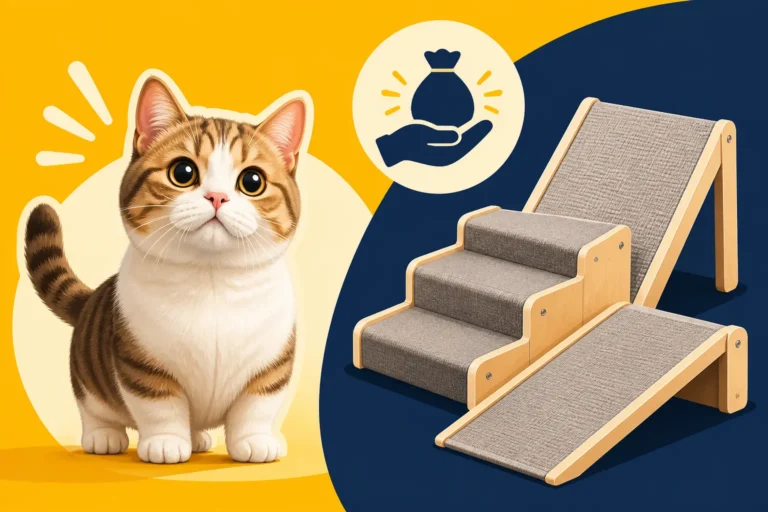
The environment a Munchkin lives in is incredibly important for their quality of life and physical comfort, but it does not have any bearing on the length of their legs. Providing ramps, steps, and carefully arranged furniture is about adapting the home to the cat, not about influencing the cat's physical growth. For instance, using pet steps or ramps to help them reach elevated surfaces like sofas or beds prevents undue strain on their spine and joints from repeated jumping. Similarly, a low-entry litter box available from retailers like Chewy ensures they can easily access their facilities without discomfort. These adaptations are preventative measures against injury and discomfort, designed to accommodate their short stature. With a Munchkin the House Changes, Not the Cat is a fundamental principle of responsible Munchkin ownership. They ensure your Munchkin can navigate their world safely and comfortably, but they won't alter the bone structure that determines their leg length. The genetic blueprint is dominant here, and environmental factors simply help manage the effects of that blueprint, not its core expression.
What Breeders and Owners Observe
Those most familiar with Munchkin cats – experienced breeders and dedicated owners – have a clear understanding of their growth patterns and the consistency of their leg length. Their observations often help to dispel common myths.
Consistent Proportions
Experienced Munchkin breeders have a very clear idea of what to expect when it comes to leg length in their kittens. They understand that while there's a natural variation in the degree of shortness (from "standard" to "rug hugger" types), each individual kitten's leg length is established early on and remains a consistent proportion of their body as they mature. Breeders will assess a kitten's conformation and often grade their leg length, knowing that these characteristics won't change dramatically. This consistency is part of what allows responsible breeders to uphold breed standards set by organizations like TICA, which recognizes the Munchkin. They're not looking for legs that get shorter or longer over time, but rather for a stable, healthy expression of the pseudoachondroplasia trait. This means that if you get a short-legged kitten, you can expect it to be a short-legged adult; the underlying genetics are unwavering.
Misconceptions and Concerns
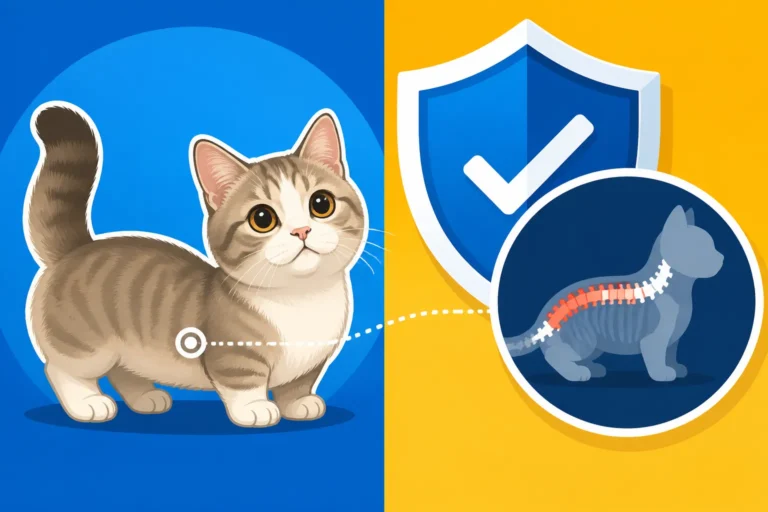
Many new Munchkin owners, or those considering getting one, often voice concerns about whether the cat's legs will "shorten" or if spinal problems might lead to a perceived change in leg length over time. It's important to clarify that the actual bone length of the legs does not change or worsen. Any perception of change is usually due to the cat's body growing larger around the fixed leg length, making the legs seem proportionally shorter. Furthermore, while Munchkins can be prone to certain skeletal issues like lordosis or pectus excavatum, these are separate conditions from the leg length itself and don't directly alter the bone length of the limbs. Issues like arthritis, which can appear as a Munchkin ages, might affect their gait or flexibility, making their movement seem different, but again, this is a joint problem, not a change in leg bone length. How a Vet Assesses a Munchkin's Leg Conformation typically involves checking for these secondary issues, not measuring a changing leg length. If you have concerns about your Munchkin's mobility or comfort, it's always best to consult with your veterinarian. Having pet insurance from providers like Healthy Paws can give peace of mind regarding potential health issues as your Munchkin ages, covering treatments for joint issues or other conditions that might arise. The core message is that the legs themselves are remarkably stable in their length once maturity is reached.
Disclaimer
This article is for general informational purposes only and does not constitute professional advice. Laws, prices and regulations vary by location and change over time. Consult a qualified professional for guidance on your specific situation.