Why a Munchkin Breeder Should Ask About Your Stairs
It’s easy to feel a little quizzical when a Munchkin breeder asks seemingly innocuous questions about your home, especially something as specific as whether you have stairs. You might think, "What does that have to do with getting a kitten?" But trust me, a good breeder isn't being nosy; they're showing deep care for the kitten's future, and this particular question reveals a lot about their understanding of the breed's unique needs. This guide will help you understand precisely why your home's layout, particularly its stairs, is a critical part of ensuring a Munchkin lives a happy, healthy life with you.
The Unique Physical Realities of a Munchkin Cat
To truly understand why stairs are such a big deal for a Munchkin, we need to start with their defining characteristic: those adorable, short legs. While they look incredibly cute, these shorter limbs fundamentally change how a Munchkin interacts with its environment compared to a long-legged cat. It's not just about aesthetics; it's about biomechanics and the very way their body is built.
Understanding the Munchkin's Physical Limitations
A Munchkin's short legs are a result of a genetic mutation that causes a form of dwarfism called pseudoachondroplasia. This means their long bones don't grow to a typical length, but their spine and body size are otherwise normal. This creates a distinct challenge: a normal-sized body supported by disproportionately short limbs. Imagine carrying a heavy backpack while having very short legs – it changes everything about how you move, how you balance, and the strain on your body.
When a Munchkin jumps, for instance, they can't achieve the same height or distance as a typical cat. Their launch isn't as powerful, and their landing mechanics are different. Every jump, every climb, every descent puts a specific kind of stress on their joints and spine. Unlike a cat with long, shock-absorbing legs, a Munchkin's joints are absorbing impact closer to the ground, and their spine is subjected to forces that a standard cat's body is better equipped to handle. It's why there's a serious discussion around Why a Munchkin's Spine Carries a Load a Normal Cat's Does Not. This difference is absolutely crucial when considering something as common as stairs.
The Risks of Repeated Stair Use
Now, let’s talk stairs. For a typical cat, stairs are just another part of the domestic landscape – they bound up and down them with effortless grace. For a Munchkin, stairs are a significant physical challenge, and repeatedly navigating them can pose serious health risks.
Firstly, there's the immediate danger of falls. A Munchkin's short legs mean they have to exert much more effort to climb each step. Their footing might be less secure, and a misstep could lead to a tumble down a flight of stairs, which could result in fractures, sprains, or even more severe spinal injuries. Their low center of gravity might help them corner like a champion on flat ground, but it doesn't offer much protection against a long fall. This is why Why a Munchkin Should Not Use Stairs Repeatedly is a core piece of advice.
Beyond acute injuries, the cumulative impact is a major concern. Each time a Munchkin attempts to ascend or descend stairs, their joints – especially in their front legs – are put under considerable strain. Over years, this repeated stress can accelerate the development of osteoarthritis. You might start to see signs of How Arthritis Shows in a Munchkin's Front Legs or understand Why a Munchkin's Shoulders Wear First long before you would in a normal-legged cat. The constant jarring and unnatural angles can degrade cartilage and lead to chronic pain, significantly impacting their quality of life as they age. A responsible owner wants to minimize these long-term risks, and a responsible breeder wants to ensure their kittens go to homes where these risks are understood and mitigated.
What a Breeder's Question About Stairs Really Means
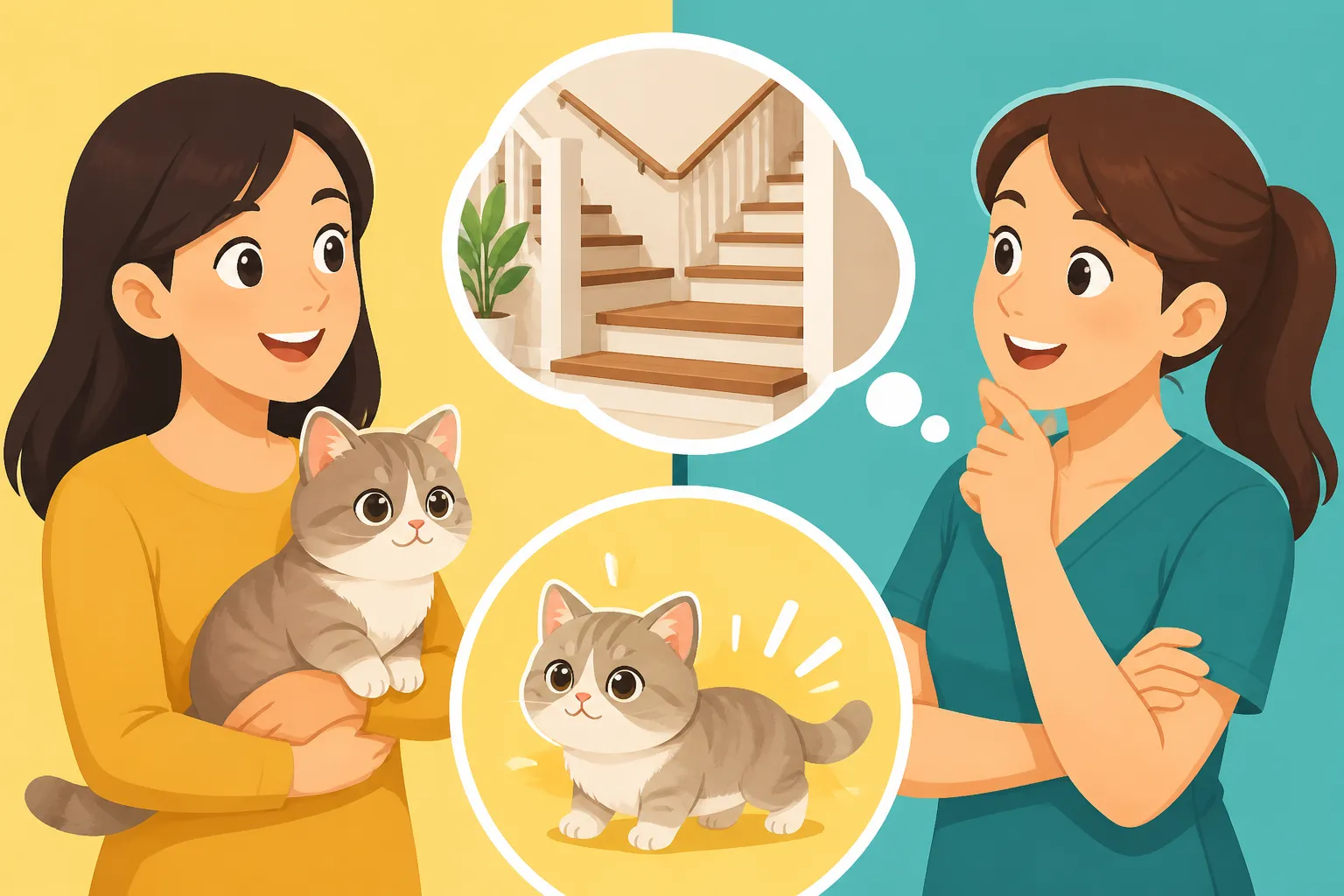
When a Munchkin breeder asks about your stairs, they aren't just making small talk. This question is a vital part of their screening process, a direct indicator of their commitment to the welfare of their kittens, and a window into your understanding (or lack thereof) of the breed's specific needs.
Identifying a Responsible Breeder
A truly responsible breeder views themselves as an advocate for the breed and a caretaker for the individual animals they bring into the world. Their goal isn't simply to sell a kitten; it's to place that kitten in a home where it will thrive for its entire life. This means finding owners who are educated, committed, and willing to adapt their lifestyle and environment to meet the Munchkin's particular requirements.
When a breeder asks about stairs, they are essentially asking: "Do you understand that a Munchkin cannot navigate a typical multi-story home without significant adaptation? Are you prepared for that?" It's a test of your awareness and willingness to provide a suitable home. If a breeder doesn't ask such questions, it might be a red flag. A breeder who focuses solely on your payment or how quickly you can pick up the kitten, without probing into your living situation, might not have the kitten's long-term well-being at heart. You want a breeder who is open to discussing What a Munchkin Breeder Should Be Able to Show You and proactively offers advice on care and home setup.
Gauging Your Home's Suitability
The information you provide about your home's layout helps the breeder gauge its suitability for a Munchkin. For instance, a single-story home with no stairs is often considered ideal because it eliminates the challenge entirely. However, many people live in multi-story houses or apartments with steps leading up to the entrance.
If you have stairs, the breeder will likely want to discuss your plan for managing them. This isn't about judging your home; it's about ensuring you've thought ahead. They might ask:
- How many flights of stairs do you have?
- Are they indoors or outdoors?
- What is their surface (carpet, hardwood, etc.)?
- Do you have a plan for ramps or gates?
- Are you aware of the potential joint issues associated with repeated stair use?
Your answers help them understand if you're prepared to make the necessary adjustments. A home that requires a Munchkin to repeatedly climb and descend stairs without any assistance or prevention is simply not a good fit. The breeder wants to know that you're ready to embrace the philosophy that With a Munchkin the House Changes, Not the Cat. They want to see that you're thinking about the kitten's safety and comfort from day one.
Adapting Your Home: Living with Stairs and a Munchkin
If you have stairs in your home and your heart is set on a Munchkin, don't despair! It’s absolutely possible to make your multi-story house a safe and enriching environment for these unique cats. It just requires thoughtful planning and a commitment to proactive adaptation.
Essential Mobility Aids
The most crucial step in managing stairs is providing safe alternatives to direct climbing and jumping. This is where mobility aids become invaluable.
- Ramps: Properly constructed and placed ramps are often the best solution for Munchkins. They provide a gradual incline that minimizes strain on their legs and spine. Look for ramps with a gentle slope and a non-slip surface, ideally carpeted, so your Munchkin can get good traction. You'll need to strategically place them to allow access to sofas, beds, windowsills, and, yes, even over staircases if you can secure them. Remember, Ramps and Steps Are Munchkin Equipment, Not Luxuries – they are a necessity for preserving your cat's long-term health. Consider materials that match your decor, or look into customizable options that can blend in seamlessly.
- Pet Stairs/Steps: For smaller elevation changes, such as getting onto a low sofa, pet stairs can also work. Ensure the steps are wide, stable, and have a shallow rise, making them easy for short legs to navigate. Again, a non-slip surface is key. Some cats prefer ramps, others prefer steps, so you might need to try a few options.
- Strategic Furniture Placement: Sometimes, you can use existing furniture to create a "staircase" effect. Place ottomans, sturdy boxes, or low shelves in a step-like fashion to help your Munchkin reach higher surfaces without a single large jump. This allows them to utilize their natural climbing instincts without risking injury.
Safety Measures and Supervision
Beyond providing aids, establishing safety measures and maintaining supervision are paramount, especially during your Munchkin's younger years. Why a Munchkin Kitten's First Year of Learning Its Limits is a critical time for them to learn safe ways to navigate their world, and for you to learn what they can't safely do.
- Baby Gates: Install baby gates at the top and bottom of staircases to prevent unsupervised access. This is particularly important when you're not home or at night. Ensure the gates are sturdy and tall enough that your Munchkin cannot squeeze under or jump over them. There are many pet-specific gates available that can blend into your home's aesthetic.
- Supervised Access: When you are home, you can supervise your Munchkin's use of ramps or steps on stairs. Encourage them gently and consistently to use the aids. Positive reinforcement with treats and praise can go a long way in teaching them.
- Preventing Risky Jumps: Discourage your Munchkin from attempting jumps that are clearly too high. This might mean rearranging tempting high-up items or blocking access to precarious ledges. While Whether a Munchkin Should Be Discouraged From Jumping is a nuanced topic (they will jump), discouraging risky jumps is essential.
For ongoing joint support, consider supplementing their diet with vet-approved joint care products. Regular veterinary check-ups are also vital to monitor their joint health. If you are ever worried about your Munchkin's mobility, getting them checked out quickly by your vet is important. Thinking ahead to veterinary costs, especially for potential long-term care needs, means having a good pet insurance plan. Companies like Healthy Paws offer comprehensive coverage that can help with unexpected vet bills, including those related to joint issues.
Long-Term Care for Stair-Related Issues
The need for careful stair management doesn't diminish with age; it often becomes even more critical. As Munchkins get older, they become more susceptible to arthritis and general stiffness. What was once a manageable climb might become painful or impossible. Caring for an Old Munchkin That Has Stopped Climbing means re-evaluating their environment to ensure everything remains accessible and comfortable. You might need to add more ramps, lower existing platforms, or even restrict them to a single floor if mobility becomes severely limited. This proactive approach ensures your beloved companion can maintain their quality of life as they age.
The Ripple Effect: Beyond Just Stairs
Understanding a breeder's concern about stairs opens up a broader conversation about holistic Munchkin care. Their short stature affects more than just their ability to climb; it influences almost every aspect of their daily life, from hygiene to play.
Broader Home Adaptation
When you commit to a Munchkin, you're committing to a lifestyle of adaptation. It’s not just about addressing stairs; it’s about making your entire home accessible and comfortable.
This includes:
- Litter Boxes: A standard litter box with high sides can be a struggle for a Munchkin to enter and exit gracefully, especially as they age or if they have spinal issues. You’ll need a low-entry litter box. Many pet supply stores, including large online retailers like Chewy, offer senior or special-needs litter boxes that are perfect for Munchkins. This directly ties into Why a Munchkin Needs a Litter Box It Can Walk Into.
- Food and Water Bowls: Elevated food and water bowls can make eating more comfortable for a Munchkin by reducing the strain on their neck and shoulders. However, ensure the elevation isn't too high, so they don't have to stretch awkwardly.
- Scratching Posts: A tall, vertical scratching post might be out of reach. Provide horizontal scratchers or shorter, angled posts that they can comfortably use without having to stretch upward excessively.
| Home Feature | Standard Cat Need | Munchkin Cat Adaptation | Why It Matters |
|---|---|---|---|
| Stairs | Climbs with ease | Ramps/gates, supervision | Prevents injury, reduces joint strain |
| Litter Box | High sides often preferred | Low-entry design | Easy access, prevents accidents/pain |
| Furniture | Jumps up/down | Ramps, steps, strategic placement | Safe access, protects spine/joints |
| Food Bowls | Floor or slightly raised | Slightly raised to comfortable height | Reduces neck/shoulder strain |
| Scratchers | Tall posts for stretching | Horizontal, angled, or shorter posts | Enables natural scratching, prevents strain |
| Windowsills | Jumps onto | Ramps, steps, or platform for access | Offers enrichment, prevents frustration |
Behavioral Implications
A Munchkin's physical limitations also have behavioral consequences. Cats instinctually seek high vantage points for safety, observation, and rest. When a Munchkin can't reach these spots, it can lead to frustration or a sense of vulnerability. It’s vital to understand How a Munchkin Gets Where It Wants Without Jumping and facilitate that.
- Ground-Level Enrichment: Since they can't climb high, much of their exploration and play will be at floor level. Provide ample floor-level enrichment, such as tunnel toys, puzzle feeders, and low-lying cat trees with closely spaced platforms.
- Need for Assistance: Your Munchkin will likely look to you for help accessing higher places, often by vocalizing or rubbing against your legs. Being prepared to gently lift them to your lap, bed, or a favorite window perch (with a ramp to get down safely) is part of being a Munchkin parent. They might not jump onto your lap unaided, but they'll definitely appreciate being lifted there for cuddles.
The Importance of a Single-Story or Thoughtfully Designed Home
Ultimately, the best living arrangement for a Munchkin is often a single-story home where stairs are not an issue at all. This removes a significant stressor from their lives and simplifies your care routine.
However, if a multi-story home is your reality, it's not impossible – it just requires an intentional and unwavering commitment to creating an adapted environment. This means thinking about every elevation change, every jump, and every descent your Munchkin might attempt throughout their day. It means having a budget not just for cat food and toys, but for ramps, steps, and potentially a good pet insurance plan from providers like Healthy Paws to cover any future mobility-related veterinary needs. It means being prepared to spend time teaching your cat to use these aids and supervise them, especially during the initial stages. A breeder who asks about your stairs is simply trying to ensure that you are fully prepared for this wonderful, but distinctly different, journey of Munchkin ownership.
Disclaimer
This article is for general informational purposes only and does not constitute professional advice. Laws, prices and regulations vary by location and change over time. Consult a qualified professional for guidance on your specific situation.