How Far Apart a Munchkin’s Platforms Should Be
If you're a proud Munchkin owner, you've probably faced the challenge of cat trees. You buy that fantastic multi-level palace, envisioning your adorable short-legged friend gracefully leaping from perch to perch, only to watch them struggle, hesitate, or completely give up on reaching the higher platforms. It's frustrating for you and potentially disheartening, or even dangerous, for your cat. This guide is here to help you understand exactly how to space cat tree platforms so your Munchkin can navigate their vertical world with confidence and safety.
Understanding the Munchkin's Unique Mobility Challenges
It’s easy to look at a Munchkin and assume they’re just like any other cat, only shorter. While their spirit and intelligence are certainly on par with their long-legged cousins, their unique physical structure means their approach to movement, especially vertical movement, is fundamentally different. Ignoring these differences can lead to an environment that’s not just difficult for them, but potentially harmful.
The Physics of Short Legs and Jumping
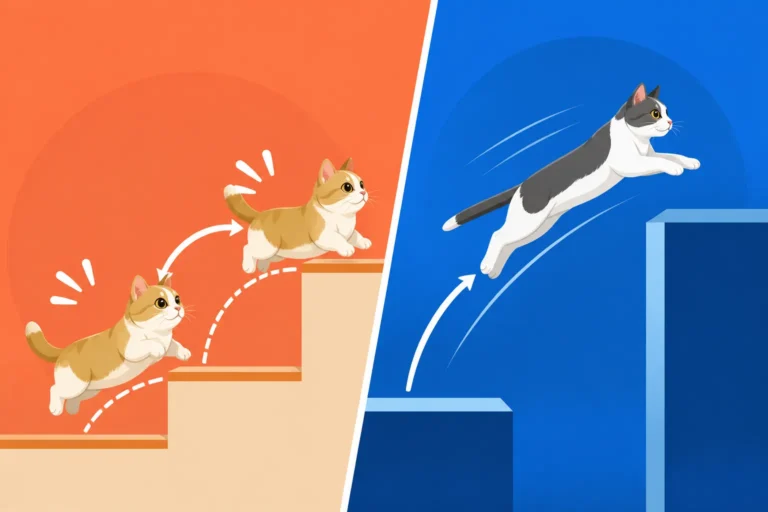
Imagine trying to jump onto a tall counter if your legs were half their normal length. That’s essentially the daily reality for a Munchkin cat. Their short limbs drastically reduce the leverage they have for propelling themselves upwards. A typical cat uses the powerful push-off from its long hind legs and the flexibility of its spine to launch itself into the air, often clearing impressive heights with ease. For a Munchkin, that same vertical jump requires significantly more effort and is limited by their shorter stride and reduced spring.
They might achieve a decent horizontal dash, surprising you with their speed on the flat, but sustained vertical climbing is another matter entirely. While they can make impressive short bursts of jumps – perhaps onto a low armchair or a sturdy ottoman – the cumulative strain of repeated high jumps can take a toll. Their body is simply not designed for the acrobatic feats that taller cats perform without a second thought. This isn't a sign of weakness; it's just the reality of their unique physique. You might see them eye a high shelf, crouch, wiggle, and then… think better of it. It’s not laziness; it’s a learned limitation, and it’s important we respect that in how we set up their environment.
Why Standard Cat Trees Don't Work
The vast majority of cat trees on the market are designed with the average-sized, long-legged domestic cat in mind. This means the manufacturers assume a certain jumping ability and vertical reach. Consequently, the spacing between platforms on these standard trees is often much too wide for a Munchkin. What might be a casual hop for a Siamese or a Maine Coon becomes an impossible stretch or a risky leap for a Munchkin.
Typically, you'll find gaps of 12-18 inches or even more between platforms on a standard cat tree. For a Munchkin, a gap of more than 8-10 inches can be a significant challenge. If the platforms are placed directly above one another, requiring a purely vertical jump, the difficulty is even greater. This isn't just about reaching; it's about the safety of the jump. A Munchkin might try to make a jump that's too high, overestimating their ability or simply being determined to get to a favorite spot. When they miss, or when they land awkwardly, it puts immense strain on their joints and spine. These are the moments that can lead to injury, pain, or even a complete aversion to the cat tree you spent good money on. It’s a common frustration to see a beautiful, elaborate cat tree go unused because your short-legged friend simply can’t make it work.
A cat tree that isn't appropriately designed can become a source of stress rather than enrichment. Imagine wanting to get to the top perch to survey your kingdom or curl up for a nap, but the journey feels like an Olympic event with a high risk of failure. This can lead to anxiety, avoidance of the tree altogether, or even behavioral issues if they feel their access to safe, elevated spaces is denied. For more on their jumping capabilities, check out How High a Munchkin Can Actually Jump.
Ideal Platform Spacing for Munchkin Cat Trees
Creating a cat tree that works for a Munchkin isn't about eliminating height; it's about making height accessible in a way that respects their physical capabilities. Think of it less as a series of hurdles and more like a gentle staircase designed for their unique stride. The goal is to encourage climbing and exploration safely, building confidence rather than fear.
The "Munchkin Leap" Rule of Thumb
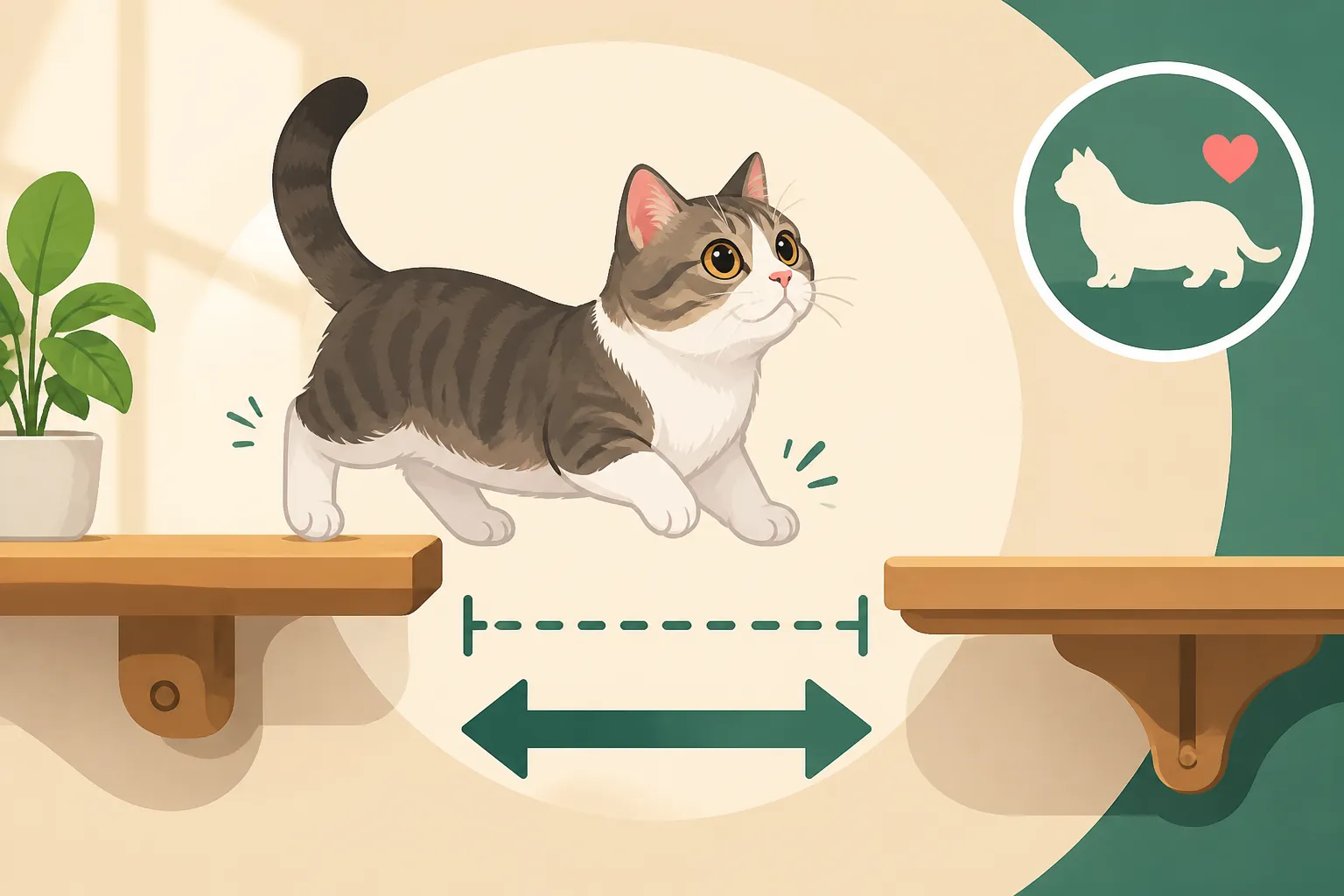
When it comes to vertical spacing, a good rule of thumb for a Munchkin's maximum comfortable jump is usually around 6 to 8 inches, measured from the top of one platform to the top of the next. Some exceptionally agile Munchkins might manage slightly more, but consistently keeping steps within this range minimizes strain and ensures success. Anything much over 10 inches becomes a genuine effort and significantly increases the risk of a missed jump or an awkward landing.
It's crucial to ensure that this spacing is consistent throughout the tree. If there's one particularly challenging gap, your Munchkin might get stuck, or worse, try to jump down from an unsafe height. Think of each platform as a stepping stone. They need to be close enough that the next one always feels achievable. You can vary the exact height slightly – maybe 6 inches here, 7 inches there – to provide a bit of variety in muscle engagement, but always within that comfortable "Munchkin leap" range. This approach turns a daunting climb into an enjoyable, natural ascent, much like how they might navigate a human-sized staircase with several small steps.
Horizontal Overlap and Staggering
Purely vertical steps, where one platform is directly above another, can be particularly challenging for Munchkins. Their short legs mean they might struggle to get enough clearance to push off and land securely. This is where horizontal overlap and staggering come into play. Instead of stacking platforms like a tower, think about arranging them more like a spiral staircase or a set of staggered shelves.
Platforms should ideally be offset from each other, allowing for a slight horizontal as well as vertical movement between them. This means your Munchkin can use a combination of a short jump and a forward scramble, rather than a single, high vertical leap. Providing an "overlap" where a portion of the upper platform extends slightly over the lower one gives them a larger target and a more stable place to launch from. It also allows them to "step up" more gradually, akin to how they might use multiple pieces of furniture to reach a higher spot on a windowsill.
For example, instead of a 7-inch vertical jump with no horizontal give, a 6-inch vertical rise with a 4-inch horizontal stagger makes the climb much easier. This configuration mimics the way cats naturally climb, using ledges and protrusions as intermediate steps. It's less about a straight upward jump and more about a graceful, diagonal ascent, which is far more suited to their body type. This is a key design principle to follow when considering Which Cat Tree Layout Suits a Munchkin.
Landing Zone Considerations
It’s not just about getting to the next platform; it’s about having a safe and comfortable place to land and rest. Munchkin cat tree platforms need to be adequately sized to provide a stable landing zone and enough space for them to comfortably turn around, stretch out, or even nap. A tiny platform that barely accommodates their body is a recipe for insecurity and potential falls.
When your Munchkin makes a jump, they need to feel confident that they have a solid, wide surface to land on. If the landing area is too small, they might hesitate, misjudge, or feel cramped once they get there, leading them to avoid the higher levels. A minimum platform size of about 12×12 inches is a good starting point, with larger platforms being even better, especially for higher perches where they might want to spend more time observing their surroundings or sleeping.
Beyond size, the surface itself matters. Carpeted platforms are usually best, providing grip and cushioning for their landings. Slick surfaces like polished wood or laminate can be dangerous, as their short legs might struggle to maintain purchase, leading to slips and falls. If you have platforms with slick surfaces, consider adding carpet tiles or textured mats to make them safer. Remember, a confident climber is a happy climber, and a secure landing zone is fundamental to that confidence.
| Feature | Standard Cat Tree | Munchkin-Friendly Cat Tree |
|---|---|---|
| Vertical Spacing | Often 12-18+ inches (30-45+ cm) | Ideal: 6-8 inches (15-20 cm) maximum between platforms |
| Horizontal Spacing | Often purely vertical or minimal offset | Staggered platforms with horizontal overlap for diagonal ascent |
| Platform Size | Varies, some small perches | Ample landing space; minimum 12×12 inches (30×30 cm) |
| Surface Material | Carpet, sisal, sometimes bare wood/laminate | Primarily carpeted or textured for secure grip |
| Ramps/Steps | Rarely integrated | Essential for bridging larger gaps or lower access |
| Stability | Important, but less critical for jumping | Paramount; tree must be extremely stable to prevent wobbling and falls |
Practical Design Tips for a Munchkin-Friendly Cat Tree
Making a cat tree truly Munchkin-friendly often involves either significant modification or a careful selection process. It's not just about spacing; it's about the overall design supporting their unique way of moving. Don’t worry, it doesn’t have to be a major carpentry project if you’re not handy – there are ways to adapt and choose wisely.
DIY Adjustments to Existing Cat Trees
Many of us already own a cat tree that simply isn't working for our Munchkin. Don't despair! With a little creativity and some basic tools, you can often adapt an existing tree to better suit their needs. The key is to add intermediate steps or ramps to bridge those too-wide gaps.
One popular method is to attach small, sturdy shelves between existing platforms. These can be simple wooden planks, cut to size and securely fastened with L-brackets or heavy-duty screws. Ensure the new shelves are carpeted or have a non-slip surface. The goal is to reduce those 12-inch gaps down to a more manageable 6-8 inches. For example, if you have two platforms 15 inches apart, adding an intermediate shelf roughly 7 inches up from the lower one, and then 8 inches to the higher one, creates two much safer steps. You'll want to ensure these new additions are incredibly stable and don't wobble when your cat jumps on them. Wobbly steps are a significant deterrent and a safety hazard.
Another excellent modification is to add ramps. A ramp can connect two platforms that are too far apart for a jump, or provide ground-level access to the first platform of the tree. Ramps should have a gentle incline – ideally no steeper than 20-25 degrees – and a textured, non-slip surface like carpet. You can purchase ready-made pet ramps (often found for small dogs or senior pets) or build one yourself from plywood and carpet. Attaching them securely is paramount. Remember, the idea is to provide continuous, easy access rather than challenging leaps. If you're looking for broader ideas on adapting your home, you might find inspiration in How to Rearrange a Room So a Munchkin Can Climb. Understanding Whether a Munchkin Uses a Ramp can also inform your design choices.
Shopping for Munchkin-Specific Cat Trees (or Modifiable Ones)
When buying a new cat tree, you'll rarely find one explicitly labeled "Munchkin-friendly," but you can definitely look for characteristics that make them suitable or easily adaptable. One of the best strategies is to look at cat trees designed for "senior cats," "kittens," or even small dogs. These often feature closer platform spacing, ramps, or multiple lower-level entry points.
As you browse online, perhaps on a site like Amazon or other pet supply retailers, pay close attention to the product dimensions, especially the height between platforms. Don't just look at photos; read the descriptions and diagrams for specific measurements. Look for trees that have platforms staggered rather than stacked directly, or ones that already include ramps. Modular cat trees, which allow you to rearrange or add components, can also be a fantastic option, as they offer flexibility to create custom spacing. You might also consider lower-height cat towers that prioritize wide, expansive platforms over extreme vertical reach, or those that come with external steps or ramps. Always check reviews, particularly for stability, as a wobbly tree, regardless of platform spacing, is a no-go for a Munchkin.
Integrating Ramps and Steps
Ramps and pet steps are truly a Munchkin owner's best friend. They can transform an unusable vertical space into an accessible pathway, reducing strain on their joints and spine while still allowing them to explore elevated areas.
For cat trees, ramps can be invaluable. A long, gently sloping ramp leading from the floor to the first platform eliminates the need for any initial jump. Shorter ramps can then connect subsequent platforms if the vertical spacing is still a bit too ambitious. The key features of a good ramp for a Munchkin include:
- Gentle Incline: As mentioned, aim for a low angle. A steep ramp can be just as difficult as a jump.
- Non-Slip Surface: Carpet, rough sisal, or textured rubber provides the necessary grip for their short legs. Smooth wood or plastic is too slippery.
- Sturdiness: The ramp must be absolutely stable and not shift or bounce when your cat uses it.
- Width: Ensure it's wide enough for your cat to comfortably walk up and down without feeling precariously balanced.
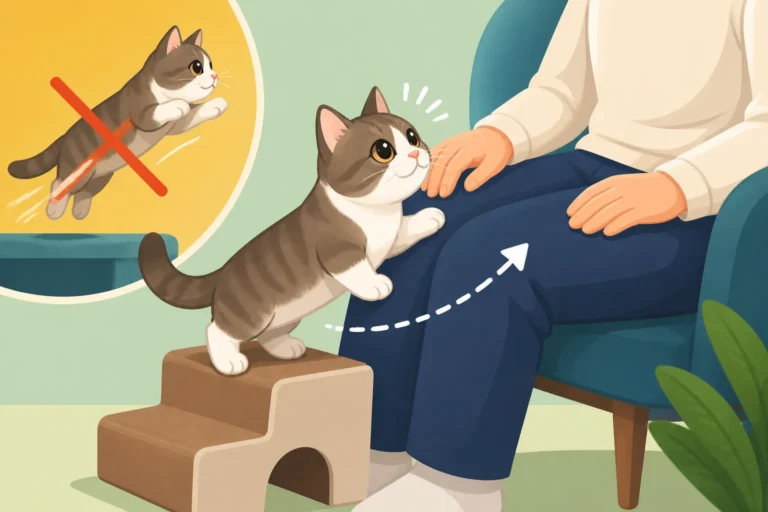
Pet steps, similar to those used for small dogs to get on sofas, can also be incorporated. These are essentially mini-staircases with very shallow risers and deep treads. They work well for bridging smaller gaps or providing access to a low-lying cat tree or window perch. Again, stability and a non-slip surface are crucial. Teaching your Munchkin to use these aids is usually quite easy, especially if you start when they're kittens or use treats and positive reinforcement. If you need some pointers, consult How to Teach a Munchkin to Use Steps.
Beyond Vertical: Engaging a Munchkin's World
While optimizing vertical access is important, it's equally vital to remember that a Munchkin's world isn't only about climbing. Much of their enrichment and play will naturally happen at floor level, and a well-rounded environment caters to both their desire to climb and their preference for horizontal exploration.
Floor-Level Enrichment and Play
Since Munchkins are naturally lower to the ground, they excel at floor-level play and exploration. Don't feel like every toy or piece of enrichment needs to be elevated. In fact, many standard cat toys are perfectly suited for their unique perspective.
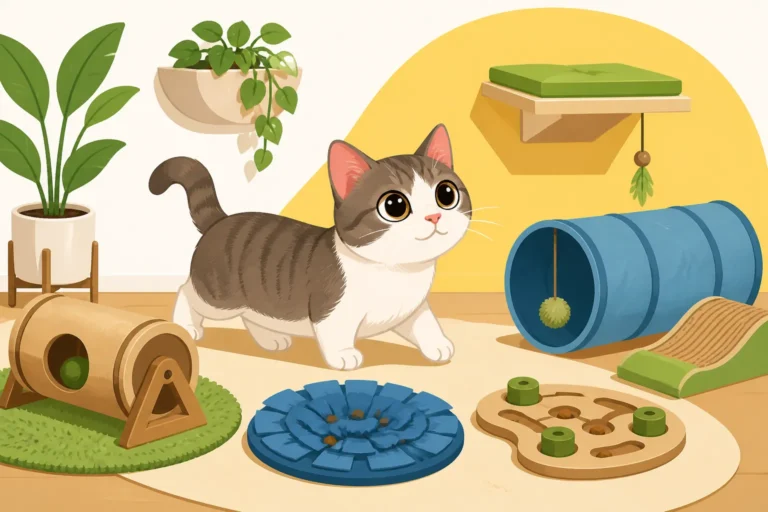
Think about toys that roll, slide, or can be chased across the floor. Crinkle balls, lightweight mice, and soft plush toys are ideal. Wand toys are fantastic for engaging them in play that stays within their comfortable reach, allowing them to pounce and chase without needing to jump high. Puzzle feeders that sit on the floor are also excellent, encouraging problem-solving and mental stimulation without any vertical challenges. Tunnels, crinkle bags, and low-entry play tents provide hiding spots and opportunities for ambush play that are perfectly suited to their ground-level vantage point.
A common pitfall is to place all toys on high shelves or in inaccessible areas. While it’s good to have some elevated play options, ensure there's a rich and varied array of entertainment within their easy reach on the floor. This provides them with daily joy and activity without putting undue stress on their short legs and spine. For more ideas on keeping them entertained down low, explore How Much Floor Level Play a Munchkin Needs.
Creating Safe Pathways to Desired Heights
Munchkins are still cats, and like all cats, they enjoy surveying their territory from a higher vantage point. The key is to provide safe pathways to these desired heights, rather than expecting them to make heroic leaps.
Look around your home. Do you have bookshelves, side tables, or window sills that your Munchkin eyes longingly but can't quite reach? You can create a "staircase" out of existing furniture. For example, a sturdy ottoman placed next to a low armchair, which then leads to a side table, could provide a series of manageable steps up to a window perch. Ensure each piece of furniture is stable and won't tip or slide.
Window perches are incredibly popular with cats, and Munchkins are no exception. You can buy specialized window seats that attach securely to the sill, but ensure your Munchkin can access it easily. This might mean placing a set of pet steps or a low side table directly underneath it. Some popular options for window perches and steps can be found on Amazon. The goal is to design a continuous, easy route upwards, breaking down what would otherwise be a single, challenging jump into several smaller, safer steps. This allows them to enjoy the view and feel secure without risking injury. You can find more specific guidance on this in How to Get a Munchkin Up to a Window Safely.
Monitoring for Comfort and Safety
As a responsible Munchkin owner, your observational skills are incredibly important. Your cat can't tell you directly if a jump is painful or if a particular platform is too high. You need to be their advocate and constantly monitor their behavior and comfort level.
Watch your Munchkin as they interact with their cat tree and other elevated spaces. Do they hesitate before a jump? Do they make several attempts before finally launching themselves? Do they land awkwardly, perhaps with a soft cry or a quick shake-off? Any signs of hesitation, struggle, or apparent pain after a jump or climb should be a red flag. Pay attention to how they walk – any limping, stiffness, or reluctance to move could indicate discomfort.
Regular veterinary check-ups are also crucial, especially as your Munchkin ages. Your vet can assess their joint health and spinal alignment and provide guidance on appropriate pain management or supplements if needed. If you notice a sudden change in their climbing habits, such as them completely avoiding a previously accessible platform or refusing to use a ramp, it's wise to consult your vet. This could be a sign of underlying discomfort or pain. Sometimes, a Munchkin might stop using their ramp because of a physical issue, as detailed in Why a Munchkin That Stops Using Its Ramp Is Unwell, or be showing early signs of joint problems like those discussed in How Arthritis Shows in a Munchkin's Front Legs. Early intervention can make a significant difference in their long-term comfort and mobility.
Maintenance and Long-Term Considerations
A Munchkin-friendly cat tree isn't a "set it and forget it" item. Like any piece of furniture, it requires ongoing maintenance, and as your cat ages, their needs may change. Being proactive about inspection and adaptation will ensure their climbing environment remains safe and accessible throughout their life.
Regular Inspection and Repair
The stability of a cat tree is paramount for any cat, but it's even more critical for a Munchkin. Because they rely more on pushing off from lower platforms and may not have the same agility to recover from a wobble, any instability significantly increases their risk of falling or injury.
Make it a habit to regularly inspect your cat tree. Check all screws, bolts, and connections to ensure they are tight and secure. Wiggle the tree gently to see if there's any undue sway. Check for wear and tear on carpeted surfaces, especially around edges or landing spots, as worn carpet can become slippery or less inviting. If you've added DIY shelves or ramps, inspect their attachments frequently to ensure they remain strong and don't loosen over time.
Repair or replace any damaged parts immediately. Don't wait until something breaks completely. A loose post, a frayed ramp, or a wobbly platform can quickly turn a safe climbing structure into a dangerous obstacle course. This diligence ensures that your Munchkin always feels secure and confident when navigating their vertical playground.
Adapting for an Aging Munchkin
Just like humans, cats experience changes in their mobility as they age. What might have been an easy 8-inch jump for a spry young Munchkin kitten could become a painful struggle for a senior cat. Their joints may stiffen, their muscles might weaken, and their overall agility can decline. This means their climbing environment will likely need to adapt over time.
As your Munchkin enters their senior years, which for many cats is around 8-10 years old, start observing their movements even more closely. Are they hesitating more? Are they choosing lower sleeping spots? These can be signs that existing platform spacing is becoming too challenging. You may need to add even more intermediate steps, lower the incline of ramps, or even add new ramps where none existed before. What an old Munchkin stops being able to do includes many things that were once easy.
Consider adding extra padded landing areas at the base of the cat tree or under popular jump-off points to cushion any accidental falls. Ensure their favorite napping spots on the tree are easily accessible without any strenuous jumps. Sometimes, it might even mean transitioning to a completely different type of cat tree – one that is lower, wider, and designed for minimal jumping. It's about meeting them where they are in their life stage, ensuring they can continue to enjoy their elevated spaces without pain or frustration. Adapting their home as they age is essential, and understanding Why an Old Munchkin Needs Its Route Lowered can help you prepare.
Disclaimer
This article is for general informational purposes only and does not constitute professional advice. Laws, prices and regulations vary by location and change over time. Consult a qualified professional for guidance on your specific situation.