Which Scratching Post Suits a Munchkin
It's a familiar scene for many Munchkin cat parents: you invest in a beautiful, tall scratching post, hoping your little one will instinctively shred it to pieces, only to find it completely ignored. Instead, your adorable short-legged friend might be eyeing your sofa arm or door frame with a mischievous glint. The truth is, standard scratching posts often aren't designed with a Munchkin's unique physique in mind, leading to frustration for both cat and owner. This guide is here to help you understand why traditional posts fall short and, more importantly, to uncover the best scratching solutions that truly cater to your Munchkin's needs, keeping their claws healthy and your furniture safe.
Understanding a Munchkin's Unique Scratching Needs
Owning a Munchkin cat is a joy, filled with their playful antics and sweet personalities. However, their defining characteristic – those adorably short legs – means that some aspects of cat care, like choosing the right scratching post, require a little extra thought. What works for a regular-sized cat might be completely inaccessible or even uncomfortable for a Munchkin.
The Physical Limitations of Short Legs
The most obvious limitation for a Munchkin is, of course, their leg length. While they are incredibly agile and can navigate their environment with surprising speed, their vertical reach is significantly different from that of a long-legged cat. When a typical cat stretches to scratch a tall post, they extend their entire body, engaging their back muscles and shoulders in a full, satisfying stretch. A Munchkin simply cannot achieve this same vertical extension.
Imagine trying to reach a high shelf when you're only half the height you need to be. You might try to jump, but the stretch simply isn't there. Similarly, a Munchkin trying to scratch a tall post will often find themselves struggling to get a good purchase, or they'll be forced to contort their body in ways that aren't natural or beneficial. This isn't just about reaching; it's also about balance and leverage. A standard tall, thin post might feel wobbly or precarious to a Munchkin trying to scratch at its full (limited) height, making them less likely to use it. Their core strength and body mechanics are optimized for lower-to-the-ground movements, not for reaching skyward. This also affects how they land from jumps, which can put more strain on their shoulders and elbows over time if not managed correctly. Why a Munchkin's Shoulders Wear First discusses this in more detail.
Why Standard Posts Just Don't Work
So, you bought a gorgeous, tall cat tree with an integrated scratching post, figuring it's a cat essential. It looks great in your living room, but your Munchkin barely glances at it. Why? Because most standard scratching posts are designed with the assumption of a cat having a full, elongated body capable of a long vertical stretch. The ideal scratching height for a typical cat allows them to extend their claws fully while stretching their spine. For a Munchkin, that "ideal height" is dramatically lower.
A post that’s even two feet tall might be too much for your short-legged friend to comfortably use for a full, satisfying stretch. They might try to scrabble at the very bottom, but they won't get the full body engagement that makes scratching so instinctually gratifying. If the post is too tall and thin, it might also feel unstable, leading them to quickly abandon it. Cats are smart; if a scratching surface feels insecure or doesn't allow them to properly engage their claws and stretch, they will look for an alternative – and that's usually your furniture. It's not that they're being naughty; they're simply seeking out a surface that meets their innate needs in a way their environment currently doesn't provide.
Instinctual Scratching and Claw Health
Scratching isn't just about sharpening claws, although that's certainly a part of it. It's a fundamental feline behavior driven by several instinctual needs. Cats scratch to mark their territory, both visually (leaving claw marks) and olfactorily (depositing scent from glands in their paws). It's also a fantastic way for them to stretch their muscles, particularly in their back, shoulders, and legs. This full-body stretch helps keep them limber and healthy. For a Munchkin, this stretching is just as crucial, perhaps even more so, given the unique load their shorter legs place on their spine and joints.
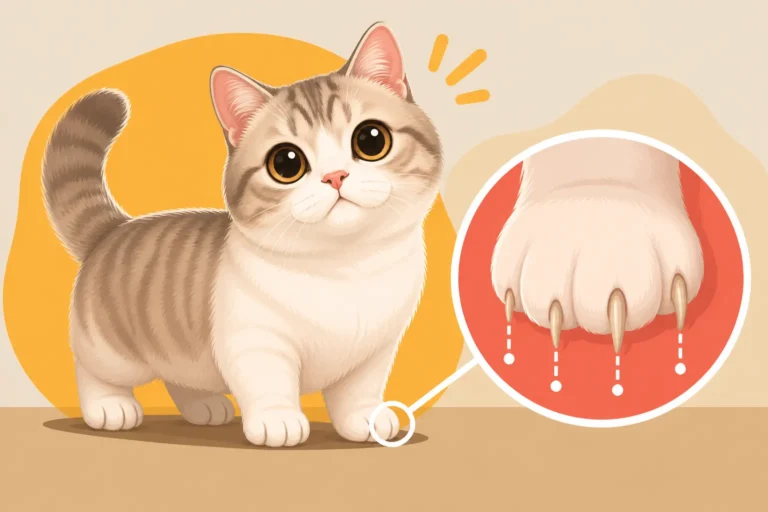
Regular scratching helps shed the outer layers of their claws, keeping them sharp and healthy. Without appropriate scratching surfaces, claws can become overgrown, leading to discomfort, difficulty walking, and even infections if they curl back into the paw pads. This is a common problem with indoor cats if their environment isn't properly set up. Ensuring your Munchkin has accessible and appealing scratching options is paramount for their physical well-being and mental satisfaction. Ignoring this instinctual need can lead to stress, destructive behavior, and potential health issues down the line. Remember, Why a Munchkin Cannot Stretch Up a Scratching Post is a fundamental truth we need to work around, not against.
Types of Scratching Posts That Do Work for Munchkins
Now that we understand why standard posts don't cut it, let's talk about the solutions. The good news is there are plenty of excellent scratching options available that are perfectly suited for your short-legged companion. It’s all about rethinking what a "scratching post" can be.
Horizontal Scratchers and Mats
These are often overlooked but are absolute gold for Munchkins. Horizontal scratchers lie flat on the floor, allowing your cat to lean over them or stand on them to scratch. This position provides a comfortable angle for a Munchkin to engage their claws and get a satisfying stretch without having to reach upwards. They can really lean into the scratch, getting the full body workout they need.
You'll find these in various forms:
- Cardboard Scratchers: These are very popular, often shaped as flat rectangles, waves, or even bowls. Cats love the texture and the satisfying shredding sound. They're affordable and disposable. Many online retailers like Chewy or Amazon offer a huge variety.
- Sisal Mats or Pads: Made from durable sisal fabric, these can be laid flat on the floor or even tacked onto a wall at a low height. Sisal is a tough, fibrous material that mimics tree bark, a natural scratching surface for cats. They are more durable than cardboard.
- Carpet Pads: While less ideal than sisal for promoting full claw shedding, some Munchkins might prefer the texture of a carpet scratcher, especially if they've already taken a liking to your carpet or rugs. Just ensure it's a durable, loop-pile carpet, not a cut-pile that can snag claws.
These types of scratchers are fantastic because they meet the Munchkin exactly where they are – on the floor. They encourage natural scratching behaviors without putting any strain on their unique physique.
Low-Profile Vertical Posts
Just because a Munchkin can't reach a tall post doesn't mean all vertical posts are out. The key here is "low-profile." Think of posts that are sturdy, stable, and crucially, short. A post that’s perhaps 12-18 inches high might be perfect, allowing them to stand on their hind legs to reach the top, or to stretch fully horizontally along its length.
When choosing a low-profile vertical post, look for:
- Height: Ideally, the scratching surface shouldn't be much higher than your Munchkin can comfortably reach while standing on their hind legs or stretching out. Some Munchkins can manage a good stretch on a 15-inch post, while others prefer something even shorter. Observing your cat is key.
- Stability: This is non-negotiable. A wide, heavy base is essential. If a vertical post wobbles even slightly, a Munchkin will likely avoid it. You want them to feel completely secure when they dig in their claws.
- Material: Again, sisal rope or sisal fabric wrapped tightly around the post is generally the best choice. It provides excellent claw-grabbing texture and durability.
A low-profile vertical post can still provide that satisfying upright scratch for a Munchkin, but it needs to be scaled to their size. Many cat furniture lines, including those found on Amazon, now offer smaller, more compact scratching posts that can be ideal.
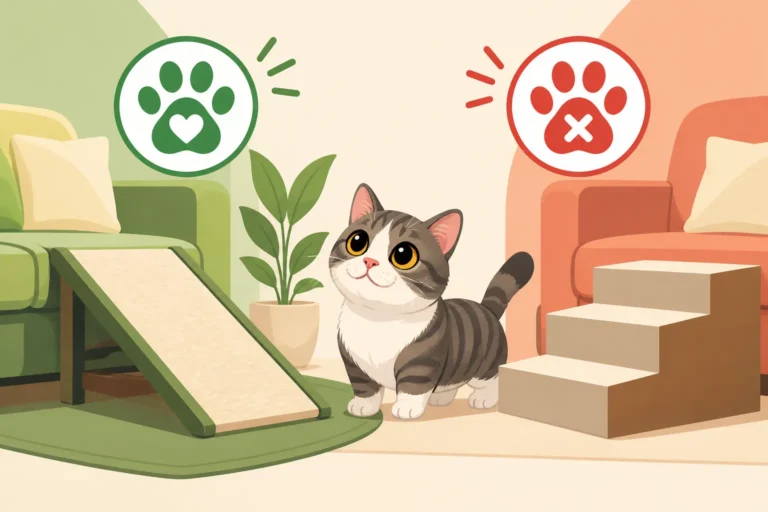
Incline and Ramp Scratchers
These are brilliant inventions for Munchkins, cleverly combining the benefits of horizontal and vertical scratching. An incline scratcher is essentially a flat scratching surface that is angled upwards, like a ramp. This allows a Munchkin to approach it from the lower end and scratch upwards at an angle that feels much more natural than a purely vertical stretch.
The incline helps them get a good stretch along their back and sides without requiring them to lift their entire body weight against gravity for an extended period. It also mimics the natural angle many cats adopt when scratching the side of a sofa or the leg of a chair.
Consider these variations:
- Cardboard Incline Scratchers: These are very popular and come in various angles. They're great for introducing the concept to your Munchkin.
- Sisal Incline Ramps: More durable, these can be standalone pieces or integrated into smaller cat structures. They offer a robust scratching surface that will last longer.
- Ramp access to furniture: If your Munchkin uses ramps to get onto the sofa or bed, consider a ramp that also doubles as a scratching surface. This integrates their mobility aid with their scratching needs. These thoughtful designs help with How a Munchkin Gets Where It Wants Without Jumping and overall house adaptation.
Incline scratchers offer a versatile solution, especially for Munchkins who enjoy both horizontal and vertical scratching, but with a comfortable, accessible angle.
Key Features to Look For in a Munchkin Scratching Post
Beyond the type of scratcher, certain features are universal indicators of a good scratching post for any cat, but they become even more critical when you're catering to a Munchkin's specific needs. Getting these right can make all the difference in whether your Munchkin adopts their new scratcher with enthusiasm or continues to eye your carpet.
Material Matters: Sisal, Cardboard, Carpet
The material of the scratching surface is incredibly important for stimulating a cat's natural desire to scratch and providing effective claw care.
- Sisal: This is often considered the gold standard for scratching posts, and for good reason. Sisal fiber is extremely durable, offering a rough, coarse texture that cats love to sink their claws into. It provides excellent resistance, allowing cats to get a deep, satisfying scratch that helps remove the outer layers of their claws efficiently. It's also very resilient and holds up well to repeated use. For a Munchkin, sisal rope wrapped tightly around a low vertical post or sisal fabric on a mat or incline is ideal because it provides the friction and durability they need to keep their claws in top condition.
- Cardboard: Corrugated cardboard scratchers are a fantastic and affordable option. Cats adore the sensation of tearing and shredding the cardboard, and the ripping sound can be very satisfying for them. While less durable than sisal, their low cost means you can easily replace them when they wear out. They are perfect for horizontal and incline scratchers and are readily available from pet retailers like Chewy or even general online marketplaces like Amazon. They're also lightweight, making them easy to move around and experiment with different placements.
- Carpet: This can be a bit of a mixed bag. Some cats prefer scratching carpet, especially if they've already gotten into the habit of scratching your home's carpeting. However, many veterinarians and cat behaviorists recommend against carpet-covered posts as a primary scratching solution. The pile of carpeting can sometimes be too soft or inconsistent, not providing the firm resistance needed for a full claw shed. Moreover, if your cat gets used to scratching carpet-covered posts, they might find it harder to distinguish between their designated scratcher and your living room rug! If you do opt for carpet, look for a durable, dense, low-pile loop carpet, as plush, cut-pile carpets can snag claws and pull threads. Generally, sisal or cardboard offers superior benefits for claw health.
Stability and Base Design
For a Munchkin, a scratching post's stability isn't just a convenience; it's a safety and comfort issue. Because they are closer to the ground, any wobble in a vertical or inclined scratcher will be more pronounced and feel less secure to them. They need to feel absolutely confident that the post will stay put when they lean into a powerful scratch.
When evaluating stability:
- Wide, Heavy Base: This is the most crucial factor. The base of any vertical or incline scratcher should be significantly wider than the scratching surface itself. A heavier base, perhaps weighted with a dense material, will further prevent tipping. Imagine a sturdy tree trunk versus a flimsy sapling – your Munchkin needs the former.
- Non-Slip Bottom: Check if the base has rubber feet or a non-slip pad. This will keep the scratcher from sliding across hard floors when your cat uses it, further enhancing their sense of security.
- Construction Quality: Look for solid construction. The scratching material should be securely attached, and if it's a post, the parts should fit together snugly without any give or looseness. A cheap, flimsy post that wobbles will quickly be abandoned, and rightfully so. This is especially important if you're looking at What a Cat Tree With Close Set Platforms Costs as they often have scratching surfaces integrated.
Appropriate Height and Reach
This is where the "Munchkin factor" truly comes into play. For horizontal scratchers, height isn't an issue, but for vertical and incline options, it's paramount. The goal is to provide a scratching surface that allows your Munchkin to stretch their entire body comfortably without straining.
- Observing Your Cat: The best way to determine the ideal height is to observe your own Munchkin. Watch how they stretch when they wake up, or if they try to scratch existing surfaces. Do they typically stretch horizontally along the floor? Or do they try to reach up slightly?
- Horizontal Stretch: For vertical posts, ensure the post is short enough that your Munchkin can comfortably scratch at floor level, or lean into it for a horizontal stretch. If they stand up on their hind legs to scratch, the top of the scratching surface should ideally be no higher than their shoulders when they're in that "prairie dog" stance.
- Incline Angle: For incline scratchers, ensure the angle isn't too steep. A gentle slope is usually preferred, allowing for easy access and a comfortable scratching position. Too steep, and it essentially becomes a vertical post they can't quite manage.
- Testing: When you bring a new scratcher home, place it in a low-traffic area initially and observe your cat's interaction. If it's too tall, they might only scratch the very bottom, or not at all. You want to see them really dig in and extend their body. This approach connects to the larger idea of Why a Munchkin's House Costs More Than the Cat – it's about adapting the environment to their physical reality.
Placement and Encouraging Use
You've picked out the perfect Munchkin-friendly scratcher – congratulations! But simply putting it in a corner and hoping for the best isn't always enough. Strategic placement and a little encouragement are key to making it your cat's go-to spot for claw care and stretching.
Strategic Placement for Maximum Appeal
Cats are creatures of habit and territory, and where you place their scratching posts matters a great deal. Think about where your cat naturally likes to scratch or stretch.
- Near Sleeping Spots: Cats often enjoy a good stretch and scratch right after waking up from a nap. Placing a horizontal scratcher or a low vertical post near their favorite napping spots – whether it's their bed, a sunny windowsill, or a comfy sofa – will make it highly accessible and appealing. If they can easily roll off a nap and right onto a scratcher, they're much more likely to use it.
- High-Traffic Areas: Cats scratch to mark their territory. Placing scratchers in prominent areas where your Munchkin spends a lot of time, or in entryways, helps them feel like they're "owning" the space. This might be in the living room where the family gathers, or a hallway they frequently trot through. Don't hide it away in a back room; make it part of their daily routine.
- Next to "Off-Limits" Furniture: If your Munchkin has developed a habit of scratching the sofa, a chair, or a door frame, place an appropriate scratcher directly in front of or right next to that forbidden spot. This gives them an approved alternative exactly where they feel the urge to scratch. Once they start using the scratcher, you can gradually try to move it a few inches away from the furniture over time, but always keep it accessible.
- Consider Multiple Locations: Don't limit yourself to just one scratcher! Cats often like to have multiple options in different areas and with varying textures. Place a horizontal one in one room, a low vertical one in another, and an incline scratcher where they like to stretch. For more ideas on effective placement, you can refer to Where to Put a Munchkin's Scratcher.
Enticing Your Munchkin to Scratch
Sometimes, cats need a little persuasion, especially if they're used to scratching other surfaces or if a new scratcher feels unfamiliar.
- Catnip: This is often a go-to for a reason! Sprinkle fresh catnip flakes on the scratcher or use a catnip spray. The intoxicating scent can attract your Munchkin and encourage them to investigate and, hopefully, scratch. For younger kittens, silvervine or valerian root can be good alternatives if catnip doesn't elicit a response.
- Treats and Praise: When you see your Munchkin using the scratcher, offer immediate praise and a small, healthy treat. Positive reinforcement goes a long way. Make it a rewarding experience for them. Many healthy cat treats are widely available.
- Interactive Play: Use a wand toy to "lead" your Munchkin to the scratcher. Drag the toy along the surface, encouraging them to bat at it and inadvertently sink their claws into the designated scratching material. This can create a positive association with the scratcher. Play sessions are crucial, and How Much Floor Level Play a Munchkin Needs reinforces the importance of engaging them at their level.
- Show Them How (Gently): You can gently take your Munchkin's paws and demonstrate the scratching motion on the post. Be very gentle and never force it. The goal is to show them the texture, not to make them uncomfortable. Most cats will quickly understand once they feel the satisfying resistance.
- Scent Marking: You can also rub some of your Munchkin's scent onto the new scratcher. Gently rub a cloth or soft brush on their cheeks (where they have scent glands) and then rub it on the scratcher. This marks it as "theirs" and can make it more inviting.
Rotating and Maintaining Scratchers
Scratching posts aren't meant to last forever. Like any tool, they wear out, and keeping them in good condition is important for your Munchkin's continued use and enjoyment.
- Rotation: If you have multiple scratchers, consider rotating them every few weeks or moving them to different locations. Sometimes a change of scenery can renew interest. It also helps distribute wear and tear.
- Replacement: Cardboard scratchers, in particular, will need to be replaced regularly once they are heavily shredded and no longer offer a good scratching surface. Sisal posts are more durable but will eventually fray. Don't wait until it's completely unusable. A worn-out scratcher is an unappealing scratcher.
- Cleaning: While cats are generally clean, scratching posts can collect fur, dust, and catnip residue. Give them a good brush or vacuum periodically to keep them tidy. For sisal, a damp cloth can wipe away surface dirt.
- Observing Wear Patterns: Pay attention to how your Munchkin is wearing down their scratchers. If one side is heavily used while another is ignored, it might tell you about their preferred angle or approach. This information can help you decide on your next purchase or how to position the current one.
- Reinforce Good Habits: Even after your Munchkin is regularly using their scratchers, continue to praise them. Consistency in positive reinforcement helps solidify the good habit.
DIY Scratching Solutions for Savvy Owners
Sometimes, the perfect scratching post isn't found in a store, or you simply enjoy a good DIY project. Creating your own Munchkin-friendly scratchers can be a rewarding and cost-effective way to meet their needs, allowing for full customization to their exact preferences and your home's aesthetic.
Simple Cardboard Creations
Cardboard is an incredibly versatile and affordable material for DIY cat scratchers. It's often readily available from recycling, making it an eco-friendly option too. Plus, cats love tearing into it!
- Stacked Cardboard Blocks: Collect clean, sturdy cardboard boxes. Cut them into squares or rectangles of varying sizes. Then, stack them horizontally or in an offset pattern, securing them together with non-toxic glue (like Elmer's glue) or heavy-duty packing tape. The goal is to create a multi-layered block with exposed corrugated edges. Your Munchkin can then scratch at the exposed edges from all sides. You can even cut a hole in the middle and stack them around it to create a scratching tunnel. This provides a wonderfully textured surface that's inherently low to the ground.
- Cardboard Ramp: Take a large, flat piece of corrugated cardboard and bend it into a gentle ramp shape. You can use smaller cardboard pieces as supports underneath to maintain the angle. This creates an instant incline scratcher. Secure everything firmly with strong tape or glue. You can also make a sturdy base from another piece of cardboard.
- Custom Shapes: Don't be afraid to get creative. You can cut cardboard into fish shapes, circles, or anything that might appeal to your Munchkin. The key is to ensure there are plenty of corrugated edges exposed for scratching. These can be laid flat or leaned against a wall at a low, safe angle. Always ensure any tape or glue used is secure and won't detach easily for your cat to ingest.
Repurposing Household Items
Before you head to the pet store, take a look around your house. You might have items that can be repurposed into functional and appealing scratchers for your Munchkin, often with minimal effort.
- Old Rugs or Carpet Remnants: If you have an old, durable rug or carpet remnant with a tight, low pile (preferably sisal or a similar robust weave), you can transform it. Lay it flat on the floor, perhaps with a non-slip backing, or secure it to a piece of plywood to make it more stable. You can even attach it securely to the bottom part of a wall or a piece of furniture that your Munchkin has been targeting, effectively covering the 'forbidden' area with an approved scratching surface. Just ensure there are no loose threads that could snag claws.
- Wooden Planks or Logs: For a truly natural feel, consider a small, untreated piece of wood. A sturdy, clean log (from a non-toxic tree species) or a thick, rough-sawn plank can make an excellent scratching surface. Sand any sharp edges, but leave the main surface textured. Place it horizontally on the floor. Some cats love the feeling of scratching wood. Just ensure it’s stable and won't roll or tip. You can even wrap a small, heavy wooden block with sisal rope to create a durable, low-profile scratching post. This can be a great way to provide a sturdy scratching option that is exactly the right height for your Munchkin without any vertical challenge.
- Carpeted Stairs (Modified): While repeated stair use (Why a Munchkin Should Not Use Stairs Repeatedly) is a valid concern for their long-term joint health, if you have carpeted stairs, a single low step might be used occasionally. You could even adapt a low step or ramp with a sisal overlay. This isn't about encouraging full stair use, but leveraging existing structures with the right material for a quick scratch.
When repurposing, always prioritize safety: ensure materials are non-toxic, free of splinters or sharp edges, and securely fixed so they won't wobble or collapse when your Munchkin uses them.
What to Avoid: Common Mistakes to Sidestep
Just as important as knowing what to get is understanding what not to get or do. Avoiding common pitfalls can save you money, prevent frustration, and most importantly, keep your Munchkin safe and happy.
Tall, Unstable Cat Trees
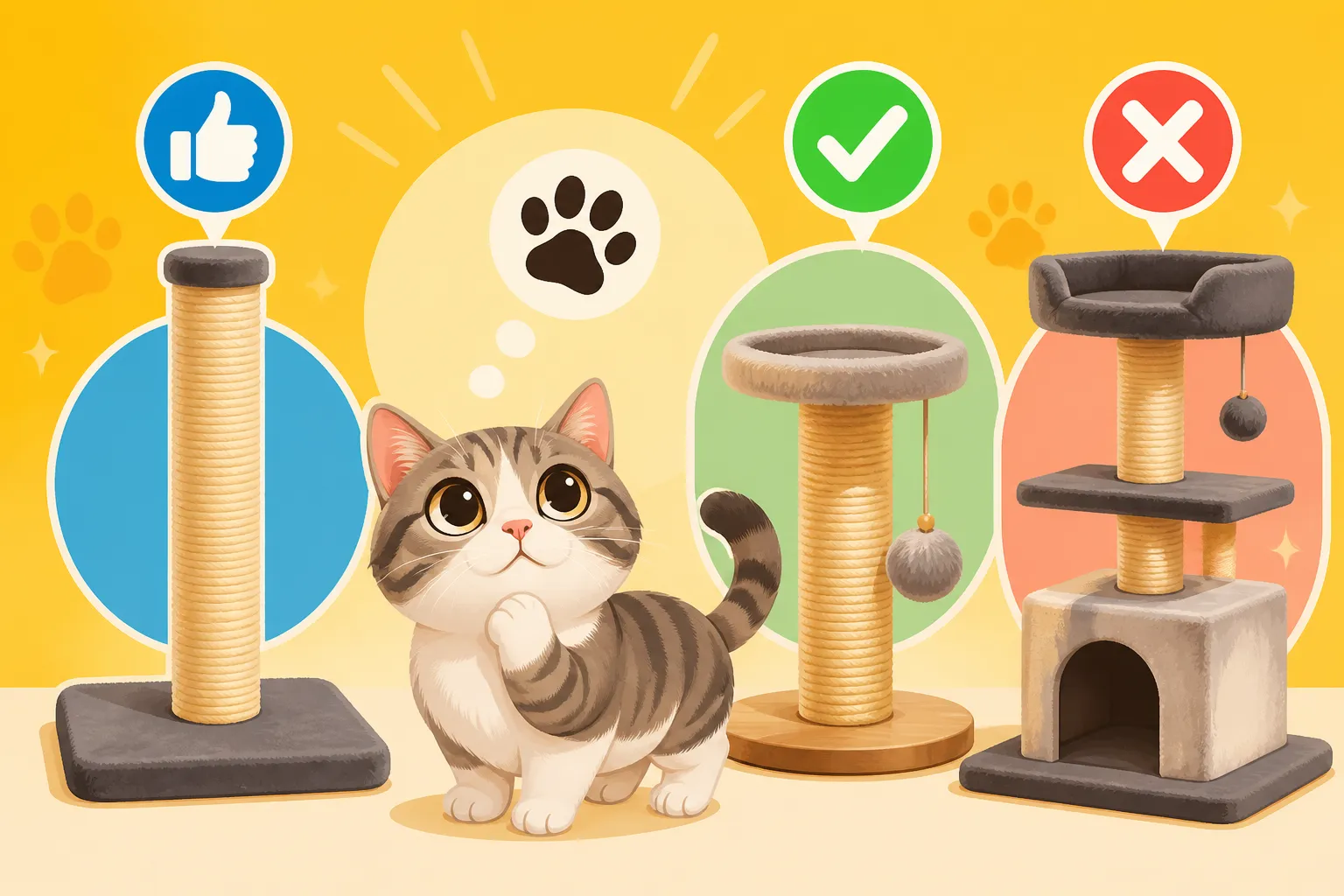
This is perhaps the biggest mistake new Munchkin owners make. A majestic, multi-level cat tree with towering scratching posts might look impressive in the pet store, but it’s often completely impractical – and potentially dangerous – for a Munchkin.
- Inaccessibility: The primary scratching areas on most large cat trees are far too high for a Munchkin to comfortably reach. They simply cannot get the full, satisfying stretch required, leading to disinterest. They might try to use the very bottom, but the upper sections become expensive, unused furniture.
- Balance Issues: Even if a Munchkin could somehow reach a higher scratching area, the act of scratching requires leverage and balance. A tall, possibly swaying post can feel precarious to a short-legged cat, making them feel insecure and unlikely to engage.
- Safety Risk: The biggest concern is the risk of falls. While Munchkins are surprisingly agile, a misjudged jump or slip from a height not designed for their physical capabilities can lead to injury. Their short legs mean they don't have the same shock absorption or reach to correct a fall as a long-legged cat. Remember, How Far Apart a Munchkin's Platforms Should Be on a cat tree designed for them is far closer than on a standard tree. If a cat tree has platforms that are too far apart, it's not a safe environment for a Munchkin. Opt for low-level, sturdy cat furniture with close-set platforms and integrated ramps if you want vertical enrichment, rather than tall, exposed scratching posts.
Carpet-Covered Posts (Sometimes)
As mentioned earlier, carpet-covered posts can be a tricky area. While some cats will use them, they are generally not the most effective for claw health and can create bad habits.
- Ineffective Claw Maintenance: The pile of many carpets (especially plush ones) is often too soft or too easily torn for a cat to get a truly effective claw shed. They might scratch, but their claws might not get properly sharpened or maintained, leading to overgrown claws that still need attention. Sisal provides superior resistance and texture for this purpose.
- Confusion for Your Cat: If your scratching post is covered in the same kind of carpet as your floor or sofa, your Munchkin might not understand the distinction. They learn "carpet is okay to scratch," which is precisely what you want to avoid on your expensive home furnishings! It's better to offer a distinct texture, like sisal or cardboard, that clearly signals "this is your scratching spot."
- Durability: Carpet on scratching posts tends to wear out quickly, especially in high-traffic areas, and can look ragged much faster than sisal.
It's best to stick to sisal or corrugated cardboard for primary scratching surfaces. If your Munchkin insists on scratching carpet, use a durable sisal mat placed directly over the offending carpeted area as a transition tool.
Ignoring Your Munchkin's Preferences
Every cat is an individual, and Munchkins are no exception. What one Munchkin loves, another might ignore. A common mistake is assuming what should work will work, without observing your own cat's unique habits and preferences.
- Texture Preference: Some Munchkins adore the shredding sensation of cardboard, while others prefer the sturdy resistance of sisal. Some might like a mix. Pay attention to what they try to scratch in your home (even if it's the wrong thing!) to get clues.
- Scratching Angle: Does your Munchkin prefer to stretch horizontally along the floor? Or do they frequently try to stand up and reach for things? This will tell you whether a horizontal mat, a low vertical post, or an incline scratcher will be their favorite. This ties into the discussion on Whether a Horizontal Scratcher Suits a Munchkin.
- Location Preference: Where do they spend most of their time? Where do they usually stretch or scratch after waking? Their chosen spots are prime real estate for a new scratcher.
- Don't Give Up After One Try: If your Munchkin ignores the first scratcher you buy, don't despair! It doesn't mean they won't use any scratcher. It just means that particular one, in that particular spot, isn't their jam. Try a different type, a different material, or a different location. Persistence and observation are key to finding the perfect match for your individual Munchkin cat.
By understanding these common mistakes and actively observing your Munchkin, you can create a scratching environment that promotes their health, happiness, and protects your home.
Disclaimer
This article is for general informational purposes only and does not constitute professional advice. Laws, prices and regulations vary by location and change over time. Consult a qualified professional for guidance on your specific situation.