Why a Munchkin’s Pedigree Should Show Its Outcrosses
When you welcome a Munchkin into your home, you're not just getting a cute, short-legged companion; you're also taking on the responsibility of understanding their unique genetic background. Many new owners don't realize how crucial it is for a Munchkin's pedigree to clearly detail its outcrosses, and without this information, you could be left guessing about potential health predispositions and the true heritage of your beloved cat. This guide will walk you through why transparency in a Munchkin's lineage, especially regarding outcrosses, is absolutely vital for their health and your peace of mind.
The Foundation of the Munchkin Breed and Outcrossing Needs
The Munchkin breed's very existence hinges on a spontaneous genetic mutation that gives them their characteristic short legs. Unlike many established breeds that have centuries of documented lineage, the Munchkin is a relatively modern breed, and its development has always relied heavily on outcrossing to maintain genetic diversity and health. This process is often misunderstood, but it’s a cornerstone of responsible Munchkin breeding.
Understanding the Munchkin Gene Pool's Origins
The story of the Munchkin begins with a stray cat named Blackberry found under a truck in Louisiana in 1983. She was a short-legged cat, and her unique trait was passed on to her kittens. From these humble beginnings, breeders began to develop what we now know as the Munchkin breed. Right from the start, it was understood that to establish a healthy breed, these short-legged cats couldn't just breed among themselves. The initial gene pool was tiny, essentially just Blackberry and her son Toulouse. To avoid inbreeding depression and to ensure the breed remained robust, careful outcrossing to non-Munchkin domestic cats was – and still is – absolutely necessary. This is why Blackberry and Toulouse Are the Two Cats Behind Every Munchkin.
Imagine trying to build a sturdy house with only a handful of bricks. You'd quickly run out of unique shapes and eventually have to reuse the same ones over and over, leading to structural weaknesses. The same principle applies to cat breeding. A narrow gene pool increases the risk of genetic problems becoming widespread. By bringing in unrelated domestic cats, breeders introduce fresh genetic material, expanding the overall health and vigor of the Munchkin lines. This is a deliberate and crucial strategy to prevent issues that can arise from limited genetic diversity.
Without this continuous infusion of new blood, the breed would quickly become vulnerable to a host of health problems. It's not just about the short legs; it's about everything else that makes a cat healthy – strong immune systems, good organ function, and resilient temperaments. Each outcross cat contributes its own genetic strengths, which are then integrated into the Munchkin lines. This responsible approach ensures that while the defining short legs are retained, the overall health of the breed is prioritized.
Why Outcrossing is Essential for Munchkin Health
Outcrossing is not merely an optional step; it's a fundamental pillar of ethical Munchkin breeding. The Munchkin gene itself, while causing the distinctive short legs, is also associated with certain health considerations, and responsible breeders are keenly aware of these. The short-legged gene is dominant, meaning only one copy is needed for a cat to have short legs. However, if a kitten inherits two copies of the short-legged gene, it is lethal, and the embryos do not survive. This means a Munchkin must always be bred to a normal-legged cat (an outcross or a long-legged Munchkin from a previous outcross) to avoid this lethal combination.
The role of outcrossing goes beyond preventing the lethal homozygous gene combination. It actively works to broaden the genetic base, mitigating the risk of hereditary diseases that can become prevalent in closed gene pools. Think of it like diversifying your investments; you wouldn't put all your eggs in one basket. Similarly, breeders don't want to concentrate undesirable recessive genes that might be hidden in a small group of cats. By introducing diverse domestic cats, the chances of two carriers of the same undesirable gene breeding together are significantly reduced. This proactive approach helps to maintain the vitality and longevity of the breed.
Furthermore, outcrossing allows breeders to introduce desirable traits from other domestic cats, such as specific coat colors, patterns, or temperaments, while retaining the Munchkin's core physical characteristics. For instance, a breeder might use a healthy domestic shorthair outcross known for its excellent dental health or robust immune system. This strategic blending helps create well-rounded, healthy Munchkins. This process is Why the Munchkin Gene Pool Stays Wide and ensures genetic strength rather than genetic fragility.
What a Pedigree Reveals About a Munchkin's Ancestry
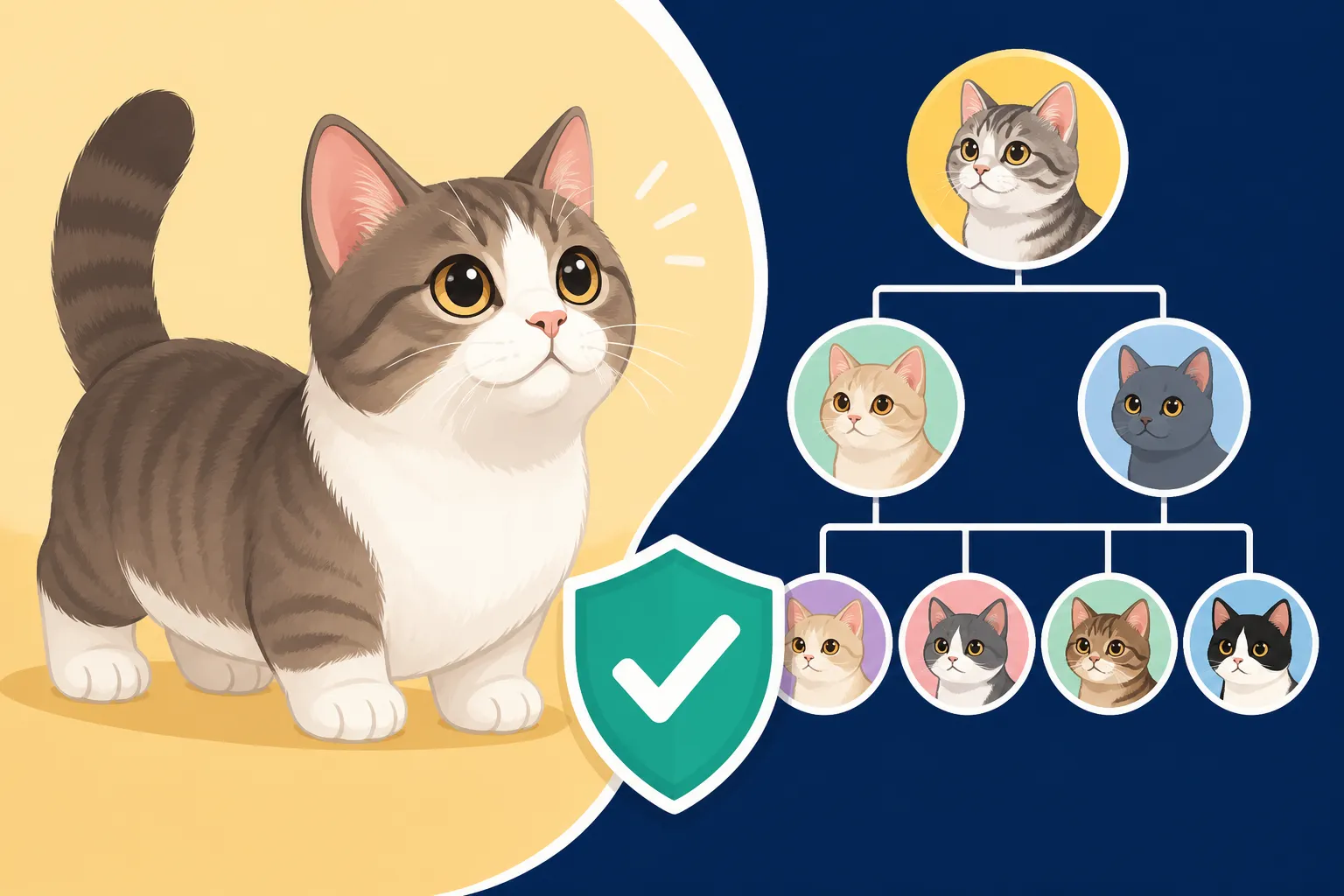
A pedigree is far more than just a family tree for your cat; it's a vital document that tells a story of generations. For Munchkin owners, understanding this story, especially the presence and type of outcrosses, is paramount. It provides insights into the genetic makeup of your cat and helps you anticipate potential health considerations.
Decoding the Lineage: Beyond Just Names
When you look at a Munchkin pedigree, you'll see names, dates, and sometimes registration numbers. But the real gold is in identifying the outcrosses. These are the domestic cats of various breeds or even mixed backgrounds that were introduced into the Munchkin lines to diversify the gene pool. Typically, the outcross cats themselves will have normal leg length. Their inclusion ensures that the Munchkin's overall health profile remains strong. A pedigree should list these outcrosses clearly, indicating not just that an outcross occurred, but often the breed or type of cat used. For example, you might see "Domestic Shorthair" or "DMH" listed. This is crucial for tracing the true genetic influences on your cat.
Without proper documentation of outcrosses, a pedigree is incomplete and can hide potential issues. It's like having a puzzle with missing pieces; you don't get the full picture. A breeder who is transparent about their outcrosses is showing a commitment to the health and integrity of their lines. They are not just breeding for short legs, but for robust, healthy cats. For example, if a pedigree shows a Persian outcross, a responsible owner knows to ask about screening for Polycystic Kidney Disease (PKD), a common genetic issue in Persians, even if the Munchkin itself doesn't show symptoms. Knowing this allows for proactive care and screening, potentially preventing serious health problems down the line. It's about being prepared and informed. This is why Which Cats a Munchkin May Be Outcrossed To is so relevant.
Consider a hypothetical scenario: You adopt a Munchkin kitten, and its pedigree vaguely mentions "outcross" without specifics. Years later, your cat develops an unusual health condition. Without knowing the full lineage of the outcrosses, your vet might have a harder time diagnosing hereditary predispositions. Conversely, if you know a particular outcross was a Maine Coon, for instance, your vet could immediately consider conditions like Hypertrophic Cardiomyopathy (HCM) which are prevalent in that breed, allowing for targeted testing and earlier intervention. The pedigree acts as a genetic roadmap, guiding both owners and veterinarians in providing the best possible care for your Munchkin.
Identifying Potential Health Risks Through Outcrosses
The breeds chosen for outcrossing have their own genetic predispositions, and these can be inadvertently introduced into the Munchkin lines. This isn't necessarily a bad thing, as long as breeders are aware and screen for them. The problem arises when this information is hidden or unknown. For instance, if a Munchkin's pedigree shows a Persian in its recent ancestry, there's a possibility of inheriting the gene for Polycystic Kidney Disease (PKD). Similarly, a Sphynx outcross could introduce predispositions for certain heart conditions or skin issues. A well-documented pedigree with clear outcross information empowers you to discuss these specific risks with your veterinarian and take preventative measures. This is why Why a Munchkin From a Persian Cross Needs a PKD Test is a critically important consideration for prospective owners.
This transparency allows for proactive health management. For example, if you know your Munchkin has a specific outcross, you might be more diligent about certain health screenings as they age. Your vet might recommend earlier kidney screenings, heart scans, or joint evaluations depending on the outcrosses. This isn't about fear-mongering; it's about being an informed and responsible pet parent. Pet insurance providers like Healthy Paws often cover hereditary conditions, but knowing your cat's specific predispositions can help you choose the right plan and be proactive with early detection, which can sometimes impact coverage.
Conversely, some outcrosses are considered highly controversial due to the potential for stacking skeletal mutations. A common example is crossing a Munchkin with a Scottish Fold, creating a cat that inherits two distinct skeletal conditions – the short legs of the Munchkin and the folded ears of the Scottish Fold, which is caused by an osteochondrodysplasia. This combination significantly increases the risk of severe skeletal problems, including painful arthritis and spinal issues. Therefore, seeing a Scottish Fold outcross in a pedigree should raise significant red flags. This is precisely Why a Munchkin From a Scottish Fold Cross Is a Warning and understanding such entries on a pedigree is vital for advocating for the cat's welfare.
Table: Common Outcrosses and Associated Health Considerations
| Outcross Breed (Example) | Potential Health Considerations (Inheritable) | Importance of Transparency |
|---|---|---|
| Domestic Shorthair/Longhair | Generally broad genetic diversity, minimal specific inherited risks if healthy. | Ensures genetic breadth, reduces general inbreeding risks. |
| Persian | Polycystic Kidney Disease (PKD), Hypertrophic Cardiomyopathy (HCM). | Allows for screening (e.g., ultrasound for PKD, echocardiogram for HCM). |
| Sphynx | Hypertrophic Cardiomyopathy (HCM), Hereditary Myopathy (muscle weakness). | Requires heart screening, awareness of muscle issues. |
| Maine Coon | Hypertrophic Cardiomyopathy (HCM), Hip Dysplasia. | Requires heart screening, orthopedic checks. |
| Burmese | Hypokalemic Polymyopathy (muscle weakness), Craniofacial Defects. | Awareness of neurological/muscular signs. |
| Scottish Fold | Osteochondrodysplasia (cartilage/bone defects causing folded ears, severe arthritis). | Major red flag. Indicates stacking of skeletal mutations, high risk of pain and joint issues. |
This table clearly illustrates how the specific outcrosses can influence the health landscape of your Munchkin, underscoring the necessity of a fully transparent pedigree.
The Importance of Transparency for Responsible Breeding and Ownership
Transparency in pedigree records, particularly concerning outcrosses, is a cornerstone of responsible breeding practices and empowers owners to make informed choices. It's about honesty, accountability, and the long-term well-being of the breed and individual cats.
Breeder Accountability and Informed Decisions
Responsible Munchkin breeders understand that their commitment extends far beyond the sale of a kitten. They are guardians of the breed's future, and that includes maintaining comprehensive and transparent records of their breeding lines. This means openly sharing information about the outcrosses used, the health screening results of parent cats (both Munchkin and outcross), and any known predispositions within their lines. A breeder who willingly provides this detailed pedigree information, and can explain the 'why' behind their outcross choices, demonstrates integrity and a genuine concern for their cats. They should be able to show you What a Munchkin Breeder Should Be Able to Show You when you visit.
Conversely, a breeder who is vague about outcrosses, or tries to dismiss the importance of pedigree information, should be a significant cause for concern. This lack of transparency can indicate an attempt to hide less-than-ideal breeding practices, such as inbreeding too closely or using outcrosses with known health issues. Imagine buying a car without knowing its service history; you'd be taking a huge risk. The same applies to a living creature. As potential owners, it's your right, and frankly your responsibility, to ask for detailed pedigrees and question any missing information. You want to ensure you're getting a kitten from a line that prioritizes health over pure aesthetics or novelty.
Furthermore, transparency allows owners to understand the potential genetic contributions to their cat's overall health, even beyond the direct risks of specific diseases. It can shed light on temperament tendencies, typical size, and even coat types that might emerge in future generations if the cat were to be bred (though most pet Munchkins are spayed/neutered). This holistic view helps to build trust between the breeder and the owner, fostering a relationship where the well-being of the cat is paramount. When considering a Munchkin, it's wise to ask not only about the pedigree but also to inquire about the health testing protocols for all cats in the breeding program, including the outcrosses. This due diligence ensures you're supporting ethical practices.
Protecting Your Munchkin's Future Health
Ultimately, knowing your Munchkin's outcross history through a detailed pedigree is about empowering you to protect their future health. This information enables you to work proactively with your veterinarian. For example, if you know there's a history of kidney issues in one of the outcross lines, your vet might recommend annual bloodwork starting at a younger age to monitor kidney function, rather than waiting for symptoms to appear. Early detection can make a world of difference in managing many health conditions, potentially leading to a better quality of life and even extending your cat's lifespan.
Beyond direct medical care, this knowledge can also influence daily care decisions. If you know your Munchkin has an outcross that predisposes them to joint problems (though Munchkins already have some joint considerations due to their unique conformation), you might be more diligent about weight management, providing joint supplements, and ensuring their environment is modified with ramps and steps to minimize jumping and impact. Foods and products that support joint health or specific dietary needs can be chosen once you understand potential predispositions. This isn't about being overly anxious, but about being equipped with the knowledge to provide the most tailored and attentive care possible.
Think of it as having a personalized health manual for your cat. Without knowing the outcrosses, you're missing several chapters. This can lead to delays in diagnosis or missed opportunities for preventative care. For instance, if a cat's outcross history isn't documented, and they start showing subtle signs of a hereditary condition, a vet might initially overlook it as a breed-specific trait or a general ailment. However, with the pedigree in hand, the vet can quickly narrow down potential genetic causes. This makes the pedigree an invaluable tool for lifelong care, ensuring that your Munchkin receives targeted attention for any vulnerabilities they might inherit. In essence, a transparent pedigree is a gift that keeps on giving, allowing you to provide the best possible care for your cherished companion throughout their life.
Disclaimer
This article is for general informational purposes only and does not constitute professional advice. Laws, prices and regulations vary by location and change over time. Consult a qualified professional for guidance on your specific situation.