How Often to Brush a Munchkin’s Back
If you're a Munchkin cat parent, you've probably noticed that while their playful antics and sweet personalities are just like any other feline, their unique physical structure presents a few specific care challenges. One of the most common frustrations? Keeping that adorable back free of mats and looking its best! It's not always easy for them to reach those spots themselves, which means it falls to us, their devoted humans, to lend a helping hand. This guide will walk you through exactly how often you should be brushing your Munchkin's back to keep them happy, healthy, and looking purr-fectly groomed.
Understanding the Unique Challenges of Grooming a Munchkin's Back
Let's be real, a Munchkin cat isn't just a regular cat with short legs; their entire physical dynamic changes how they interact with their world, and that includes their grooming habits. What might seem like a simple task for a long-legged cat becomes an Olympic-level feat for our little short-statured friends.
The Physical Limitations of Short Legs
The most obvious challenge, of course, is those delightfully short legs. While they are perfect for zipping around on the floor and doing that adorable "prairie dog" sit, they aren't quite designed for reaching around to the middle or base of their own spine. Imagine trying to scratch an itch in the middle of your own back without being able to fully extend your arms – that's a bit what it's like for a Munchkin. They can easily groom their front legs, their chest, their sides, and even their tails with relative ease. But that expanse of fur from their shoulders right down to their hindquarters? That becomes a real no-man's-land for self-grooming.
This means that areas that would naturally be kept clean and free of loose fur by a normal-legged cat's tongue and teeth often get neglected on a Munchkin. Dust, dander, loose hairs, and even tiny bits of debris from their environment can accumulate there, just waiting to form a tangle or, worse, a painful mat. It's not a sign of laziness on their part; it's simply a physical impossibility, and it's where we step in as their primary caretakers.
Why a Munchkin's Body Shape Matters
Beyond just the leg length, a Munchkin's overall body conformation plays a significant role in their grooming needs. While their legs are short, their body length and spine are typically of normal feline proportions. However, because they sit much closer to the ground, their underside and lower back areas have more frequent contact with surfaces. Think about how much closer their belly fur is to the floor, or how their entire body might brush against carpets, furniture, and even the sides of their litter box.
This increased contact means their fur can pick up more dirt, oils, and loose particles throughout the day. A long-legged cat might simply step over a small mess, but a Munchkin's low-slung body is more likely to sweep through it. This predisposition to getting a bit dirtier, combined with their inability to reach those areas, creates a perfect storm for matting and general coat issues on their back and hindquarters. Understanding this unique aspect of their physique helps us appreciate why a proactive grooming routine is absolutely essential.
Coat Type and Its Impact on Grooming Frequency
Just like any other cat breed, Munchkins come in a variety of coat lengths and textures, and this is a huge factor in determining how often their backs need brushing. A short-haired Munchkin will naturally have fewer issues with matting than a long-haired one, but that doesn't mean they're off the hook entirely.
Short-haired Munchkins still shed, and that loose fur can sit on their back, eventually clumping or contributing to hairballs when they do manage to lick parts of themselves. Regular brushing helps to remove this dead hair, distribute natural skin oils, and stimulate circulation, keeping their skin healthy and their coat shiny. For long-haired Munchkins, however, the grooming demands ramp up considerably. Their luxurious locks, while beautiful, are incredibly prone to tangles and mats, especially in those hard-to-reach areas of the back and around the hindquarters where friction is common. If left unchecked, these mats can quickly become tight, pulling on the skin and causing pain, discomfort, and even skin infections.
Establishing a Regular Brushing Routine for Your Munchkin
Consistency is truly key when it comes to grooming your Munchkin's back. It's not just about aesthetics; it's about their comfort, health, and preventing painful problems down the line. Tailoring your routine to their specific coat type will make all the difference.
How Often to Brush Short-Haired Munchkins
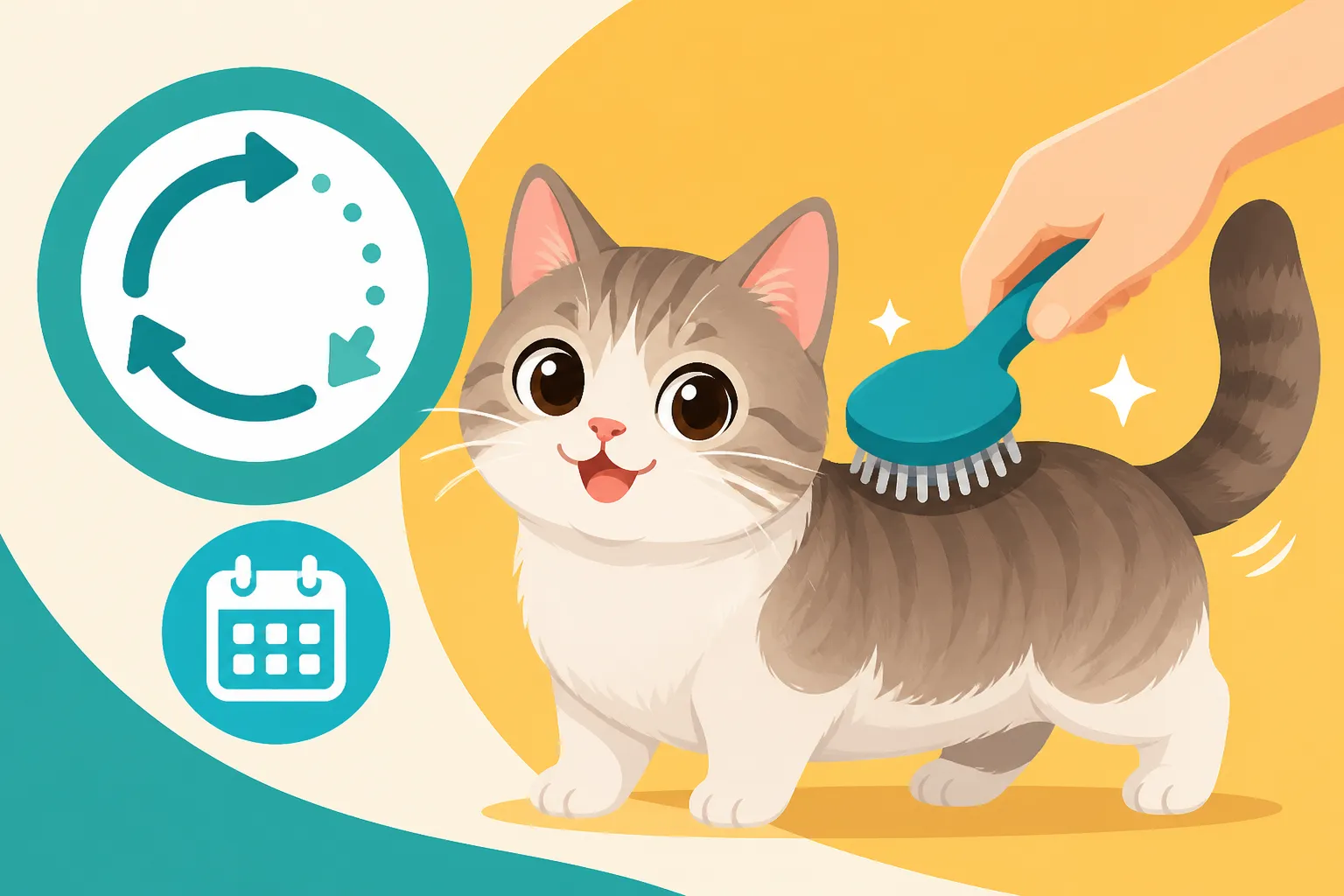
Even with a sleek, short coat, your Munchkin's back can accumulate loose hair and benefit immensely from regular brushing. While they might not be as prone to severe matting as their long-haired counterparts, daily shedding means there's always dead fur to remove. A good rule of thumb for a short-haired Munchkin is to aim for two to three times a week during most of the year. This frequency helps to remove shedding hair, prevents small tangles from forming, and distributes their natural skin oils, which contributes to a healthy, shiny coat. It also reduces the amount of hair they ingest during their limited self-grooming, potentially cutting down on hairballs.
During peak shedding seasons – typically spring and fall, but this can vary based on individual cats and indoor environments – you might find yourself needing to brush their back more frequently, even daily. You'll notice more fur coming off on the brush, and this is your cue to ramp up the routine. Tools like a rubber curry brush or a fine-toothed metal comb work wonders for short coats, gently lifting loose hair and stimulating the skin without pulling.
How Often to Brush Long-Haired Munchkins
For our gorgeous long-haired Munchkins, the brushing schedule for their back needs to be much more rigorous. If you've ever owned a long-haired cat, you know the struggle is real, and for a Munchkin, it's compounded by their inability to reach. These beauties absolutely require daily brushing of their back and hindquarters. Seriously, don't skip a day if you can help it! Their longer fur can tangle and mat at an astonishing rate, especially in areas with friction or where they can't reach with their tongues.
Neglecting a long-haired Munchkin's back for even a couple of days can lead to small knots that quickly escalate into painful, tight mats. These mats pull on their skin, restrict movement, and can hide skin irritations or parasites. Focus especially on the areas from their mid-back down to the base of their tail and their "pantaloons" or fluffy hind leg fur, as these are prime matting spots. I've covered how important it is to keep up with these areas in detail in How Often to Brush a Longhaired Munchkin's Back Half. Using a slicker brush followed by a wide-toothed comb will be your best friend in preventing these issues.
Recognizing When Your Munchkin Needs More Attention
Sometimes, even with a consistent schedule, your Munchkin might need a little extra TLC for their back. Learning to read the signs can prevent minor issues from becoming major problems. Keep an eye out for visible tangles or small mats forming, especially after a particularly active play session or if they've been lounging in a new spot. If their coat appears dull, greasy, or excessively flaky, it could be a sign that more frequent brushing is needed, or perhaps there's an underlying skin issue brewing.
Seasonal changes are another big indicator. Many cats "blow their coat" as seasons shift, shedding more heavily to adapt to temperature changes. During these times, even normally low-shedding Munchkins might benefit from daily brushing. Pay attention to how much hair comes off on the brush; if it's a lot, increase your frequency. Environmental factors like dry indoor air can also contribute to a dull, more static-prone coat that might tangle easier. If you notice your Munchkin scratching at their back more than usual or showing discomfort when touched there, it's definitely time for a closer inspection and potentially more frequent, gentle brushing. Remember, skin problems can start quickly under mats, so vigilance is key. If you suspect any underlying issues, or if you're seeing persistent skin irritation, it's always best to consult your veterinarian. How Skin Problems Start Under a Munchkin's Mats delves deeper into these concerns.
| Coat Type | Regular Brushing Frequency | During Shedding Season | Key Benefits |
|---|---|---|---|
| Short-Haired | 2-3 times per week | Daily | Removes loose fur, distributes oils, reduces hairballs, skin stimulation |
| Long-Haired | Daily | Daily (often twice) | Prevents mats/tangles, maintains coat health, minimizes discomfort |
Essential Tools and Techniques for Brushing a Munchkin's Back
Having the right arsenal of grooming tools and knowing how to use them gently and effectively is half the battle. You want to make the experience as comfortable and positive as possible for your little Munchkin, especially when tackling those areas they can't reach themselves.
Choosing the Right Brushes and Combs
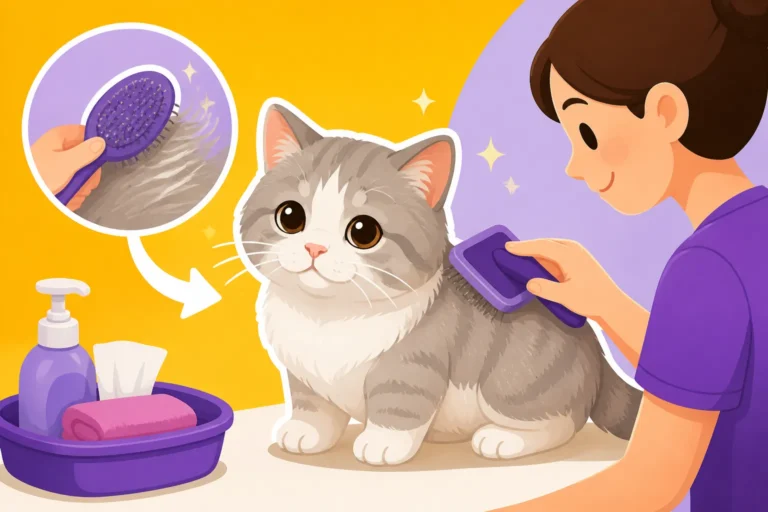
The type of brush you choose will depend heavily on your Munchkin's coat length and texture, as well as the specific task at hand. For short-haired Munchkins, a rubber curry brush or grooming mitt is fantastic. These brushes are gentle, help to massage the skin, and are very effective at lifting loose hair and dirt from short coats. A fine-toothed metal comb can also be used to check for any hidden tangles or remove dander.
For long-haired Munchkins, you'll likely need a combination of tools. A slicker brush with fine, wire bristles is excellent for getting through longer fur and removing mats, but use it with a very light hand to avoid scratching the skin. Follow up with a wide-toothed comb to ensure all tangles are removed and the fur is truly smooth. For really stubborn knots, a de-matting tool or a specialized mat splitter can be a lifesaver, but these should be used with extreme caution and only on the very edge of a mat to avoid cutting the skin. You can find a great selection of these on Amazon or Chewy, making it easy to stock up on all the essentials you'll need for a thorough grooming session.
Gentle Brushing Techniques for a Sensitive Spine
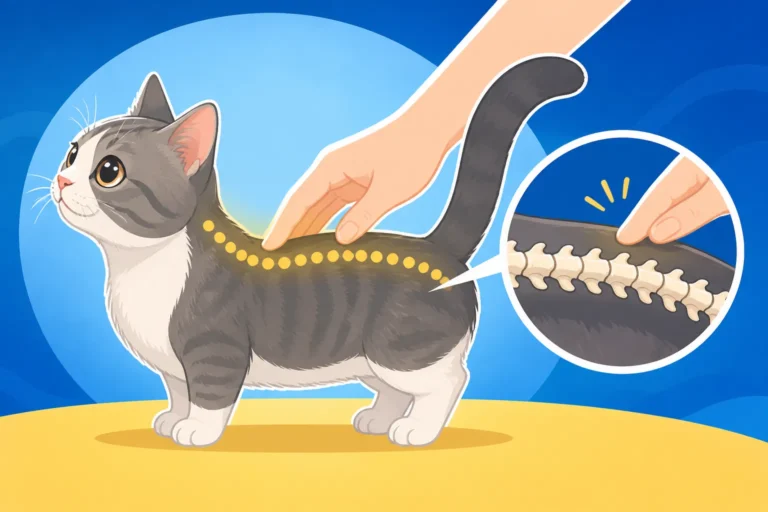
When brushing your Munchkin's back, gentleness is paramount. Their spine is typically of normal length and structure, but their overall conformation means you want to avoid any unnecessary pressure or twisting. Always start with very light strokes, especially if your Munchkin isn't used to being brushed or if you're tackling a new area. Use smooth, even motions, working with the direction of the hair growth. Never brush against the grain unless you are trying to lift out particularly stubborn loose undercoat, and even then, do it very gently.
Positioning your Munchkin comfortably is also key. Many cats prefer to be brushed while lying down on your lap or a soft, low surface where they feel secure. You might find it easier to work on their back if they are on a low table, allowing you to reach without bending over too much. Support their body gently with one hand while you brush with the other. If you encounter a tangle, do not pull! Instead, hold the fur at the base of the mat close to the skin with your fingers to prevent pulling on the skin, and then gently work the mat out with the wide-toothed comb, starting from the ends and working your way inward. Patience is crucial here. Learning how to hold and support your Munchkin properly during grooming, even for something like nail trims, is a skill that will benefit you both for life, as discussed in How to Hold a Munchkin for a Nail Trim.
Making Grooming a Positive Experience
Grooming shouldn't be a chore for either of you; it should be a bonding experience! To make brushing your Munchkin's back (or any part of them) a positive interaction, start early. Introduce grooming tools to a Munchkin kitten gently, allowing them to sniff and investigate the brushes. Keep initial sessions very short – just a minute or two – and always end on a positive note, with praise, a favorite treat, or a short play session.
As they get older, gradually increase the duration of your brushing sessions. If your Munchkin shows any signs of discomfort or stress, such as tail twitching, flattened ears, or attempts to bite or scratch, stop immediately. Pushing them will only create negative associations and make future grooming much harder. Instead, try again later, or shorten the session next time. Consistency, positive reinforcement, and understanding their body language are vital for building trust and making grooming something they tolerate, or even enjoy. It's all about slowly getting them used to the sensation, especially on areas like their back, as highlighted in Getting a Munchkin Used to Being Groomed on Its Back.
Beyond the Brush: Other Considerations for a Healthy Munchkin Back
While brushing is undeniably important for your Munchkin's back, it's just one piece of the puzzle. A truly healthy coat and skin are a reflection of their overall well-being, influenced by diet, environment, and when to seek professional advice.
Diet and Skin Health
What goes into your Munchkin's body has a direct impact on the quality of their coat and the health of their skin. A high-quality diet rich in essential fatty acids, particularly omega-3 and omega-6, is crucial for promoting a shiny coat and supple skin. These nutrients help to reduce dryness and flakiness, which can contribute to irritation and even matting. Look for cat foods that list these ingredients, often sourced from fish oils or flaxseed.
Beyond just the basic diet, some owners find that certain supplements or fresh food options further enhance their cat's coat. However, always consult with your veterinarian before making significant changes to your cat's diet or introducing new supplements, as their specific needs can vary. A well-nourished Munchkin will naturally have a healthier coat that is easier to maintain and less prone to problems, meaning less work for you and more comfort for them.
Environmental Adaptations to Prevent Issues
Because Munchkins sit lower to the ground, their environment can either help or hinder their grooming efforts. Keeping their living space clean is paramount. Regular vacuuming and cleaning of floors and bedding will reduce the amount of dust, dirt, and loose hair that can transfer onto their low-slung bodies and get caught in their back fur. Pay particular attention to their favorite sleeping spots.
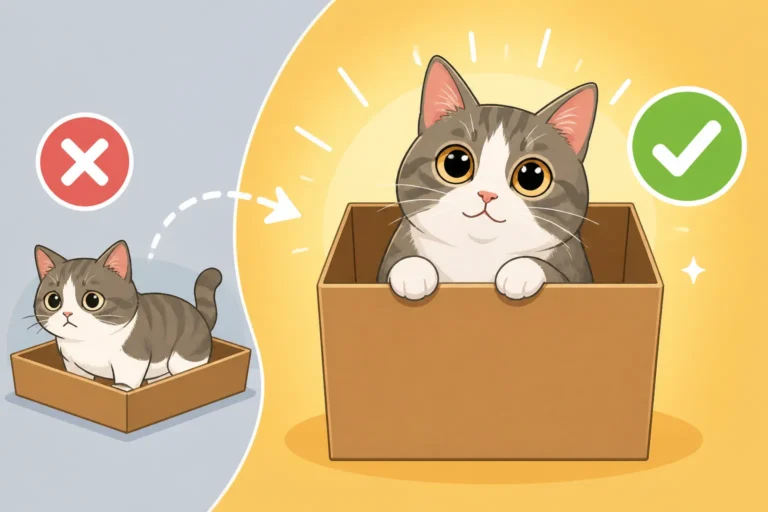
Another crucial consideration is their litter box. A Munchkin's low belly can easily drag through litter, especially if the box has high sides they have to "scoot" over or if the litter itself is too fine and clingy. This not only makes their belly dirty but can also transfer litter dust and debris to their back and hindquarters as they exit and move around. Using a low-entry litter box designed for senior cats or those with mobility issues, as well as choosing a litter that doesn't stick readily to fur, can make a huge difference. I've often seen how Which Litter Sticks to a Munchkin's Belly can cause issues, and using a box with How Low a Munchkin Litter Box Entry Should Be can prevent a lot of problems. Ensuring a clean, appropriate litter box setup is a simple but effective preventative measure against coat problems on their back.
When to Seek Professional Help
Even the most diligent home groomer might encounter situations that require professional intervention. If your Munchkin develops severe matting on their back that you can't safely remove at home, it's time to call a professional groomer or your vet. Attempting to cut out tight mats with scissors can be extremely dangerous, as it's easy to accidentally cut the skin underneath. A professional groomer has the tools and expertise to safely shave or remove tough mats.
Beyond just matting, if you notice any persistent skin lesions, excessive scratching, redness, bald patches, or unusual lumps and bumps on your Munchkin's back, these are all signs that warrant a visit to the veterinarian. These could indicate allergies, parasites, fungal infections, or other dermatological issues that need medical attention. Any sudden changes in your Munchkin's behavior during grooming, such as unusual sensitivity or pain when touched on their back, should also be investigated by a vet, as it could signal an underlying discomfort or even a spinal issue. Early detection and treatment are always best for your cat's long-term health and comfort. If your typically outgoing Munchkin suddenly becomes withdrawn or reluctant to interact, especially if it seems related to touch, it's a sign to seek veterinary advice, as discussed in Why a Withdrawn Munchkin Should See a Vet. Understanding Which Parts of Itself a Munchkin Cannot Reach and How to Groom a Munchkin's Hindquarters can also help you identify areas that might need extra care or professional attention. And always remember to check What a Munchkin's Belly Fur Needs Checking regularly, as issues here can quickly spread to the back.
Disclaimer
This article is for general informational purposes only and does not constitute professional advice. Laws, prices and regulations vary by location and change over time. Consult a qualified professional for guidance on your specific situation.