How Many Colors a Munchkin Comes In
A Munchkin’s short legs do not limit its coat colors, but color names can be confusing when breeders use terms such as tabby, tortoiseshell, or colorpoint. This guide explains the colors and patterns a Munchkin may have, how coat length fits into the picture, and what appearance can—and cannot—tell you about the cat.
Munchkin coat colors and patterns are not the same thing
Color describes the coat’s shades
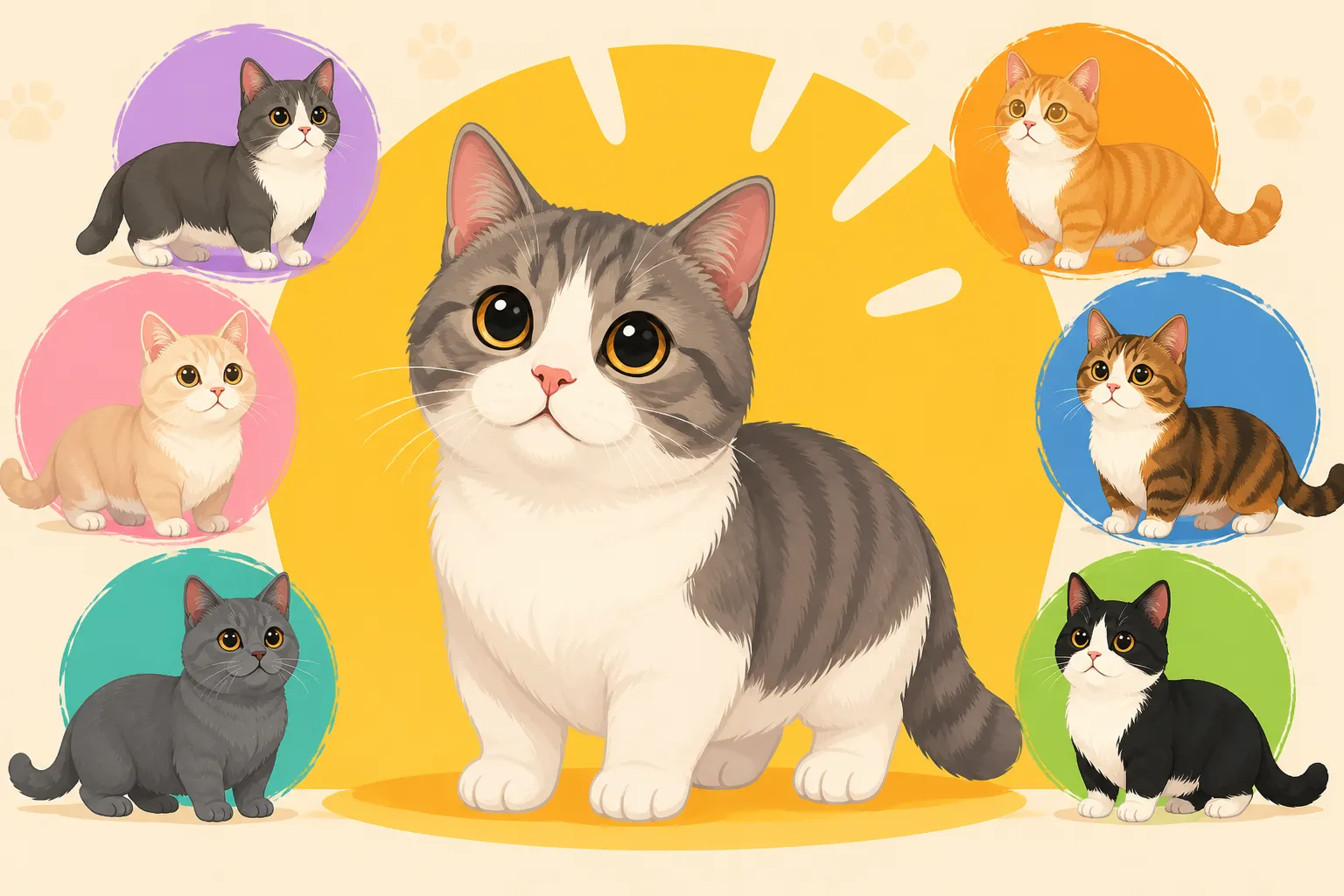
A cat’s color is the basic shade or combination of shades in its fur. Munchkins may be seen in familiar cat colors such as black, white, blue or gray, red, cream, and brown. Some cats have a single-color coat, while others have several colors mixed together or arranged in distinct areas.
Color names can vary a little between breeders and registries. “Blue,” for example, is a cat-fancy term for a diluted gray shade, not a bright blue coat. Similarly, “red” often describes orange-toned fur. A breeder’s description is most useful when it includes a clear photo and explains whether the cat has one color or a patterned coat.
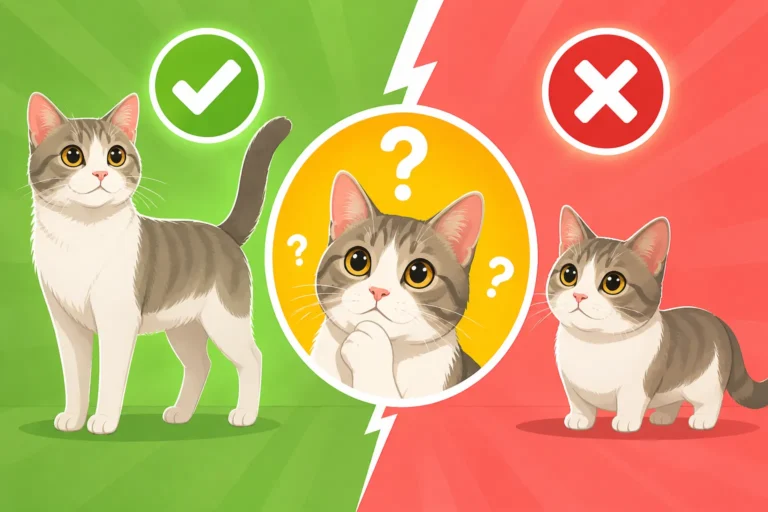
The key point is that the Munchkin’s short-legged appearance is separate from its coat color. A black Munchkin and a cream Munchkin may look very different, but color alone does not determine whether a cat has the breed’s characteristic short legs. For more on the breed’s overall appearance, see What a Munchkin Looks Like Against the TICA Standard.
Pattern describes how colors are arranged
Pattern is the arrangement of colors across the coat. A tabby, for instance, has markings such as stripes, swirls, or spots, often with a distinctive “M” shape on the forehead. A tortoiseshell coat mixes colors in mottled patches, while a bicolor coat combines white with another color. Calico is commonly used for a coat with white plus patches of two other colors.
A cat can have both a color and a pattern: “black tabby” describes a color and the way its markings are arranged. Some coats are subtle, so it may take a close look in good light to tell whether a cat is solid-colored or has faint markings. White areas can also make a coat look more dramatic without changing the underlying pattern.
Munchkins can come in a wide range of coat colors and patterns. If you want to explore the range in more detail, Which Colors a Munchkin Comes In and Whether a Munchkin Can Be Any Pattern cover those questions from their own angles. A cat’s coat is not limited to one signature Munchkin color.
| Term | What it describes | Example |
|---|---|---|
| Color | The shade or shades in the fur | Black, cream, white, or blue |
| Pattern | How colors and markings are arranged | Tabby, tortoiseshell, or bicolor |
| Coat length | How long the fur grows | Shorthaired or longhaired |
| Point coloring | Darker color on the face, ears, legs, and tail | A colorpoint pattern |
Common Munchkin coat patterns to know
Tabby, solid, and white-marked coats
Tabby is one of the patterns people often recognize first. The markings may be narrow stripes, broad swirls, or spots, and the contrast can range from bold to quite soft. A gray tabby may look smoky from across the room, while a brown tabby can have warm, earthy tones. The pattern can show differently depending on the length and texture of the fur.
Solid coats are another familiar possibility. A solid-colored cat has fur that appears to be one color overall, although small variations in shade can still show when sunlight catches the coat. White markings may appear alongside other colors, creating anything from a small patch on the chest to larger areas of white across the body.
The short legs are still the feature most people notice first, but they do not dictate whether the coat is tabby, solid, or marked with white. The breed’s body and leg characteristics are a different part of its appearance; What a Munchkin's Body Type Is Called explains the distinction between its proportions and its coat.
Tortoiseshell, calico, and colorpoint coats
Tortoiseshell coats typically have a mottled mixture of colors, often with little or no white. Calico coats usually include white along with patches of other colors. The edges between patches can be sharply defined or blend together, so two cats described with the same pattern name may still look quite different.
A colorpoint coat has a lighter body and darker areas on the face, ears, legs, and tail. The contrast can be striking, though the exact shades vary. A kitten’s coat may also develop in appearance as it matures, so a young cat’s current coloring may not show the full look of its adult coat.
Colorpoint Munchkins may be seen, but questions about show or registration eligibility depend on the registry and its standards. If that distinction matters to you, ask the breeder which registry they use and check its rules directly. Whether a Colorpoint Munchkin Is Recognized looks more closely at that specific issue.
Coat length and appearance as a Munchkin grows
Shorthaired and longhaired Munchkins
Munchkins may have short or long coats. Coat length is separate from color: a tabby pattern, for example, can appear on either a shorthaired or longhaired cat. Length affects the coat’s overall look, how much it tangles, and how much maintenance it may need—not whether the cat has short legs.
A shorthaired Munchkin’s coat may be relatively easy to keep neat with routine brushing, though individual cats still vary. Longer fur can be more prone to tangles, especially in places the cat has trouble grooming comfortably. Regularly checking the belly and hindquarters can help you spot loose fur, debris, or early mats before they become difficult to handle.
If you are choosing brushes or combs, match the tool to the coat rather than shopping by color. Whether you browse a local pet shop or Chewy, check that the grooming tool is appropriate for your cat’s fur length and that you can use it gently. The guide Which Coat Lengths a Munchkin Comes In covers the differences between shorthaired and longhaired coats.
Why a kitten’s color may not tell the whole story
A kitten’s coat can look different as it grows. Markings may become easier to see, the coat may gain or lose contrast, and a colorpoint pattern can develop more noticeably over time. Lighting, camera settings, and the angle of a photograph can also make the same coat appear lighter or darker.
That is one reason to ask for recent, natural-light photos or a video rather than relying on a single heavily edited image. If you are meeting a kitten, look at its coat in person and ask the breeder how they describe its color and pattern. For show or registration questions, written documentation from the relevant registry is more useful than a seller’s informal label.
It is also sensible to separate appearance from health. A striking coat color does not prove that a kitten is healthy, responsibly bred, or even a Munchkin. Ask about the kitten’s veterinary care, family background, and the breeder’s practices, not just its color. Which Cats a Munchkin May Be Outcrossed To offers useful context about the breed’s background.
Choosing a Munchkin by more than coat color
What coat color can and cannot tell you
Coat color can help you describe a cat, but it does not tell you how the cat will behave, what care it needs, or whether its legs and body are healthy. Two littermates can have different coats and similar temperaments; two cats with nearly identical coats can have very different personalities. Spend time learning about the individual cat rather than treating color as a shortcut to character.
Color also does not establish breed identity by itself. Many domestic cats share the same colors and patterns as Munchkins. If registration or pedigree matters to you, ask what paperwork is available and what it actually records. A seller’s use of a particular color name is not a substitute for documentation or an examination by a veterinarian.
When comparing cats, consider the whole picture: the kitten’s movement, comfort, coat condition, social behavior, and veterinary history. The Munchkin’s short legs are a defining part of its appearance, but coat color is only one detail among many. How to Tell a Munchkin From a Minuet can help if you are comparing Munchkins with a related-looking breed.
Basic coat care keeps every color looking its best
All coats benefit from gentle, regular checks. Brush in short sessions, especially if your cat is new to grooming or dislikes being handled. Look for tangles behind the ears, under the legs, along the belly, and around the hindquarters. Those areas can be easy to miss when a cat has thick or long fur.
A light-colored coat may show dirt more readily, while darker fur can make loose pale flakes easier to notice. That is a visibility difference, not a reason to bathe one color more often than another. If a mat is tight against the skin, avoid cutting it out with scissors; a veterinarian or experienced groomer can help prevent accidental injury.
For a simple grooming kit, Chewy is one place to compare combs and brushes, but the right choice depends on your cat’s coat and tolerance for brushing. Read the tool description carefully, and introduce it slowly with treats and breaks. You can also ask your veterinarian or groomer to demonstrate a safe way to work around the belly and legs. If you are shopping through Chewy, think in terms of coat length and comfort rather than choosing a tool because it is marketed for a particular coat color.
Questions to ask when a breeder describes a coat
Ask the breeder to describe the kitten’s color and pattern in plain language, then request recent photos or video. If the label is unfamiliar, ask what they mean by it. “Blue tabby with white,” for example, gives you more information than a vague claim that a kitten has a rare or exclusive color.
If registration matters, ask which registry the breeder uses and whether the kitten’s paperwork records its color or pattern. The relevant standards can differ, so confirm details directly with the registry rather than assuming every organization treats a coat description the same way. What the TICA Munchkin Standard Weights Most is a useful next read if you are learning how a breed standard describes a Munchkin.
Finally, be cautious if a seller makes health or quality promises based on color alone, or pressures you to pay extra because a coat is supposedly rare. A beautiful coat is lovely, but it cannot replace clear health information, transparent records, and a chance to see how the kitten moves and behaves. Chewy and other pet retailers can help with routine grooming supplies after adoption; they cannot verify a breeder’s claims, so keep those decisions separate.
Disclaimer
This article is for general informational purposes only and does not constitute professional advice. Laws, prices and regulations vary by location and change over time. Consult a qualified professional for guidance on your specific situation.