Whether Any Munchkin Cross Is Registered by CFA
A Munchkin kitten may be advertised as a Minuet, a Bambino, or another Munchkin cross, leaving buyers unsure what its papers actually mean. The key distinction is simple: a cross with Munchkin ancestry is not automatically eligible for Cat Fanciers’ Association registration. Here’s how CFA registration, breed names, and show eligibility differ.
Can CFA register a Munchkin or a Munchkin cross
The short answer is no for Munchkin ancestry as a breed
The Cat Fanciers’ Association, usually called CFA, does not register the Munchkin as a CFA-recognized breed. That means a cat cannot receive CFA breed registration simply because it is a Munchkin, has short legs, or comes from registered Munchkin parents. A cross that includes a Munchkin does not become eligible just by having a different breed name.
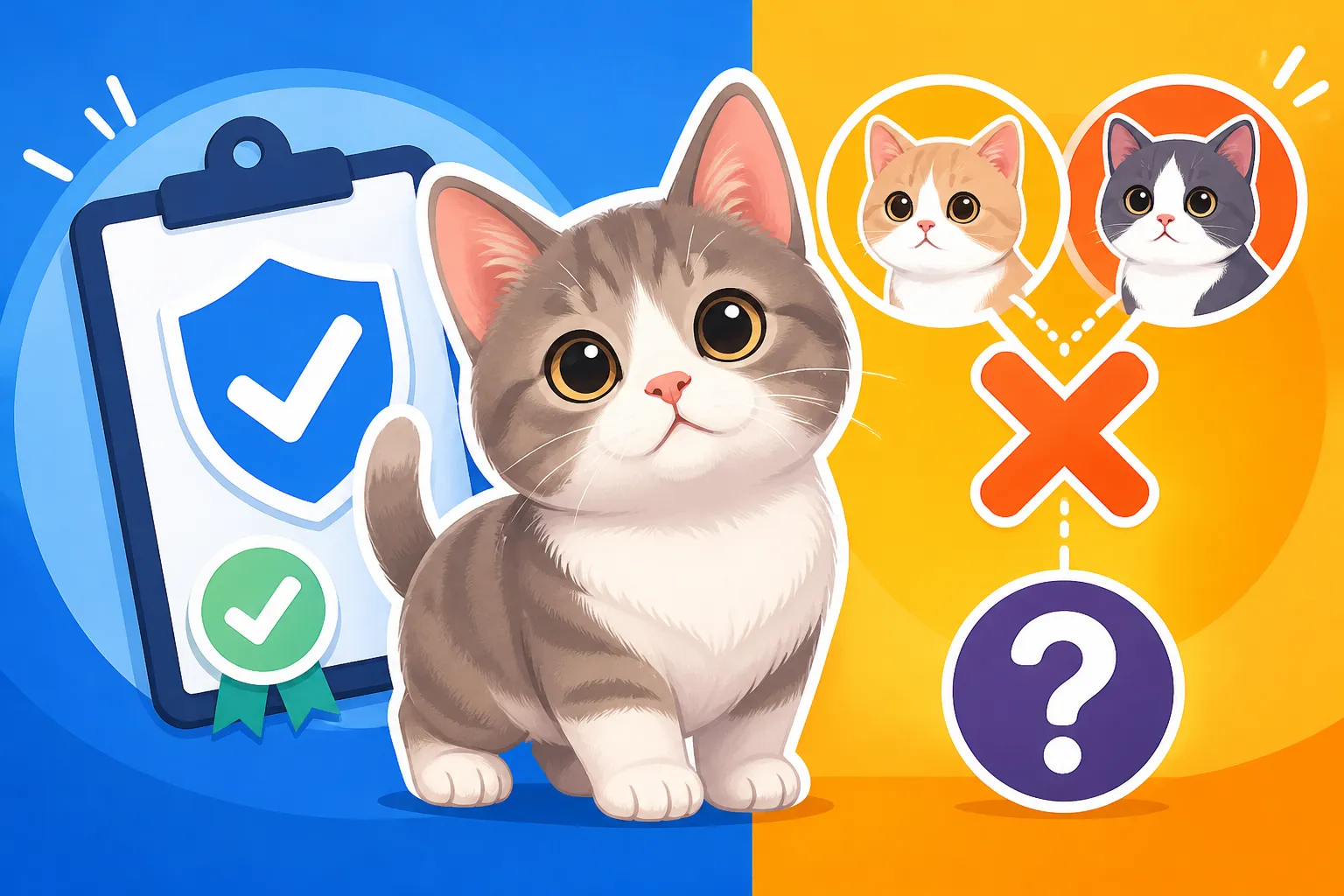
This is the central answer to whether any Munchkin cross is registered by CFA: a Munchkin cross is not registered by CFA as a Munchkin-derived breed on the basis of that cross. Registration is tied to CFA’s recognized breeds and its rules for their pedigrees, not just to a seller’s description or a cat’s appearance.
For a broader explanation of the organization’s position, see Why CFA Refuses to Register the Munchkin. CFA’s decision is also part of a wider difference between registries: an association may recognize or accept a breed that another association does not. Which Registries Refuse the Munchkin Today explains why the answer can vary depending on which registry a seller is talking about.
A cross does not automatically qualify as its other parent breed
It is tempting to assume that if a Munchkin is crossed with a CFA-recognized breed, the kittens can be registered as that other breed. In practice, a cat’s ancestry and registration eligibility are not interchangeable. A kitten does not become a Persian, for example, merely because one parent is Persian. CFA’s rules for a recognized breed define what pedigree and breeding history qualify.
The same issue applies when a cross receives a distinct name. A name such as Minuet or Bambino may describe a particular type of cat or breeding program, but it does not by itself create CFA eligibility. How the Minuet Was Made From a Munchkin and How the Bambino Was Made From a Munchkin offer background on two examples of breeds or hybrids associated with Munchkin ancestry. Their existence does not mean CFA registers them.
This distinction can be especially confusing when advertisements use terms such as “registered,” “pedigreed,” or “papers available” without naming the registry. Ask which organization issued the document, what exact breed it records, and whether it is a registration certificate, a pedigree, a veterinary record, or a sales document. A paper from one registry is not automatically a CFA paper.
What registration means and what it does not mean
Registration is not the same as a pedigree or a certificate
People often use “papers” as a catchall, but the word can refer to several different things. A pedigree lists a cat’s ancestry. A registration certificate records the cat within a particular organization’s system. A health record documents veterinary care. A breeder’s certificate may describe a kitten’s parentage or sale terms. These documents can be useful, but they do different jobs.
When someone says a Munchkin cross is “registered,” ask them to be specific: registered with whom, under which breed name, and according to what rules? A kitten may have documentation from a registry that accepts its breed or cross, while having no CFA registration. That does not necessarily make the paperwork fake; it means it is not CFA registration.
A retailer is a separate matter altogether. A Chewy listing, product description, or seller advertisement is not proof of CFA registration, just as a food receipt or microchip record is not a pedigree certificate. If a breeder says a kitten has CFA papers, ask to see the actual document and verify the issuing organization rather than relying on the wording in an online listing.
Registration is not the same as being allowed into every show class
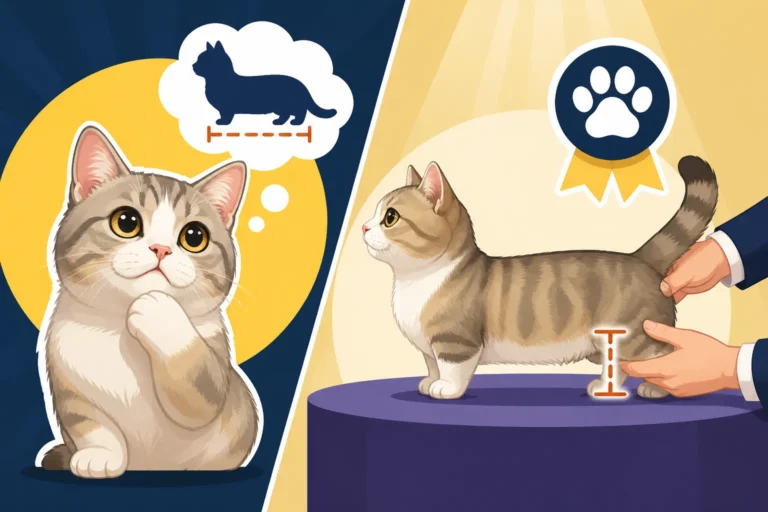
A cat may be eligible to participate in some activities without being registered as a recognized breed. For example, a show may have a household-pet or other non-pedigree class, subject to that event’s rules. That is different from entering a breed class as a CFA-registered Munchkin or Munchkin cross.
This difference matters if your goal is to show a cat. Ask the show organizer or CFA which classes are available and what documentation is required. A breeder’s claim that a cat is “showable” should not be taken to mean it has CFA breed registration. The seller may be referring to a different association, a different type of class, or simply a cat they believe is suitable for exhibition.
The reverse is true, too: lack of CFA papers does not determine whether a cat is affectionate, healthy, or a good companion. Registration answers a record-keeping and breed-eligibility question. It does not certify a cat’s personality or guarantee its health. For questions about the physical traits themselves, How a Munchkin Differs From a Dwarf Cat helps clarify why short legs alone do not settle a cat’s formal breed status.
| What the seller says | What to ask | What it establishes |
|---|---|---|
| “The kitten is registered” | Which registry issued the certificate, and under what breed? | Registration with that named organization, if the document is genuine |
| “The kitten has a pedigree” | Which cats and generations are listed, and who issued it? | An ancestry record, not necessarily CFA eligibility |
| “The kitten can be shown” | At which association and in which class? | Possible show participation under those event rules |
| “It is a Munchkin cross” | What are the parents’ breeds, and what documents support that claim? | A description of ancestry, not CFA registration |
| “It has papers” | May I see the document and confirm the issuing body? | Nothing specific until the document is identified |
How to check a Munchkin cross’s paperwork
Start with the registry, breed name, and document
Before paying a deposit, ask the breeder to name the registry that issued the kitten’s papers. Then ask for the exact breed listed on the registration document. If the answer is “CFA,” request the certificate or a way to confirm the registration directly. A vague assurance that the kitten is “registered somewhere” does not answer whether CFA recognizes it.
Read the document carefully. Does it identify the kitten by name or registration number? Does it list a breed and parents? Is the issuing organization clearly identified? Does the breeder’s description match what the document says? A pedigree from another association may be legitimate and still not be a CFA registration. The important thing is that the paperwork and the claim agree.
If you are told that the kitten is a recognized cross because of a particular breed name, check the rules of the organization being claimed. A breed name used in advertising is not sufficient evidence that CFA registers it. And if the seller’s language keeps shifting between “pedigreed,” “registered,” and “CFA eligible,” pause and ask them to explain each term in writing.
Look beyond registration when evaluating the breeder
CFA registration is only one piece of a responsible purchase decision, and in this case it is not available as proof of Munchkin-cross status. Ask about the kitten’s parents, veterinary examinations, vaccinations, socialization, and any known health concerns in the family line. Request to see the kitten move naturally and ask what happens if a veterinary examination identifies a concern after purchase.
Also look closely at the cross itself. Combining traits from two breeds can raise questions beyond paperwork, especially if both parents contribute physical characteristics that may affect a cat’s movement or comfort. Why Stacking Mutations on a Munchkin Is Criticized discusses concerns that can arise when distinctive inherited traits are combined. A reassuring registration claim should never replace questions about the kitten’s welfare and the parents’ health.
If you are looking at a cat described as a Minuet, learn how the label is being used and how the cat differs from a Munchkin. How to Tell a Munchkin From a Minuet can help you understand the terminology, but the breeder should still be able to show clear records and explain which registry, if any, recognizes the cat.
Common questions about CFA and Munchkin crosses
Does “registered with another association” mean the same as CFA registered
No. A registry’s certificate applies to that registry. Different cat associations have their own breed lists, standards, and registration requirements. If a breeder provides paperwork from an association other than CFA, treat it as documentation from that association—not as a substitute for CFA papers.
That difference is not necessarily a sign of dishonesty. A breeder may accurately describe a cat as registered elsewhere. The problem arises when the language blurs the distinction, such as implying that registration by one organization means CFA has accepted the breed. Ask for the organization’s full name and verify the claim with that organization if the registry status is important to you.
If you are purchasing a companion rather than seeking a particular show path, registration may matter less than health records, responsible breeding practices, and a clear contract. Chewy can be useful for ordinary cat supplies after adoption, but buying supplies from a retailer does not validate a breeder’s pedigree or registry claims. Keep the documents that came with the cat and note exactly who issued each one.
Could CFA rules change, and what should a buyer do
Breed-recognition policies and registration procedures belong to the organization, so anyone making a purchase that depends on CFA eligibility should confirm the relevant rules directly with CFA before committing. Ask about the specific breed name and the exact kind of registration being claimed. Do not rely solely on a breeder’s interpretation, an old advertisement, or a general statement that a breed is “recognized.”
A practical way to protect yourself is to put the claim in writing before paying a deposit. If CFA registration is promised, ask the breeder to identify the registration document and explain what happens if the kitten cannot be registered as described. If the answer is that the kitten is a Munchkin cross registered with another association, make sure the contract says that clearly.
Finally, decide what you actually need from the paperwork. If you want a CFA-registered cat, a Munchkin cross is not the right choice on the basis of CFA breed registration. If you are considering a cat as a pet, focus on its care, health, temperament, and the breeder’s transparency. Whether a Munchkin Is the Right Cat for You can help you weigh the broader ownership decision. Chewy may help with everyday supplies once you bring a cat home, but the registry question should be resolved through the named cat association and the original documents—not a retailer or seller listing.
Disclaimer
This article is for general informational purposes only and does not constitute professional advice. Laws, prices and regulations vary by location and change over time. Consult a qualified professional for guidance on your specific situation.