Whether a Scottish Fold Munchkin Should Be Bred
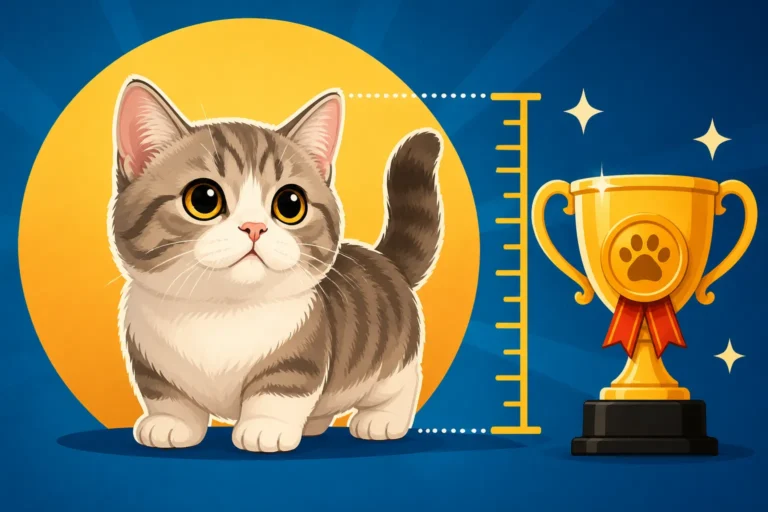
A Scottish Fold Munchkin combines two deliberately selected skeletal traits: folded ears linked to abnormal cartilage development and shortened legs associated with a separate dwarfism trait. Their effects in an individual kitten cannot be predicted simply from appearance, but that uncertainty is not a reason to breed them. This guide explains the welfare concerns, what is known about the risks, and what to do if you already have one.
Why this cross raises welfare concerns
The folded ears are a sign of altered cartilage
The Scottish Fold’s characteristic ears are associated with a mutation affecting cartilage and bone development. The same biological change that bends the ear cartilage can also affect other parts of the skeleton. Cats with folded ears may develop painful joint and bone disease, with the timing and severity varying between individuals.
That variation matters, but it does not make the trait harmless. A kitten can look comfortable and move easily while young, then develop stiffness, lameness, a thickened tail, or difficulty jumping as it grows. Some cats have serious mobility problems; others show milder signs. Looking at a kitten’s ears or watching it play for a few minutes cannot reliably tell you what its joints will be like later.
The concern is not limited to a particular ear shape or show standard. It is about selecting cats for a visible feature that is connected to a body-wide cartilage and bone disorder. A breeding decision should account for the animal’s whole life, not just how it looks at the time of sale.
Short legs add a second skeletal concern
Munchkin cats have shortened limbs caused by a separate inherited trait. The exact genetic basis is not established well enough to offer a simple DNA test that can certify a Munchkin as free of the trait. Breeding practices also commonly avoid mating two short-legged cats together because inheriting two copies of the Munchkin dwarfism trait is considered lethal to embryos.
A short-legged cat may be lively and able to run, play, and navigate a home. That does not answer every question about how the altered limb proportions may affect movement, joints, or long-term comfort. A careful discussion of those uncertainties appears in Why Munchkin Crosses Worry Veterinarians and What Two Skeletal Mutations Do to One Munchkin.
When the Munchkin trait and the Scottish Fold trait are combined, kittens may inherit one, both, or neither of the visible traits, depending on their parents and inheritance. But a breeder cannot make the combination safe simply by selecting a kitten with a particular ear fold or leg length. The traits raise different concerns, and screening for one does not remove the risk associated with the other.
The combination is more than a cosmetic cross
It is tempting to treat the folded ears and short legs as two appearance features that can be mixed like coat colors. That misses the central issue: both traits involve skeletal development. The potential welfare burden is not just that a kitten may look different; it is that selecting for these traits can increase the chance of producing cats with inherited physical limitations or pain.
There is not enough reliable evidence to say that every Scottish Fold Munchkin will develop the same condition, or that the two traits always interact in one predictable way. A responsible explanation should not claim that every cat in the cross will be severely disabled. But uncertainty about the exact outcome is not evidence that the combination is safe. Where the foreseeable risks are substantial and the desired benefit is primarily appearance, breeding needs a strong welfare justification.
What can happen to a kitten and adult cat
Inherited traits do not guarantee an obvious problem at birth
A kitten may be born active and appear healthy. It may eat, play, and walk normally in the limited ways a young kitten can be observed. That is reassuring about the kitten’s condition at that moment, but it cannot rule out later-developing joint or bone disease.
A breeder may show you videos of kittens running around, or point to healthy-looking parents. Those observations can be useful, but they are not a guarantee about an individual kitten’s future. A parent’s current comfort does not prove that the offspring will avoid inherited problems, and a young cat’s easy movement does not reveal how its joints will feel years later.
This is one reason What a Munchkin Breeder Should Be Able to Show You is a useful related topic. Records, honest disclosure, and a willingness to discuss health concerns matter more than a reassuring sales description. Even thorough records, however, cannot turn a risky combination into a risk-free one.
Watch for changes in movement and daily habits
For a cat already living with these traits, focus on changes rather than waiting for an obvious limp. Reluctance to jump, slower movement after resting, reduced play, difficulty using stairs, or sensitivity when handled can all warrant a veterinary conversation. Cats often hide discomfort, so a gradual shift in routine may be more noticeable than a dramatic symptom.
At home, note what your cat can reach and whether its routes are becoming harder. A low-entry litter box, stable steps, and non-slip floor surfaces can make daily tasks easier. If you are looking for ordinary care supplies, Chewy is one possible retailer to compare with local pet shops; choose equipment based on your cat’s size, mobility, and comfort rather than a breed label. A ramp that is too steep or slippery may go unused, however convenient it looked online.
If an existing cat needs grooming help, easier access to brushes and basic supplies can make regular care less stressful. Chewy is one place an owner might check for standard grooming tools, but a veterinarian or experienced groomer can help decide whether a particular cat needs extra assistance. For broader background on the breed’s welfare debate, see What Welfare Bodies Say About the Munchkin and Why Some Vets Refuse to Recommend a Munchkin.
Veterinary care can support a cat but cannot erase its inheritance
A veterinarian can examine a cat, assess its gait and joints, and recommend further evaluation if signs warrant it. Depending on the cat’s symptoms, that might include imaging or a plan for pain management and mobility support. Keep a record of changes at home and, if possible, take short videos of your cat walking, rising, and using steps. Movement at home can be easier to compare over time than a brief clinic visit.
Care can improve comfort, but it cannot reverse the inherited traits or guarantee that a cat will never develop problems. This distinction is important when evaluating breeder claims. A promise of veterinary checks, supplements, or a health guarantee does not demonstrate that breeding the cross is ethically justified. Preventing avoidable risk through breeding choices is different from treating problems after they appear.
Should a Scottish Fold Munchkin be bred
A cautious welfare decision is not to produce the cross
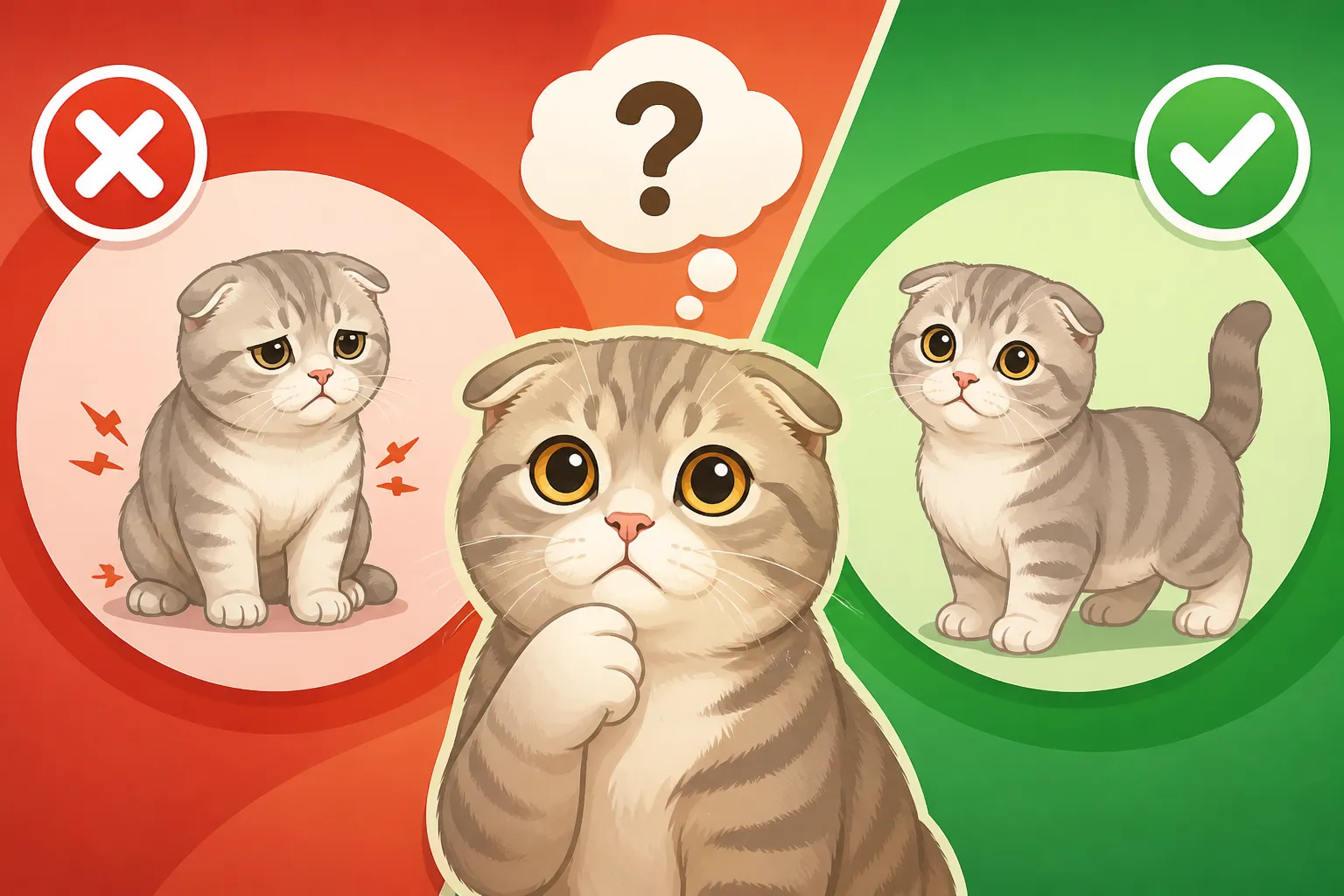
The most defensible answer is no: Scottish Folds and Munchkins should not be deliberately crossed to produce Scottish Fold Munchkins. Both traits are associated with skeletal concerns, and combining them for appearance offers no clear welfare benefit to the kittens. The fact that some individual cats may remain active or show mild signs does not remove the ethical problem of intentionally creating a pairing with foreseeable health risks.
This position does not mean that every cat with these traits is currently suffering, or that an existing cat should be judged by its appearance. It distinguishes breeding decisions from the care owed to animals already here. An owner can love and provide excellent care for a Scottish Fold Munchkin while still deciding that producing more cats with the same combination is not responsible.
For a wider discussion of the question, Whether a Scottish Fold Munchkin Should Exist and Which Munchkin Crosses Vets Object To Most address the concerns around combining inherited traits. The relevant question is not only whether a kitten can be born and sold, but whether intentionally creating that kitten gives its likely lifetime welfare adequate priority.
Health checks and careful pairings do not make the cross safe
A breeder might say that the parents have been examined, that the kittens are active, or that the mating avoids breeding two short-legged cats together. Those points may address particular concerns, but they do not remove the Scottish Fold’s cartilage-related risk or the uncertainty around the combined effects of two skeletal traits.
A health check is a snapshot, not a guarantee of a lifetime without disease. Likewise, avoiding a mating that could produce embryos with two copies of the Munchkin trait does not eliminate the separate risk associated with Scottish Fold inheritance. A breeder cannot responsibly present one precaution as proof that the entire cross is safe.
Be wary of claims such as “vet checked, so there is no risk,” “the parents are healthy, so the kittens will be,” or “the short legs are just cosmetic.” Ask for clear explanations of health history and veterinary findings, but treat pressure to reserve a kitten or dismiss concerns as a reason to step back. What a Munchkin Breeder Should Be Able to Show You offers more questions to consider when assessing a breeder’s transparency.
Choosing a cat without supporting the cross
If you want a companion, consider adopting an adult cat from a shelter or rescue, or looking for a cat whose breeding does not intentionally combine these traits. An adult’s established movement and habits can give you more information about its current needs than a very young kitten’s behavior can. No cat comes with a guarantee of perfect health, but choosing a companion does not require seeking out a combination selected for multiple skeletal features.
If you are considering any Munchkin, take time to weigh the practical and ethical questions rather than focusing on leg length alone. Whether a Munchkin Is the Right Cat for You can help you think through the day-to-day implications. Whichever cat you choose, plan for routine veterinary care, an accessible litter box, comfortable resting places, and help with grooming if the cat cannot manage it well. Chewy and other pet retailers may offer common household supplies, but an accessible setup should be chosen around the individual animal—not treated as a fix for inherited disease.
| Question | What it tells you | What it cannot prove |
|---|---|---|
| Do the parents have veterinary records? | Whether known concerns or examinations have been documented | That kittens will avoid inherited disease |
| Does the kitten move comfortably today? | How it appears to function at the time you observe it | How its joints and mobility will be later |
| Were two short-legged cats bred together? | Whether a particular high-risk Munchkin pairing was avoided | That a Scottish Fold Munchkin cross is safe |
| Does the breeder offer a health guarantee? | What support or terms the breeder says are available | That the inherited traits carry no welfare risk |
| Is the kitten already in your care? | What veterinary assessment and daily support it may need | That its appearance alone predicts pain or disability |
If you already live with a Scottish Fold Munchkin
Put the individual cat’s comfort first
A cat’s care should be based on what that cat can do comfortably. Keep food, water, resting spots, and litter accessible without repeated high jumps. Stable, non-slip steps or a gentle ramp can help a cat reach favorite places, while soft rugs can improve traction on slick floors. Watch whether your cat actually uses any equipment; if it avoids a ramp, reconsider its angle, surface, or placement rather than forcing the issue.
Maintain a healthy body condition with measured meals and regular play suited to your cat’s abilities. Extra weight can make movement more demanding for any cat, and mobility limitations make it especially important to discuss weight changes with a veterinarian. Avoid giving human pain medication or starting supplements without veterinary guidance.
Routine grooming can also matter. If your cat has trouble reaching parts of its body, check its coat and skin regularly and ask a groomer or veterinary team for help before mats become painful. Chewy may be one option for standard brushes or other everyday supplies, alongside local shops, but the most useful choice is one your cat tolerates and that helps you handle it gently.
Keep a record and discuss concerns early
Make a simple note of changes in walking, jumping, play, grooming, appetite, and litter-box use. A cat that stops using a familiar step or spends more time resting may be communicating discomfort, even without crying or limping. Share these changes with your veterinarian rather than assuming they are just part of getting older.
Ask the clinic what signs should prompt a quicker appointment and how often your cat should be rechecked. A veterinarian can help determine whether a change is related to pain, another medical condition, or an environmental obstacle. The goal is not to label every movement difference as disease; it is to notice meaningful changes and respond before your cat’s routine becomes difficult.
Disclaimer
This article is for general informational purposes only and does not constitute professional advice. Laws, prices and regulations vary by location and change over time. Consult a qualified professional for guidance on your specific situation.