Why a Standard Cat Tree Is Useless to a Munchkin
It's a common and completely understandable assumption: a cat is a cat, right? So, any cat tree you buy should work just fine. But if you're a Munchkin cat parent, you've probably already discovered the frustrating reality that your adorable short-legged friend struggles immensely with standard-issue cat furniture. This guide is here to explain exactly why those towering multi-level structures are more of a hindrance than a help for Munchkins, and how you can create a vertical paradise that truly suits their unique needs.
Understanding the Munchkin's Unique Physiology and Movement
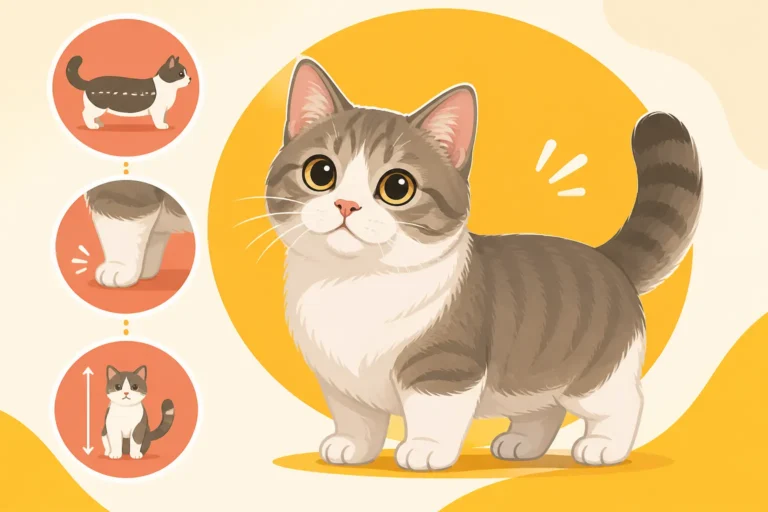
The most defining characteristic of a Munchkin cat, of course, is their short legs, a genetic trait that gives them their distinctive appearance. This isn't just a cosmetic difference; it profoundly impacts how they interact with their environment, especially when it comes to vertical movement. Their dwarfism, specifically pseudoachondroplasia, means their long bones don't develop to full length, resulting in legs significantly shorter than those of a typical domestic cat.
The Limits of a Munchkin's Jump
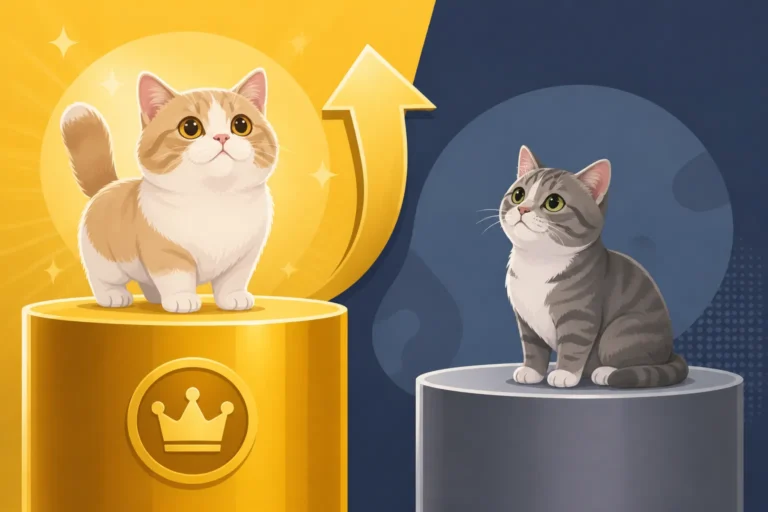
Unlike their long-legged cousins who can effortlessly launch themselves onto kitchen counters or the top of a tall bookshelf, a Munchkin cat's jumping ability is severely constrained. They lack the leverage and leg length to achieve significant vertical height in a single leap. While they might surprise you with their speed and agility on flat ground, when it comes to elevation, their efforts are often met with frustration. You'll see them gather, prepare, and then, rather than soaring, they manage a modest hop, perhaps just enough to get onto a low footstool, but nowhere near the dizzying heights of a standard cat tree's platforms. How High a Munchkin Can Actually Jump delves deeper into these physical limits.
This isn't about a lack of desire or spirit; Munchkins are just as curious and driven to explore their surroundings as any other cat. They want to be up high, to survey their domain, and to feel safe from floor-level disruptions. But their bodies simply aren't built for it. Repeatedly trying and failing to reach a desired spot can lead to discouragement, or worse, put unnecessary strain on their joints as they land awkwardly or repeatedly attempt jumps that are beyond their physical capacity.
Gait and Balance Challenges
Beyond jumping, the Munchkin's short legs also influence their gait and overall balance. While they're surprisingly swift and stable on a flat surface, their lower center of gravity and shorter stride mean navigating steps, steep inclines, or narrow ledges can be trickier. They don't have the same reach or wide stance that a long-legged cat uses to steady themselves when stretching or climbing.
Imagine trying to climb a ladder if your arms and legs were half their normal length; every rung would be a major stretch, and maintaining your grip and balance would be far more precarious. This is somewhat akin to the challenge a Munchkin faces on a traditional cat tree designed for standard feline proportions. They might struggle to stretch between platforms, or find the gaps too wide to safely traverse, making the entire structure a precarious obstacle course rather than a fun playground. Their unique movement is often described as a "ferret-like" scamper, which is fantastic for zipping across floors but less so for scaling heights.
Why Standard Cat Trees Are a Misfit for Munchkins
Knowing the physical realities of a Munchkin, it becomes clear why most cat trees, designed with the average cat in mind, are simply not going to work. These aren't minor inconveniences; they pose significant challenges and even risks to your short-legged companion.
Platform Spacing and Height
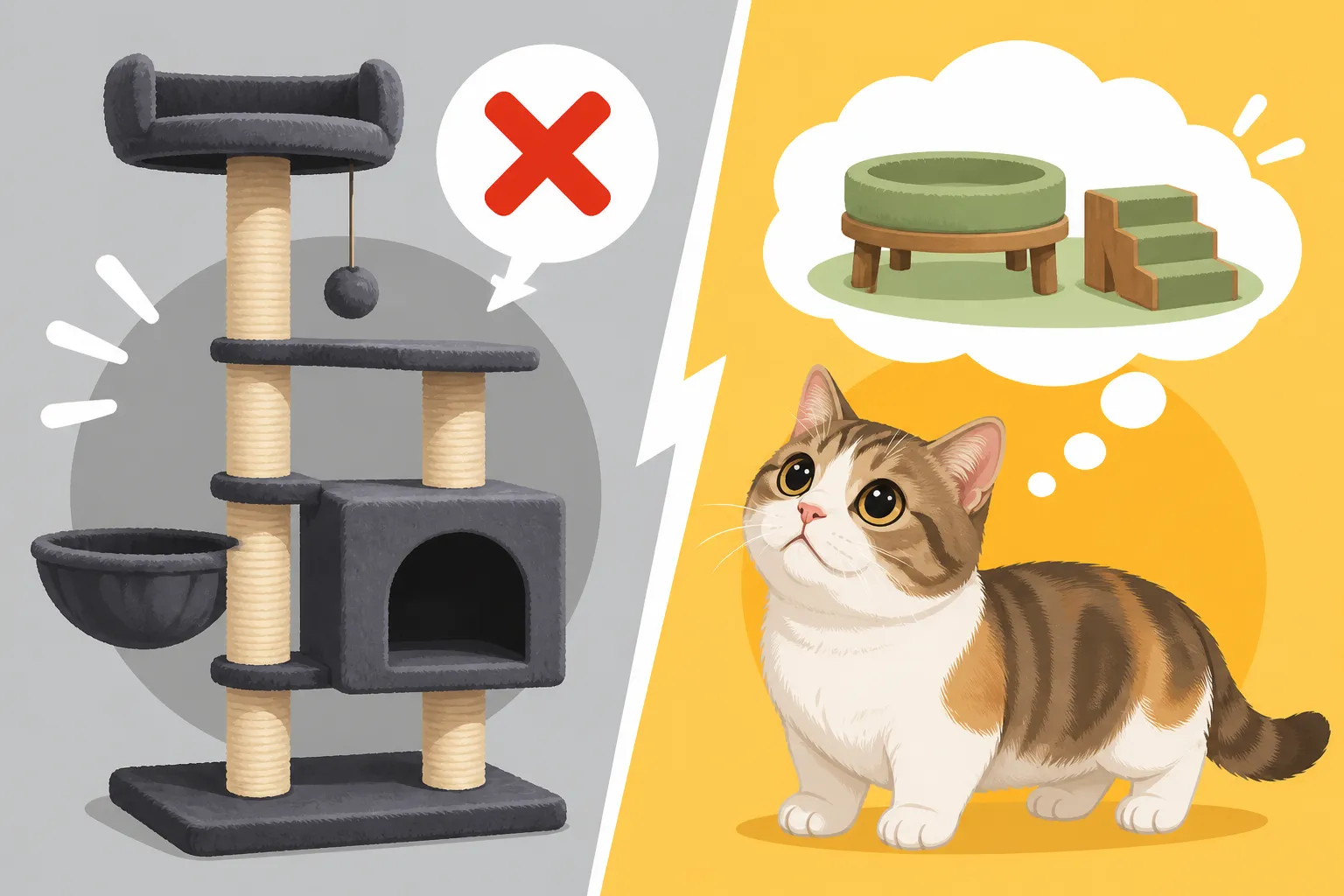
The most glaring issue with standard cat trees is the spacing and height of the platforms. Manufacturers typically assume a cat can jump considerable distances and heights. You'll often see platforms spaced a foot or more apart, with the first platform often requiring a significant jump off the ground. For a Munchkin, these gaps are often insurmountable.
They might be able to make the first low jump if it's within a few inches, but then they're stuck. The next platform is often too high, too far, or both. Imagine looking at a series of shelves, each one just a little bit too high to reach. Your Munchkin will gaze longingly upwards, maybe try a few half-hearted hops, but ultimately give up, leaving the expensive cat tree unused and your furry friend deprived of vertical enrichment. This is a common frustration for owners who bought a tree hoping to provide fun, only to find their cat can't access it. Why a Standard Cat Tree Is Useless to a Munchkin elaborates on this very point.
Unreachable Scratching Posts
Many cat trees incorporate scratching posts wrapped in sisal rope. These are fantastic for normal cats to stretch, climb, and maintain their claws. However, for a Munchkin, the tall, vertical nature of these posts often renders them useless for a full, satisfying stretch. A cat needs to fully extend its body to get a good scratch, digging its claws in as it pulls downwards.
A standard post is typically too tall for a Munchkin to perform this natural behavior. They might try to scratch the very bottom, but they can't get the full body extension that is so crucial for muscle health and claw maintenance. This means they'll likely seek out other, more accessible scratching surfaces – like your sofa or carpet – which isn't ideal for anyone. Consider horizontal scratchers or shorter, sturdier scratching ramps that allow them to get a proper stretch without needing to reach sky-high. Which Scratching Post Suits a Munchkin offers excellent alternatives.
Stability and Safety Concerns
While many cat trees are designed to be stable for an average-sized cat, their structure can still present safety issues for a Munchkin. If a Munchkin does manage to get onto a higher platform, the descent can be dangerous. They might struggle to gauge distances accurately or lack the agility to safely navigate complex structures on the way down, potentially leading to falls and injuries. Their short legs offer less shock absorption, meaning awkward landings are more impactful on their delicate joints and spine.
Furthermore, some flimsier cat trees might wobble under the weight of even a small cat when they try to jump, further deterring a Munchkin or making any attempted climb risky. The goal is to provide a safe, accessible environment, not one that could lead to sprains, strains, or more serious musculoskeletal issues down the line. Investing in a robust, stable structure is critical, even if it's custom-built.
Here's a quick look at how standard cat trees compare to what a Munchkin truly needs:
| Feature | Standard Cat Tree | Munchkin-Friendly Cat Tree / Structure |
|---|---|---|
| Platform Spacing | Wide (12+ inches vertically) | Close-set (4-6 inches max, or ramps/steps) |
| First Platform Height | Often 12-18 inches off the ground | Ground-level access, or a very low first step (2-4 inches) |
| Scratching Posts | Tall vertical posts | Horizontal scratchers, scratching ramps, short vertical posts |
| Ramps/Steps | Rarely included | Essential for safe ascent/descent, gentle slope or shallow steps |
| Enclosures/Caves | Often on higher levels, requiring a jump | Ground level or easily accessible via ramps/steps |
| Stability | Can be tall and sometimes wobbly | Low profile, very sturdy and stable, wider base |
| Overall Design | Focus on height and multiple jumps | Focus on accessible levels, gentle transitions, and secure footing |
Crafting a Vertical Wonderland for Your Munchkin
The good news is that you absolutely can provide your Munchkin with vertical enrichment, but it requires a different approach than just buying off-the-shelf. It's about rethinking how cats ascend and creating a world at their level.
Low-Profile Cat Trees and Modules
Forget the towering skyscrapers. For a Munchkin, think bungalows or multi-level coffee tables. Look for cat trees specifically designed for kittens, senior cats, or cats with mobility issues. These often feature much closer-set platforms, lower overall heights, and sometimes even integrated ramps. Brands like Chewy often carry a variety of options that cater to different needs, so you can filter for more accessible designs.
Alternatively, you can create modular climbing structures. Picture a series of sturdy, low shelves arranged in a staircase fashion against a wall, or sturdy, wide cubes stacked securely next to each other. Each level should be easily reachable from the one below, allowing your Munchkin to gradually ascend without any strenuous jumps. The key is small, incremental steps or ramps. How Far Apart a Munchkin's Platforms Should Be gives specific guidance on optimal spacing.
Ramps and Steps: The Munchkin's Escalator
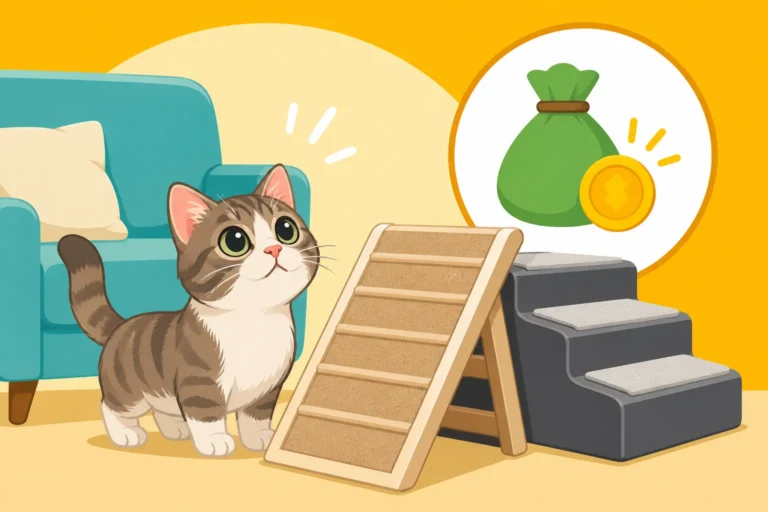
Ramps and pet steps are absolute game-changers for Munchkin owners. They provide a gentle, low-impact way for your cat to reach higher surfaces without putting stress on their joints or spine. Think about places your Munchkin wants to go: the sofa, your bed, a sunny windowsill. These are prime locations for well-placed ramps or steps.
When choosing or building ramps, ensure they have a gentle incline, a non-slip surface (carpeted or textured), and are wide enough for your cat to feel secure. Steps should be shallow and wide, like a staircase designed for a toddler. Introducing these early, perhaps even as a kitten, can help them become comfortable using them throughout their lives. Remember, a Munchkin's joints, especially their shoulders, take a lot of impact, and ramps can mitigate that wear and tear. Why a Munchkin's Shoulders Wear First explains why this is so important for their long-term health.
Utilizing Existing Furniture and Creative Solutions
Your existing furniture can become part of your Munchkin's vertical landscape with a little ingenuity. Instead of buying a whole new cat tree, think about how you can create accessible "ladders" using what you already have.
- Ottomans and Footstools: Place a sturdy ottoman next to the sofa to create a midway point for your Munchkin.
- Small Bookcases: A low, wide bookcase can serve as a multi-tiered climbing structure if you clear off a few shelves and make them accessible.
- Stacking Cubes: Interlocking pet cubes or even sturdy storage cubes can be arranged to form a custom, low-rise climbing wall.
- Window Perches with Support: If your Munchkin loves to look out the window, install a window perch but ensure there's a ramp or a series of steps leading directly to it from the floor or a nearby piece of furniture. They want to see the outside world, and giving them safe access is crucial. How to Get a Munchkin Up to a Window Safely details how to achieve this without forcing dangerous jumps.
Remember, the goal is to make the entire house a navigable, enriching environment where your Munchkin can explore all three dimensions comfortably and safely. This holistic approach is key to their well-being.
Beyond the Tree: Adapting Your Home for a Munchkin
Providing a Munchkin-friendly cat tree or climbing structure is just one piece of the puzzle. A truly adapted home considers all aspects of their daily life, from sleeping to playing to eating. This comprehensive approach ensures their comfort, safety, and longevity.
Creating Ground-Level Comfort Zones
Because Munchkins spend more time on the floor, it's vital to make those areas as comfortable and engaging as possible. Ensure they have cozy, soft beds at ground level, tucked away in quiet corners where they can feel secure. Provide plenty of floor-level toys that they can easily bat around and chase. Puzzle feeders that sit low to the ground are also excellent for mental stimulation and slow feeding.
Think about what they interact with most. Their food and water bowls should be easily accessible, ideally slightly raised to prevent strain on their neck and shoulders, but never requiring a jump to reach. Why a Munchkin's Food and Water Belong at Floor Level offers more insights into setting up their feeding station optimally. Rugs and carpet runners can also be helpful, providing traction on slippery floors like laminate or tile, making it easier for them to run and play without slipping. Whether Rugs Help a Munchkin Move Around covers this practical consideration.
Prioritizing Joint and Spinal Health
The way a Munchkin moves and interacts with its environment directly impacts its joint and spinal health. Repeated jumping and awkward landings can exacerbate underlying conditions or lead to premature arthritis. This is why adapting your home is not just about convenience; it's a preventative health measure.
Ensuring ramps and steps are readily available means less impact on their joints, particularly their shoulders, elbows, and spine. Good nutrition, including joint supplements, can also play a role in supporting their musculoskeletal system. You might even consider pet insurance from providers like Healthy Paws, which can help cover veterinary costs for age-related conditions or unexpected injuries that might arise from their unique anatomy. Discussing a joint care plan with your vet is a proactive step that can make a huge difference in their quality of life as they age. What Pain Relief a Stiff Munchkin Can Take might be relevant later in their life.
Long-Term Considerations and Aging
As Munchkins get older, their mobility may naturally decrease, just like any cat. Stiffness, arthritis, or other age-related conditions can make even small jumps challenging or painful. If your Munchkin has been accustomed to an adapted home from a young age, this transition will be much smoother.
For senior Munchkins, you might need to re-evaluate ramp inclines, add more steps, or even bring favorite perches down to floor level entirely. Caring for an Old Munchkin That Has Stopped Climbing is an invaluable resource for this stage of life. The goal is to keep them comfortable and mobile for as long as possible, allowing them to continue to enjoy their home without pain or frustration. Regularly assessing their ability to navigate their environment is key, and making adjustments as needed will ensure they remain happy and healthy into their senior years. Some owners find that online retailers like Chewy offer a wide range of senior pet products, from orthopedic beds to specialized steps, that can be incredibly helpful in maintaining an older Munchkin's comfort and independence.
Remember, the initial cost of adapting your home with ramps, steps, and appropriate furniture might seem like an investment, but it pales in comparison to the potential vet bills and heartache that can come from injuries sustained in an unadapted environment. What a Munchkin's First Year Costs With Ramps Included can give you a clear picture of what to budget for these essential modifications.
Disclaimer
This article is for general informational purposes only and does not constitute professional advice. Laws, prices and regulations vary by location and change over time. Consult a qualified professional for guidance on your specific situation.