Why a Munchkin Moves Like a Ferret
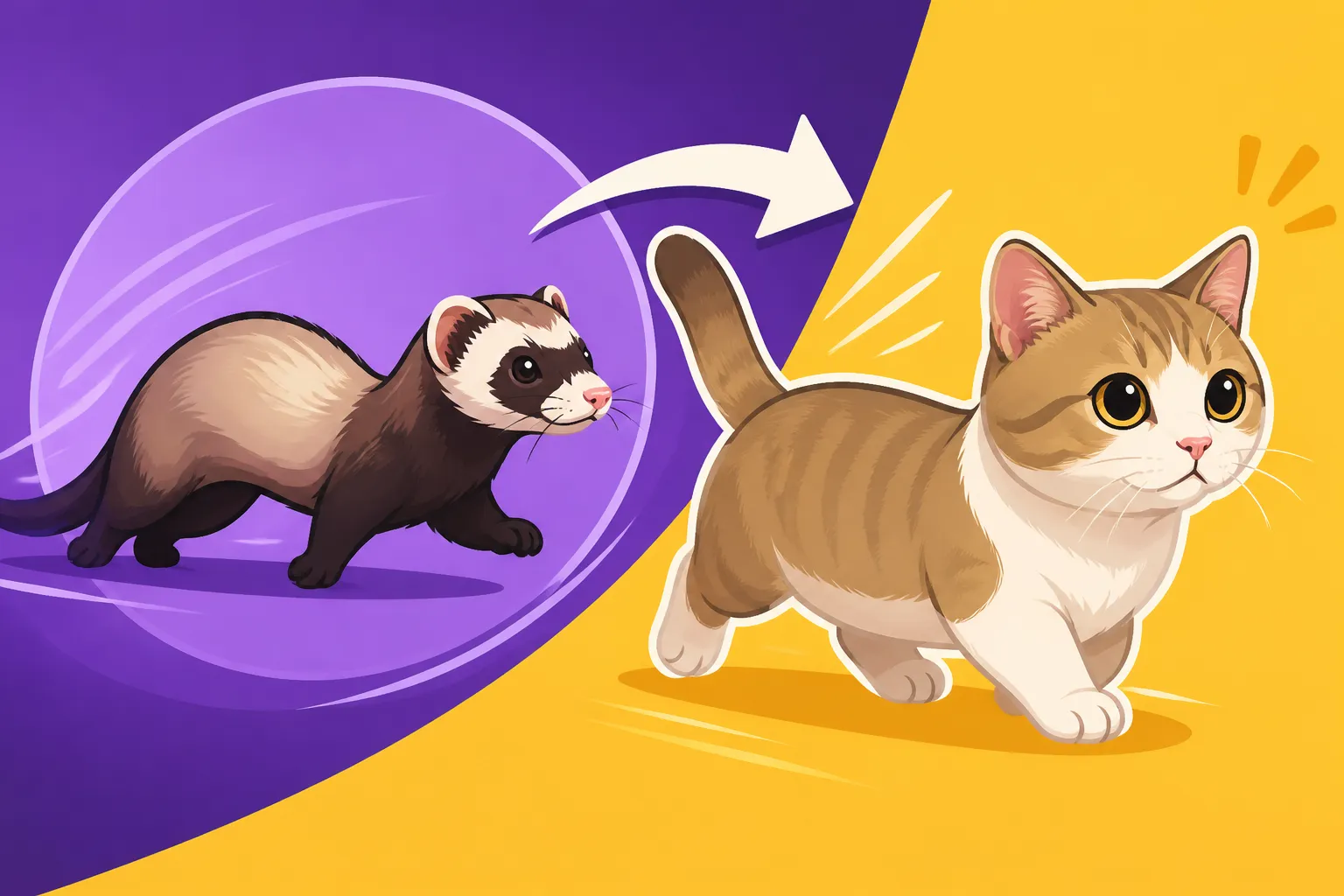
Have you ever watched a Munchkin cat darting around your living room and thought, "Are they part ferret?" It's a common observation, and for good reason! Their distinctive short legs give them a gait and agility that's truly one-of-a-kind, often reminiscent of a slinky, low-slung weasel rather than a typical feline. This guide will dive deep into the fascinating mechanics and behaviors that make a Munchkin move so much like a ferret, exploring everything from their unique physique to their playful antics and how you can best support their unique way of navigating the world.
The Unique Biomechanics of the Munchkin Gait
The most defining characteristic of a Munchkin cat, of course, is its short legs. This isn't just a cute quirk; it fundamentally alters their biomechanics, leading to a movement style that stands out in the feline world. Unlike their long-legged cousins, Munchkins have a body structure that requires them to move differently, and it’s these differences that often draw comparisons to animals like ferrets. Their proportions are quite specific, often described as a normal-sized cat body on proportionally shorter limbs.
The Role of Shortened Limbs and Long Body
Imagine a regular cat, but then picture its legs having stopped growing a bit earlier than usual. That's essentially what you see in a Munchkin. Their femurs and humeri, the long bones in their upper legs, are significantly shorter than those of a typical domestic cat. This congenital condition, known as pseudoachondroplasia, results in legs that are much closer to the ground. Despite this, their spine itself is usually of a normal length, providing a body that is surprisingly long and flexible for their height. Why a Munchkin's Spine Is Normal Length
This combination of short legs and a normal-length, flexible body is key to their unique movement. It means their center of gravity is much lower to the ground, which has profound implications for how they walk, run, and interact with their environment. They aren't simply miniature versions of other cats; they are cats specifically adapted to a ground-hugging existence. This anatomical setup requires a distinct muscular engagement and balance strategy that sets them apart.
When you observe a Munchkin, you'll notice their belly almost sweeps the floor as they move. Why a Munchkin's Belly Nearly Touches the Floor This closeness to the ground allows for a type of agility that is different from the soaring leaps of a standard cat. Instead of vertical prowess, they excel in horizontal maneuvers, demonstrating a quickness and serpentine grace that is unexpected given their appearance. Their body becomes a low-slung, agile platform, capable of rapid changes in direction.
The Distinctive "Ferret-Like" Amble
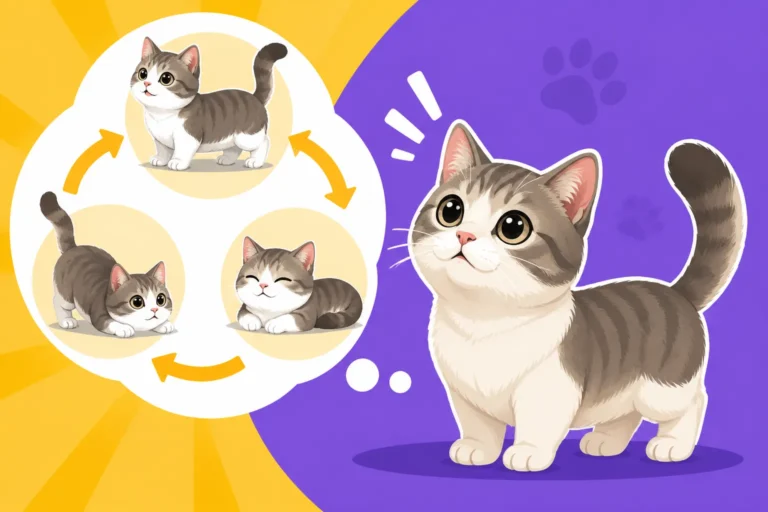
The term "ferret-like" often comes to mind because of their low, slinky, and often wiggly gait. When a Munchkin walks, it's not the fluid, almost elegant stride of a long-legged cat. Instead, their short legs necessitate quicker, smaller steps, and their body often sways or undulates to maintain momentum and balance. This creates a distinctive "waddle" or "scurry" that is quite endearing to watch.
Picture a ferret as it explores: a low body, quick movements, and an almost continuous motion that flows rather than steps. A Munchkin exhibits similar characteristics, especially when they are exploring or hunting at ground level. Their front legs, in particular, can appear slightly bowed or turned out. Why a Munchkin's Front Legs Look Bowed This isn't necessarily a fault but a common conformation trait that further influences their gait, contributing to that distinctive low-to-the-ground, wide stance as they move.
This specific type of locomotion allows them to move through tight spaces with surprising ease and speed. They can weave around chair legs, under furniture, and through cluttered areas without missing a beat, often appearing to flow over the terrain rather than walk on it. It’s a highly efficient way to navigate a world that is not necessarily designed for their unique proportions, relying on their body's flexibility to compensate for what their legs lack in height.
How Their Low Center of Gravity Aids Agility
A low center of gravity is a significant advantage for a Munchkin, especially when it comes to agility and stability. Think about a race car: it's built low to the ground for better handling and cornering at high speeds. While a Munchkin isn't a race car, the principle applies. Their proximity to the ground makes them incredibly stable, reducing the likelihood of tipping over even during rapid movements or quick changes in direction. Why a Low Center of Gravity Helps a Munchkin Corner
This inherent stability allows them to be incredibly fast on level ground. You might not expect it from their appearance, but a Munchkin can really put on a burst of speed when chasing a toy or darting across the room. Their energy isn't expended on achieving height; it's channeled into horizontal propulsion, making them surprisingly quick. How Fast a Munchkin Runs on Level Ground This makes them fantastic playmates for interactive, ground-based games.
Moreover, their low stance gives them exceptional control during quick turns. They can pivot and change direction with remarkable precision, often outmaneuvering longer-legged cats in a tight chase. This ground-hugging dynamism is a hallmark of their ferret-like movement, allowing them to excel in pursuits that keep them firmly on all fours. They use their entire body, including their tail for balance, to navigate their environment with remarkable dexterity.
Navigating the World: Movement Adaptations
Living life at ankle height means a Munchkin develops a whole set of unique strategies for getting around. They don't have the same access to vertical spaces as other cats, but they more than make up for it with their adaptability and cleverness. Observing how they navigate a typical home truly highlights their distinct approach to feline mobility.
Master of the Flatland Sprint and Cornering
When it comes to covering ground quickly, particularly on flat surfaces, Munchkins are often underestimated. Their short legs might suggest slower movement, but in reality, they are surprisingly zippy. Instead of long, powerful strides, they employ rapid, piston-like movements of their legs, combined with the undulating flex of their spine, to propel themselves forward with considerable speed. This makes them excellent at chasing toys across a living room floor or dashing to greet you at the door.
Their low center of gravity isn't just for stability; it's also a secret weapon for quick directional changes. A longer-legged cat might need to slow down more significantly to make a sharp turn, but a Munchkin can pivot almost on the spot. They use their entire body to lean into turns, maintaining momentum and balance in a way that truly resembles a ferret weaving through obstacles. This makes playtime particularly dynamic, as they can suddenly change course to ambush a dangling wand toy or a scuttling laser pointer dot.
This mastery of horizontal movement means that while they might not be scaling your bookshelves, they are absolute champions of the floor. They can weave through obstacles, dart under furniture, and zip across open spaces with an efficiency that’s fascinating to watch. For a Munchkin, the floor isn't just a surface to walk on; it's their entire world, and they've evolved a movement style perfectly suited for it.
Ingenious Climbing and Descent Strategies
While a Munchkin cannot jump as high as a normal-legged cat, don't mistake this for a lack of ambition or desire to reach elevated spots. How High a Munchkin Can Actually Jump They simply employ different, often more creative, methods. Instead of launching themselves in a single, powerful leap, Munchkins are masters of the "staircase" approach. They'll use furniture, stacked boxes, or strategically placed pet steps and ramps to ascend to their desired height. You might find them hopping from a footstool to a sofa, then to a chair, and finally onto a low-lying windowsill.
Descent, interestingly, can sometimes be more challenging than ascent, especially if the landing surface is too far away. While they are agile, repeated high-impact landings can put strain on their unique skeletal structure. This is why many Munchkin owners invest in ramps or pet steps, especially for access to beds and sofas. Ramps and Steps Are Munchkin Equipment, Not Luxuries They learn very quickly to use these aids, often preferring a gentle slope to a jarring jump. An Amazon search for "pet ramps for small dogs and cats" can yield many suitable options.
When they do jump, it’s typically a horizontal jump to an adjacent surface of similar height, or a carefully calculated upward trajectory to a modest height. They often push off powerfully with their hind legs, using their short front legs to grasp and pull themselves up. Their resourcefulness in navigating a vertical world highlights their intelligence and determination, proving that a lack of leg length doesn't mean a lack of capability – just a different strategy.
The Characteristic "Prairie Dog" Sit for Observation
One of the most charming and distinct behaviors of a Munchkin cat is their "prairie dog" sit. This is when they stand up on their hind legs, balancing on their back paws with their front paws held close to their chest, almost like a meerkat or, indeed, a prairie dog. They can hold this pose for surprisingly long periods, often using it to get a better view of their surroundings, survey a situation, or simply observe something that has caught their attention. Why a Munchkin Sits Up on Its Hind Legs
This upright posture isn't just for cuteness; it's a functional adaptation to their short stature. Since everything around them is at a higher vantage point, sitting up allows them to overcome their height disadvantage and take in more of their environment. It’s a natural response to their world, enabling them to see over low obstacles, scan for incoming toys, or peek at what you're doing on the kitchen counter. It’s an adorable example of how their behavior has evolved to compensate for their physical traits.
While it looks utterly charming, it’s worth noting that the TICA Munchkin standard, which describes the ideal physical characteristics for the breed, values a cat that is well-balanced and moves freely. The "prairie dog" sit is a natural behavior, but a healthy Munchkin should also be able to move and play comfortably on all fours. What the TICA Munchkin Standard Asks For This unique posture is another reason why their movements are often likened to smaller, ground-dwelling mammals rather than typical cats, further solidifying the ferret comparison.
Play, Predation, and the Munchkin's Movement Style
Munchkin cats are incredibly playful, and their unique movement style directly influences how they interact with toys, engage in mock hunts, and even socialize with other pets. Their ground-level existence shapes their predatory instincts and how they seek enrichment, making them fascinating companions to observe during their most active moments.
Ground-Level Hunting and Pouncing Dynamics
A Munchkin's hunting style is very much a reflection of its short stature. Instead of high-leaping ambush tactics, they are masters of the low-slung prowl and the swift, ground-based pounce. They stalk their prey (whether it's a toy mouse or a dust bunny) with their body low to the ground, almost slithering through the terrain, much like a ferret might navigate underbrush. This allows them to stay hidden and approach unnoticed, using their environment to their advantage.
When they launch their attack, it's often a quick, powerful burst forward, rather than an upward spring. They explode from their crouched position, covering short distances with remarkable speed and accuracy. Their strong hindquarters are well-suited for this kind of propulsion, enabling them to snatch toys right off the floor or from under low furniture. This style of hunting is highly effective for their build, focusing their energy on horizontal speed and precision rather than vertical reach.
This predatory behavior makes interactive wand toys that are kept close to the ground particularly engaging for Munchkins. They love to chase, bat, and pounce on feathers or small stuffed animals dragged along the floor. You'll see their ferret-like agility in full display as they weave, dart, and corner, completely immersed in the thrill of the chase, demonstrating that their short legs certainly don't diminish their innate hunting drive.
Engaging with Toys and Environment
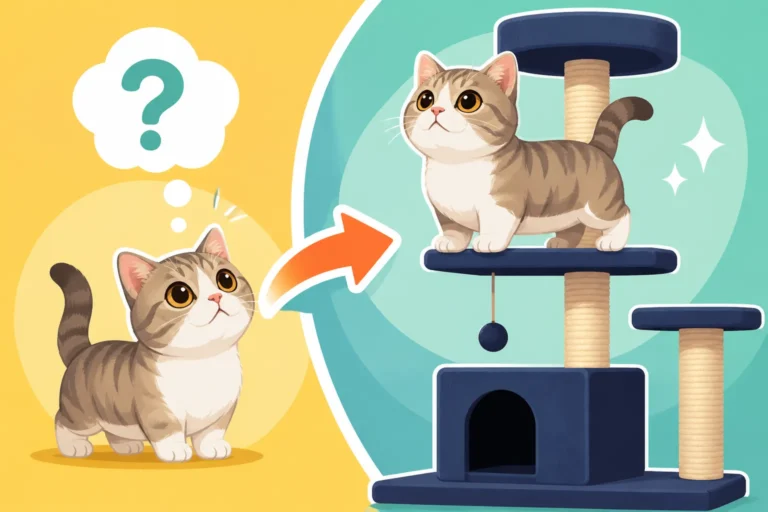
Because Munchkins live so close to the ground, their interaction with toys and their environment is naturally focused on that level. Tall cat trees with widely spaced platforms are often inaccessible or daunting for them. Instead, they thrive with toys they can chase, bat, and manipulate on the floor. Balls, crinkle toys, small stuffed animals, and puzzle feeders that sit on the ground are ideal for keeping them entertained. You can find a vast array of such toys on Amazon, perfectly suited for ground-level play.
They also have a knack for exploring and getting into tight, low spaces that a larger, longer-legged cat might not even consider. This can lead to amusing discoveries, like finding them curled up in a laundry basket or peeking out from under a low coffee table. Their curiosity is boundless, and their body shape allows them to satisfy it in ways that are unique to their breed. It's important to provide them with safe, accessible hideaways and tunnels that cater to this exploratory nature.
Enrichment for a Munchkin means thinking horizontally. Providing pathways of boxes, tunnels, and low-level climbing structures allows them to exercise both their body and their mind. They use their unique movement to navigate these environments, demonstrating their incredible adaptability and intelligence. Their play is often characterized by bursts of energy, quick turns, and a constant engagement with objects at their eye level.
Social Interaction and Play with Other Pets
When a Munchkin interacts with other cats, particularly those with normal leg length, their movement differences become quite apparent. While they are just as playful, their play style might involve more wrestling and ground-based chasing rather than vertical pursuits. A long-legged cat might jump onto a tall cat tree to escape a playful ambush, but a Munchkin relies on its speed and ability to duck under or around obstacles.
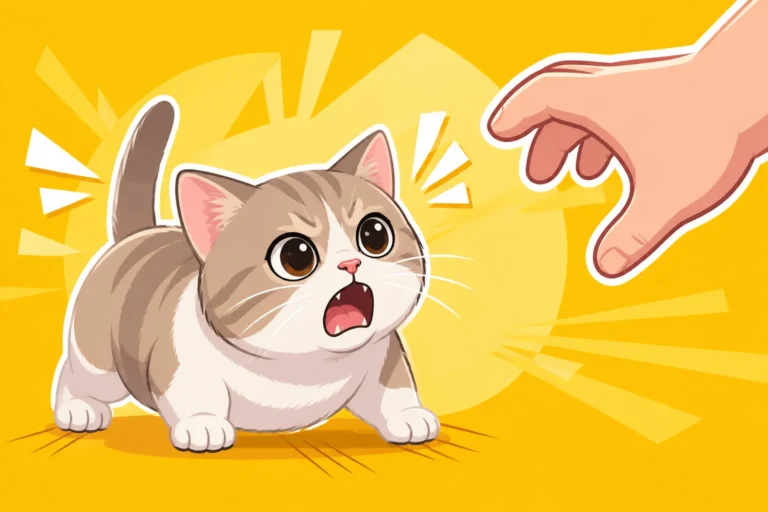
Introducing a Munchkin to a dog requires careful consideration, primarily because their unique movement style can make them vulnerable. Why a Munchkin Cannot Get Away From a Dog A Munchkin cannot easily jump onto a high surface to escape a boisterous dog. Therefore, ensuring they have secure, dog-free zones or low, accessible hiding spots is crucial. Their ferret-like ability to dart and hide low can be an advantage, but it's not a foolproof escape plan from an overly energetic canine.
Despite these physical differences, Munchkins are generally very social cats and integrate well into multi-pet households. Their playful nature and adaptability mean they often find ways to engage in play with companions, adapting their movements to suit the situation. You'll often see them initiating games of chase or hide-and-seek, using their distinctive gait to their advantage in playful encounters, cementing their role as an active and integrated member of the family.
Physical Comparisons: Munchkin Cats vs. Ferrets
The comparison between a Munchkin cat's movement and that of a ferret is striking enough to warrant a deeper look. While they are entirely different species, their shared physical characteristics in terms of body shape and low stature lead to some fascinating parallels in how they navigate their respective worlds.
Anatomical Similarities and Differences
At first glance, the most obvious anatomical similarity is their low-slung, elongated body profile. Ferrets are naturally long and slender, designed to tunnel and navigate tight spaces. Munchkin cats, with their normal-length spine and short legs, effectively achieve a similar silhouette. Both animals move close to the ground, relying on flexibility and quick, low movements rather than high jumps or broad strides.
However, the underlying skeletal structures are fundamentally different. Ferrets, belonging to the weasel family, have a naturally very flexible spine that allows for incredible contortions. While Munchkins have a flexible spine for a cat, it is still a cat spine, not a ferret spine. The dwarfism in Munchkins affects the long bones of their limbs, whereas a ferret's elongated body is its natural, non-dwarfed form. This means that while both move with a slinky grace, the mechanism by which they achieve it differs.
| Feature | Munchkin Cat | Ferret |
|---|---|---|
| Leg Length | Proportionally short due to dwarfism | Proportionally short/normal for species |
| Body Length | Normal cat body length | Naturally elongated body |
| Spine Flexibility | Flexible (for a cat), contributes to gait | Extremely flexible, serpentine motion |
| Center of Gravity | Very low | Very low |
| Movement Style | Scurrying, low-slung, undulating | Slinky, weaving, tunneling, very fluid |
| Primary Locomotion | Ground-based running, pivoting, short jumps | Ground-based, burrowing, climbing (low) |
| Jumping Ability | Limited vertical, good horizontal | Limited vertical, good horizontal/climbing (low) |
Behavioral Overlaps and Distinctive Traits
Beyond just anatomy, there are behavioral overlaps that strengthen the "ferret-like" comparison. Both Munchkins and ferrets are known for their insatiable curiosity, especially for exploring low, hidden spaces. They love to tunnel under blankets, squeeze into tight gaps, and investigate every nook and cranny at ground level. This shared exploratory drive translates into similar movement patterns as they forage and play.
The "prairie dog" sit, as mentioned, is another behavioral quirk that resonates with ferret owners. While ferrets don't typically stand on their hind legs to the same extent as a Munchkin, their general upright investigative postures can bear a resemblance. Both animals utilize their full body to interact with their environment, whether it's by stretching to reach something or by using their powerful hindquarters for quick bursts of movement.
However, their distinctive traits remain. A Munchkin's purr and kneading behavior are undeniably feline, and their independent, yet affectionate, nature is pure cat. Ferrets, while domesticated, retain more of their wild mustelid instincts, often exhibiting a more intense, driven curiosity and a different vocalization repertoire. The comparison is mainly about locomotion and interaction with ground-level space, not a wholesale behavioral identity.
Evolutionary Paths Leading to Similar Locomotion
It’s truly a case of convergent evolution in miniature. Ferrets evolved their long, low bodies to be effective predators in tunnels and burrows, giving them access to prey that larger animals couldn’t reach. Their movement is perfectly adapted to navigating confined, horizontal spaces, allowing them to slink and weave with incredible efficiency.
The Munchkin's short legs, while a spontaneous genetic mutation, resulted in a phenotype that, by sheer accident, creates a similar set of movement advantages for navigating ground-level environments. The cat’s instinct to explore and hunt, when combined with its shortened limbs, naturally led to the development of a low-slung, scuttling gait. It’s not that Munchkins are trying to be ferrets; rather, their unique physical form has led them to adopt similar movement strategies out of necessity and efficiency, simply because it’s the most effective way for them to move through their world.
This accidental convergence highlights how different species, when faced with similar physical constraints or ecological niches, can evolve or develop strikingly similar adaptations. For the Munchkin, it means a fascinating and often amusing display of agility and unique grace that charms their human companions and provides endless entertainment.
Cultivating Optimal Movement and Enrichment
Understanding how a Munchkin moves is just the first step; the next is creating an environment that supports and celebrates their unique abilities while minimizing potential strain. A well-adapted home ensures your Munchkin can move freely, play safely, and live a full, enriching life without undue physical stress.
Adapting the Home Environment for Safe Exploration
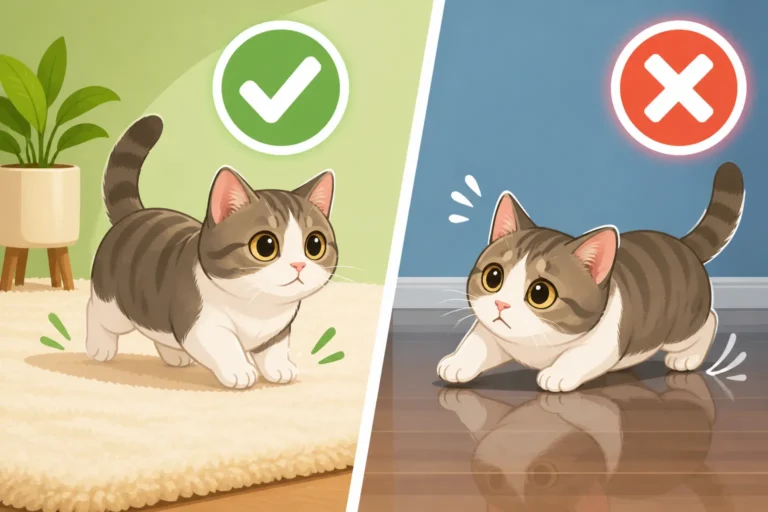
The most crucial aspect of caring for a Munchkin is recognizing that your home needs to be adapted to them, rather than expecting them to adapt to a typical cat environment. This means reimagining vertical access. Instead of tall, unstable cat trees with wide gaps between platforms, consider low-rise cat trees, or better yet, a series of steps or ramps leading to favorite perching spots. You can find excellent pet steps and ramps on Amazon, specifically designed for small animals or those with mobility challenges.
Think about access to essential areas. Litter boxes should have a very low entry point, allowing your Munchkin to walk in easily without having to jump or strain their back. Which Litter Box a Munchkin Can Actually Enter Their food and water bowls should also be easily accessible at ground level, or slightly raised bowls to prevent them from stooping too far, which can strain their shoulders. Consider a raised feeder you can buy, or even just placing bowls on a slightly elevated, stable platform like a sturdy book.
Furthermore, ensure that their favorite napping spots, like a sunny windowsill or a cozy bed, are reachable via ramps, steps, or strategically placed furniture. This minimizes the need for high-impact jumps, preserving their joint health as they age. Every potential jump down from a sofa or bed should have a ramp or step to facilitate a gentle descent, especially since coming down can be harder than going up for a Munchkin.
Providing Appropriate Play and Exercise Opportunities
Playtime for a Munchkin should largely be focused on ground-level activities that engage their natural hunting instincts and exploit their ferret-like agility. Wand toys are a fantastic choice, allowing you to mimic scuttling prey along the floor, encouraging their low-slung prowling and quick pounces. Laser pointers, when used appropriately and always ending with a tangible toy they can "catch," also provide great exercise for their quick sprints and sharp turns.
Puzzle feeders are another excellent way to provide mental and physical enrichment, especially those designed to be solved on the floor. These encourage them to use their paws and noses to get treats, stimulating their minds without requiring strenuous jumps. Look for feeders that allow for easy access, rather than those that require reaching high or into deep crevices.
Consider creating a "Munchkin-friendly" play zone with a series of tunnels, low boxes, and soft obstacles they can weave through or jump over. This kind of environment not only encourages their natural movement patterns but also satisfies their instinct to explore and hide. Remember that while they are highly energetic, short bursts of play throughout the day are often more suitable than one long, exhausting session.
Encouraging Natural Behaviors Without Strain
While it's important to provide ramps and steps, it's equally vital not to overly restrict a Munchkin's natural desire to explore and play. They will, of course, attempt jumps and climbs. The goal is to provide safe alternatives and minimize risky behaviors, not to eliminate their natural instincts. Observe your cat: if they are attempting a jump repeatedly and failing, or looking strained, it’s a good indication that you need to provide a more accessible route.
Encourage their "prairie dog" sit by placing interesting things for them to observe at a slightly elevated level, where they would naturally want to stand up to see. This allows them to engage this unique behavior safely and naturally. Gentle, consistent encouragement to use ramps and steps will also help them understand these are their new, safe pathways. Positive reinforcement with treats and praise can work wonders in teaching them new habits.
Ultimately, cultivating optimal movement means creating a balance: an environment that challenges their minds and bodies in appropriate ways, allows them to express their natural feline behaviors, and crucially, protects their unique physical structure from unnecessary strain. It’s about understanding and catering to their special needs, ensuring they can enjoy life to the fullest.
Addressing Mobility Concerns and Health Proactively
While Munchkins are generally healthy and active cats, their unique skeletal structure does mean that mobility and joint health require particular attention throughout their lives. Being proactive and observant can help you identify any issues early and ensure your ferret-footed friend remains comfortable and mobile.
Recognizing Signs of Discomfort or Changes in Gait
It's absolutely essential to be vigilant for any changes in your Munchkin's movement. Because their gait is already distinctive, it can sometimes be challenging to spot subtle signs of discomfort. However, any new reluctance to jump even small heights, hesitation before using a ramp they previously navigated with ease, or a change in their typical ferret-like scurry could be a red flag. Pay attention if they start to walk with a stiffer, more labored gait, or if they are less enthusiastic about playtime. How Arthritis Shows in a Munchkin's Front Legs
Other signs of potential joint discomfort or spinal issues might include excessive licking of a particular limb or joint, guarding a certain area when touched, or a noticeable decrease in their overall activity level. They might also start avoiding their favorite sleeping spots if getting there requires a jump or climb that is now painful. Even changes in their "prairie dog" sit – if they hold it for shorter periods or seem unsteady – could indicate an issue. Don't dismiss these as simply "getting old," especially if they appear suddenly or progress quickly.
If you observe any of these changes, it's crucial to consult your veterinarian promptly. Early diagnosis and intervention can make a significant difference in managing discomfort and improving your Munchkin's quality of life. Describe exactly what you've noticed, and consider taking a video of their altered movement to show your vet, as pets often act "normal" in the clinic setting.
The Critical Role of Weight Management
For a Munchkin cat, maintaining a healthy weight is not just about aesthetics; it's a critical component of their overall health and particularly their joint and spinal well-being. Every extra pound on a Munchkin places disproportionate stress on their short limbs and spine, which are already designed to carry a lower load than a standard cat's. Why Weight Is More Dangerous on a Munchkin This increased burden can exacerbate existing predispositions to conditions like arthritis or lordosis.
An overweight Munchkin will find even simple movements more challenging. Their already low belly might drag more, making grooming their hindquarters difficult and potentially leading to skin issues or matting. What a Munchkin Cannot Reach to Groom They may become even more reluctant to move, leading to a vicious cycle of weight gain and decreased activity. Weighing your Munchkin regularly at home and consulting your vet about their ideal body condition score is highly recommended.
Feeding a precisely measured diet that is appropriate for their lower energy expenditure is paramount. Unlike long-legged cats that burn more calories through higher jumps and more strenuous movement, Munchkins often require fewer calories. Work with your vet to determine the right portion sizes and a high-quality diet that supports their joint health without leading to weight gain. This preventative measure is one of the most impactful things you can do for your Munchkin's long-term mobility.
Regular Veterinary Checks and Preventative Care
Routine veterinary visits are vital for all cats, but for Munchkins, they offer an invaluable opportunity for early detection of potential mobility issues. During these check-ups, your vet can assess their gait, palpate their spine and joints, and discuss any changes you've observed. As they age, your vet might recommend specific screenings, such as X-rays, to monitor the health of their spine and joints, particularly if any concerns arise.
Beyond monitoring for musculoskeletal issues, regular vet visits ensure they are up-to-date on vaccinations and parasitic control. Discussing a joint supplement regimen with your vet can also be a proactive step, especially as your Munchkin enters their senior years. Supplements containing glucosamine, chondroitin, and omega fatty acids can support joint health and potentially slow the progression of age-related arthritis.
Remember, the goal is preventative care. By understanding the unique physical characteristics of your Munchkin and working closely with your veterinarian, you can proactively address potential health challenges. This commitment to their well-being ensures that your beloved ferret-footed companion can continue to enjoy their playful, curious life with as much comfort and mobility as possible for all their The Twelve to Fifteen Years a Munchkin Usually Gets.
Beyond the "Ferret" Label: Appreciating Munchkin Uniqueness
While the "ferret-like" comparison is undeniably apt for describing a Munchkin's movement, it's important to remember that they are, first and foremost, cats. Their unique locomotion is just one facet of their charming personality and resilience. There are often misconceptions surrounding their health and quality of life, which deserve to be clarified.
Debunking Myths About Their Movement Being Painful
One of the most persistent myths about Munchkin cats is that their short legs cause them constant pain or significant disability. This is largely untrue for well-bred Munchkins without severe skeletal deformities like lordosis or pectus excavatum. The short-legged trait (pseudoachondroplasia) itself is generally not considered painful. Healthy Munchkins adapt exceptionally well to their unique physique and move with a surprising level of agility and speed, as we've explored. They do not appear to be in distress from their shortened limbs.
The concern arises when individuals confuse typical Munchkin movement with the symptoms of genetic conditions that can cause pain, such as severe spinal lordosis (an inward curvature of the spine) or pectus excavatum (a sunken chest). Lordosis Is the Spinal Curve the Munchkin Argument Is About These conditions are not inherent to all Munchkins; rather, they are potential complications that ethical breeders screen for. A healthy Munchkin displays its ferret-like gait with ease and joy, exhibiting no signs of discomfort or limitation in its everyday activities.
It's crucial for prospective owners to distinguish between the natural, adapted movement of a healthy Munchkin and the signs of actual medical issues. A responsible breeder should be able to provide health clearances for parents and discuss any potential breed-specific concerns transparently. Observing a Munchkin kitten moving freely and playing vigorously is usually a good indicator of their comfort and quality of life.
Celebrating Their Resilience and Adaptability
What truly defines Munchkin cats is their incredible resilience and adaptability. Despite their physical differences, they approach life with boundless curiosity, energy, and a remarkable ability to navigate a world built for longer-limbed creatures. They don't dwell on their limitations; instead, they find ingenious ways to overcome them, whether it's through elaborate climbing sequences, masterful ground-level navigation, or simply asking for a lift when a spot is truly out of reach.
Their spirit is undeniably feline: playful, independent, and deeply affectionate. They bond closely with their families and often display a charming persistence in getting what they want, whether it’s a cuddle or access to a sunny patch. This inherent cheerfulness and tenacity are what endear them to so many owners worldwide. They prove that being different doesn't mean being less capable; it simply means being uniquely capable.
Living with a Munchkin cat offers a constant reminder of the diverse beauty within the animal kingdom. Their ferret-like movements are not a sign of weakness but a testament to their evolutionary ingenuity and their ability to thrive. They inspire us to look beyond conventional standards and appreciate the varied ways creatures can move through and interact with their environment.
The Joy of Living with a Ferret-Footed Friend
Ultimately, owning a Munchkin cat is a joyful experience, largely because of their distinctive personality and unique way of moving through the world. Their ferret-like scurry brings a constant source of amusement and wonder, reminding you that even familiar animals can surprise you with their adaptations. Watching them dart around, pounce from a low crouch, or pop up in their signature "prairie dog" sit is endlessly entertaining.
They are engaging companions who encourage you to view your home from a different perspective, leading you to create a more accessible and enriching environment not just for them, but often for other pets and even humans. The slight adjustments needed to their home environment become small acts of love that enhance their quality of life, making your bond even stronger.
If you’re considering bringing a Munchkin into your life, prepare for a cat that will captivate you with its singular charm and dynamic presence. Their unique movement is part of their identity, a visible expression of their vivacious spirit and adaptability. Embrace the ferret-footed friend, and you’ll discover a feline companion unlike any other, bringing endless laughter and love into your home.
Disclaimer
This article is for general informational purposes only and does not constitute professional advice. Laws, prices and regulations vary by location and change over time. Consult a qualified professional for guidance on your specific situation.