Why a Munchkin’s Bed Should Be on the Floor
We all want our beloved pets to be comfortable and safe, and when it comes to sleeping arrangements, our first instinct is often to offer them a plush bed up high, perhaps on a sofa or even right on our own bed. After all, isn't that where cats love to be? However, for a Munchkin cat, that seemingly loving gesture can actually pose a significant risk and cause unnecessary strain. This guide is dedicated to helping you understand why placing your Munchkin's primary bed at floor level isn't just a good idea, but an essential part of responsible Munchkin care, ensuring their long-term health and happiness.
Understanding a Munchkin's Unique Mobility Needs
It's easy to look at a Munchkin and see a regular cat, just with shorter legs. While they are indeed full of personality and often just as agile as their long-legged counterparts on level ground, their unique physical structure means they interact with their environment in fundamentally different ways. Ignoring these differences can lead to preventable health issues and a diminished quality of life.
The Limitations of Short Legs
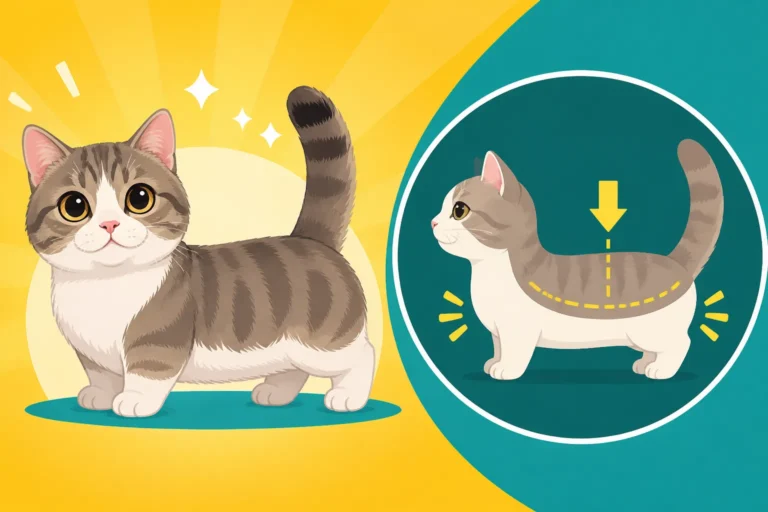
The defining characteristic of a Munchkin cat is their adorably short legs, a result of a genetic mutation causing pseudoachondroplasia. This isn't just a cosmetic difference; it directly impacts their biomechanics. Imagine trying to navigate a world built for someone much taller than you – that's often what a Munchkin experiences. Their legs, while strong, simply don't provide the same leverage or reach as a standard cat's. This means they can't spring upwards with the same power, nor can they absorb impacts from descents in the same way. Their spine, while often described as normal length, carries a different load distribution because of those short limbs. This is why understanding Why a Munchkin's Spine Carries a Load a Normal Cat's Does Not is so crucial.
Their short stature also changes how they move. While they can dart and weave with surprising speed on the flat, their ability to cover vertical distances is severely limited. What might be a simple hop for a regular cat becomes a multi-stage effort, or an impossible feat, for a Munchkin. This isn't laziness; it's a physical reality that shapes their entire interaction with furniture, toys, and even fellow household members. Owners often recount how their Munchkin will gaze longingly at a spot a regular cat would effortlessly reach, highlighting the very real barriers they face in a standard home.
The Impact on Jumping and Climbing
Despite their limitations, Munchkins are incredibly determined and clever. They will find ways to get where they want to go, often by using furniture as a kind of staircase. A series of low, sequential jumps from a footstool to a chair to a sofa might be their elaborate route to a sunny windowsill. This problem-solving is endearing, but it comes with an inherent risk. Every jump, no matter how small, places stress on their joints, especially their shoulders and elbows, which bear the brunt of the landing. Over time, this repeated impact can contribute to conditions like osteoarthritis. You might notice your Munchkin trying the same jump repeatedly, even if they fail, which is a testament to their persistence but also a warning sign for you, the owner.
Climbing is an even greater challenge. Standard cat trees with widely spaced platforms are often completely unusable for a Munchkin. Their short legs simply can't bridge the gaps, leaving them unable to access the higher, more secure perches that other cats enjoy. This lack of vertical escape routes can also lead to stress, especially if they feel cornered or threatened by other pets or children. Providing a safe, accessible environment isn't just about physical health; it's about their mental well-being too, ensuring they always have a comfortable, easy-to-reach sanctuary.
The Risks of High Beds for Munchkins
It's natural to want our cats to sleep in a soft, elevated spot where they can survey their kingdom, but for a Munchkin, this can turn a cozy dream into a potential nightmare. The very design of their bodies makes high perches problematic, and the cumulative effects of trying to access them can be quite serious over their lifespan.
Fall Injuries and Joint Strain
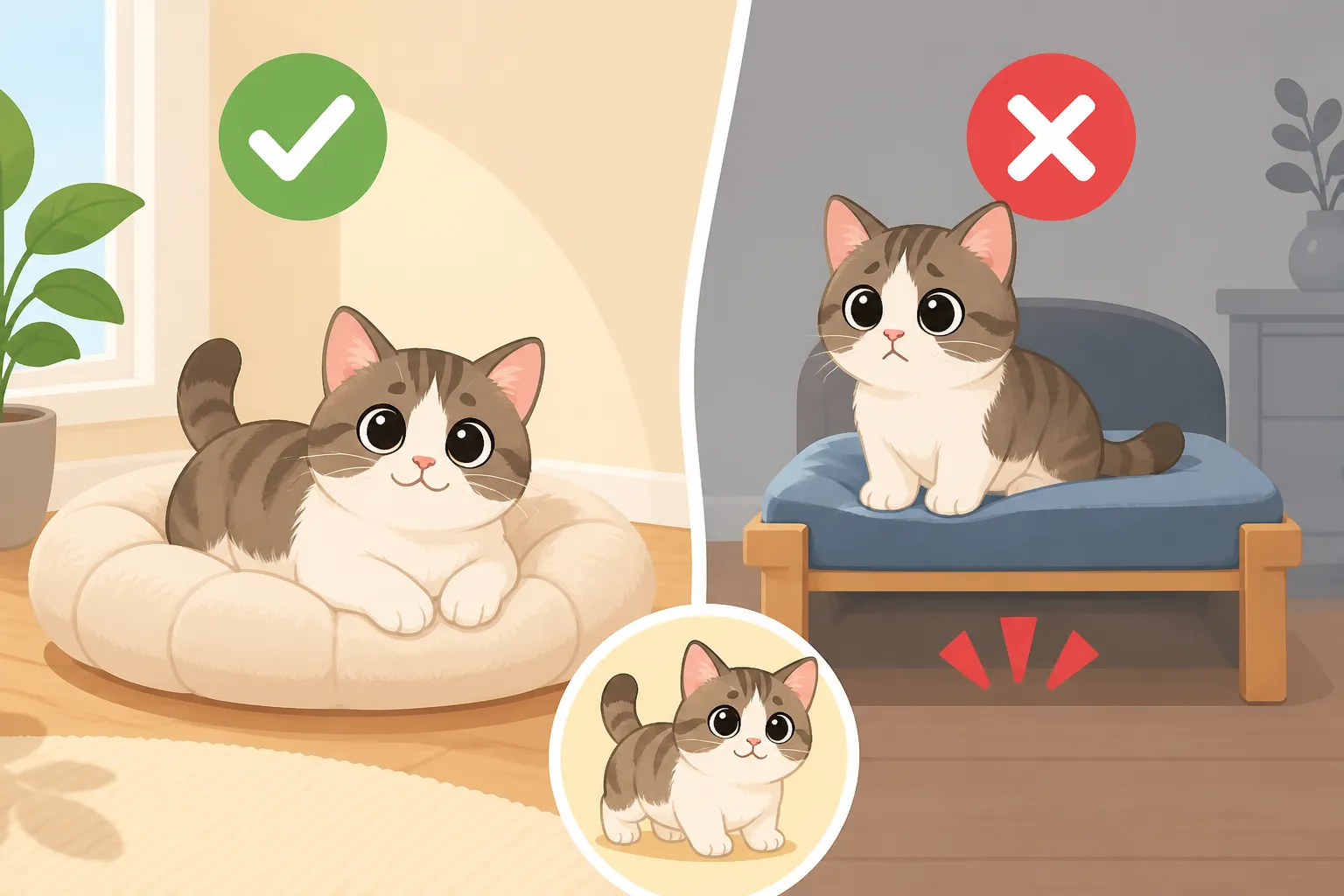
The most immediate and obvious risk of a high bed is the danger of a fall. While a Munchkin might be able to jump up onto a bed, sofa, or chair, jumping down is often a greater challenge, and many cats will simply drop. For a cat with normal leg length, the shock is distributed across longer bones and more flexible joints. For a Munchkin, however, the impact is more concentrated and directly affects their shorter limbs and the delicate structure of their spine. A bad landing, even from a seemingly moderate height, can lead to sprains, fractures, or worse, exacerbate existing spinal issues. Why a Munchkin's Spine Is Normal Length doesn't mean it's invulnerable to such impacts.
Beyond acute injuries, there's the insidious problem of chronic joint strain. Every time your Munchkin jumps up or down, their joints are subjected to stress. Over months and years, this repetitive stress can accelerate the development of degenerative joint diseases like arthritis. Think of the impact on their shoulders and elbows, which are constantly used for leverage and shock absorption. How Arthritis Shows in a Munchkin's Front Legs is something every Munchkin owner should be aware of, and preventing excessive jumping is a key preventative measure. Providing ramps and steps for their favored spots can certainly help, but ensuring their primary sleeping spot is already on the floor removes the need for these maneuvers during their most vulnerable, sleepy moments.
The Psychological Toll of Inaccessibility
Beyond the physical dangers, consider the psychological impact on your Munchkin. Cats are creatures of routine and comfort. If their favorite sleeping spot requires a difficult or painful jump, it can lead to frustration, anxiety, and even reluctance to use the bed you've so thoughtfully provided. Imagine wanting desperately to reach a comfortable spot but knowing it will hurt, or fearing you might fall. This can diminish their overall quality of life. They might start avoiding the bed altogether, choosing less comfortable but more accessible spots on the floor, or constantly solicit your help to be lifted.
Furthermore, cats derive a sense of security from having a predictable, easily accessible resting place. If their sleep zone is a precarious perch, they may not feel truly safe or relaxed. This is particularly true if they share the home with other pets or young children from whom they might need a quick escape. A Munchkin cannot simply leap to safety onto a high shelf or dart under a bed if getting there requires multiple jumps. Ensuring their bed is at floor level gives them an immediate, constant haven they can retreat to without stress or physical exertion, promoting a sense of calm and well-being.
Creating a Safe and Accessible Sleep Environment
Once you understand the 'why,' the 'how' becomes much clearer. Adapting your home for a Munchkin, especially their sleeping arrangements, is about making smart, compassionate choices that align with their physical capabilities. It's about letting your home work with your Munchkin, not against them.
Choosing the Right Bed Location and Type
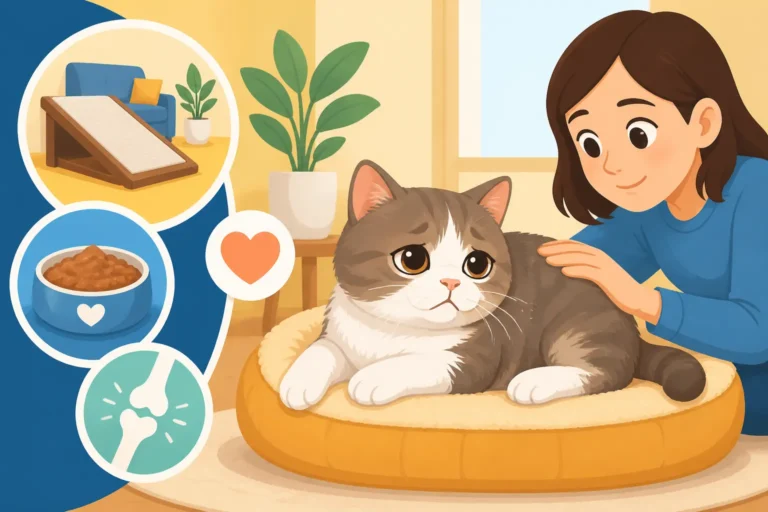
The simplest and most effective solution for a Munchkin's bed is to place it directly on the floor. This completely eliminates any need for jumping or straining. But 'on the floor' doesn't mean sacrificing comfort or style! There's a vast array of floor-level pet beds available today, from cozy donut beds that offer a sense of security to plush memory foam mats that cradle joints, which you can easily find on platforms like Amazon or Chewy. Look for beds with supportive, low-profile edges that they can easily step over. Consider also the material; something soft yet durable that can be easily cleaned is ideal, especially if your Munchkin has trouble reaching certain areas for grooming.
When selecting the location, think about warmth, quiet, and security. A drafty hallway might not be the best spot. Near a sunny window, in a quiet corner of a living room, or even in your bedroom at the foot of your bed are all excellent choices. The goal is to provide a dedicated, comfortable space that your Munchkin can access effortlessly, day or night. This simple change can dramatically reduce the daily physical stress on their body and ensure they get truly restful sleep.
Adding Ramps and Steps for Elevated Access
While their primary bed should be on the floor, we know Munchkins are curious and sometimes enjoy being up higher with their humans. This is where well-designed ramps and steps become indispensable. These aren't just luxuries; for a Munchkin, Ramps and Steps Are Munchkin Equipment, Not Luxuries that bridge the gap between their short legs and your taller furniture. Look for pet ramps with a gentle incline and a non-slip surface to give them confidence. Steps should have shallow risers and broad treads, making each step easy and stable.
You can place these ramps or steps strategically to allow access to your sofa, a favorite armchair, or even your bed. It’s important to introduce these slowly and positively, using treats and praise to encourage their use. Some Munchkins will take to them immediately, while others might need a little coaxing. The key is consistency and ensuring the ramps or steps are stable and don't wobble, which can scare a cautious cat. Regularly check the condition of these aids, especially if they are frequently used, to ensure they remain safe and secure.
Ensuring Comfort and Security at Floor Level
Beyond just putting a bed on the floor, think about enhancing the overall comfort and security of their floor-level world. Many Munchkins love the feeling of being enclosed or having a "den." Consider beds with high sides or even enclosed cat caves that offer a sense of privacy and safety. These can be particularly comforting for a Munchkin who might feel exposed due to their low stature. You can also layer soft blankets or towels inside their bed to make it even more inviting, especially during cooler months.
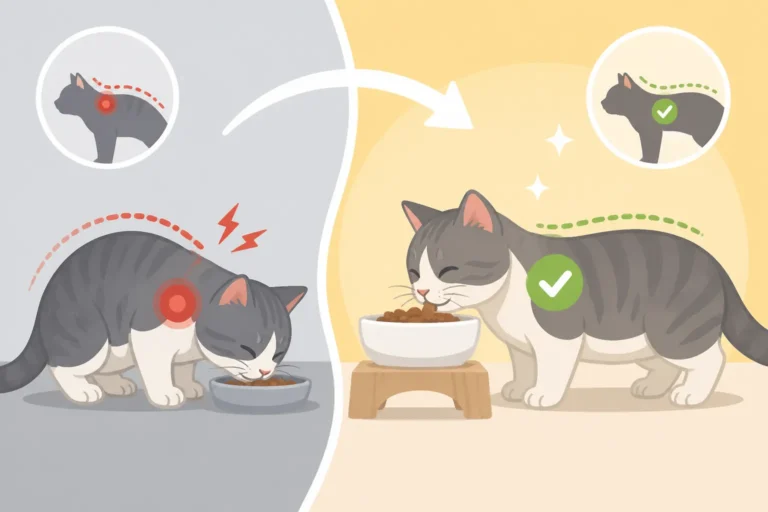
Think about the wider environment surrounding their bed. Is it in a high-traffic area where they might be constantly disturbed? Or is it in a quieter spot where they can truly relax? Place their food and water bowls nearby, ensuring they are also at an easily accessible height. Raised food bowls can actually ease strain on a Munchkin's neck and shoulders while eating, which is a great complementary measure to floor-level sleeping. How High a Munchkin's Food Bowl Should Sit is a good point to consider when setting up their eating space to ensure optimal comfort.
| Bed Type | Pros for Munchkins | Cons for Munchkins |
|---|---|---|
| Floor-level Donut Bed | Easy access, cozy, provides security, no jumping needed. | May not offer elevated view, can accumulate floor dust. |
| Enclosed Cat Cave | Excellent security, warmth, clear "safe space." | Can be less breathable, might be harder to clean. |
| Orthopedic Mat | Excellent joint support, low profile, comfortable. | Less "cozy" feeling than enclosed beds, less security. |
| Pet Sofa/Miniature Bed | Elevated slightly for a view, still low to the ground. | Requires a small step or ramp for easy access, still a slight jump down. |
Beyond the Bed: Holistic Home Adaptation
Providing a floor-level bed is a fantastic start, but a Munchkin's care involves a more holistic approach to their entire living space. Every aspect of your home, from furniture to litter boxes, should be viewed through the lens of their unique physical design. This isn't about making your home less appealing to you, but rather making it genuinely functional and comfortable for your low-to-the-ground companion.
Rethinking Furniture Placement
Once you accept that a Munchkin needs a floor-centric environment, you'll start seeing your furniture differently. Rather than forcing them to adapt to your tall tables and shelves, consider how you can adapt your home to them. This might involve rearranging pieces of furniture to create natural, low-level 'staircases' or pathways. For instance, placing a sturdy ottoman next to a sofa can provide an intermediate step, making the sofa accessible without a high jump. Similarly, low bookshelves or benches can act as stepping stones to a favorite windowsill. It's about creating a series of accessible platforms rather than expecting a single heroic leap.
Consider the layout of your main living areas. Are there long stretches of slippery flooring, like laminate or tile, that could be difficult for a Munchkin to navigate quickly or safely? Adding rugs or carpet runners can provide better traction, reducing the risk of slips and falls, especially during enthusiastic play or quick turns. Remember, Why a Munchkin's Low Body Helps It Chase means they can be surprisingly fast, but sudden stops and turns on slick surfaces can be risky. The goal is to minimize high-impact activities and create smooth, low-effort transitions throughout the house.
Grooming and Litter Box Considerations
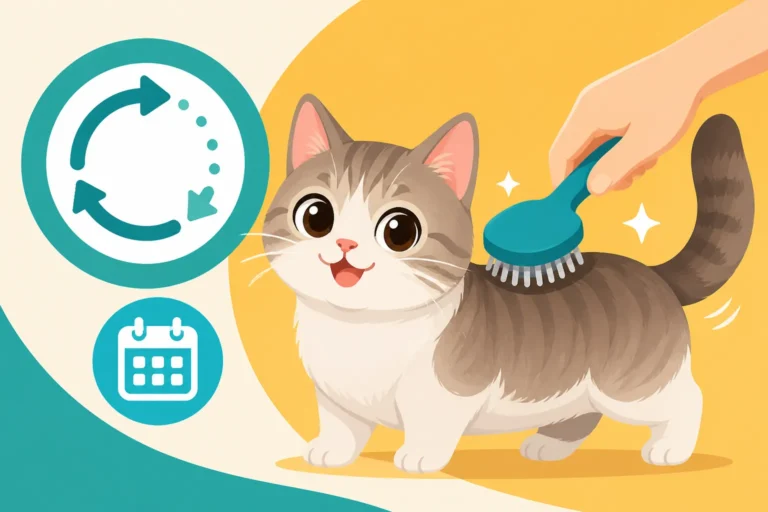
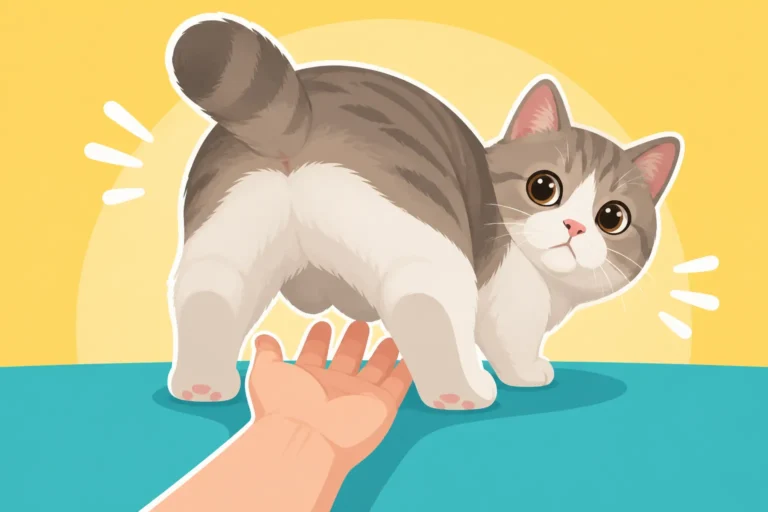
Because of their short legs and proportionally normal body length, Munchkins can sometimes struggle with self-grooming, especially reaching their hindquarters or the underside of their belly. This means as an owner, you'll need to step in to help with regular brushing and even occasional cleaning. Neglecting this can lead to uncomfortable matting, skin irritation, and hygiene issues, particularly around the litter box area. Whether Matting Becomes a Health Problem in a Munchkin is a valid concern, and proactive grooming is essential.
Speaking of litter boxes, this is another crucial area for adaptation. A standard litter box with high sides, while great for containing litter, can be a major hurdle for a Munchkin. Imagine trying to step over a wall that's almost as tall as your waist – that's what a Munchkin experiences. This can lead to them holding it in, or worse, finding more accessible (and less appropriate) places to relieve themselves. Opt for low-entry litter boxes, or even senior cat litter boxes, which have a much lower lip, making them easy for your Munchkin to walk into without straining. You can even find these specialty items on pet supply sites like Chewy.
Recognizing Signs of Discomfort and When to Act
Even with the most meticulously adapted home, it's vital to remain observant of your Munchkin's behavior. Their unique anatomy means they can be prone to certain issues, and early detection is key to managing any discomfort or developing health problems effectively. Your vigilance is their best defense.
Behavioral Cues and Physical Symptoms
Munchkins are often stoic, and cats in general are masters at hiding pain or discomfort. However, there are subtle signs that can indicate they are struggling. Pay close attention to changes in their mobility. Are they hesitating before attempting even small jumps they used to make easily? Are they sleeping more than usual, or in unusual places, perhaps seeking out softer, more supportive surfaces? A reluctance to play, especially games that involve running or chasing, can also be a red flag. If your usually playful Munchkin seems withdrawn or less engaged, it warrants investigation. What an Old Munchkin Stops Being Able to Do is often a gradual process, but even subtle changes in a younger cat can be significant.
Physically, watch for any stiffness in their gait, particularly after resting. Do their front legs appear stiff, or do they shift their weight awkwardly? Are they more vocal than usual, especially when trying to move or settle? Any signs of lameness, swelling in joints, or visible discomfort when you gently touch their back or legs should prompt immediate veterinary attention. Don't dismiss these as simply "getting old" – cats can experience pain at any age, and early intervention can make a huge difference.
The Importance of Regular Vet Checks
Regular veterinary check-ups are paramount for a Munchkin, even if they seem perfectly healthy. Your vet can perform a thorough physical examination, assessing their gait, joint health, and spinal alignment. Don't be afraid to openly discuss your Munchkin's unique needs and any concerns you have about their mobility. It's often helpful to prepare a list of observations you've made at home, perhaps even taking videos of your Munchkin moving or interacting with their environment, as this can provide invaluable information to your vet.
As your Munchkin ages, these check-ups become even more critical, often including a focus on joint health and weight management. Why Weight Is More Dangerous on a Munchkin cannot be overstated, as extra pounds place immense strain on their already unique skeletal structure. Your vet might recommend supplements, such as those containing glucosamine or chondroitin, or specific dietary changes, perhaps incorporating joint-supportive food. Proactive care and open communication with your veterinarian will help ensure your Munchkin enjoys a long, comfortable, and pain-free life, all starting with something as simple as providing a safe, floor-level bed.
Disclaimer
This article is for general informational purposes only and does not constitute professional advice. Laws, prices and regulations vary by location and change over time. Consult a qualified professional for guidance on your specific situation.