Why the Munchkin Is Named After the Wizard of Oz
It's completely understandable why so many people, when they first hear about the Munchkin cat, immediately wonder about its name. It’s certainly distinctive, and for anyone familiar with classic cinema or literature, The Wizard of Oz springs to mind almost instantly. You're not alone in making that connection, and in fact, you're absolutely on the right track! This guide will take a deep dive into the fascinating origin of the Munchkin cat's name, exploring its roots in the beloved tale and how it perfectly encapsulates the breed's most defining characteristic, while also looking at the breed's captivating history and unique traits.
The Curious Case of the Munchkin Name
When you encounter a Munchkin cat for the first time, their most striking feature is undeniably their delightfully short legs. It's this unique physical trait that sets them apart and, as it turns out, directly inspired their rather famous name. The choice wasn't accidental; it was a clever and fitting homage that perfectly captured the essence of these charming felines.
More Than Just a Cute Sound
Many breed names are descriptive, reflecting a place of origin, a characteristic color, or a historical role. Think of a Persian cat's flowing coat, or a Siamese cat's distinctive coloring. The name "Munchkin," however, feels a little different. It's whimsical, almost storybook-like, and carries an immediate sense of smallness and charm. But it's more than just a cute sound; it's a direct reference that, once understood, makes perfect sense. The founders of the breed wanted a name that would instantly convey the cat's most defining physical attribute without resorting to clinical or overly scientific terms. They sought something memorable, endearing, and universally understood for its association with small stature. This wasn't just about naming a cat; it was about branding a new and unusual breed in a way that captured public imagination. The name helps paint a picture even before you've seen the cat, and that's a powerful thing in the world of animal fancy. It bypasses any need for lengthy explanations, delivering the core idea in a single, evocative word.
A Deliberate Choice, Not a Coincidence
The naming of the Munchkin cat was far from a coincidence; it was a deliberate and thoughtful decision made by the early developers of the breed. They understood the power of a name to define a new animal in the public eye, and they chose one that would be both memorable and descriptive. Imagine being one of the first people to encounter these unique cats – their standard-length bodies carried on unusually short legs. It's a striking image, and the challenge was to find a name that would capture that immediate visual impact. The association with the "Munchkins" from The Wizard of Oz was a natural fit, offering a cultural touchstone that many people could instantly grasp. It allowed for a playful yet accurate description of the cat's most distinctive feature. This intentional choice helped to quickly establish the breed's identity and provided a conversation starter that drew people in, rather than creating confusion or requiring complex explanations. It embedded the breed's identity within a popular narrative, lending it an instant sense of magic and familiarity.
The Origin Story of the Munchkin Cat
To truly understand the name, we need to go back to where it all began. Like many beloved breeds, the Munchkin's story starts with a chance encounter and a observant, caring individual who recognized something special. The breed didn't spring from meticulous genetic engineering in a lab; it arose from a spontaneous natural mutation in a regular domestic cat.
Blackberry's Discovery in Louisiana
The tale of the Munchkin cat begins in 1983, under a truck in Rayville, Louisiana. A kindhearted schoolteacher named Sandra Hochenedel found two stray cats hiding there, both pregnant. She took them in, providing them with food, shelter, and much-needed care. What she noticed almost immediately was that one of these cats had remarkably short legs, significantly shorter than a typical domestic cat. This particular cat was a black, short-haired feline who Hochenedel affectionately named Blackberry. Blackberry was not only unique in her appearance, but also possessed a gentle temperament and a playful spirit, quickly endearing herself to Hochenedel. The circumstances of her discovery, a humble stray finding refuge, highlight the natural, unpedigreed origins of what would eventually become a recognized breed. It was a simple act of compassion that set the stage for a new chapter in cat history. This chance discovery of The Munchkin Started Under a Truck in Louisiana in 1983 truly marks the foundational moment for the entire breed.
From Stray to Foundation Queen
Blackberry, with her distinctive short legs, eventually gave birth to a litter of kittens. To Sandra Hochenedel's surprise and fascination, about half of Blackberry's kittens also inherited her short legs. This was a clear indication that the short-legged trait wasn't an anomaly or an injury, but rather a genetic characteristic that was being passed down. One of these short-legged kittens, a male, was given to Hochenedel's friend, Kay LaFrance, who named him Toulouse. It was this pair, Blackberry and Toulouse, who became the foundation stock for the entire Munchkin breed. LaFrance and Hochenedel carefully observed these cats, noting that despite their shorter limbs, they were active, playful, and displayed no apparent discomfort or mobility issues. They moved differently, certainly, but they moved with grace and speed. This consistent inheritance and normal behavior encouraged them to explore the possibility of developing this unique trait into a new breed. The story of Blackberry and Toulouse Are the Two Cats Behind Every Munchkin is truly the genesis of what we know today as the Munchkin cat.
The Connection to The Wizard of Oz
Now we arrive at the heart of the matter: the direct inspiration for the Munchkin cat's name. It's a charming connection that ties a beloved fantasy world to the unique reality of these adorable felines.
The Little People of Oz
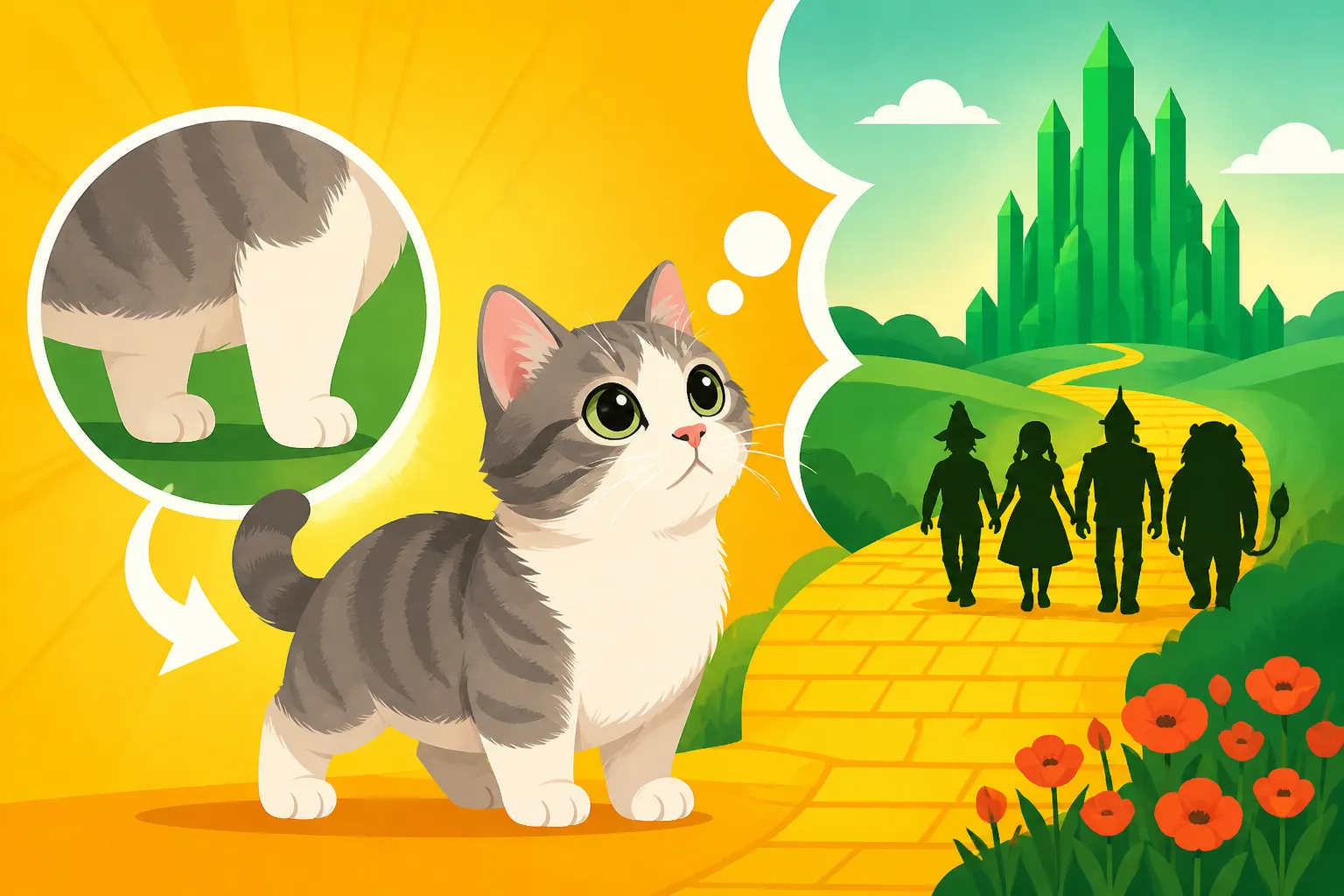
For anyone familiar with L. Frank Baum's classic novel, The Wonderful Wizard of Oz, or more famously, the iconic 1939 film adaptation, the "Munchkins" are immediately recognizable. They are the cheerful, diminutive inhabitants of Munchkinland, the eastern quadrant of the magical Land of Oz, famously adorned in blue. When Dorothy's house lands in Oz, it's the Munchkins who greet her, their small stature and vibrant personalities leaving a lasting impression. They are portrayed as industrious, joyful, and, most notably, quite short in height. This imagery of a group of friendly, small-statured individuals is what struck the founders of the cat breed. The name perfectly conjured an image of smallness combined with an engaging, almost fantastical, quality. It was a cultural touchstone that immediately conveyed a sense of the cat's most striking physical feature in an endearing way. This association helped to give the breed an instant identity that was both playful and evocative, making it easy for people to remember and understand its core characteristic.
Drawing Parallels to the Cat's Stature
The parallels drawn between the fictional Munchkins and the real-life cats are quite direct and undeniable. Just as the Munchkins in Oz are characterized by their short stature, the feline Munchkin breed is defined by its significantly shortened legs. When you see a Munchkin cat, it's impossible not to notice how much closer to the ground they are compared to an average domestic cat. This isn't a subtle difference; it's the most prominent feature of their physical conformation. The breed developers recognized this striking visual similarity and cleverly adopted the name. It wasn't just about being "small"; it was about being proportionately short-legged while maintaining a body length and build that were otherwise typical of a domestic cat. This distinction from other forms of dwarfism, where other skeletal issues might be present, was important. The name "Munchkin" became a shorthand, a delightful and easily understood metaphor for their distinctive physique, connecting them instantly to a well-known image of charm and smallness.
The Munchkin Breed's Early Days and Public Debut
Once the short-legged trait was recognized as inheritable, the journey from interesting genetic anomaly to recognized breed began. This path was not without its challenges and debates, but the unique appeal of the Munchkin cat was undeniable.
Introducing the Breed to the World
After several generations of breeding Blackberry's descendants, Sandra Hochenedel and Kay LaFrance felt they had a stable, healthy line of short-legged cats. They decided it was time to introduce their unique felines to the wider cat fancy community. The formal debut of the Munchkin breed occurred in 1991 at a TICA (The International Cat Association) show at Madison Square Garden in New York City. This was a pivotal moment, marking the first time the public and professional breeders saw these cats en masse. The cats were presented as a new breed undergoing development, and they were an instant sensation – albeit a controversial one. Spectators were both charmed and puzzled by the cats' appearance and gait. Some found them incredibly cute and endearing, while others raised concerns about their health and welfare due to their unique leg structure. The reaction was intense and divided, a sign that the Munchkin was destined to be a talking point for years to come. How the Munchkin Reached Madison Square Garden really set the stage for its contentious but ultimately successful path to recognition.
TICA's Role in Recognition
The International Cat Association (TICA) plays a crucial role in the recognition and standardization of new cat breeds, and the Munchkin was no exception. While the initial presentation at Madison Square Garden generated significant buzz, it also sparked a fierce debate within the cat fancy community. Despite the controversies, TICA saw the merit in the breed's unique characteristics and the dedication of its breeders. In 1994, TICA officially accepted the Munchkin into its new breed development program. This was a critical step, allowing breeders to register their cats and participate in shows, moving towards championship status. It wasn't a smooth process; there were judges who resigned in protest, feeling that promoting a breed with a genetic mutation that could potentially cause health issues was unethical. However, TICA's stance was that the cats were healthy and active, and the short-legged trait was a naturally occurring mutation. Eventually, in 2003, TICA granted the Munchkin Championship Status, allowing them to compete fully in shows and achieve the highest honors. This decision solidified the Munchkin's place in the cat world, despite ongoing discussions. For more on this, you might be interested in TICA Took the Munchkin In and a Judge Resigned Over It.
Why the Name Stuck and Resonates
The name "Munchkin" isn't just a historical footnote; it's a living part of the breed's identity that continues to resonate with cat lovers and the general public alike. Its staying power speaks to its cleverness and appropriateness.
The Power of Distinctive Naming
In a world filled with many wonderful cat breeds, having a truly distinctive name is a huge asset, and the "Munchkin" name delivered exactly that. It's not generic; it instantly piques curiosity and, thanks to its pop culture connection, immediately provides a visual reference for those unfamiliar with the breed. This distinctiveness helps the breed stand out in a crowded field. Imagine if they had been named something more clinical like "Short-Legged Feline" or "Achondroplastic Cat" – it just wouldn't have the same memorable charm or broad appeal. The name "Munchkin" works because it's whimsical, a little bit magical, and perfectly encapsulates the breed's adorable and unusual appearance. This kind of evocative naming is critical for public recognition and for fostering a sense of affection and uniqueness around the breed. It transforms a genetic trait into an endearing characteristic, making the cat more approachable and desirable to potential owners. The playful nature of the name itself mirrors the playful and energetic personalities these cats often exhibit.
Public Perception and Enduring Appeal
The connection to The Wizard of Oz has undoubtedly contributed to the Munchkin cat's enduring appeal. It taps into a shared cultural narrative that many people recognize and hold dear, creating an instant emotional connection. When someone hears "Munchkin," they often think of charming, cheerful, and slightly mischievous characters, and this perception translates beautifully to the cat breed. The name evokes a sense of joy and wonder, which aligns well with the playful and often curious nature of these cats. This positive association has helped to cement the Munchkin's place in the hearts of many cat enthusiasts, allowing them to forgive or overlook some of the controversies that have historically surrounded the breed. The simple, memorable name has made them a household word, and contributes to their widespread popularity in online communities and pet-related content. It gives them a narrative beyond just their physical appearance, lending them a distinct and relatable personality that transcends typical breed descriptions.
Beyond the Name: Understanding the Munchkin's Unique Traits
While the name is charming, it's important to delve deeper into what makes a Munchkin cat truly unique, beyond just a clever label. Their short legs are, of course, the defining feature, but understanding the genetics and their impact on the cat's life is crucial for any potential owner.
The Genetic Basis of Short Legs
The most distinctive feature of the Munchkin cat, its short legs, is the result of a spontaneous, naturally occurring genetic mutation. This mutation causes a condition known as pseudoachondroplasia, which specifically affects the long bones of the legs, making them significantly shorter than those of an average cat. The gene responsible is inherited in an autosomal dominant manner. This means that if a cat inherits just one copy of the gene, it will display the short-legged trait. If it inherits two copies, however, the condition is lethal, and the embryos do not survive. This is why Munchkins are always bred to normal-legged cats – a practice that ensures healthy kittens and prevents the lethal homozygous state. This unique inheritance pattern is a critical aspect of Munchkin breeding and understanding. The short legs do not impede their agility or speed on flat surfaces, though they do affect their jumping ability. For a deeper understanding of the inheritance, refer to Why Munchkin Dwarfism Is Called Autosomal Dominant and Why the Munchkin Gene Has Not Been Identified.
The short legs of a Munchkin cat are not merely a cosmetic trait; they dictate a completely different way of interacting with their environment. Unlike some forms of dwarfism, the Munchkin's spine and body length are typically normal. It's predominantly the long bones in their limbs that are affected, particularly the radius, ulna, tibia, and fibula. This means their body is a normal cat's body, but it sits significantly closer to the ground. This physical characteristic leads to certain adaptations in their movement and behavior. They are often described as having a "ferret-like" gait due to their low-slung bodies and agile movement close to the floor. While they can run and play with surprising speed, they cannot achieve the same vertical leaps as their long-legged counterparts. Understanding this genetic basis helps prospective owners appreciate that this is a fundamental, inherited aspect of the breed, not a defect or illness. This is also why reputable breeders are so careful about their breeding pairs.
This genetic uniqueness also means that owning a Munchkin requires a different approach to their environment. Since they can't jump onto high surfaces like typical cats, their world needs to be adapted. This means providing ramps to sofas and beds, or ensuring all essential items like food, water, and litter boxes are easily accessible at ground level. Thinking about their lifestyle means considering everything from their favourite Chewy brand cat tree, which might need closer-set platforms, to simple things like window perches that are reachable. The trait itself is a single gene mutation, and beyond the leg length, a healthy Munchkin should exhibit all the vitality and characteristics of a regular domestic cat. It's a testament to the resilience of nature that such a distinct genetic variation can result in such an active and beloved breed.
A Normal Cat, Just Closer to the Ground
Despite their visually striking short legs, it's crucial to understand that a Munchkin cat is, in most respects, a normal cat. They possess the same inquisitive nature, playful energy, and affectionate disposition as any other domestic feline. Their personalities are often described as confident, outgoing, and highly intelligent. They love to play, chase toys, and engage with their human companions. The primary difference lies in their physical capabilities related to vertical movement. While they might not scale a tall cat tree in a single bound, they are incredibly resourceful and agile on the ground. They'll find alternative routes to elevated spots, using furniture as steps or employing their famous "prairie dog" sit to get a better view.
Their internal organs, skull, and spine are typically proportioned like those of a regular cat. This differentiates them from breeds with other forms of dwarfism that might experience wider-ranging health issues affecting other skeletal or internal systems. The focus of the Munchkin's uniqueness is predominantly on those charmingly short legs. This means that a healthy, well-bred Munchkin should not be in pain from its legs, nor should it experience widespread mobility issues beyond the limitations of jumping. They still require regular veterinary care, a balanced diet, and plenty of environmental enrichment, just like any other cat. The idea that they are "suffering" simply due to their leg length is a misconception that often arises from unfamiliarity with the breed. A Munchkin's daily life is full of running, playing, and exploring, just at a slightly lower altitude. Their adaptiveness and zest for life are often what truly win over their owners. For perspective on their physical health, exploring Which Health Problems the Munchkin Actually Has can offer more insights.
It's a common misunderstanding that their short stature leads to a sedentary lifestyle, but this couldn't be further from the truth. Munchkins are notoriously active and love to run and wrestle. Their low center of gravity often gives them surprising stability and agility when zooming across the floor or making tight turns during play. They are keen hunters of toy mice and laser pointers, demonstrating typical feline predatory instincts. The perception of them being fragile or less capable needs to be challenged. They are robust, curious, and full of personality. This means that owners need to provide appropriate outlets for their energy, ensuring they have toys they can bat and chase along the ground, or puzzle feeders that don't require high climbs. Even something as simple as a flat, soft bed from Chewy can be more suitable for their specific needs, ensuring they don't have to strain to get comfortable. Ultimately, a Munchkin is a cat first and foremost, with all the charms and quirks that implies, simply packaged in a uniquely endearing form.
The Ongoing Debate and Breed Standards
Despite their charm and growing popularity, the Munchkin cat breed has always been, and continues to be, a subject of considerable debate within the wider cat fancy and animal welfare communities. This controversy often revolves around ethical questions related to breeding for specific physical traits, particularly those resulting from genetic mutations.
Controversies and Ethical Considerations
The primary point of contention surrounding the Munchkin cat stems from its defining characteristic: the short legs caused by a genetic mutation. Critics often argue that breeding for a mutation that can be lethal in its homozygous form (when two copies are inherited) or potentially lead to health issues is unethical. Concerns have been raised about the possibility of spinal problems, joint issues, or mobility limitations, suggesting that the breed's conformation might compromise its welfare. Veterinary associations in some countries, notably those in Europe, have either banned or strongly discourage the breeding of Munchkin cats due to these welfare concerns, classifying them as "dysfunctional" or "deformed" breeds. These groups prioritize the cat's health and natural physical capabilities above aesthetic appeal or unique traits. They highlight the argument that if a cat cannot perform all the natural behaviors of its species (like jumping to safety or cleaning itself thoroughly) without human intervention or environmental modification, then breeding that trait is questionable. It's a complex ethical debate, with passionate arguments on both sides, which makes it a breed that often starts conversations like Whether Buying a Munchkin Is an Ethical Decision.
Proponents of the breed, primarily TICA-affiliated breeders and many owners, counter these arguments by stating that responsible breeding practices (never breeding two short-legged Munchkins together) mitigate the risks associated with the lethal gene. They point to studies and anecdotal evidence suggesting that healthy Munchkins, when well-bred and properly cared for, do not suffer from more skeletal or joint problems than other cat breeds. They emphasize the cat's normal activity levels, playfulness, and ability to adapt to its environment. They argue that the short legs are merely a physical difference, akin to the flattened face of a Persian or the hairlessness of a Sphynx, which also come with their own unique care requirements. These breeders often assert that the cats lead full, happy, and active lives, showcasing their agility on the ground and their ability to navigate their world effectively, even if differently. The intensity of this disagreement is why Why the Munchkin Divides the Cat Fancy More Than Any Breed is a topic of constant discussion.
The welfare debate also extends to the possibility of "stacked mutations," where Munchkins are crossed with other breeds known for specific genetic traits that might also have health implications, such as the folded ears of a Scottish Fold or the hairlessness of a Sphynx. These hybrid breeds sometimes face even greater scrutiny from welfare advocates, who worry about the cumulative effect of multiple genetic mutations on a cat's overall health and quality of life. This adds another layer of ethical complexity to the breeding practices within the Munchkin lineage. However, reputable breeders are generally very transparent about their cats' health and genetic backgrounds, ensuring they provide a detailed history and health guarantees. They also encourage potential owners to consider What Welfare Bodies Say About the Munchkin before making an informed decision.
TICA's Standard and the Ideal Munchkin
Despite the ongoing controversies, The International Cat Association (TICA) recognizes the Munchkin breed and has established a detailed breed standard to guide breeders and judges. This standard outlines the ideal physical characteristics and temperament of a Munchkin cat, ensuring that breeding efforts focus on health, structure, and type. For TICA, the Munchkin should be a medium-sized cat with a moderate body type, normal musculature, and a full, rounded chest. The defining characteristic, of course, is the legs, which should be noticeably short but well-boned and muscular, tapering slightly to small, neat paws. The front legs may have a slight bow, but this should not interfere with their movement. Importantly, the standard emphasizes that the spine should be normal, flexible, and free of any indications of lordosis or pectus excavatum. The goal is a cat that is structurally sound and agile despite its unique leg length. The breed standard helps maintain consistency and health within the population, providing clear guidelines for what constitutes a healthy and well-conformed Munchkin. Knowing What the TICA Munchkin Standard Asks For is essential for breeders and prospective owners.
Beyond the legs, the TICA standard describes a head that is a modified wedge, with gentle contours and a rounded forehead. The eyes should be walnut-shaped, neither round nor almond, and express a lively, alert, and sweet nature. Ears are medium-sized, broader at the base, and set on the side of the head. The coat can be either short-haired or long-haired, in any color or pattern, reflecting the diverse genetic background of the outcrosses used to establish the breed. The tail should be of normal length, carried upright when the cat is in motion. Temperament is also a key component of the standard; Munchkins should be outgoing, intelligent, and playful, demonstrating a curious and confident disposition. These qualities ensure that the cat is not only unique in appearance but also possesses a desirable personality suitable for a companion animal.
The careful detail in the TICA standard reflects a commitment to promoting healthy and well-adjusted Munchkin cats. It's a living document that guides breeders in making responsible choices, focusing on genetic diversity and minimizing any potential health risks associated with the breed. By adhering to this standard, breeders aim to produce cats that embody the charming spirit and unique appearance of the Munchkin, while ensuring their overall well-being. This includes assessing things like How Much an Adult Male Munchkin Weighs to ensure they are within a healthy range for their frame. Ultimately, the standard is a tool to ensure that the "Munchkin" name continues to represent a robust and beloved feline companion.
Disclaimer
This article is for general informational purposes only and does not constitute professional advice. Laws, prices and regulations vary by location and change over time. Consult a qualified professional for guidance on your specific situation.