What the First Munchkin Looked Like
It's always fascinating to delve into the origins of a breed, especially one as distinctive and, let's be honest, debated as the Munchkin. If you've ever wondered about the very first Munchkin cat, the one that started it all, you're not alone. Many people picture a perfectly groomed, tiny cat, but the reality of the breed's foundation is far more humble and, in some ways, quite wild. This guide will take you back to 1983 to explore the appearance of the original Munchkin, a little black cat named Blackberry, and how her unique look laid the groundwork for an entire breed.
The Unexpected Beginning: Blackberry's Appearance
Imagine stumbling upon a cat that looks distinctly different from any you've seen before. That's precisely what happened in the early 1980s, setting in motion the story of the Munchkin. The very first Munchkin wasn't some designer cat from a fancy cattery; she was a survivor, a feral cat discovered in the wild.
A Feral Find in Rural Louisiana
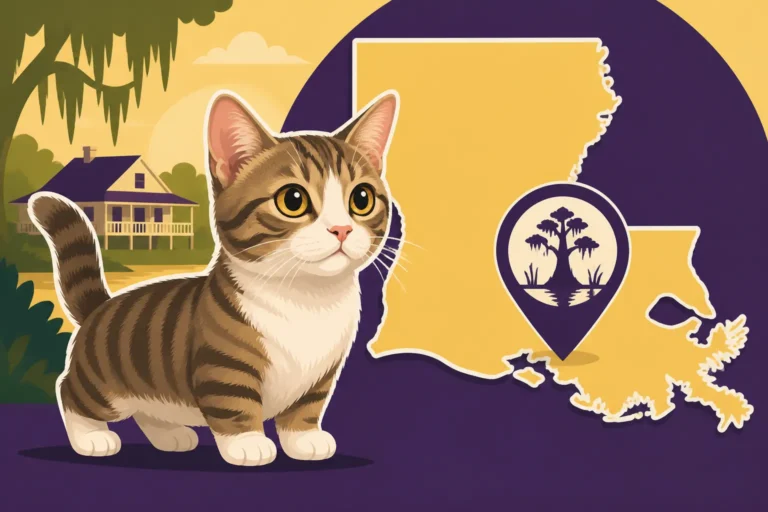
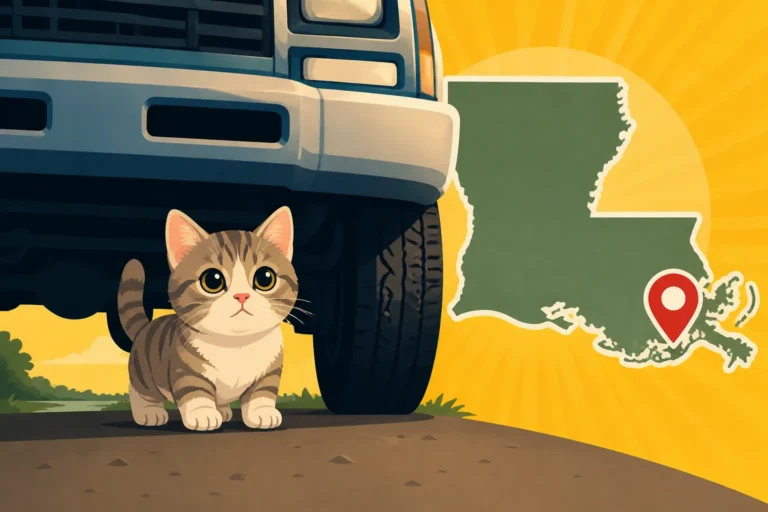
The year was 1983, and the place was rural Rayville, Louisiana. A woman named Sandra Hochenedel found a pregnant stray cat under her truck. This isn't an uncommon occurrence in many parts of the world, but this particular feline had a striking feature: extremely short legs. This was the cat who would become known as Blackberry. She was, by all accounts, a simple domestic black shorthair, but her legs were notably stubby, giving her a distinctive low-slung appearance.
At first glance, one might assume such short legs were the result of an injury or some kind of deformity. Perhaps she'd been hurt, or maybe she had a congenital issue that made her different. She was a feral cat, so her coat might have been a bit scruffy, her eyes wary, and her body lean from the struggles of street life. Her defining characteristic, the disproportionately short limbs, immediately set her apart. It was a visual anomaly that sparked curiosity, not pity, because despite her unique conformation, she moved with surprising agility. The Munchkin Started Under a Truck in Louisiana in 1983 recounts this very beginning.
Sandra Hochenedel's First Impressions
Sandra Hochenedel, the kind soul who took Blackberry in, was naturally intrigued by her new charge's unusual physique. Instead of dismissing it as a mere peculiarity, she observed Blackberry closely. What struck her was that despite the short legs, Blackberry seemed to function perfectly well. She could run, play, and navigate her environment without apparent difficulty or pain. Her movements were described as "ferret-like" – low to the ground, quick, and agile.
Hochenedel didn't initially think she had discovered a new breed. She simply saw a healthy, if unusually built, cat. There were no overt signs of distress or mobility issues that would suggest a disability. This observation was crucial because it informed the early understanding that the short legs were a genetic trait, not a debilitating defect. This early assessment by a concerned owner, observing a cat living a seemingly normal life despite its short stature, paved the way for the Munchkin's future. It was this initial normalcy in behavior, coupled with the striking physical difference, that made Blackberry so memorable and significant.
The Physical Traits of the Original Munchkin
So, what exactly did Blackberry look like, beyond just "short legs"? Her appearance, though unassuming for a feral cat, embodied the very essence of what would later become the Munchkin breed standard. It wasn't just about being small; it was about a specific type of dwarfism.
The Defining Feature: Short Legs
The most salient characteristic of Blackberry, and by extension, the first Munchkins, was undeniably her short legs. This isn't simply a matter of being a small cat; it's a specific form of dwarfism known as pseudoachondroplasia. This condition affects the long bones of the limbs, causing them to be significantly shorter than those of a typical cat, while the body and head remain proportionate in size. What Pseudoachondroplasia Does to a Munchkin's Legs delves deeper into this.
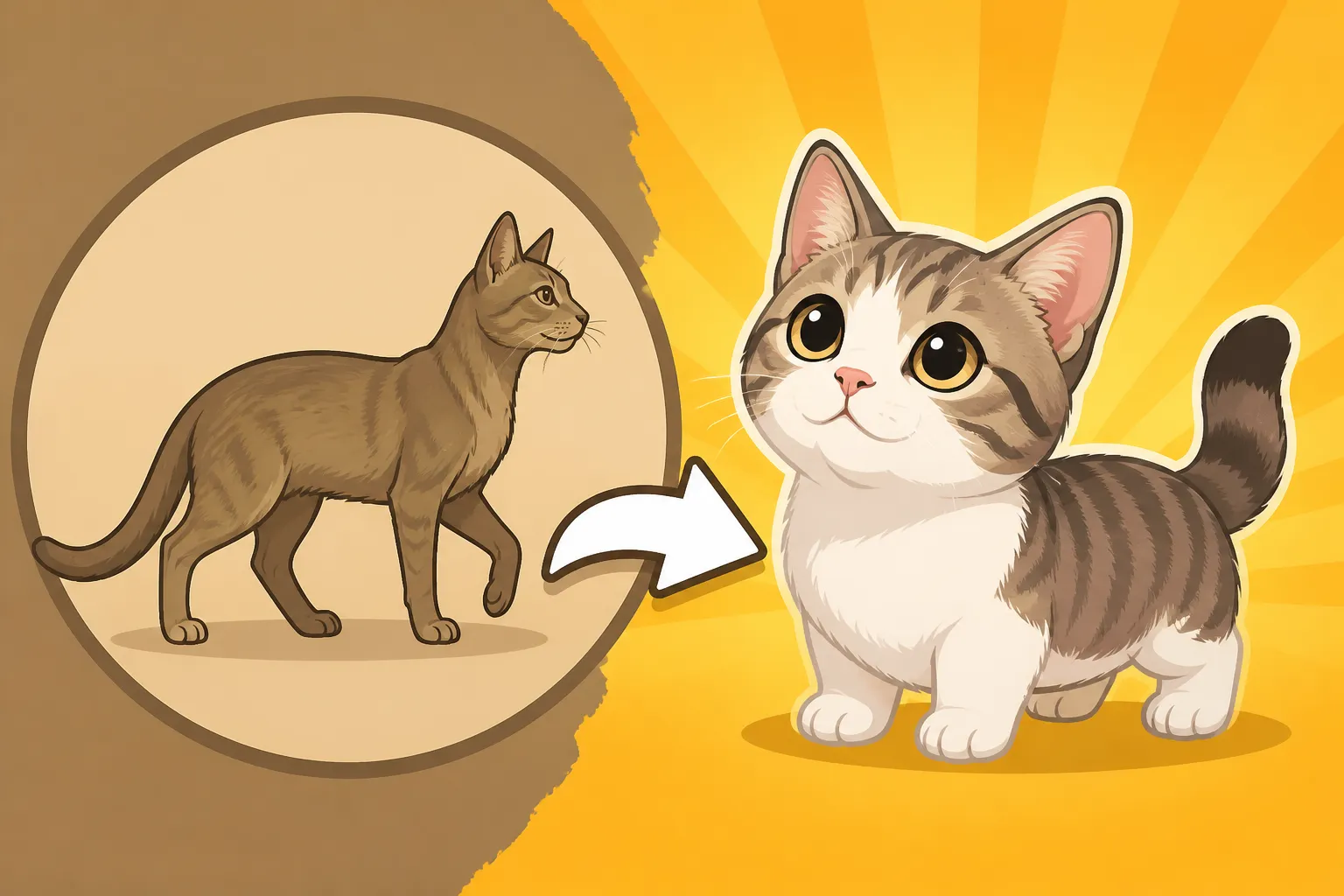
For Blackberry, this meant her legs were noticeably stubby, often described as about half the length of a regular domestic cat's legs. While all four legs were affected, there can be slight variations in length, sometimes giving the front legs a slightly bowed appearance as they adapt to the load. This isn't a fault, but a natural consequence of the shortened bones and how they articulate. The visual impact was a cat that sat much closer to the ground, with a distinctive low-slung profile. When she walked or ran, her body swayed from side to side in a manner that was later described as a "ferret-like" gait. This unique movement was a direct result of her shortened limbs and became a hallmark of the breed.
Beyond the Legs: Body and Coat
While the legs were the star of the show, it's important to remember that Blackberry was otherwise a normal cat. Her body was of a typical length and conformation for a domestic shorthair, not compacted or stunted in the way some other dwarf breeds or conditions might present. Her spine was a normal length, which is a key distinction and a point of much discussion regarding the breed's health. Why a Munchkin's Spine Is Normal Length is a good read on that. Her head was proportionate to her body, with regular ear size and eye placement, none of the exaggerated features sometimes seen in more extreme forms of dwarfism.
Blackberry's coat was black, as her name suggests, and she was a shorthair. This simple, classic feline appearance, combined with her novel leg length, highlighted the genetic mutation even more starkly. She was essentially a standard domestic shorthair cat in every way, save for those unique, stubby legs. This meant her size, apart from height, was comparable to a medium-sized domestic cat, not unusually small or "teacup" in overall mass. The short, sleek black fur contrasted with the short limbs, emphasizing the unique silhouette without any long fur to obscure her shape.
The Lack of Other Obvious Deformities
A critical aspect of Blackberry's appearance, which proved vital for the breed's acceptance, was the apparent lack of other significant deformities. When Hochenedel observed her, Blackberry didn't display issues like a severely twisted spine, an abnormally shaped skull, or other physical abnormalities that often accompany more severe forms of dwarfism in animals. This made her case compelling; her short legs seemed to be a standalone trait, not part of a syndrome of multiple, debilitating problems.
Of course, with hindsight and further study, we now understand that the Munchkin gene can indeed be associated with other health considerations, such as lordosis (an inward curvature of the spine) or pectus excavatum (a sunken chest). However, in Blackberry, the original cat, these issues were either not present or not immediately obvious to her rescuer. Her overall healthy demeanor and mobility were what truly stood out, leading Hochenedel to believe she had a robust, albeit physically unusual, cat. This initial perception of robust health was what allowed the breed to gain traction, as breeders sought to preserve what appeared to be a healthy, unique mutation.
Blackberry's Progeny: Confirming the Trait
The true revelation about Blackberry wasn't just her own unique appearance, but what she passed on to her offspring. Her first litter of kittens provided the undeniable proof that her short legs were a hereditary trait, not a fluke.
The First Litter and Its Significance
When Blackberry gave birth to her first litter, Sandra Hochenedel was undoubtedly curious about what her kittens would look like. To her amazement, a portion of the kittens in that litter inherited their mother's short legs, while others had normal-length legs. This observation was the game-changer. It immediately indicated that the short-legged trait was not a one-off injury or an isolated developmental anomaly in Blackberry herself. Instead, it was genetic, a characteristic that could be passed down through generations.
The fact that roughly half the litter had short legs and half had normal legs provided a crucial clue to the mode of inheritance. This pattern strongly suggested a dominant gene, where only one copy of the gene is needed for the trait to be expressed. It meant that every short-legged kitten carried this new, unique gene. This observation was the turning point; from a unique stray, Blackberry became the matriarch of a potential new breed. How Many Kittens in a Munchkin Litter Are Short Legged explains this fascinating genetic split in more detail, a common phenomenon in Munchkin litters even today.
Toulouse and the Spread of the Gene
Among Blackberry's first short-legged offspring was a male kitten named Toulouse. Just like his mother, Toulouse exhibited the distinctive short legs and the low-slung, agile movement. Sandra Hochenedel recognized the significance of this and made a pivotal decision: she gave Toulouse to her friend, Kay LaFrance. This act was instrumental in establishing the Munchkin as a breed.
With Toulouse now in a new home, the gene pool for these short-legged cats began to expand beyond a single household. Toulouse, being a male, could be bred with other normal-legged domestic cats, further proving the heritability of the trait and establishing multiple lines. Which Munchkin Kitten Was Given to a Friend details this critical step in the breed's development. Together, Blackberry and Toulouse became the two foundational cats, the genetic progenitors of every Munchkin cat that exists today. Their appearance — a domestic shorthair, black for Blackberry, but with those unmistakable short legs — set the visual standard for the nascent breed.
The Consistency of the "Look"
As Blackberry and later Toulouse continued to produce short-legged offspring, a remarkable consistency emerged. The short-legged kittens, regardless of their other domestic shorthair parentage (which introduced various colors and patterns), consistently displayed the same characteristic short limbs and otherwise normal body proportions. This wasn't a random occurrence; it was a reliable, repeatable genetic expression.
This consistency solidified the idea that Hochenedel and LaFrance had something truly unique and stable on their hands. It wasn't just a quirky individual cat; it was a distinctive type of cat that bred true. This predictability in appearance was essential for gaining recognition and for breeders to establish a cohesive vision for the Munchkin breed. The initial look of Blackberry, that healthy, short-legged, otherwise standard domestic cat, became the blueprint.
The Visual Legacy: How the First Munchkin Influenced the Breed Standard
Blackberry's humble beginnings and unique appearance laid the foundational aesthetic for the Munchkin breed. Her original look, captured in those early observations, continues to echo in the breed standards recognized today.
Establishing the Core Look
The visual blueprint for the Munchkin was etched with Blackberry's very form. When The International Cat Association (TICA) eventually accepted the Munchkin for registration and, later, championship status, their breed standard essentially codified Blackberry's defining characteristics. The TICA standard mandates that the Munchkin should be a medium-sized cat with a well-muscled body, a normal cat's head, and eyes—all proportionate, but with the critical exception of their uniquely short legs. These legs are described as moderately boned and muscular, giving the cat a low-slung appearance.
This emphasis on an otherwise normal body confirms that the breed was built around the original vision of Blackberry: a perfectly functional, healthy cat whose only major deviation was its limb length. It's why Munchkins aren't just small cats; they have a specific conformation that directly relates to their genetic origin. You can read more about What a Munchkin Looks Like Against the TICA Standard to see how closely it aligns with Blackberry's initial presentation.
Diversity in Outcrosses, Uniformity in Legs
One of the fascinating aspects of the Munchkin breed's development is its reliance on outcrosses. To maintain genetic diversity and prevent inbreeding, early Munchkins were bred with various normal-legged domestic cats. This meant that while the short-leg gene remained consistent, the overall appearance of the kittens could vary wildly in terms of coat color, pattern, and even length. You could have a short-legged Munchkin that looked like a tabby, a calico, a solid black, or even a colorpoint. Which Domestic Cats Are Used as Munchkin Outcrosses further illustrates this practice.
Despite this explosion of aesthetic diversity, the defining trait – the short legs – remained uniformly expressed in the short-legged offspring, consistent with Blackberry's original appearance. The short-legged mutation itself was faithfully reproduced, regardless of whether the outcross parent was a sleek Siamese-type, a fluffy Persian-type, or a sturdy American Shorthair. The low profile, the unique gait, and the overall body proportions (minus leg length) were all consistent with the founding cat.
The "Rug Hugger" Ideal and its Origin
Even as a feral cat under a truck, Blackberry embodied what breeders would later affectionately call the "rug hugger" ideal. This term refers to the Munchkin's characteristic low stance and their ability to run and play close to the ground, almost "hugging" the rug or floor. This active, playful, yet ground-level movement was observed in Blackberry from the very beginning. Her agile, ferret-like movements were not a sign of struggle but an adaptation to her unique physique.
The popularity of this "rug hugger" appearance became a significant draw for the breed. Owners found joy in their unique movements, from their swift scampers across the floor to their adorable "prairie dog" sit, where they balance on their hind legs to get a better view. Even modern Munchkins, with all their varied colors and coat lengths, carry this visual legacy of Blackberry, the original rug hugger. You'll find many useful products for these low-to-the-ground cats at online retailers like Chewy, from low-entry litter boxes to ramps. When you're browsing for cat supplies on Chewy, it's worth remembering that the very first Munchkin inspired many of these adaptations.
| Trait | Blackberry (The First Munchkin) | Typical Domestic Shorthair (Non-Munchkin) |
|---|---|---|
| Leg Length | Significantly short | Proportionate to body length |
| Body Length | Normal, proportionate | Normal, proportionate |
| Head Shape | Normal | Normal |
| Coat Color | Black | Varied (Black, Tabby, Calico, etc.) |
| Coat Length | Shorthair | Shorthair (can be longhair too) |
| Overall Size | Medium-sized cat | Medium-sized cat |
| Genetic Origin | Spontaneous mutation | Standard feline genetics |
| Movement | Low-slung, ferret-like, agile | Standard feline gait, jumping |
| Health Perception | Seemingly healthy and mobile | Generally healthy and mobile |
This article is for general informational purposes only and does not constitute professional advice. Laws, prices and regulations vary by location and change over time. Consult a qualified professional for guidance on your specific situation.