Whether Wartime Russia Had Munchkin Type Cats
It's absolutely fascinating how much history and mystery can swirl around our beloved feline friends, isn't it? When you look at a Munchkin cat, with their distinctly short legs, it's natural to wonder if they're a brand new phenomenon or if cats with this unique look have graced human lives throughout history, perhaps even in times and places we might not expect, like wartime Russia. This question touches on the very core of feline genetics, historical record-keeping, and how specific traits become recognized as breeds. Let's delve into the anecdotes and evidence to see what we can uncover about short-legged cats from generations past.
The Historical Context of Short-Legged Cats
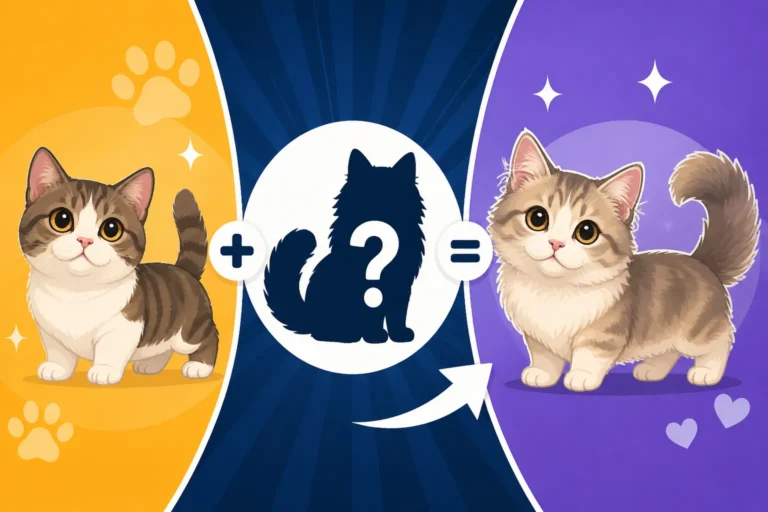
Before we get to any specific claims about wartime Russia, it's really important to understand that the genetic mutation responsible for short legs isn't some brand-new invention. It's a spontaneous occurrence that has popped up in cat populations around the world for a very long time. Think of it less like a manufactured design and more like a naturally occurring variation that sometimes appears.
Tracing Early Mentions of Chondrodysplasia in Cats
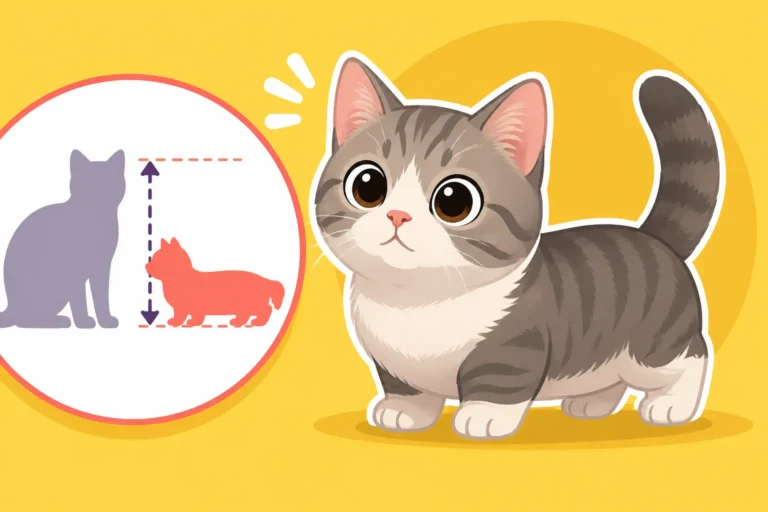
The term "chondrodysplasia" might sound a bit intimidating, but it simply refers to a disorder of cartilage development, which in turn affects bone growth. In cats, this often manifests as disproportionately short limbs, much like what we see in the modern Munchkin. This isn't a condition unique to them; it's the underlying mechanism behind their short stature. The gene causing Munchkin dwarfism, specifically, leads to what's known as pseudoachondroplasia. What this means is that while the long bones in the legs are affected, growing shorter, the skull and spine typically develop normally. It's a subtle but important distinction that sets them apart from some other forms of dwarfism.
Because this mutation can arise spontaneously, there have been sporadic reports of short-legged cats appearing in various parts of the world, long before the modern Munchkin breed was intentionally developed. These weren't necessarily recognized "breeds" but rather individual cats or small localized populations that happened to carry this distinctive trait. Sometimes they were seen as curiosities, other times they were just integrated into the local stray population, their unique appearance simply another facet of the diverse feline world. There might be old village stories or even local nicknames for these kinds of cats, tales passed down that hint at their presence without ever forming a formal record.
The "Kangaroo Cat" Phenomenon in Europe (1940s)
While not directly wartime Russia, one of the most well-documented historical accounts of short-legged cats comes from Europe around the 1940s, specifically in the United Kingdom. These were often referred to as "Kangaroo Cats" because of their habit of sitting upright on their hind legs, almost like a meerkat or indeed, a small kangaroo, to survey their surroundings. This posture is something modern Munchkins are also famous for, often called the "prairie dog sit."
Imagine living through the Blitz or the rationing of wartime Britain, and suddenly, there's this unusual cat in your alleyway or barn, sitting up on its haunches, looking around with bright, curious eyes. It must have been quite a sight! These cats were characterized by their short front legs and a tendency to sit on their hind legs, a direct physical adaptation to their limb structure. What Britain Recorded in 1944 That Resembled a Munchkin details some of these fascinating observations.
It's important to understand that while these "Kangaroo Cats" shared the short-legged trait, they weren't necessarily the direct ancestors of today's Munchkins, nor did they form a continuously bred line. They were spontaneous occurrences. For a trait to become a recognized breed, you need systematic breeding programs, documentation, and a sustained effort to preserve and propagate the unique characteristics. In the chaos and hardship of the 1940s, such focused breeding efforts for novel cat types simply weren't a priority, and these unique cats often just faded back into the general cat population or their lines simply died out. They serve as a powerful historical precedent, though, illustrating that short-legged cats are not a purely modern phenomenon.
Examining Claims of "Stalingrad Short-Legs" or Similar in Wartime Russia
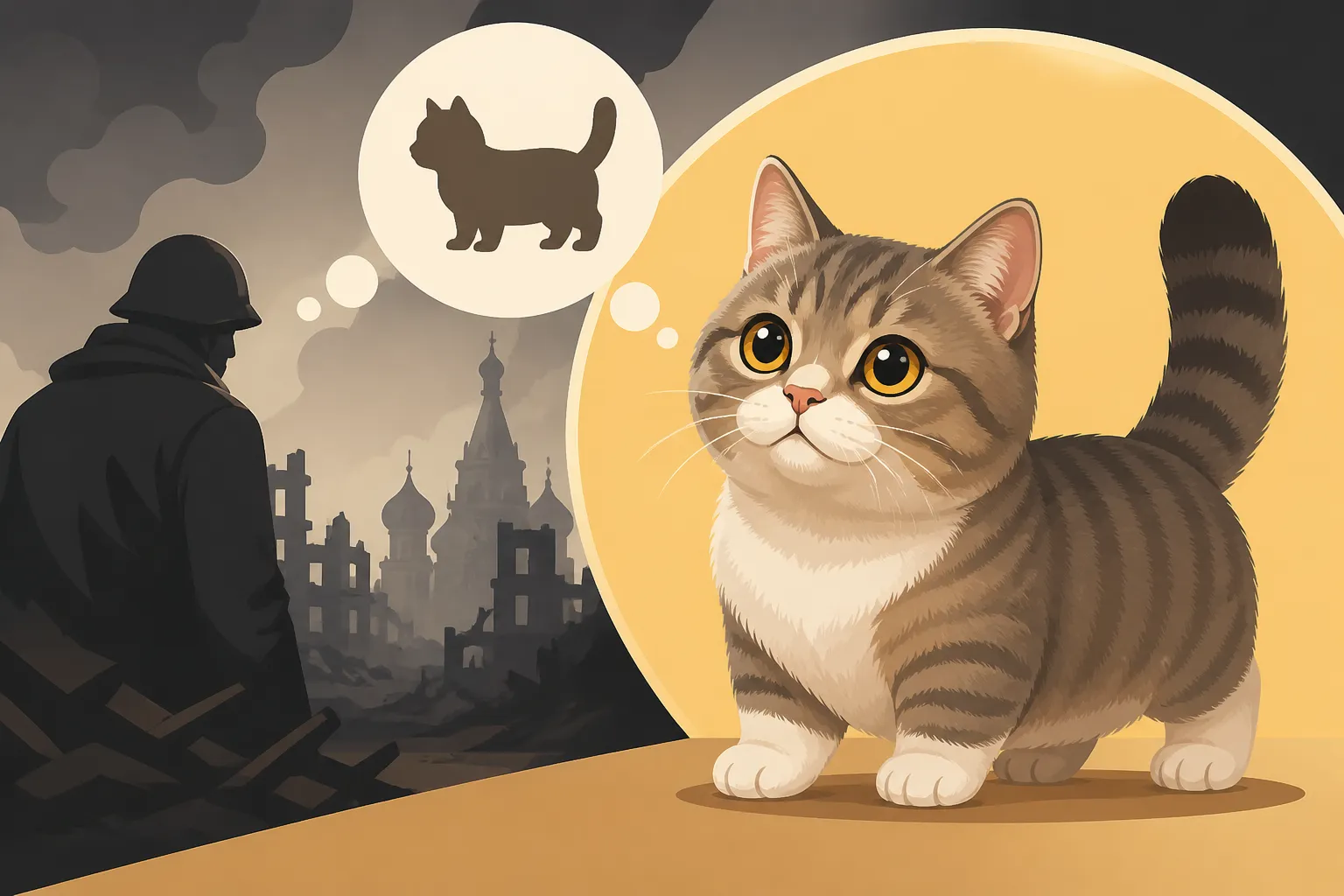
Now, let's address the specific question about wartime Russia. The idea of "Stalingrad short-legs" or similar descriptions often arises from anecdotal accounts or attempts to find historical parallels for modern breeds. It’s certainly a compelling image: a resilient, short-legged cat navigating the ruins of a war-torn city.
The Scarcity of Documented Evidence
When we talk about specific historical claims like "short-legged cats in wartime Russia," the first thing we encounter is a significant lack of documented, verifiable evidence. Unlike the "Kangaroo Cats" of Britain, which had some written observations, there isn't a widely recognized historical record, photographic evidence, or scientific report pointing to a distinct population of short-legged cats in Russia during World War II.
During wartime, the priorities of any nation, especially one embroiled in a conflict as devastating as the Eastern Front, are squarely on human survival, defense, and basic infrastructure. Keeping detailed records of local cat populations, let alone specific genetic anomalies, would have been an unimaginable luxury. People were focused on finding food, staying safe, and rebuilding their lives, not on cataloging unique feline traits. This doesn't mean such cats couldn't have existed; given the spontaneous nature of the chondrodysplasia gene, it's entirely plausible that individual short-legged cats appeared in Russia, just as they have elsewhere. However, for them to constitute a "type" or a recognizable group, you would need consistent observations, perhaps local folklore that survived, or even artistic depictions. Such widespread evidence is simply absent when it comes to wartime Russia.
Anecdotal stories, while charming and often persistent, are incredibly difficult to verify years, or even decades, later. Memories can shift, details can be embellished, and a single unusual cat sighted by one person can grow into a "population" in retelling. Without corroborating evidence, it's hard to move from a compelling story to a historical fact.
Potential Misinterpretations or Folklore
It’s worth considering how such claims might arise. In times of extreme hardship, animals often play a critical role in human survival, whether as companions or pest controllers. Stories about exceptionally clever, resilient, or unusually built animals can become powerful symbols. A cat that somehow managed to survive the harsh conditions of a city under siege might be remembered as extraordinary.
Could a cat that was particularly adept at navigating rubble, perhaps because of a lower center of gravity, have been perceived as having shorter legs, even if its proportions were actually normal? Or perhaps an individual cat with a spontaneous mutation did appear, and its unique appearance made it memorable, leading to stories that persisted long after the cat itself was gone. The human mind is very good at creating narratives, especially around remarkable survivors. We might project certain traits onto animals to explain their exceptional resilience.
The idea could also be a misattribution or confusion with other historical accounts of short-legged cats, or even an urban legend that has taken root. Without any concrete evidence or historical documentation, it remains in the realm of intriguing speculation rather than established fact. It's a lovely thought to imagine these little resilient cats, but historical support for them as a distinct group in wartime Russia simply isn't there.
The Origins of the Modern Munchkin Breed
To fully appreciate why these historical inquiries are so important, and why the modern Munchkin is such a specific case, it helps to understand its actual, well-documented origins. The Munchkin breed we know today has a very clear and relatively recent genesis, quite distinct from the anecdotal sightings of short-legged cats in centuries past.
The Genesis in Louisiana, 1980s
The true story of the modern Munchkin cat begins not in a war-torn city, but in rural Louisiana in 1983. A music teacher named Sandra Hochenedel found two pregnant stray cats under a truck. One of them, a black cat she named Blackberry, had strikingly short legs. When Blackberry's kittens were born, about half of them inherited her unique short-legged trait. This immediately caught Hochenedel's attention. The Munchkin Started Under a Truck in Louisiana in 1983.
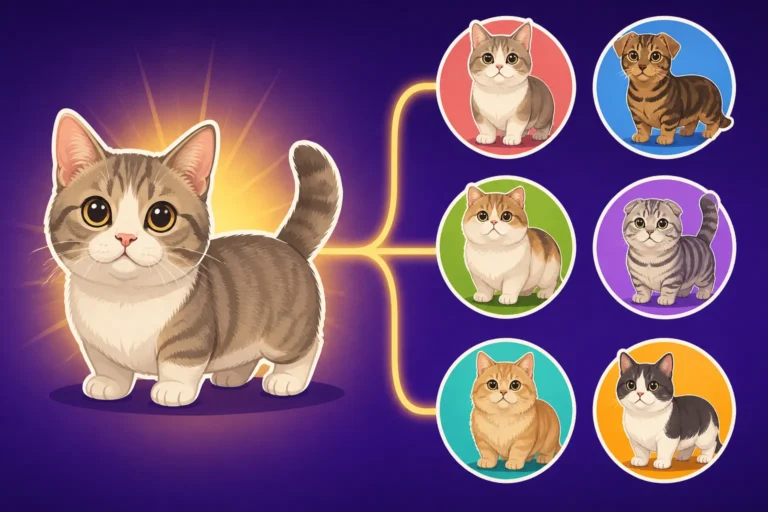
Blackberry went on to have several litters, and she also gave one of her short-legged male kittens to a friend, Kay LaFrance, who named him Toulouse. Together, Blackberry and Toulouse became the foundational cats of the entire Munchkin breed. Blackberry and Toulouse Are the Two Cats Behind Every Munchkin and their offspring represent the earliest, systematically recorded lineage of what would become a globally recognized, albeit controversial, cat breed. This is where the crucial difference lies: it wasn't just a spontaneous occurrence that was observed and then forgotten. It was a trait that was intentionally recognized, protected, and then bred to establish a new line.
From these humble beginnings under a truck, dedicated breeders worked to stabilize the trait, ensuring the cats were healthy and well-adjusted. The breed eventually gained preliminary recognition with The International Cat Association (TICA) in 1994, and then full Championship status in 2003. This meticulous documentation, pedigrees, and health monitoring are what define a modern breed, distinguishing it from random mutations that appear and disappear throughout history.
Why Earlier Munchkin Type Cats Died Out (General Reason)
The question often arises: if short-legged cats appeared before, why did they die out? Why did Blackberry's offspring become the foundation of a breed, but the "Kangaroo Cats" of the 1940s, or any hypothetical short-legs from wartime Russia, did not? There are several key factors.
First, lack of genetic understanding and intentional breeding. Before the widespread understanding of genetics, people simply didn't know how to reliably reproduce specific traits. A unique cat might appear, but without knowing it was a dominant gene or how to safely breed for it, the trait might easily be lost. The Munchkin gene is autosomal dominant, meaning only one copy is needed for the trait to appear. However, breeding two short-legged Munchkins together is highly discouraged because two copies of the gene are lethal to embryos, meaning those kittens are never born. This crucial piece of genetic understanding was vital to the breed's survival. Why Earlier Munchkin Type Cats Died Out delves into this more broadly.
Second, focus on utility over novelty. Historically, cats were valued primarily for their mousing abilities. A cat's physical traits were less important than its hunting prowess. A short-legged cat might have been a good mouser, but its unique appearance wasn't something people necessarily sought to perpetuate for its own sake.
Third, limited communication and travel. Even if someone in one region found a unique cat, the ability to connect with other enthusiasts or systematically spread a genetic line was limited. Modern cat fancy, with its registries, shows, and global communication, allows for the rapid establishment and dissemination of new breeds.
Finally, perceptions of health and 'deformity'. In many historical contexts, unusual physical traits might have been viewed as deformities or signs of weakness, rather than desirable characteristics. The welfare debate around Munchkins today is a modern echo of this very concern. Without a systematic health evaluation and careful breeding, such cats might not have been seen as viable candidates for a new breed. The modern Munchkin's journey to recognition involved extensive veterinary observation and careful breeding practices to ensure their health and vitality.
The Role of Genetics and Breed Recognition
The very nature of how we classify and define "breeds" in the feline world is deeply intertwined with genetics and formal recognition processes. This is what truly differentiates a historical anecdote from an established breed with a documented lineage.
The Autosomal Dominant Trait
The distinctive short legs of the Munchkin are due to an autosomal dominant gene. This means a cat only needs to inherit one copy of this specific gene from either parent to display the short-legged trait. This is a crucial piece of genetic information, and it's why Munchkins are always bred to long-legged domestic cats (called "outcrosses" or "non-standard" Munchkins). If two short-legged Munchkins were bred together, there's a 25% chance of the offspring inheriting two copies of the gene, which is lethal to the embryo, resulting in fewer live kittens in the litter. Why Munchkin Dwarfism Is Called Autosomal Dominant explains this phenomenon in more detail.
This genetic understanding is paramount in ethical breeding. The spontaneous nature of the mutation means it can arise anywhere, at any time, in any domestic cat population. This is why sightings of "Munchkin-like" cats can appear in different parts of the world, independently of the Louisiana origins. However, for a trait to become a breed, it requires more than just its existence; it needs identification, consistent reproduction, and careful management. It's interesting to note that even with our modern understanding, Why the Munchkin Gene Has Not Been Identified is still a question, meaning we know its effects but not the exact sequence on the chromosome yet. Whether a Munchkin DNA Test Exists is therefore still something people wonder about.
Why Formal Recognition Matters
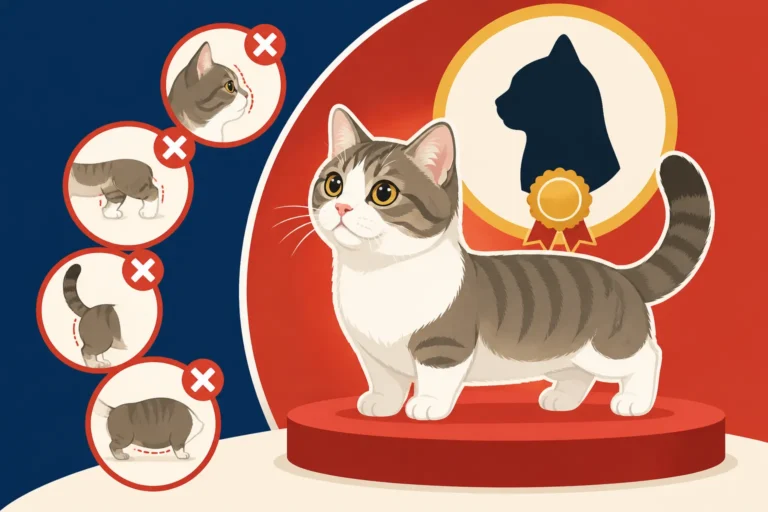
Formal recognition by organizations like The International Cat Association (TICA) is what transforms a unique cat with an interesting genetic trait into a recognized breed. TICA's process is rigorous, requiring multiple generations of cats, extensive pedigrees, and careful health monitoring. When TICA accepted the Munchkin into its New Breed program in 1994, it was a significant step, but also one that sparked considerable debate. TICA Took the Munchkin In and a Judge Resigned Over It illustrates the strong opinions involved.
Contrast this with the informal, unverified reports of short-legged cats throughout history. While those stories are intriguing, they lack the verifiable lineage, health data, and widespread acceptance that characterize a recognized breed. The existence of a robust breed standard, genetic information, and a community of dedicated breeders all contribute to the formal status of the Munchkin.
The discussions around the Munchkin's health and welfare, even today, highlight why such formal processes are so important. Organizations like welfare bodies scrutinize breeds for potential inherited health issues. What Welfare Bodies Say About the Munchkin reflects these ongoing conversations. Without the formal framework, consistent health data and ethical breeding practices would be much harder to enforce or even track.
The table below summarizes the key differences between historical, anecdotal sightings of short-legged cats and the established modern Munchkin breed.
| Feature | Historical "Munchkin-type" Cats (e.g., "Kangaroo Cats") | Modern Munchkin Cat Breed (Post-1980s) |
|---|---|---|
| Origin | Sporadic, spontaneous mutations worldwide | Documented lineage from a Louisiana stray (Blackberry) |
| Time Period | Various, including early 20th century Europe | Established from 1983 onwards |
| Documentation | Often anecdotal, informal reports, local sightings | Formal breed registry (TICA), pedigrees, health records |
| Breeding Program | None established or short-lived | Systematic, selective breeding to perpetuate trait |
| Genetic Basis | Likely chondrodysplasia (similar to Munchkin) | Autosomal dominant gene (pseudoachondroplasia) |
| Legacy | Mostly historical curiosities, disappeared | Established, recognized breed with defined standard |
In conclusion, while the idea of short-legged cats existing in wartime Russia is a romantic and intriguing one, there's no reliable historical documentation or evidence to support the widespread existence of a distinct "Munchkin-type" population there. The genetic mutation for short legs can, and has, appeared spontaneously in various cat populations across the globe and throughout history, but the intentional development and recognition of the Munchkin as a breed is a much more recent, and well-recorded, story originating in Louisiana in the 1980s. It just goes to show you that while history is full of fascinating possibilities, not every captivating tale has solid proof to back it up!
Disclaimer
This article is for general informational purposes only and does not constitute professional advice. Laws, prices and regulations vary by location and change over time. Consult a qualified professional for guidance on your specific situation.