Whether a Colorpoint Munchkin Is Recognized
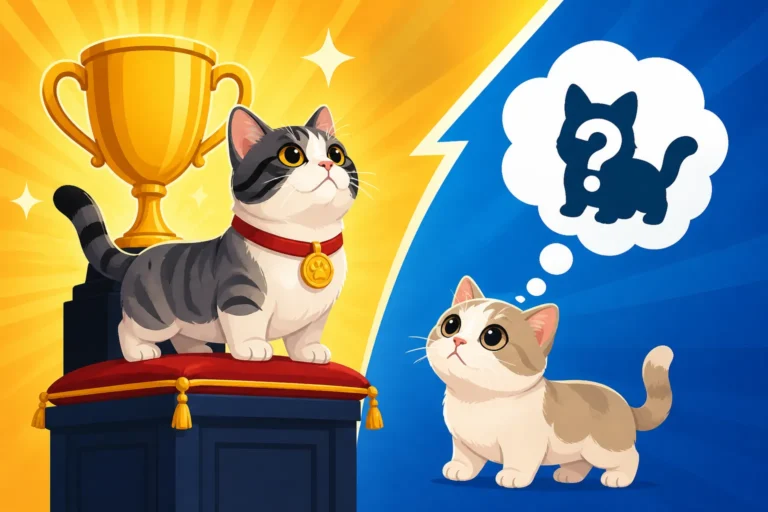
A colorpoint Munchkin can prompt a confusing paperwork question: is “colorpoint” an accepted Munchkin variety, a separate breed, or just a seller’s description? The short answer is that colorpoint describes a coat pattern, not a separate breed. Whether a cat is registered as a Munchkin depends on the registry and its rules, not on the word “colorpoint” alone.
Is a colorpoint Munchkin recognized as a Munchkin
Colorpoint describes a coat pattern
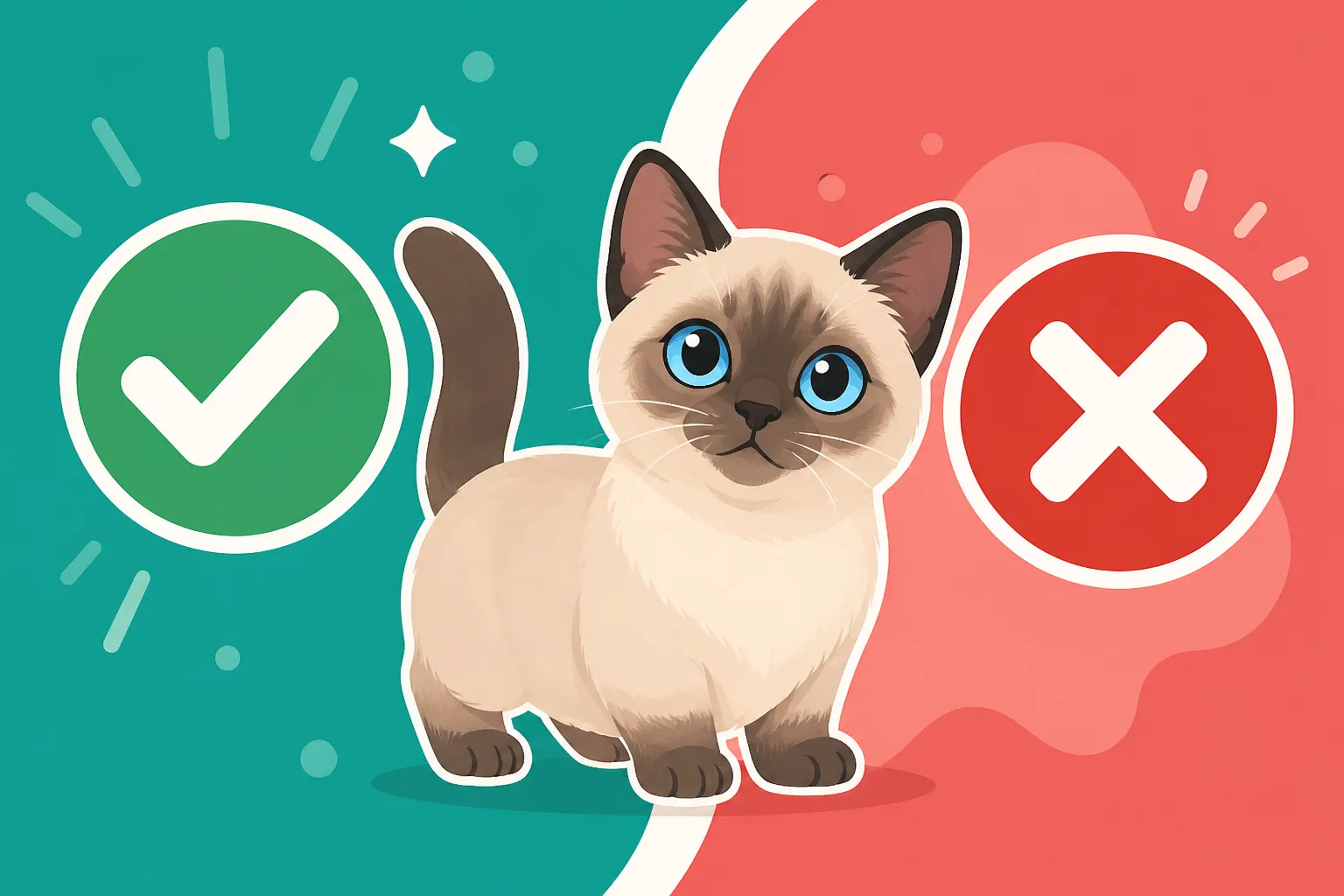
“Colorpoint” refers to a pattern in which the cat’s body is generally lighter than its cooler extremities, such as the face, ears, legs, and tail. The contrast and shade can vary. Pointed cats commonly have blue eyes, but the important distinction here is that colorpoint describes appearance; it does not establish a breed or prove that a cat is registered.
A Munchkin, by contrast, is identified as a breed by the registry that accepts it and by the breed characteristics that registry uses. A cat may have the short-legged Munchkin build and a pointed coat at the same time. In that case, “colorpoint Munchkin” is a useful description of the cat’s appearance, rather than the name of a separate breed.
That distinction matters when you see a listing or pedigree. A seller may use “colorpoint Munchkin” to describe a kitten, but the phrase itself is not evidence of registration, ancestry, health screening, or eligibility for showing. Those details need to be checked separately. For the broader rules behind appearance, see What the TICA Munchkin Standard Asks For.
Registry rules determine recognition
TICA accepts the Munchkin as a breed and its standard allows a wide range of coat colors and patterns. Under that approach, a colorpoint cat may be recognized as a Munchkin if it meets the registry’s requirements. The registry is recognizing the cat as a Munchkin; it is not necessarily treating “Colorpoint Munchkin” as a distinct breed.
Recognition is not universal across cat registries. Some registries do not accept the Munchkin breed at all, regardless of its coat pattern. So the question “Is a colorpoint Munchkin recognized?” needs a follow-up: recognized by which organization, and for what purpose? A cat might be registered with one organization but not eligible for a show or registry system that does not recognize Munchkins.
This is why a seller’s use of “registered” should always come with specifics. Ask which registry issued the papers, what breed name appears on them, and whether the registration can be verified. A general claim that a kitten is “recognized” does not tell you enough. For a comparison of registry policies, see Which Registries Accept a Munchkin and Why CFA Has Never Accepted the Munchkin.
| Question | What it tells you |
|---|---|
| Is colorpoint a separate Munchkin breed? | No. It describes a coat pattern. |
| Can a colorpoint cat be registered as a Munchkin? | It may be, through a registry that accepts Munchkins and under that registry’s rules. |
| Does the phrase “colorpoint Munchkin” prove registration? | No. Ask for the registry name and verifiable paperwork. |
| Does coat pattern decide whether a cat is a Munchkin? | No. Coat pattern and breed registration are separate matters. |
| Will every cat registry recognize the cat? | No. Registries have different breed policies. |
What color and pattern rules mean in practice
Coat pattern is separate from leg type
It is easy to let the striking coat become the main focus, especially when a pointed kitten has bright eyes and high-contrast markings. But pattern and leg length are different traits. A colorpoint pattern does not confirm that a kitten has Munchkin ancestry, and short legs alone do not establish registered breed status.
If you are assessing a kitten, ask the breeder to explain both parts clearly: how the kitten is described for coat color and pattern, and how its breed and registration are documented. The answer should not blur the two. For example, a pedigree may identify the breed while the registration or breeder records separately describe the coat. Paperwork formats can differ, so ask what each document actually shows rather than assuming a particular field will be present.
A kitten’s appearance can also change as its coat develops. The pointed pattern may become more noticeable over time, and photos taken in different lighting can make the contrast look stronger or weaker. That is one reason not to rely on a single photograph when confirming color. The question of which patterns are accepted is covered in Whether a Munchkin Can Be Any Pattern, while Which Colors a Munchkin Comes In gives more context on coat variety.
Ask what the paperwork actually says
When a breeder says a kitten is “registered,” ask to see the documents and check the registry name. If the kitten is represented as a TICA Munchkin, ask how to verify the registration and whether the papers identify the kitten’s registered breed. If colorpoint is important to you, ask how the breeder records the coat pattern and whether that description appears on the paperwork or only in the sales listing.
It is also reasonable to ask for the parents’ documentation and to confirm that the litter’s records match the breeder’s claims. A clear, patient explanation is more reassuring than a polished advertisement with no detail. A breeder who cannot name the registry, explain the paperwork, or show how to verify it has not answered the recognition question. For practical verification steps, see How to Verify a Munchkin Is Registered at All.
Be cautious about treating registration as a guarantee of health or responsible breeding. Registration can document a cat’s place within a registry’s system, but it does not by itself establish that a breeder has screened for relevant health concerns, cared well for the litter, or provided a suitable contract. Ask about health checks, veterinary records, the kitten’s parents, and the breeder’s support after the kitten goes home. Registration is one piece of information, not the whole assessment.
How to assess a colorpoint Munchkin listing
Separate claims about breed, pattern, and quality
A listing may use phrases such as “rare colorpoint,” “show quality,” or “fully recognized.” These claims can sound decisive, but each needs clarification. “Colorpoint” describes the coat. “Recognized” should refer to a named registry. “Show quality” should mean the kitten is considered eligible under a specific show system and its standards, not simply that the seller likes its appearance.
Ask the seller to put the claims into plain language. Which registry recognizes the Munchkin? Is this particular kitten registered, or are its parents registered? Does the registry allow the kitten’s coat pattern? Is the kitten being sold with registration papers, and can those papers be independently checked? These questions help distinguish a documented claim from marketing language.
You should also ask what the seller means by “Munchkin.” Some listings use the word loosely for any short-legged cat, while others refer to a registered pedigree. A short-legged shelter cat may be a wonderful companion without being a registered Munchkin. Conversely, a registered cat’s coat pattern does not make it a different breed. The useful question is not whether the kitten looks like the pictures online, but whether the seller’s specific claims are supported. See Whether a Munchkin Without Papers Is Still a Munchkin for the difference between breed description and registration.
Keep the practical questions in view
If you are considering bringing a kitten home, coat color should not crowd out questions about everyday care and welfare. Ask how the kitten moves, how it interacts with people, what veterinary care it has received, and what the breeder has observed about its development. Request clear video of the kitten walking and playing on a safe, level surface, as well as information about the parents and the litter.
Think about the home the kitten will be entering, too. Munchkins may need accessible routes to favorite resting spots, litter boxes, and furniture. The exact setup depends on the individual cat and your home, but it is worth considering before choosing a kitten rather than after a problem arises. When gathering supplies, a retailer such as Chewy may be one place to compare brushes for a pointed coat and other routine-care items; check that any tool is comfortable and appropriate for your cat.
The same practical approach applies to equipment. A low-entry litter box can be easier for some short-legged cats to access, and a secure carrier should allow the cat to enter and turn comfortably. Chewy is one option for browsing different box and carrier designs, but the product label alone cannot tell you whether a particular size or shape will suit your cat. Measure the space, consider your cat’s movement, and ask your veterinarian or breeder about any individual needs. For breed context beyond coat appearance, see How to Tell a Munchkin From a Minuet.
The straightforward answer for prospective owners
A colorpoint can be a Munchkin without being a separate variety
The most accurate answer is that colorpoint is a coat pattern, not a separate Munchkin breed. A cat with that pattern may be accepted as a Munchkin by a registry that recognizes the breed, provided the cat and its paperwork meet that registry’s requirements. TICA’s broad acceptance of Munchkin colors and patterns is relevant when checking a TICA registration, but it does not mean every registry recognizes the breed.
That distinction can prevent two common misunderstandings. First, a pointed coat does not automatically make a cat a Colorpoint Shorthair or any other separate breed. Second, a seller calling a kitten a colorpoint Munchkin does not prove the kitten has registration papers. Look at the registry, the documents, and the cat’s actual description rather than relying on a sales phrase.
TICA championship recognition is also specific to TICA’s system. It does not require other registries to recognize the breed or the same coat varieties. To understand what that recognition means—and what it does not mean—read What TICA Championship Status Gives a Munchkin.
A short checklist before you decide
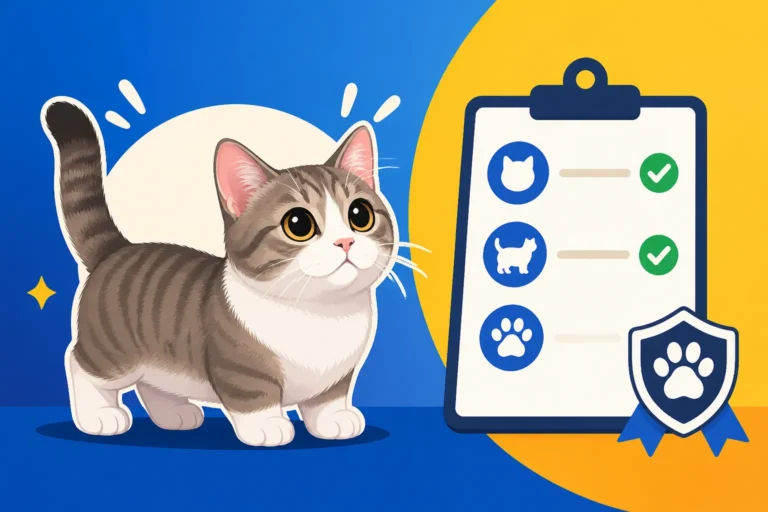
Before placing a deposit or choosing a kitten, use this checklist:
- Ask which registry the breeder means when they say “recognized.”
- Confirm whether the kitten itself is registered or whether only its parents are.
- Request the registry name and a way to verify the paperwork.
- Ask how the coat pattern is recorded and whether the breeder is using “colorpoint” descriptively or as a formal color notation.
- Review the kitten’s veterinary records and ask about the health and movement of the kitten and its parents.
- Make sure you understand the contract, including what happens if the kitten’s registration or described characteristics differ from what was promised.
A colorpoint Munchkin can be a striking cat, but its pattern is only one part of the picture. For a sound decision, separate coat description from breed recognition, confirm the relevant registry, and evaluate the breeder’s records and care practices with the same attention you would give any kitten. Chewy and similar retailers can help you compare everyday supplies, but no product choice or attractive coat can replace careful questions about the cat itself.
Disclaimer
This article is for general informational purposes only and does not constitute professional advice. Laws, prices and regulations vary by location and change over time. Consult a qualified professional for guidance on your specific situation.