When a Munchkin Reaches Full Size
A Munchkin kitten can look nearly grown while still filling out, and its short legs make ordinary size comparisons confusing. You may wonder whether your cat is growing normally, when to switch from kitten food, or whether a low-to-the-ground body means it is unusually small. This guide explains the usual growth timeline and how to judge development without relying on leg height alone.
When a Munchkin reaches adult size
The usual growth timeline
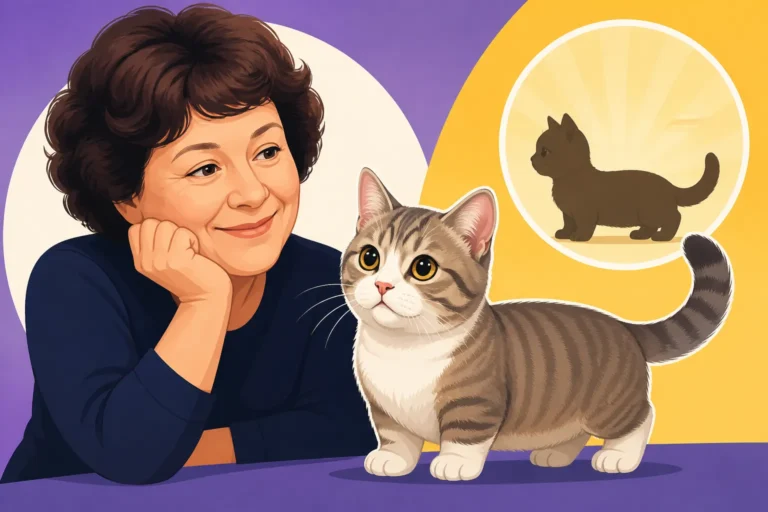
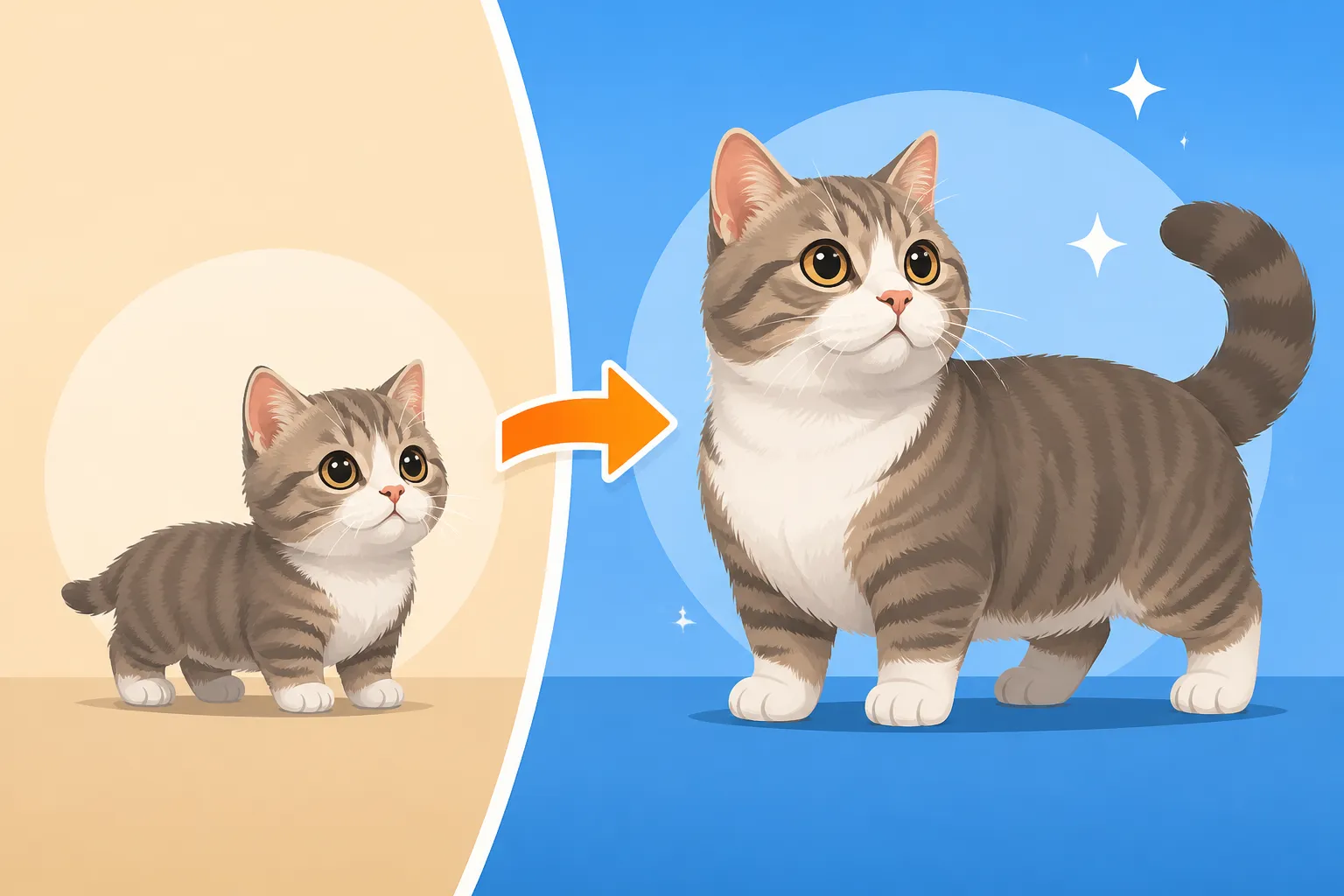
Most Munchkin cats reach close to their adult height and length around their first birthday. They may continue gaining muscle and filling out after that, so a cat can look more mature at 12 to 18 months than it did at one year. That gradual change is normal; it does not necessarily mean the cat is still getting taller.
There is no single birthday when every Munchkin becomes “fully grown.” Genetics, sex, nutrition, health, and the cat’s individual frame all influence the pace. A kitten with a larger build may take longer to finish filling out than a smaller-framed cat. Munchkins also vary because their ancestry may include different domestic cats and other breed backgrounds.
A useful way to think about it is in stages: a kitten grows rapidly in its first months, approaches adult height and length during its first year, and may continue developing adult muscle and body condition beyond that. For background on the size variation you might see, read How Big an Adult Munchkin Gets.
What full size means for a short-legged cat
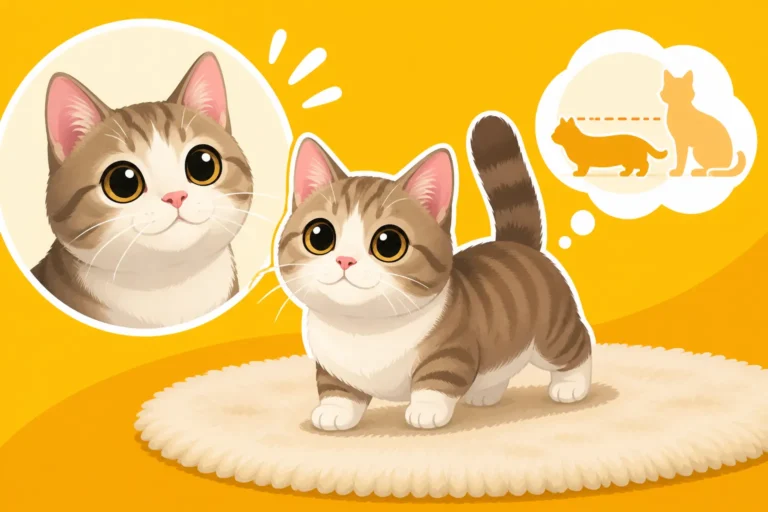
“Full size” can be misleading if you picture it as reaching the same standing height as an ordinary-legged cat. A Munchkin’s short legs affect how high its body sits above the floor, but they do not mean its torso is necessarily miniature. Its body is generally normal in length for its overall build, and its adult size is better judged by its frame, weight trend, and body condition than by shoulder height alone.
That difference can make casual comparisons frustrating. A Munchkin beside a taller cat may look much smaller even if both have similar body lengths or comparable weights. Photos can also exaggerate the difference depending on camera angle, posture, and how close each cat is to the lens. The breed’s body and leg proportions are discussed further in Why a Munchkin's Body Must Be Normal Length.
A cat’s weight is one helpful clue, but it is not a verdict. Two healthy adult Munchkins can have different ideal weights because they may have different frames and builds. Rather than aiming for a number you saw online, ask your vet to assess your cat’s body condition and track its growth over time. For a related overview of breed proportions, see What a Munchkin Looks Like Against the TICA Standard.
How to tell whether your Munchkin is still growing
Track changes, not one number
A single weigh-in tells you what your cat weighs that day; a series of weigh-ins shows the direction of growth. If your kitten is gaining steadily, eating normally, playing, and developing at a pace your vet considers appropriate, a small difference from another kitten is not automatically a concern.
At home, weigh your cat under similar conditions each time. A pet or baby scale can make this easier, especially when your kitten is still small. Some owners look for a suitable scale through retailers such as Chewy, while others use a household scale by weighing themselves first and then weighing themselves while holding the cat. The second method is less precise, so focus on the trend rather than treating every decimal as meaningful.
Write down the date and weight, and bring the record to routine vet visits. A steady curve is generally more useful than comparing your kitten with a breed chart that may not reflect its frame or background. For a practical routine, see How to Weigh a Munchkin Weekly.
Look at body condition as well as weight
A growing cat should not become progressively round simply because it is still a kitten. You should be able to feel the ribs with gentle pressure, though they should not be sharply visible, and there should be a discernible waist when viewed from above. A Munchkin’s low body position can make its belly appear close to the floor even when its weight is appropriate, so judge the whole body rather than the underside alone.
If you are unsure, ask your vet to show you how to assess your cat’s ribs, waist, and muscle condition. This is especially helpful when your cat’s coat is thick or its shape is hard to judge. The guide What a Lean Munchkin Should Feel Like Along the Spine offers another way to think about a lean, well-conditioned body.
Your vet can also interpret weight changes in context. A kitten that gains weight while growing in length and developing muscle is different from one that gains weight while becoming less active and harder to feel around the ribs. Avoid putting a growing kitten on a weight-loss plan without veterinary guidance; kittens need appropriate nutrition for development.
Feeding and care as your Munchkin matures
When to change from kitten food
Many cats transition from kitten food to an adult diet around the time they approach physical maturity, often near their first birthday. The right timing can vary, so ask your vet before changing the diet, particularly if your Munchkin is growing slowly, has a health concern, or is gaining weight quickly.
Make any food change gradually rather than swapping meals all at once. A sudden change can upset some cats’ digestion or make them refuse the new food. Follow your veterinarian’s transition advice, and measure portions instead of leaving food available without a plan if your cat tends to overeat. A kitchen scale can help with consistent portions; Chewy is one example of a retailer where owners may look for basic feeding tools, but the important part is measuring accurately and following your vet’s recommendation.
It is also worth remembering that “full size” does not mean your cat’s food needs will stay identical forever. Activity, neuter status, health, and body condition can all affect calorie needs. Recheck your cat’s weight and shape as its routine changes, rather than assuming that the portion that worked as a kitten will remain right as an adult.
Keep the growth check focused on the whole cat
Leg length is only one part of your Munchkin’s development. Your vet may examine posture, gait, joint movement, muscle development, teeth, and overall body condition during regular checkups. If you are curious about the way a Munchkin’s legs are assessed, How a Munchkin's Legs Are Judged explains why overall conformation is more informative than a quick height comparison.
At home, pay attention to changes in behavior as well as appearance. A kitten that stops playing, has trouble moving, eats less, or seems uncomfortable deserves attention even if its weight looks ordinary. Likewise, an energetic kitten that is smaller than a littermate may simply have a different build—but a vet can help distinguish normal variation from a growth or health problem.
If the question is whether your kitten’s size is normal, bring a short record of weights, feeding details, and any changes you have noticed to the appointment. A few clear observations are often more useful than repeatedly comparing your cat with online photos. If you are still preparing for life with a growing cat, Whether a Munchkin Suits a First Time Cat Owner covers some of the everyday considerations.
Growth milestones at a glance
| Approximate stage | What you may notice | What to focus on |
|---|---|---|
| Early kittenhood | Rapid changes in size, appetite, and coordination | Routine veterinary checks and appropriate kitten nutrition |
| Later kittenhood | Continued growth in body length and development | A steady weight trend, play, and healthy body condition |
| Around the first birthday | Many cats are close to adult height and length | Ask your vet whether it is time to transition to adult food |
| After the first birthday | Some cats continue filling out and developing muscle | Keep tracking weight and body condition rather than expecting height changes |
These are general milestones, not a deadline or diagnostic chart. A kitten that seems to be growing differently from a sibling is not automatically unhealthy, and a cat that appears fully grown is not necessarily finished filling out. If your kitten’s growth stalls, weight drops, appetite changes, or movement seems uncomfortable, contact your vet rather than waiting for a milestone to pass.
The most reassuring picture is a cat that develops steadily, maintains a healthy body condition, and moves and behaves comfortably. For a visual comparison of kitten development, see What a Munchkin Kitten Looks Like at Eight Weeks. If you want a broader look at adult proportions, How Much an Adult Male Munchkin Weighs and How Much an Adult Female Munchkin Weighs may help frame the discussion, but your own cat’s build and veterinary assessment matter more than a general range.
Disclaimer
This article is for general informational purposes only and does not constitute professional advice. Laws, prices and regulations vary by location and change over time. Consult a qualified professional for guidance on your specific situation.