Whether a Munchkin Suits an Elderly Owner
A Munchkin’s short legs may make the breed seem like an easy match for an older person, but they do not automatically make daily care simpler. Getting on furniture, reaching the litter box and grooming the back half can take extra planning. This guide explains what to consider, how to set up a home, and when another cat might be a better fit.
What living with a Munchkin is really like
Short legs change access, not a cat’s need for care
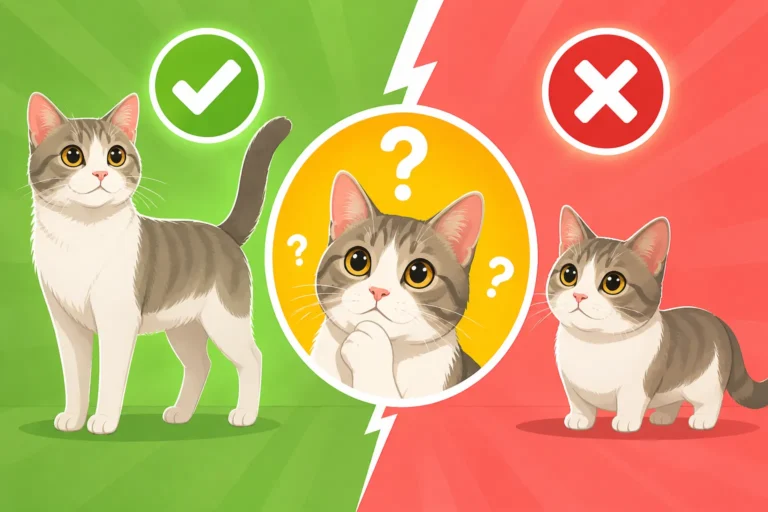
Munchkins are cats with their own personalities and energy levels. Some are content to nap nearby; others want to play, explore and follow their people from room to room. Their short legs do not mean they need little attention, and they may not be able to reach places that other cats manage with one jump. A sofa, bed or windowsill might require a stable set of steps or a ramp.
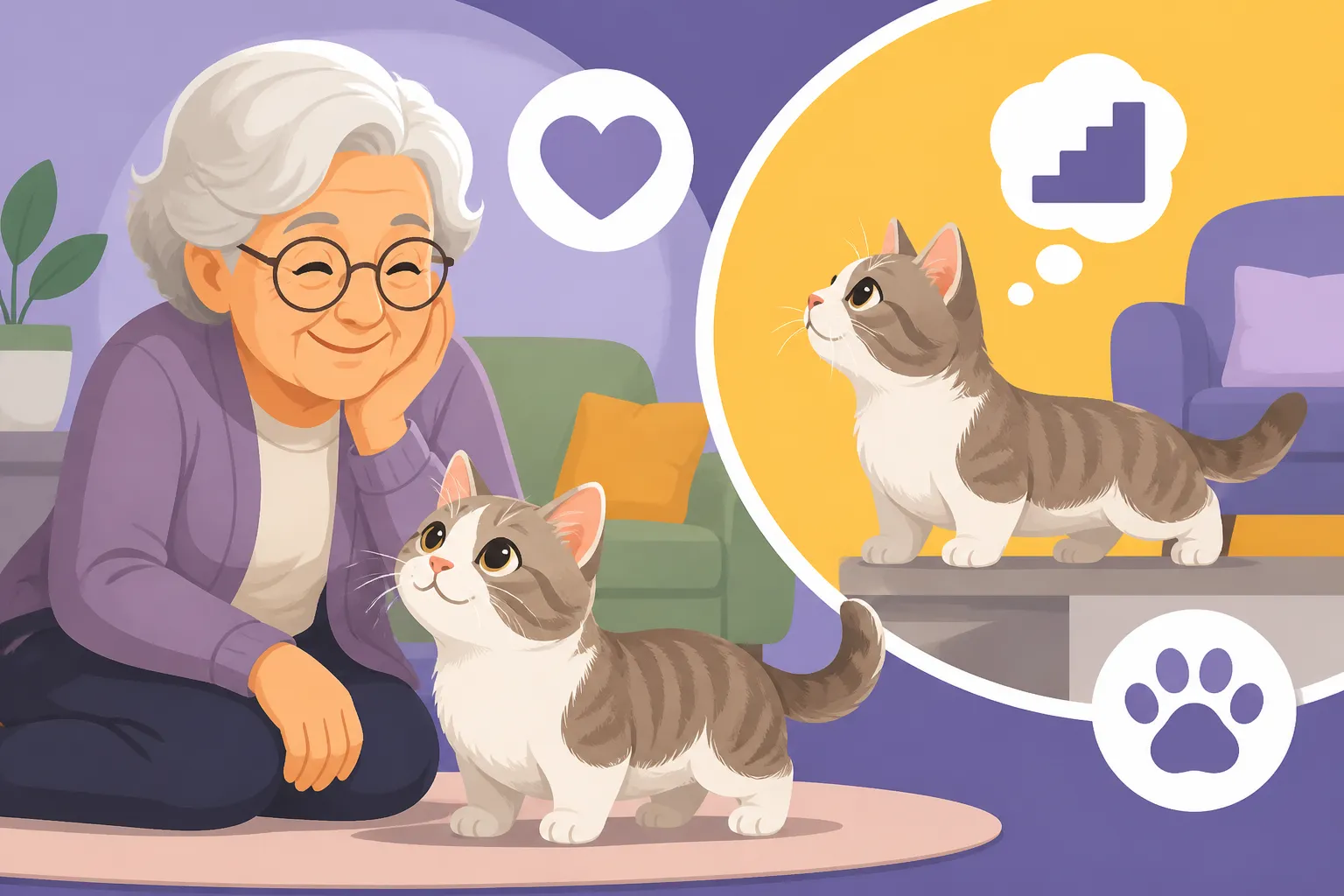
That difference can be easy to underestimate when a kitten is small and lively. Picture a cat trying to join you on a high armchair several times a day. If you have to lift the cat each time, the arrangement could become tiring or uncomfortable, especially if you have limited strength, balance or hand mobility. A more accessible seat, a low platform or a gently sloped ramp may make the routine easier for both of you.
A Munchkin may also need help with grooming in areas it cannot reach well. Coat type matters: a longhaired cat may need more frequent brushing, particularly around the hindquarters. If you have arthritis, trouble bending or difficulty handling a brush, consider whether you can manage that care yourself or arrange reliable help. For a closer look at the breed’s overall fit, see Whether a Munchkin Is the Right Cat for You.
Think about movement and household safety
A one-level home can reduce the need for a cat to negotiate stairs to reach food, water, resting places and a litter box. In a multi-level home, you can make life easier by setting up the essentials on the floor where you spend the most time. A second litter box may be helpful if getting to the existing one involves a long walk or stairs. Why a Single Story Home Suits a Munchkin Best explores why a simpler layout can be a practical advantage.
Short legs can also affect how a cat gets away from a surprise or a busy household. A Munchkin may not be able to climb out of a dog’s reach or escape a boisterous visitor as easily as a more agile cat. If family, caregivers or visiting grandchildren will be around, make sure the cat has a quiet retreat at floor level where people will not corner or disturb it. The article What a Munchkin Does When It Cannot Get Away explains why having an accessible safe space matters.
Look around your home as if you were seeing it from the cat’s height. Smooth floors can be slippery, furniture can block a route, and a bed that seems low to you may still be difficult to reach. Non-slip rugs, clear walkways and stable steps can help. These changes need not mean rebuilding a room: the goal is to create a few dependable routes to the places the cat uses every day.
How to decide whether the match suits your needs
Consider your mobility, routine and backup support
A useful question is not simply, “Can I care for a Munchkin?” It is, “Can I do the regular tasks comfortably, including on a less energetic day?” Think about bending to clean the litter box, lifting a carrier, trimming claws, brushing the cat and arranging veterinary visits. If you already have a cat-care routine that works well, compare the Munchkin’s needs with what you can realistically keep doing.
It can help to write down who would take over if you were ill, travelling or temporarily unable to manage chores. A trusted relative, neighbour, pet sitter or caregiver might be able to help with feeding, cleaning and transport. Make sure the person is willing and able to handle a cat safely; do not assume that a visitor can lift the cat or carry a heavy litter container.
Your home matters too. Someone in a compact apartment may have fewer stairs to worry about, but still needs enough space for a litter box, resting areas and low-access enrichment. A larger house is not automatically better if the cat’s essentials are far apart. Whether an Apartment Suits a Munchkin offers another way to think about the relationship between a cat’s needs and the layout of a home.
Compare the benefits with the daily work
For some older owners, a cat’s companionship and predictable routines are a real source of comfort. A Munchkin who likes being nearby may be a lovely companion without requiring outdoor walks. But the breed is not guaranteed to be calm, quiet or happy being carried. Spend time with the individual cat if possible, and ask how it behaves around handling, grooming and everyday household sounds.
| Consideration | Potentially easier when | Plan ahead when |
|---|---|---|
| Reaching furniture | The cat has a low resting spot near you | It needs frequent lifting to join you |
| Litter care | The box has an easy entrance and is close by | You have difficulty bending or carrying supplies |
| Grooming | The cat has a manageable coat and accepts brushing | You cannot comfortably reach or handle its hindquarters |
| Home movement | Main routes are clear and have good traction | Stairs, slick flooring or high furniture are unavoidable |
| Backup care | A reliable person can help when needed | You live alone without practical support |
A short-legged cat is not necessarily a safer or easier choice for someone with balance concerns. A cat moving quickly around your feet can still create a trip hazard, and carrying any cat while using a cane or walker may be awkward. If you use mobility aids, consider how the cat’s routes and your walking paths will overlap. A clear route to the kitchen or bathroom should remain clear even when the cat is playing or resting.
Before choosing a kitten, consider an adult cat whose temperament and habits are easier to assess. Ask about its comfort with grooming, how it uses steps or ramps, and whether it has a history of mobility or health concerns. An adult cat may still need time to settle into a new home, but its established behavior can give you a better sense of what day-to-day care will involve.
Make the home easier for both of you
Set up essentials within easy reach
Start with the basics: a stable, low-entry litter box; food and water in accessible locations; a comfortable floor-level bed; and a scratching surface the cat can use without stretching high. Keep the litter box somewhere you can clean without awkwardly twisting or carrying it across the home. If choosing supplies online, Chewy can be one place to compare low-entry boxes, washable mats and other everyday items; check dimensions carefully rather than relying on a product’s label.
A ramp or pet steps can give the cat a route onto a favourite chair, but stability matters more than appearance. Put the equipment on a surface that will not slide, and watch whether the cat actually uses it. Some cats prefer steps; others may be more comfortable with a gradual ramp. Introduce new equipment with patience and treats rather than placing the cat on it and expecting it to understand immediately. How to Set Up a Home for a New Munchkin Kitten includes useful setup ideas, even if you are preparing for an adult cat.
Keep frequently used supplies where you can reach them without bending deeply. A small basket near the litter area can hold a scoop, bags and cleaning cloths. Chewy may also be useful when you want to compare grooming tools or litter accessories for delivery, particularly if carrying bulky supplies is difficult. The best choice is the one you can use consistently and store safely—not necessarily the one with the most features.
Make handling and grooming manageable
If you need to lift the cat, use a secure, supported hold that keeps its body balanced. Avoid lifting by the front legs or letting the cat dangle. If lifting is painful or unsafe for you, design the home so the cat can reach its usual resting spots without being picked up. Read How to Lift a Munchkin Correctly and practise only if you feel steady and comfortable; asking another person to demonstrate can be helpful.
Grooming is easier when it becomes a short, calm routine instead of a long wrestling match. Choose a position that does not strain your back, and brush a small area at a time. A washable mat on a stable surface can help contain loose fur, but the cat should not be placed somewhere it could fall. If the cat resists or you cannot comfortably reach its hindquarters, ask a veterinarian or experienced groomer about safe options. Why an Old Munchkin Stops Grooming Its Back describes why changes in grooming ability deserve attention.
Chewy can be a convenient option for comparing brushes, nail-care tools or washable bedding, but the tool still needs to suit your hand strength and the cat’s coat. For example, a brush that is difficult to grip may sit unused, while a simple comb that you can handle comfortably may fit your routine better. If regular grooming becomes hard to manage, arranging help is more sensible than waiting for tangles or discomfort to build.
Health, ageing and choosing responsibly
Plan for changes over time
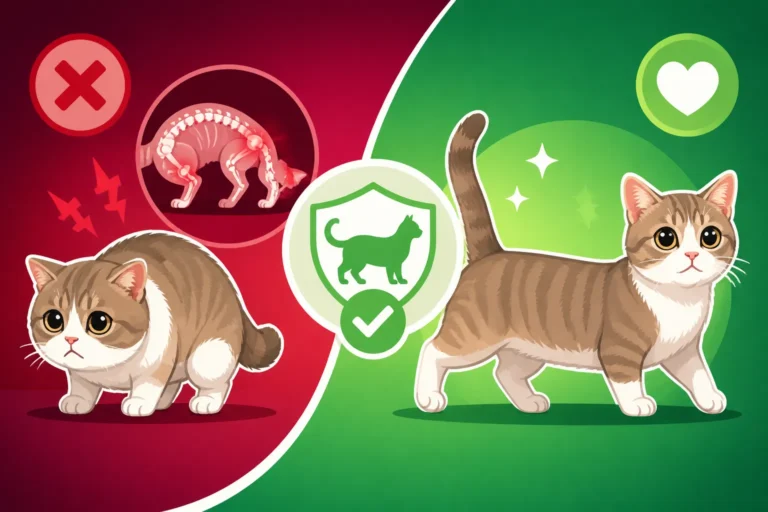
Any cat may become less active or need more support with age. Watch for changes in how your Munchkin walks, climbs, grooms or uses the litter box. A cat that suddenly avoids a ramp, hesitates before stepping into the box or stops jumping to a favourite spot may be uncomfortable. Do not assume a change is simply “old age.” Keep notes or short videos of changes and share them with a veterinarian. How to Tell Stiffness From Old Age in a Munchkin can help you notice patterns worth discussing.
A veterinarian can assess your individual cat and advise you about preventive care, weight management, grooming needs and any change in movement. Keeping a healthy body condition is a practical part of long-term care; extra weight can make everyday movement harder for a cat that already has short legs. Ask the veterinarian what weight and body shape are appropriate for your cat rather than relying on a breed-wide number.
Before bringing a Munchkin home, ask the breeder, shelter or current caregiver about the cat’s health history, movement and veterinary records. If you are considering a kitten, ask what early examinations have been done and what follow-up care is recommended. You can also ask to see the cat walk and move around naturally. For further context on breed-specific concerns, see Which Health Problems the Munchkin Actually Has.
Make the final choice around the individual cat
A Munchkin may suit an older owner who enjoys close companionship, can adapt the home and has practical support for tasks that become difficult. It may be a poor fit if frequent lifting is essential, the cat would have to climb stairs to reach basic needs, or grooming and litter care would be physically uncomfortable. Those are not failures on anyone’s part; they are useful realities to consider before committing.
Try to meet the cat in a calm setting and observe how it approaches people, handles touch and moves between resting places. Ask what its daily routine looks like and whether it is comfortable being brushed and placed in a carrier. If you cannot visit in person, request a video of the cat walking and interacting in an ordinary environment rather than relying only on posed photographs.
Finally, think beyond the first few weeks of excitement. A thoughtful setup, a clear plan for help and regular veterinary care can make a big difference, but no home arrangement can guarantee that a cat will never need extra support. Choosing based on the cat’s individual temperament—and on what you can comfortably provide over time—is kinder to you and to the animal.
Disclaimer
This article is for general informational purposes only and does not constitute professional advice. Laws, prices and regulations vary by location and change over time. Consult a qualified professional for guidance on your specific situation.