Why a Munchkin’s Vet Year Includes Its Joints
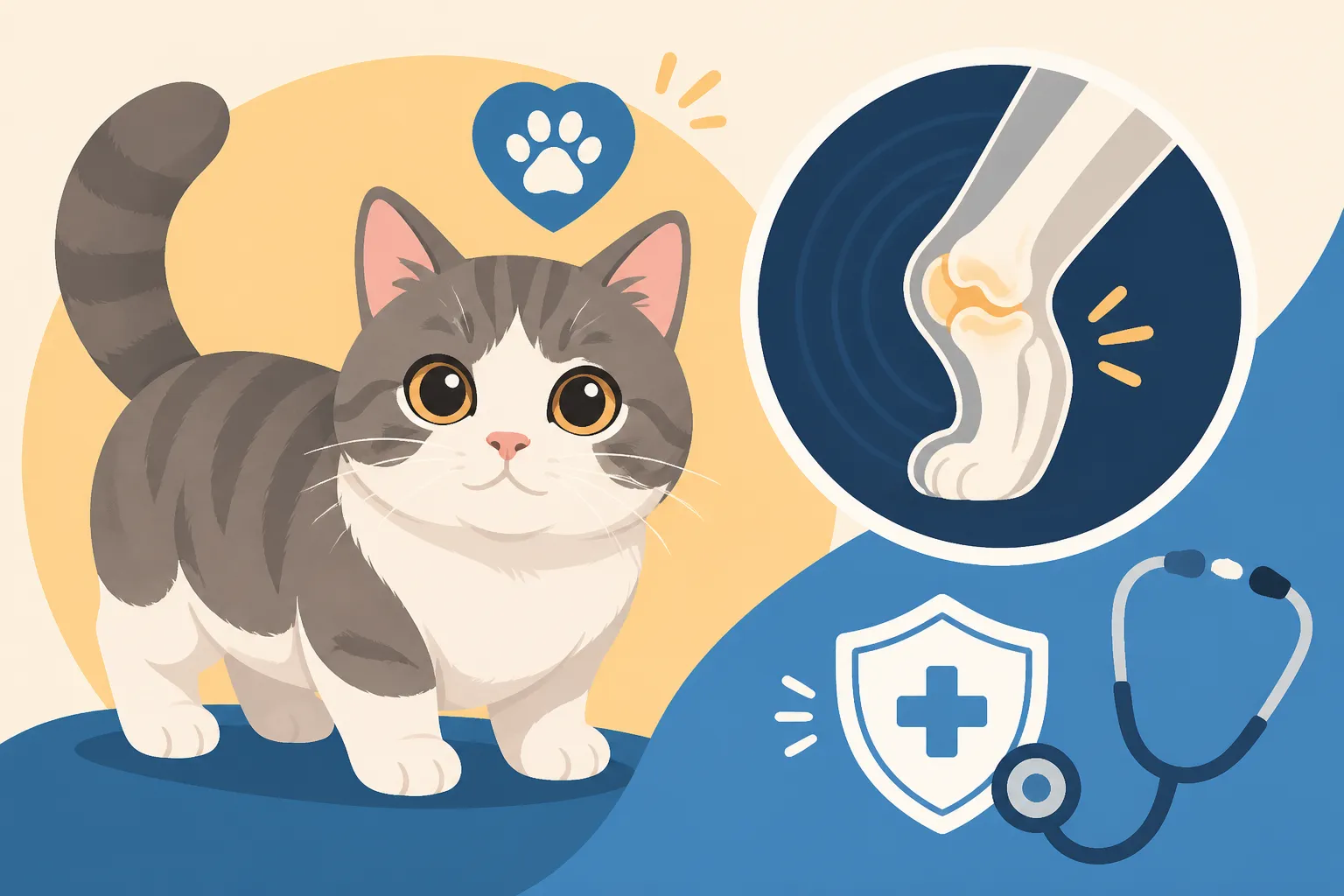
It's a common misconception that because Munchkin cats are lively and playful, their unique physiology doesn't come with its own set of challenges. However, the truth is that their adorable short legs mean their skeletal structure and joints experience forces and strains that are very different from a long-legged cat. Understanding why your Munchkin's annual vet check-up absolutely must include a thorough examination of their joints is crucial for ensuring they lead a long, comfortable, and happy life.
The Unique Strain on Munchkin Joints
When you bring a Munchkin into your home, you're not just getting a cat with shorter legs; you're welcoming a feline friend whose entire physical mechanics are altered. Their skeletal structure, while charmingly unique, distributes weight and absorbs impact in ways that can put particular stress on certain areas, especially their joints. This isn't about casting judgment on the breed, but rather about being a realistic and responsible owner who understands their cat's specific needs.
Biomechanics of Short Legs and Joint Stress
Imagine running a marathon in shoes that are too small, or trying to lift heavy boxes with only your arms – that's a bit like what a Munchkin's joints contend with on a daily basis. Their short limbs mean that tasks like jumping, running, and even just walking involve a different leverage and impact absorption strategy. Instead of long, flexible limbs providing a wide range of motion and shock absorption, their shorter bones mean that forces are concentrated over smaller areas.
Specifically, their shoulders, elbows, and wrists bear a disproportionate amount of weight and impact. When they jump down from a sofa, for instance, the force travels up their short legs with less cushioning from the limb bones themselves, placing more direct stress on the joint cartilage and surrounding soft tissues. This altered biomechanics isn't a "flaw," but it's a reality that requires careful consideration in their care. It's why Why a Munchkin's Spine Carries a Load a Normal Cat's Does Not is such an important topic to understand, as the spine and its supporting structures are also under different kinds of pressure.
Increased Wear and Tear from Daily Activities
Because of these altered mechanics, even everyday activities that a long-legged cat barely registers can contribute to increased wear and tear on a Munchkin's joints over time. Think about the simple act of navigating stairs. A regular cat might bound up and down with ease, but a Munchkin might have to make a series of small hops or carefully place each paw, which puts repetitive stress on their small joints.
Similarly, playful wrestling with housemates, scampering across a slick floor, or even just stretching can engage their joints in ways that lead to earlier degradation. This isn't to say Munchkins shouldn't play or move! On the contrary, movement is vital. But it highlights why their joint health needs vigilant monitoring from a young age, and why preventative measures are so important throughout their lives. The constant, subtle strain, accumulated over years, can pave the way for conditions that might typically be seen much later in other breeds.
Common Joint Issues in Munchkins
While Munchkins are generally robust and healthy, their unique physical structure does predispose them to certain joint-related concerns. These aren't necessarily breed-specific diseases in the genetic sense, but rather conditions that their body shape makes them more susceptible to developing or experiencing more severely. Being aware of these helps you and your vet stay ahead of potential problems.
Early Onset Arthritis and Osteoarthritis
One of the most significant concerns for Munchkin owners is the potential for early-onset arthritis, specifically osteoarthritis. This degenerative joint disease occurs when the protective cartilage at the ends of bones wears down over time, leading to pain, stiffness, and reduced mobility. Because of the aforementioned increased wear and tear on their joints, especially their shoulders and elbows, Munchkins can start to show signs of arthritis much younger than their long-legged counterparts.
It's not uncommon for owners to notice a subtle change in their Munchkin's jumping height or willingness to play as early as middle age, whereas other cats might not show such signs until their senior years. This is why paying attention to articles like Whether a Munchkin Gets Arthritis Earlier is so crucial. The constant stress on their joints can accelerate the breakdown of cartilage, leading to inflammation and pain. The insidious nature of this condition means it often progresses slowly, making early detection by a veterinarian absolutely vital.
Spinal Concerns Beyond Lordosis
While the conversation around Munchkin spinal health often revolves around lordosis—a curvature of the spine where it sags downwards—it's important to understand that other spinal concerns can also arise or be exacerbated by their unique structure. Lordosis itself is a condition where the spinal muscles shorten, pulling the spine into an abnormal curve, and is a serious concern. However, even in Munchkins without diagnosed lordosis, the way their body weight is distributed and how they move can put different pressures on their intervertebral discs and the small joints between their vertebrae.
This isn't about fear-mongering; it's about being informed. The spine is a complex structure, and while a Munchkin's spinal length is typically normal, the load it carries and the mechanics of movement can stress the various segments differently. Stiffness in the back, reluctance to arch or stretch, or even just subtle changes in their 'ferret-like' gait can sometimes hint at underlying spinal discomfort that goes beyond just the big-ticket items like lordosis. Regular veterinary checks can help identify these subtle signs before they become major issues.
Joint Dysplasia and Ligament Strain
While hip dysplasia is more commonly associated with certain dog breeds, and elbow dysplasia is a complex issue, cats can also experience various forms of joint dysplasia or predisposition to ligament strain. In Munchkins, while not necessarily suffering from a higher incidence of genetic dysplasia compared to other cats, their physical structure can make them more susceptible to the impact of any mild conformational irregularities or simply from repeated stress.
Their compact limb structure means that ligaments and tendons around the knee (patellar luxation, though less common in cats than dogs), shoulder, and elbow joints are constantly working under different leverage. This can lead to strains, sprains, or even contribute to conditions like osteoarthritis over time. For example, How Osteoarthritis Shows in a Munchkin's Shoulders delves into how the shoulders bear significant load, and Why a Munchkin's Elbows Take the Landing explains the specific impact on another critical joint. Regular, gentle examination by a vet can help catch any developing instability or discomfort in these crucial load-bearing joints.
Recognizing Signs of Joint Discomfort
Cats are masters of disguise when it comes to pain. Their evolutionary instinct tells them to hide weakness, making it incredibly challenging for owners to spot subtle signs of discomfort, especially when it comes to joints. For Munchkin owners, this challenge is amplified because their unique gait and movement patterns might already look "different" to the untrained eye. Learning to recognize the subtle cues is paramount.
Subtle Behavioral Changes
One of the first indicators of joint discomfort in your Munchkin might not be an obvious limp, but rather a change in their usual behavior. Have you noticed them hesitating before jumping onto their favorite chair, or opting for a ramp or set of steps they previously ignored? Perhaps they used to launch themselves onto your bed with gusto, but now they meow for you to lift them, or wait patiently for you to create a makeshift step. These aren't necessarily signs of laziness; they could be telling you that jumping is becoming uncomfortable.
You might also observe changes in their grooming habits. Cats are meticulous groomers, but if reaching certain areas, like their lower back or hindquarters, becomes painful due to joint stiffness, you might see mats developing or a duller coat in those regions. A normally playful cat might become a bit more withdrawn, less interested in chasing toys, or prefer quiet naps over boisterous play. They might even become a little irritable when touched in certain areas. Any deviation from their normal routine, no matter how small, warrants investigation.
Physical Indicators and Gait Changes
Beyond behavioral shifts, there are more direct physical signs and changes in movement to watch for. Observing your Munchkin's gait is important. How a Vet Watches a Munchkin Walk highlights the importance of analyzing their movement. While their walk is naturally distinctive, look for new stiffness, a subtle head bob when walking, or an unevenness in their step. Do they shift their weight differently? Are their front legs looking more bowed than usual, or do they seem to drag their hindquarters slightly?
You might also be able to feel some changes. Gently palpate their joints – the shoulders, elbows, and knees. Are there any areas that feel warmer to the touch? Do they react with a flinch or a hiss when you gently press on a particular spot? Swelling around a joint, muscle atrophy (loss of muscle mass) in a particular limb, or even just a general reluctance to stretch fully are all potential red flags. It's helpful to become familiar with what your cat's body normally feels like so you can spot deviations quickly.
Here's a quick reference table for subtle signs versus potential joint discomfort:
| Normal Munchkin Behavior | Potential Signs of Joint Discomfort |
|---|---|
| "Prairie dog" sit for visibility | Reluctance to sit up or hold position for long |
| Runs low to the ground with ferret-like gait | Stiff, choppy, or uneven gait |
| Uses furniture as steps to reach heights | Hesitates or refuses to use ramps/steps they once did |
| Jumps onto low furniture (sofas, chairs) | Avoids jumping, meows to be lifted |
| Plays actively with floor toys | Less interest in play, particularly chasing/pouncing |
| Self-grooms diligently | Matted fur or dull coat, especially on hindquarters |
| Enjoys being picked up | Yelps or flinches when handled, especially near joints |
| Maintains a healthy weight | Noticeable weight gain or loss, impacting mobility |
Proactive Veterinary Care and Diagnostics
Because Munchkins are so good at hiding pain and their joint issues can be subtle, regular, proactive veterinary care is not just a good idea – it's an absolute necessity. Your vet becomes your most important partner in ensuring your cat's joint health is monitored and managed effectively.
The Annual Joint-Focused Exam
Your Munchkin's annual veterinary visit should be more than just a quick glance and vaccinations. For these cats, it needs to be a comprehensive, joint-focused examination. This means the vet will not only listen to their heart and lungs, but also pay close attention to their musculoskeletal system. They'll gently palpate each joint, checking for swelling, warmth, pain responses, or reduced range of motion. They'll also carefully assess your cat's spine for any signs of discomfort or abnormal curvature, such as lordosis.
A good vet will also observe your Munchkin's gait and posture. They might ask you to walk your cat across the examination room or observe them moving naturally. They'll inquire about any behavioral changes you've noticed at home – whether your cat is still jumping on the sofa, using their litter box easily, or grooming themselves effectively. This detailed assessment allows the vet to create a baseline of health and spot any subtle changes year over year, which can be critical for early intervention.
Diagnostic Tools and Early Detection
When a vet suspects joint issues, they have a range of diagnostic tools at their disposal to get a clearer picture of what's happening internally. X-rays are often the first line of defense. These images can reveal signs of arthritis, such as joint space narrowing, bone spurs, or changes in bone density. They can also help visualize the spine for any abnormal curvatures or disc issues. In some cases, your vet might recommend more advanced imaging, like an MRI, to get a detailed look at soft tissues like ligaments, tendons, and spinal discs.
Gait analysis, which might involve simply observing your cat walk or, in some specialized clinics, using force plates or video analysis, can also provide valuable information about how your Munchkin is bearing weight and moving their limbs. The goal of these diagnostics is not just to confirm a problem, but to catch it as early as possible. Early detection allows for earlier intervention, which can significantly slow the progression of degenerative conditions and improve your cat's quality of life.
Discussing Preventative Measures with Your Vet
Preventative care is truly the best medicine, especially when it comes to joint health in Munchkins. Your vet is the perfect resource for discussing various strategies to keep your cat's joints as healthy as possible. This conversation should cover several key areas, including diet, weight management, and supplements.
For instance, they can advise on appropriate joint supplements, which often contain ingredients like glucosamine, chondroitin, and omega-3 fatty acids, known for their anti-inflammatory properties and role in cartilage health. Brands like Chewy often offer a wide selection of cat-specific joint supplements that your vet might recommend. You can also discuss specialized diets that are formulated to support joint health, often available through prescription or high-quality pet food lines. Ensuring your cat maintains an ideal body weight is paramount, as Why Weight Is More Dangerous on a Munchkin clearly explains – every extra pound puts immense strain on those small joints. Your vet can help you determine the right calorie intake and exercise plan for your specific cat.
Long-Term Joint Management and Home Care
Once you understand the unique challenges a Munchkin faces, managing their joint health becomes an ongoing partnership between you and your vet. It's a commitment to a lifestyle that supports their unique needs, ensuring they remain comfortable and happy throughout their lives.
Weight Management: The Cornerstone of Joint Health
I cannot stress this enough: weight control is arguably the single most important factor in managing a Munchkin's joint health. Think about it – those short legs and compact frame mean that even a little bit of extra weight can put a disproportionate amount of stress on their delicate joints. It's like asking a small car to carry the load of a large truck; something's going to give.
An overweight Munchkin will experience accelerated wear and tear on their hips, knees, elbows, and shoulders. This extra burden not only speeds up the development of arthritis but also makes any existing joint pain much worse. Your vet can help you determine your Munchkin's ideal body condition score and set a safe, gradual weight loss plan if needed. This might involve precise portion control, a diet lower in calories, or increasing safe, floor-level playtime. Regularly weighing your Munchkin at home and making adjustments to their food intake based on activity levels is key.
Environmental Adaptations for Easier Living
Part of responsible Munchkin ownership is adapting your home environment to make life easier and safer for their short legs. They might be little adventurers, but we need to give them the tools to explore without risking injury or exacerbating joint pain.
This means strategically placing ramps or pet stairs to allow them safe access to favorite lounging spots like sofas, beds, and windowsills. Look for ramps with a gentle incline and a non-slip surface to build their confidence. Ramps and Steps Are Munchkin Equipment, Not Luxuries isn't an exaggeration; they truly are essential. Also, consider low-entry litter boxes to prevent painful stretching or jumping into high-sided boxes. Food and water bowls should be placed at floor level, or ideally, slightly raised to avoid unnecessary bending and strain on their necks and shoulders. A cat tree with close-set, easily accessible platforms is also a great investment for mental and physical enrichment.
Nutritional Support and Supplements
Beyond managing weight, diet plays a crucial role in providing the building blocks for healthy joints and reducing inflammation. Many high-quality cat foods today are formulated with ingredients beneficial for joint health. Always discuss any dietary changes with your vet to ensure it's appropriate for your Munchkin.
Supplementation is another area where you can proactively support your Munchkin's joints. Common joint supplements for cats include glucosamine, chondroitin, MSM, and omega-3 fatty acids (like fish oil). These ingredients are believed to support cartilage health, reduce inflammation, and improve joint lubrication. Your vet can recommend specific brands and dosages tailored to your cat's age, weight, and existing health conditions. When purchasing supplements, always look for reputable brands, and consider places like Chewy for a wide range of vetted options. Which Joint Supplements Suit a Munchkin is a great resource to learn more about selecting the right ones.
Physiotherapy and Pain Management Options
For Munchkins already experiencing joint discomfort or diagnosed with arthritis, a multi-modal approach to pain management is often necessary. This might include veterinary-prescribed pain relief medication, which can range from anti-inflammatory drugs to more targeted pain relievers, depending on the severity and specific condition. Never administer human pain medication to your cat, as many are toxic to felines.
Physiotherapy, or physical rehabilitation, can also be incredibly beneficial. This might include gentle massage, stretching exercises, therapeutic exercises to build muscle strength around the joints, and even hydrotherapy (under supervision). A certified veterinary rehabilitation therapist can design a program tailored to your Munchkin's specific needs, helping to improve flexibility, reduce pain, and enhance overall mobility. What Physiotherapy for a Stiff Munchkin Costs is a good article to review if you're considering this option, as it gives a realistic picture of the investment involved.
Insurance Considerations for Future Care
Let's face it, veterinary care, especially for chronic conditions like arthritis or unexpected injuries, can be costly. Investing in pet insurance for your Munchkin, particularly one that covers chronic conditions and specialist care, can provide immense peace of mind. While it won't prevent joint issues, it can make advanced diagnostics, long-term medications, and rehabilitation therapies more accessible without breaking the bank.
When choosing a policy, read the fine print carefully. Some policies might have exclusions for pre-existing conditions, so it's always best to get insurance when your Munchkin is young and healthy. Reputable providers like Healthy Paws offer comprehensive plans that could help cover the costs associated with ongoing joint care, diagnostics, and medications. Looking into Whether Pet Insurance Covers a Munchkin's Spine is also a smart move, as spinal health is closely intertwined with overall joint well-being in this breed. Considering the potential for lifelong joint management, pet insurance can be a very wise investment for a Munchkin owner.
Disclaimer
This article is for general informational purposes only and does not constitute professional advice. Laws, prices and regulations vary by location and change over time. Consult a qualified professional for guidance on your specific situation.