Why a Munchkin Contract Bans Breeding Two Short Legged Cats
It’s a common question that pops up when you're looking into bringing a wonderful Munchkin cat into your home, especially if you're curious about how these adorable short-legged furballs come to be. You might see a clause in a breeder's contract that explicitly forbids breeding two short-legged Munchkins together, and it can leave you scratching your head. This guide is here to clear up exactly why this is a crucial, non-negotiable rule in responsible Munchkin breeding, delving into the genetics and the ethical considerations behind it.
The Genetic Truth Behind Short Legs
The distinctive short legs of a Munchkin cat are undoubtedly their most defining feature, making them look like little furry dachshunds scampering across the floor. But these short legs aren't just a quirky trait; they're the result of a specific genetic mutation, and understanding this mutation is key to grasping why breeding practices are so carefully regulated. It’s a bit of a science lesson, but stick with me – it’s fascinating and vital for the cats' well-being.
Understanding Autosomal Dominant Inheritance
The gene responsible for a Munchkin's short legs operates on what geneticists call an "autosomal dominant" basis. What does "autosomal" mean? It simply means the gene isn't linked to sex chromosomes, so both male and female cats can inherit and pass it on. "Dominant" is the really important part here. It means that a cat only needs to inherit one copy of this particular gene from one parent to express the trait – in this case, short legs. If a cat inherits even one copy, it will have short legs. A cat with normal-length legs, on the other hand, does not carry this dominant gene at all. They have two copies of the "normal leg" gene. How Munchkin Dwarfism Is Inherited helps lay this out in more detail, but the key takeaway is that one copy equals short legs.
This is why, in a breeding scenario, a short-legged Munchkin (which, by definition, has one copy of the short-leg gene and one copy of the normal-leg gene) is always bred to a normal-legged cat. This ensures that any kittens born will either inherit the single short-leg gene from the Munchkin parent (making them short-legged) or inherit two normal-leg genes (making them normal-legged). This specific breeding strategy is universally adopted by ethical breeders to maintain genetic health and prevent severe complications. Why a Munchkin Is Always Bred to a Normal Legged Cat delves into the necessity of this outcrossing.
The Deleterious Gene and Homozygous Kittens
Now, here’s where the "ban on breeding two short-legged cats" comes in. While one copy of the dominant gene gives a Munchkin its adorable short legs, inheriting two copies of this same dominant gene is lethal. This means that if two short-legged Munchkins were to breed, their offspring could potentially inherit a copy of the short-leg gene from each parent. A kitten that receives two copies is known as "homozygous" for the short-leg gene.
Unfortunately, these homozygous embryos are not viable. They simply do not develop beyond a very early stage in the womb. This is a crucial piece of information that sets the Munchkin apart from many other breeds. The gene itself, when present in two copies, causes such severe developmental abnormalities that the embryo cannot survive. So, while you might see a beautiful litter of short-legged kittens, remember that Why Every Munchkin Litter Is a Carrier Cross because each short-legged kitten carries one copy of that dominant gene, and they got it from one short-legged parent who was heterozygous (meaning one short-leg gene, one normal-leg gene).
What this means in practical terms is that if a breeder were to intentionally (or accidentally) breed two short-legged Munchkins together, a significant portion of their litter would never even see the light of day. It’s not just that they’d have health problems; they simply wouldn't survive past early fetal development. This genetic reality underpins the strict ethical guidelines that responsible Munchkin breeders follow. It's a fundamental aspect of Munchkin Dwarfism Is Dominant and Lethal in Two Copies.
Why Breeding Two Short-Legged Munchkins is Dangerous
The practice of crossing two short-legged Munchkins isn't just frowned upon; it's actively avoided by any breeder who prioritizes the health and welfare of their cats above all else. This isn't about personal preference or aesthetics; it's about life and death for the unborn kittens and the integrity of the breed itself.
The Tragic Outcome: Non-Viable Embryos
Imagine a scenario where a breeder, unaware or unconcerned with the genetics, decided to breed two short-legged Munchkins. For every litter born from such a pairing, statistically, a quarter of the embryos would inherit two copies of the short-leg gene. These embryos would then be reabsorbed by the mother's body or spontaneously aborted very early in gestation. While this doesn't typically pose a direct physical threat to the mother cat (the queen), it results in smaller litter sizes and, more importantly, the tragic loss of potential lives. What Two Copies of the Munchkin Gene Do is exactly this: lead to non-viability.
This is Why Homozygous Munchkin Kittens Are Never Born. No responsible breeder wants to knowingly create a situation where a percentage of their kittens are destined not to survive due to a preventable genetic pairing. It's not only heartbreaking but also a clear sign of irresponsible breeding practices that disregard the fundamental principles of animal welfare. The goal of breeding should always be to produce healthy, thriving animals, and knowingly engaging in practices that lead to fetal loss runs completely counter to that.
Ethical Obligations of Responsible Breeders
Any reputable Munchkin breeder understands their profound ethical obligation to protect their cats and the future of the breed. This responsibility extends far beyond simply producing cute kittens. It involves meticulous planning, comprehensive health screening, and a deep understanding of genetics. Breeders are essentially stewards of the breed, and their choices have a direct impact on the health and vitality of generations of cats. What a Munchkin Breeder Should Be Able to Show You will include their understanding of these genetic principles.
Ethical breeders adhere to strict guidelines set by feline registries like The International Cat Association (TICA), which recognizes the Munchkin breed. These guidelines explicitly prohibit breeding two short-legged Munchkins together. Breeders who ignore these rules are not only risking the lives of kittens but also undermining the reputation of the breed and those who strive to breed responsibly. They might not be intentionally cruel, but ignorance or disregard for established genetic science can lead to significant suffering and loss.
It's also why you often see breeding contracts specify that "long-legged" Munchkin cats (which are genetically normal-legged, but born from a Munchkin parent) are ideal as outcrosses, or that short-legged Munchkins must only be bred with normal-legged domestic cats. This carefully considered approach ensures genetic diversity and, crucially, avoids the lethal homozygous combination. How a Breeder Plans a Munchkin Mating always takes this into account.
What a Breeding Contract Protects
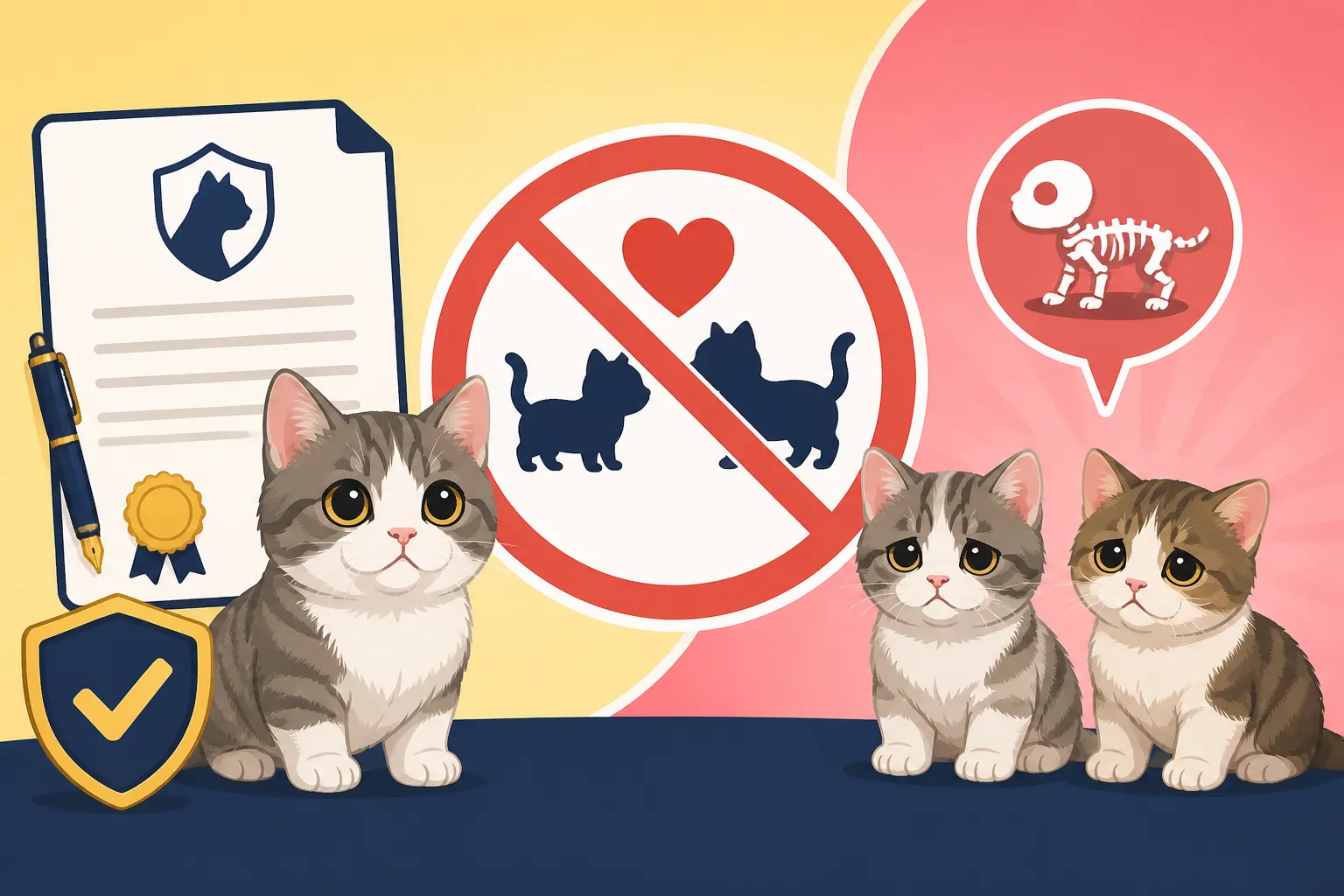
A well-crafted breeding contract from a reputable Munchkin breeder isn't just a piece of paper; it's a living document that outlines the shared commitment to the health and well-being of the cat. These contracts are designed to protect everyone involved: the kitten, the new owner, and the breed itself. The clause prohibiting the breeding of two short-legged Munchkins is one of the most critical elements of this protection.
Safeguarding the Kitten's Future
When you purchase a Munchkin kitten, especially one with breeding rights, the contract serves as a binding agreement that ensures the welfare of that specific animal and any future offspring. By explicitly banning the mating of two short-legged Munchkins, the contract directly prevents the creation of non-viable embryos, thus preventing unnecessary suffering and loss. It’s a proactive measure to safeguard life.
The contract also typically outlines other important health considerations. This might include stipulations about health testing for genetic conditions that could be present in the outcross lines, ensuring proper nutrition, and regular veterinary care. For instance, some contracts might suggest pet insurance from providers like Healthy Paws to cover any unexpected health issues, demonstrating a holistic approach to care. This ensures that the breeding queen is in peak condition to carry and deliver a litter, and that the resulting kittens get the best start in life. The contract is designed to prevent a cycle of poor breeding that could lead to widespread health problems within the breed.
Protecting the Integrity of the Breed
Beyond the individual kitten, the breeding contract also plays a vital role in maintaining the overall health and genetic integrity of the Munchkin breed. If breeders were to disregard the lethal gene and breed two short-legged cats together, it could lead to several negative outcomes for the breed as a whole. It would result in a higher incidence of fetal loss, potentially smaller, less robust litters, and could even give rise to misconceptions or criticisms about the breed's viability and health.
The strict adherence to breeding guidelines helps to ensure that the Munchkin breed remains as healthy as possible within the confines of its genetic mutation. It reinforces the commitment of responsible breeders to uphold breed standards that prioritize health over novelty. When you're looking for a kitten, knowing that the breeder adheres to these principles, perhaps by showing you the pedigrees and health clearances of the parents, is a huge green flag. Why a Munchkin Contract Restricts Which Cats It May Mate is all about preventing detrimental pairings and upholding breed standards.
The Breeder's Commitment to Welfare
Ultimately, the presence of such a clause in a Munchkin breeding contract is a testament to the breeder's deep commitment to animal welfare. It signals that they are knowledgeable about the breed's unique genetic challenges and are actively working to mitigate them. A responsible breeder isn't just selling you a cat; they are entrusting you with a valuable life and expecting you to uphold the same ethical standards they do.
This commitment often extends to clauses about spaying or neutering pet-quality kittens (those sold without breeding rights) to prevent accidental or irresponsible breeding. It's a comprehensive approach to ensuring that every Munchkin cat born contributes positively to the breed's future, or lives a long, healthy life as a beloved pet. Always remember that a good breeder will be transparent and eager to explain every clause in their contract. Which Diseases a Munchkin Breeder Must Declare is another critical aspect that will likely be covered, showing their dedication to health.
Red Flags and Responsible Choices
Navigating the world of cat breeders can sometimes feel overwhelming, especially with so much information (and misinformation) out there. Knowing what to look for, and what to avoid, is crucial when you’re considering a Munchkin, particularly when it comes to understanding their unique genetic situation and breeding contracts.
How to Identify a Reputable Munchkin Breeder
A reputable Munchkin breeder will be transparent, knowledgeable, and genuinely passionate about the health and welfare of their cats. They won't just tell you what you want to hear; they'll educate you. Here are some signs to look for:
- Transparency about genetics: They should be able to clearly explain Why Munchkin Dwarfism Is Called Autosomal Dominant and the implications of the lethal gene. They won't shy away from discussing the need to outcross with normal-legged cats.
- Detailed contracts: Their contract will explicitly state the ban on breeding two short-legged Munchkins. It will also cover health guarantees, spay/neuter agreements for pet-quality kittens, and what happens if a kitten develops a genetic health issue.
- Health screening: They'll provide documentation of health screenings for the breeding parents, especially any relevant to their outcross lines (e.g., PKD tests if Persians are in the ancestry).
- Clean and stimulating environment: Visit their cattery (if possible, or via video calls). The cats should be in a clean, safe, and enriching environment, not confined to small cages.
- Engaged and inquisitive: A good breeder will ask you lots of questions to ensure you're a suitable home for their kitten. They care where their cats go.
- References: They should be happy to provide references from other satisfied owners or their veterinarian.
If a breeder seems evasive when asked about genetics, downplays the risks, or seems overly focused on quick sales rather than education, these are significant red flags that should make you reconsider.
Questions to Ask About the Breeding Pair
When you're speaking with a potential breeder, don't be afraid to ask specific questions about the parents of the litter. This is your chance to really understand the lineage and the care that has gone into the breeding process.
- "Can you explain the genetic background of the parents, particularly in relation to the short-leg gene?" A good breeder will clearly state that one parent is a short-legged Munchkin (heterozygous) and the other is a normal-legged cat (homozygous normal). They will never say both parents are short-legged.
- "What are the outcross breeds used in your lines?" Munchkins are bred with various domestic cats to maintain genetic diversity. Knowing which breeds are involved can give you insight into potential inherited traits or health considerations.
- "Can I see the pedigree and any health certificates for the parents?" This documentation provides proof of lineage and any health testing results.
- "At what age do you assess the leg length of the kittens, and how do you grade them?" Breeders typically evaluate leg length around 8-12 weeks, as this is when the trait is clearly expressed. They might use a system to classify them as "standard" or "rug hugger" or "non-standard" (long-legged). Why a Breeder Grades a Munchkin's Legs at Twelve Weeks is a good question to ask.
By asking these questions and paying close attention to the breeder's answers and their contract, you'll be much better equipped to make a responsible and informed decision about welcoming a Munchkin into your life. The careful planning and ethical practices outlined in these breeding contracts are ultimately what allow these unique and charming cats to thrive.
Ensuring a Healthy Start for Munchkin Kittens
A truly dedicated Munchkin breeder understands that their responsibility doesn't end when a kitten goes to its new home. It begins with ensuring the optimal health of the breeding pair and continues through the crucial early weeks of a kitten's life. This meticulous approach is what safeguards the well-being of the entire litter.
Pre-Natal and Post-Natal Care
The health of the queen (the mother cat) is paramount even before she becomes pregnant. A reputable breeder ensures she is in excellent physical condition, up to date on vaccinations, and has a balanced, high-quality diet. Many breeders utilize premium cat food to ensure the queen has all the nutrients she needs. During pregnancy, this attention to nutrition becomes even more critical, supporting not only the mother but also the developing embryos.
Once kittens are born, the breeder's role shifts to providing impeccable post-natal care. This includes monitoring the queen and kittens closely for any signs of distress or health issues. Kittens will receive their initial vet checks, deworming, and first vaccinations. These early interventions are critical for identifying and addressing any problems promptly. A breeder's contract will often specify that the kitten has received a clean bill of health from a veterinarian before going to its new home, giving you peace of mind. Why a Munchkin Kitten Needs an Early Vet Check covers the essentials of this critical period.
Early Assessment and Observation
One of the breeder's key tasks is to observe the kittens closely as they grow, especially in relation to their physical development. While the short-leg trait is visible fairly early, other health aspects need careful monitoring. This includes checking for proper growth, activity levels, and conformation. For instance, any signs of spinal curvature (lordosis) or chest abnormalities (pectus excavatum) would be noted and addressed immediately. Although these conditions are not directly caused by the short-leg gene in one copy, they are sometimes associated with the broader skeletal development and require attention.
Reputable breeders will have their kittens thoroughly examined by a veterinarian before they are cleared for sale. This comprehensive exam will include palpating the spine and checking the chest structure to rule out any concerns. This transparency and proactive approach in What a Munchkin Kitten's First Exam Should Cover are vital indicators of an ethical breeder, demonstrating their commitment to sending home healthy, well-adjusted kittens, and ensuring you get a pet that brings joy, not heartache.
| Breeding Pair Combination | Genetic Outcome (Expected) | Viability Outcome | Ethical Status |
|---|---|---|---|
| Short-Legged Munchkin x Normal-Legged Cat | 50% Short-Legged, 50% Normal-Legged | All viable kittens | Ethical, Standard |
| Short-Legged Munchkin x Short-Legged Munchkin | 25% Homozygous Lethal, 50% Short-Legged, 25% Normal-Legged | 25% non-viable, 75% viable | Unethical, Banned |
| Normal-Legged Cat x Normal-Legged Cat | 100% Normal-Legged | All viable kittens | Ethical |
Disclaimer
This article is for general informational purposes only and does not constitute professional advice. Laws, prices and regulations vary by location and change over time. Consult a qualified professional for guidance on your specific situation.